Loading...
Done
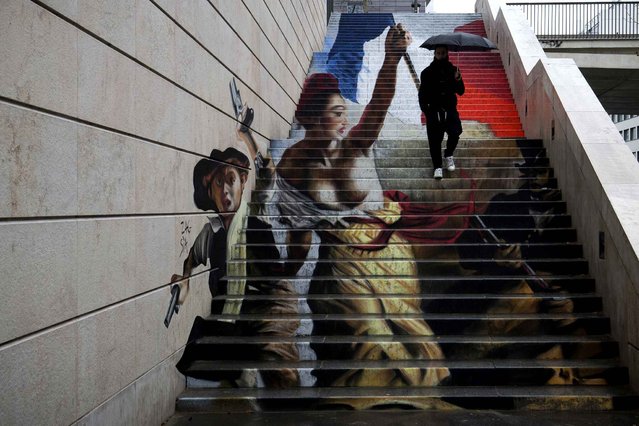
A man passes by an unfinished street art graffiti made in a stairway by French street artists Zag and Sia in Paris on March 1, 2016. The two artists drew inspiration from famous “Liberty Leading the People” (La Liberte guidant le peuple) painting by French Eugene Delacroix commemorating the July Revolution of 1830 and viewed as a symbol of the French Republic. (Photo by Joel Saget/AFP Photo)

A man passes by an unfinished street art graffiti made in a stairway by French street artists Zag and Sia in Paris on March 1, 2016. The two artists drew inspiration from famous “Liberty Leading the People” (La Liberte guidant le peuple) painting by French Eugene Delacroix commemorating the July Revolution of 1830 and viewed as a symbol of the French Republic. (Photo by Joel Saget/AFP Photo)
Details
04 Mar 2016 12:31:00
“Americana”. (Photo by Olivia Bee)

“Americana”. (Photo by Olivia Bee)
Details
11 Dec 2013 12:16:00
A picture made available on 13 May 2016 shows A Tiwa girl performing her traditional dance as they celebrated the Wanchuwa festival in Karbi Anglong District of Assam state, India, 11 May 2016. Wanchuwa is one of the most important festivals of the Tiwa tribal community living in the hills as it is related with agriculture which is the mainstay of their economy. Tiwas pray for a bountiful harvest during this festival and to protect their crops from pest and other natural calamities. (Photo by EPA/Stringer)

A picture made available on 13 May 2016 shows A Tiwa girl performing her traditional dance as they celebrated the Wanchuwa festival in Karbi Anglong District of Assam state, India, 11 May 2016. Wanchuwa is one of the most important festivals of the Tiwa tribal community living in the hills as it is related with agriculture which is the mainstay of their economy. Tiwas pray for a bountiful harvest during this festival and to protect their crops from pest and other natural calamities. Tiwa is a major tribe of Assam state who practice Jhum or shifting cultivation for their living in the hills. (Photo by EPA/Stringer)
Details
14 May 2016 11:45:00
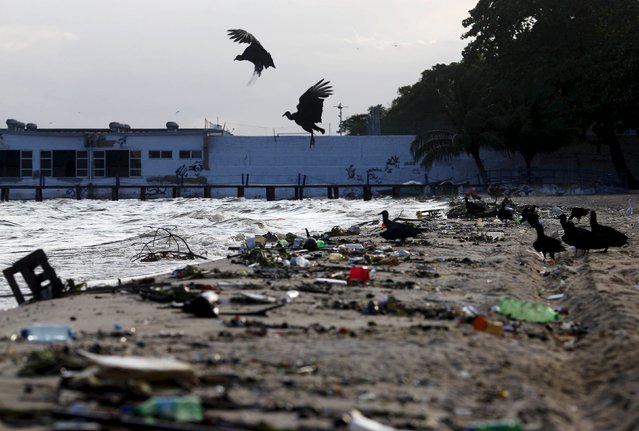
Vultures gather to eat waste in Bica beach, on the banks of the Guanabara Bay, with the Sugar Loaf mountain in background, 500 days ahead the Rio 2016 Olympic Games in Rio de Janeiro March 24, 2015. (Photo by Ricardo Moraes/Reuters)

Vultures gather to eat waste in Bica beach, on the banks of the Guanabara Bay, with the Sugar Loaf mountain in background, 500 days ahead the Rio 2016 Olympic Games in Rio de Janeiro March 24, 2015. As part of its Olympic bid, Rio promised to clean up 80 percent of the bay for the games. But local government officials have already admitted that a cleanup by 2016 is not achievable. Despite millions of dollars of investment over the years, the bay still stinks of sewage. Sailors who visited the city for test events complained of a floating sofa and a dead dog in the water. (Photo by Ricardo Moraes/Reuters)
Details
26 Mar 2015 12:16:00
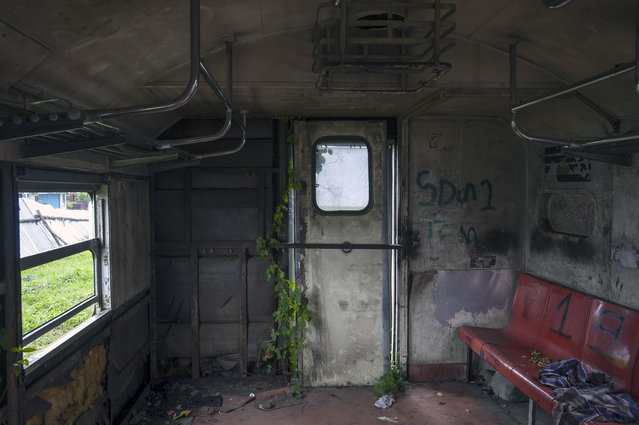
The carriages have decayed over time, on February 27, 2015, in Purwakarta, Indonesia. Dozens of trains are stacked on top of each other in what looks like a post-apocalyptic world. The old electric trains that travelled in and out of Jakarta, Indonesia, are weathered and decayed over time. The trains were used everyday since the 1980s and carried thousands of people to work. (Photo by HKV/Barcroft Media)

The carriages have decayed over time, on February 27, 2015, in Purwakarta, Indonesia. Dozens of trains are stacked on top of each other in what looks like a post-apocalyptic world. The old electric trains that travelled in and out of Jakarta, Indonesia, are weathered and decayed over time. The trains were used everyday since the 1980s and carried thousands of people to work. Now the carriages, which were once the lifeblood of public transport in the south-Asian city, have been left to rust among shrubbery. (Photo by HKV/Barcroft Media)
Details
21 Apr 2015 11:13:00
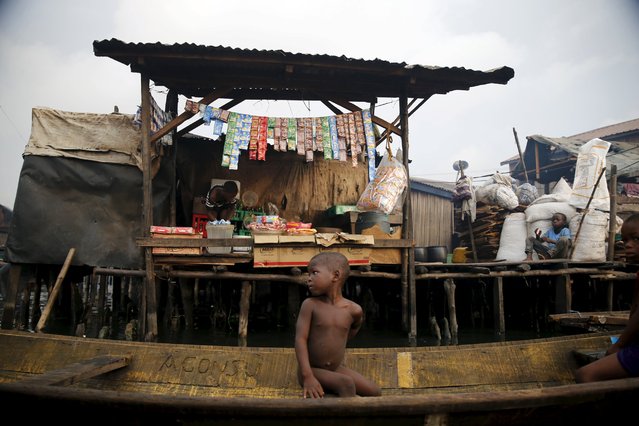
A boy sits in a canoe in front of a shed built on a raft in the Makoko fishing community on the Lagos Lagoon, Nigeria February 29, 2016. Makoko, a vast slum of houses on stilts in a Lagos lagoon, now boasts a new school – pyramid-shaped, floating and capable of withstanding the waterways' extreme weather, it is a beacon of hope for the nearly 100,000 Nigerians who live there.  (Photo by Akintunde Akinleye/Reuters)

A boy sits in a canoe in front of a shed built on a raft in the Makoko fishing community on the Lagos Lagoon, Nigeria February 29, 2016. In Makoko, a sprawling slum of Nigeria's megacity Lagos, a floating school capable of holding up to a hundred pupils has since November brought free education to the waterways known as the Venice of Lagos. It offers the chance of social mobility for youngsters who, like most of the city's 21 million inhabitants, lack a reliable electricity and water supply and whose water-based way of life is threatened by climate change as well as rapid urbanisation. (Photo by Akintunde Akinleye/Reuters)
Details
05 Mar 2016 12:01:00
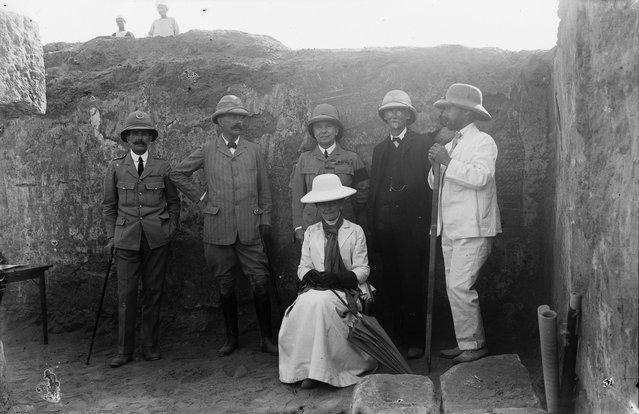
Remarkable discoveries were made, like the decapitated head of a bronze statue of Roman emperor Augustus, sacked from a raid on Roman garrisons further north in Egypt. Here: A group visiting the excavations at Meroë, including (from left) Midwinter Bey, director of Sudan Railways; Lord Kitchener; General Sir Francis Reginald Wingate, Sirdar of the Egyptian Army; Professor Archibald Sayce; John Garstang; and Lady Catherine Wingate, 1911. (Photo by Garstang Museum of Archaeology)

The city of Meroë laid undiscovered for two millennia before British archaeologist John Garstang excavated it in the early 20th century. Garstang took the radical decision to document his discoveries with photography – and immortalised an ancient world. “Meroë: Africa’s Forgotten Empire” is being shown until 14 September at Garstang Museum of Archaeology, Liverpool. Here: A group visiting the excavations at Meroë, including (from left) Midwinter Bey, director of Sudan Railways; Lord Kitchener; General Sir Francis Reginald Wingate, Sirdar of the Egyptian Army; Professor Archibald Sayce; John Garstang; and Lady Catherine Wingate, 1911. (Photo by Garstang Museum of Archaeology)
Details
15 Jun 2016 14:49:00
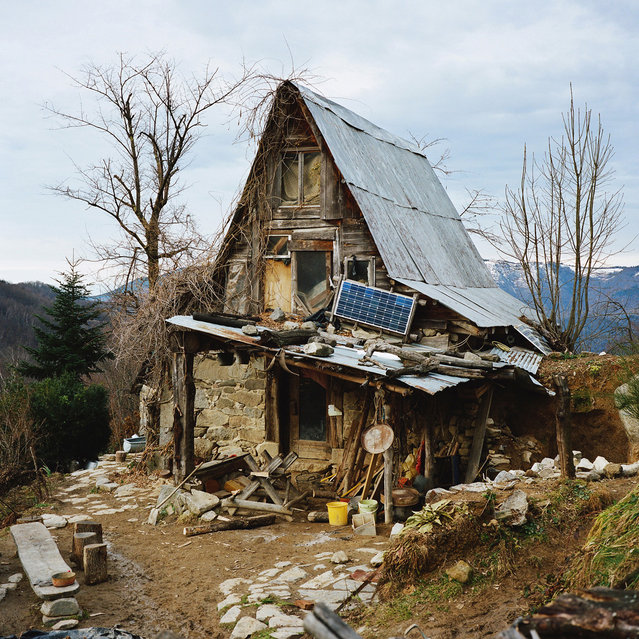
This property in the French Pyrenees is owned by a German man, who moved with his family here 25 years ago. He has since renovated the shack to be a completely self-sufficient house. There are no electrical appliances, but the solar panel powers small lights in the house. (Photo by Antoine Bruy)

Back in 2010, French photographer Antoine Bruy began hitchhiking around Europe without any fixed route. Along his travels, he met people who had entirely abandoned city life in favour of an isolated country existence they found more fulfilling. Bruy began seeking out people who lived off-the-grid. After three years on the road, staying in makeshift houses and on community farms, he has released Scrublands, a documentation of the lifestyle. While each living situation is different, Bruy found that all the people he met shared a common desire to escape the rat race and achieve a quieter life in harmony with nature. (Photo by Antoine Bruy)
Details
13 Aug 2014 09:45:00