Loading...
Done
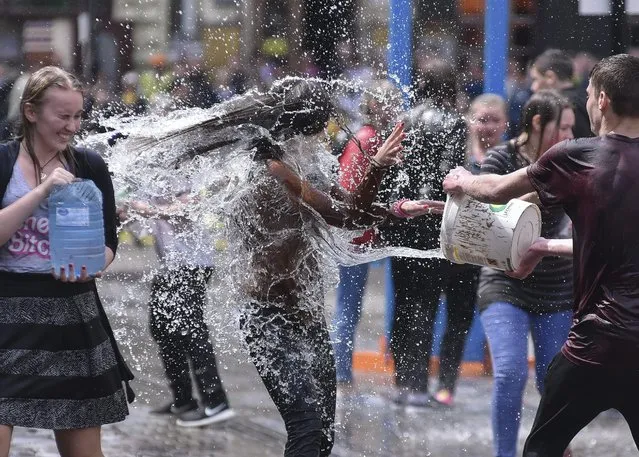
Ukrainians pour water on each other on a street in Lviv, Ukraine, 02 May 2016. The tradition of pouring water was an ancient spring ritual of cleansing on first Monday after Orthodox Easter. (Photo by Mykola Tys/EPA)

Ukrainians pour water on each other on a street in Lviv, Ukraine, 02 May 2016. The tradition of pouring water was an ancient spring ritual of cleansing on first Monday after Orthodox Easter. (Photo by Mykola Tys/EPA)
Details
03 May 2016 13:38:00
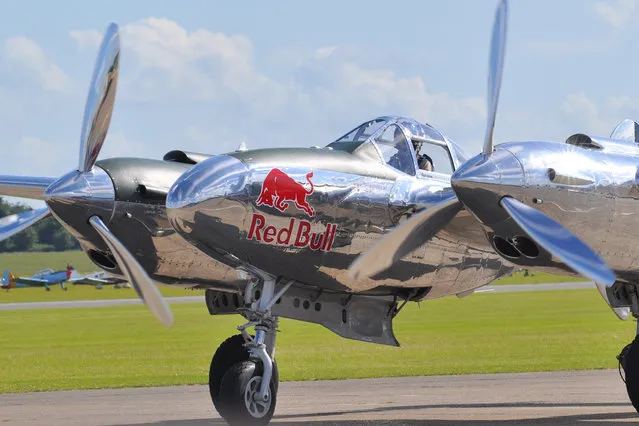
The Flying Bull's P-38 Lockheed Lightning N25Y / 13 – Red Bull – Flying Legends Airshow 2012 Duxford (Rob Lovesey)

The Flying Bull's P-38 Lockheed Lightning N25Y / 13 – Red Bull – Flying Legends Airshow 2012 Duxford (Photo by Rob Lovesey)


Details
20 Nov 2012 12:10:00
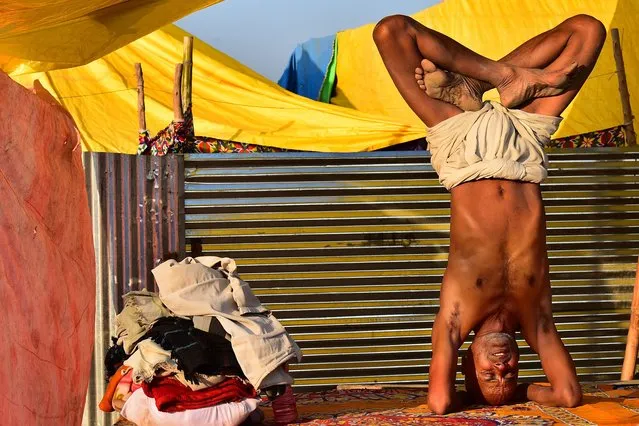
An ascetic performs yoga at his makeshift tent near the banks of Sangam -the confluence of the Ganges, Yamuna and mythical Saraswati river during the Magh Mela festival in Allahabad on January 28, 2022. (Photo by Sanjay Kanojia/AFP Photo)

An ascetic performs yoga at his makeshift tent near the banks of Sangam -the confluence of the Ganges, Yamuna and mythical Saraswati river during the Magh Mela festival in Allahabad on January 28, 2022. (Photo by Sanjay Kanojia/AFP Photo)

Details
08 Feb 2022 05:38:00
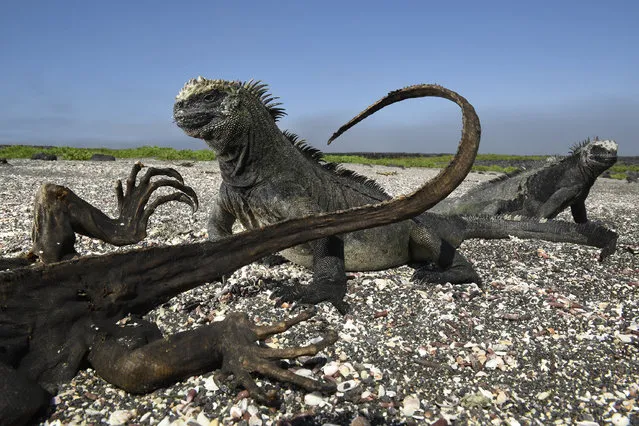
Galapagos – Rocking the Cradle: Four major ocean currents converge along the Galapagos archipelago, creating the conditions for an extraordinary diversity of animal life, April 25, 2016. The islands are home to at least 7,000 flora and fauna species, of which 97 percent of the reptiles, 80 percent of the land birds, 50 percent of the insects and 30 percent of the plants are endemic. The local ecosystem is highly sensitive to the changes in temperature, rainfall and ocean currents that characterize the climatic events known as El Niño and La Niña. These changes cause marked fluctuations in weather and food availability. Many scientists expect the frequency of El Niño and La Niña to increase as a result of climate change, making the Galapagos a possible early-warning location for its effects. (Photo by Thomas P. Peschak for National Geographic/World Press Photo)

Galapagos – Rocking the Cradle: Four major ocean currents converge along the Galapagos archipelago, creating the conditions for an extraordinary diversity of animal life, April 25, 2016. The islands are home to at least 7,000 flora and fauna species, of which 97 percent of the reptiles, 80 percent of the land birds, 50 percent of the insects and 30 percent of the plants are endemic. (Photo by Thomas P. Peschak for National Geographic/World Press Photo)
Details
16 Apr 2018 00:01:00
Paul Villinskis By Butterflies Art

Paul Villinski is a professional visual artist who has created studio and large-scale artworks for more than three decades. Villinski was born in York, Maine, USA, in 1960, son of an Air Force navigator. He has lived and worked in New York City since 1982. A scenic route through the educational system included stops at Phillips Exeter Academy and the Massachusetts College of Art, and a BFA with honors from the Cooper Union for the Advancement of Science and Art in 1984. He lives with his partner, the painter Amy Park, and their son, Lark, in their studios in Long Island City, NY.
Details
02 Mar 2013 12:24:00
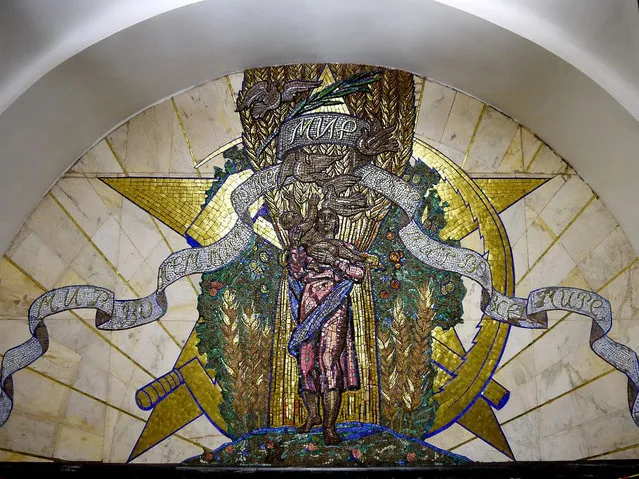
Moscow Metro

The is a rapid transit system serving Moscow and the neighbouring town of Krasnogorsk. Opened in 1935 with one 11-kilometre (6.8 mi) line and 13 stations, it was the first underground railway system in the Soviet Union. As of 2011, the Moscow Metro has 185 stations and its route length is 305.7 kilometres (190.0 mi). The system is mostly underground, with the deepest section 84 metres (276 ft) at the Park Pobedy station. The Moscow Metro is the world's second most heavily used rapid transit system after Tokyo's twin subway.
Details
13 Jun 2012 09:17:00
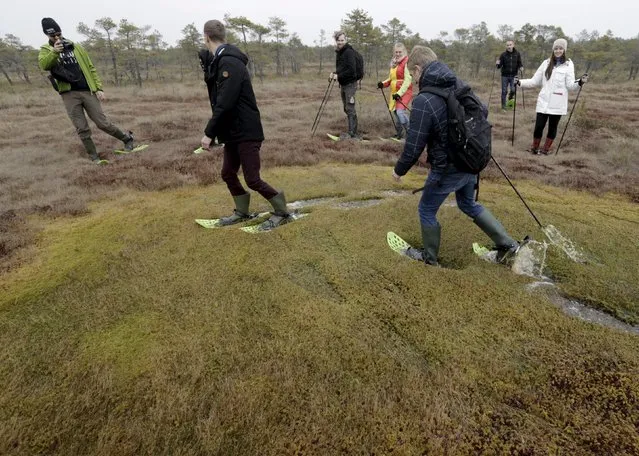
People use snowshoes during a tour of the Great Kemeri Bog, Latvia, October 17, 2015. (Photo by Ints Kalnins/Reuters)

People use snowshoes during a tour of the Great Kemeri Bog, Latvia, October 17, 2015. The Kemeri bog is more than 8,000 years old and is one of the largest dry moss swamps in the Baltics. A more than decade-long joint restoration of the bog by the European Union and the Latvian government helped the bog recover its high moss marshes, damp black alder forests, floodplain meadows and seaside lakes – features now considered rare in Europe due to industrialisation. (Photo by Ints Kalnins/Reuters)
Details
20 Oct 2015 08:03:00
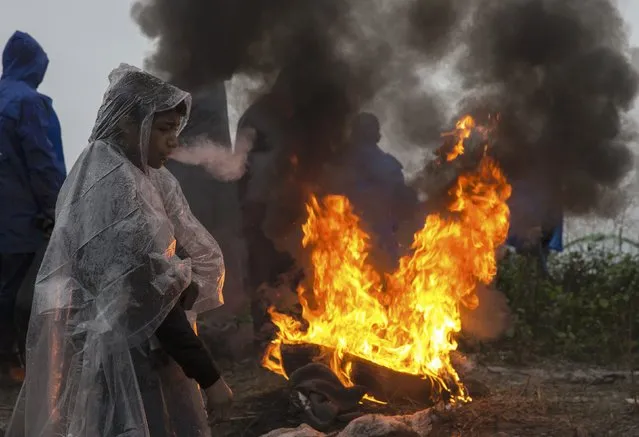
A migrant smokes a cigarette as he waits among others to cross the Croatian border near the village of Berkasovo, Serbia October 19, 2015. (Photo by Marko Djurica/Reuters)

A migrant smokes a cigarette as he waits among others to cross the Croatian border near the village of Berkasovo, Serbia October 19, 2015. Thousands of migrants clamoured to enter European Union member Croatia from Serbia on Monday after a night spent in the cold and mud of no-man's land, their passage west slowed by a Slovenian effort to impose limits on the flow to western Europe. (Photo by Marko Djurica/Reuters)
Details
22 Oct 2015 08:00:00