Loading...
Done
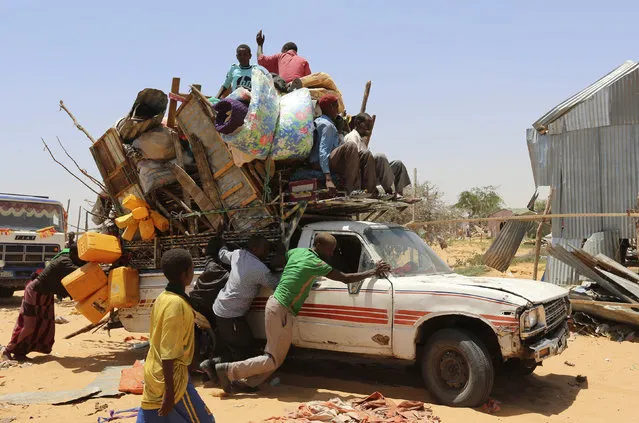
More than 6 billion people live in countries where serious levels of public sector corruption are fueling inequality and exploitation, according to Transparency International's 2015 index of perceived public sector corruption. The group's annual report measures perceptions of corruption due to the secrecy surrounding most corrupt dealings. Two thirds of the 168 countries assessed were identified as having a serious corruption problem. Somalia, which has been mired in conflict since civil war broke out in 1991, ranks bottom of the list. (Photo by Feisal Omar/Reuters)

More than 6 billion people live in countries where serious levels of public sector corruption are fueling inequality and exploitation, according to Transparency International's 2015 index of perceived public sector corruption. The group's annual report measures perceptions of corruption due to the secrecy surrounding most corrupt dealings. Two thirds of the 168 countries assessed were identified as having a serious corruption problem. Somalia, which has been mired in conflict since civil war broke out in 1991, ranks bottom of the list. (Photo by Feisal Omar/Reuters)
Details
13 May 2016 12:10:00
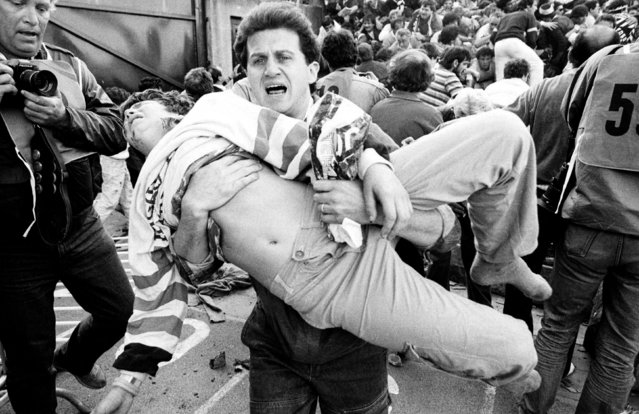
An injured soccer fan is carried to safety by a friend after a wall collapsed during violence between fans before the European Cup final between Juventus and Liverpool at the Heysel stadium in Brussels, May 29, 1985. 39 people died, and a further 600 were injured. (Photo by Nick Didlick/Reuters)

Reuters multi-award winning photographers are celebrated here in a three part retrospective on the 30th anniversary of the service's launch. They have captured dramatic images illustrating the human tragedy of natural disaster and war as well as the fallout of economic events across the continents, creating iconic images, recognised around the world. Here: an injured soccer fan is carried to safety by a friend after a wall collapsed during violence between fans before the European Cup final between Juventus and Liverpool at the Heysel stadium in Brussels, May 29, 1985. 39 people died, and a further 600 were injured. (Photo by Nick Didlick/Reuters)
Details
15 Feb 2015 13:43:00
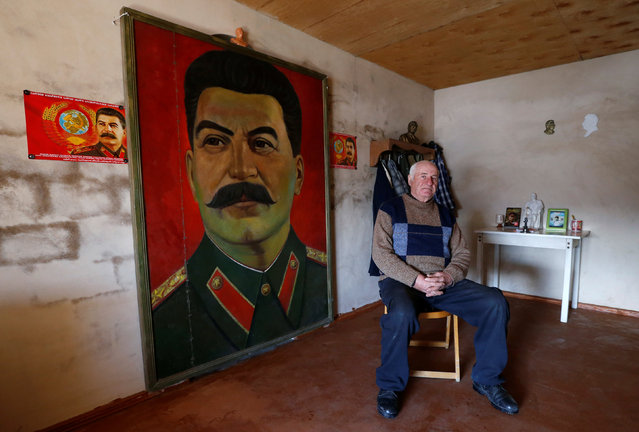
Retired builder Vasili Sidamonidze, 70, poses for a portrait at his home in Gori, Georgia, December 6, 2016. “Unfortunately, Stalin is not popular nowadays. Our people don't respect him. Only we, members of the (Communist) Party, respect him”, Sidamonidze said. “I always try to attend Stalin's birthday anniversaries in Gori. Unfortunately many people don't want to join us even if they live nearby. They look at us from their windows”. Stalin, who was born in Gori in 1878 and died in 1953, is largely reviled today in Georgia, which regained its independence during the 1991 collapse of the Soviet Union. Over the years, his memorials have been dismantled, most recently in 2010 when authorities removed a statue of the dictator from Gori's central square. But Stalin is still revered by a small group of mainly elderly supporters who stress his role in the industrialisation of the Soviet Union and in defeating Nazi Germany in World War Two. Each Dec. 21, a few dozen people mark his birthday by gathering outside a Gori museum dedicated to Stalin, where they make speeches and walk to the square where a 6-meter-high bronze statue of him once stood, calling for it to be reinstated. Opponents say it was a symbol of Moscow's still lingering shadow. In 2008, Russia fought a brief war with Georgia and recognised its breakaway regions of Abkhazia and South Ossetia as independent states. (Photo by David Mdzinarishvili/Reuters)

Retired builder Vasili Sidamonidze, 70, poses for a portrait at his home in Gori, Georgia, December 6, 2016. “Unfortunately, Stalin is not popular nowadays. Our people don't respect him. Only we, members of the (Communist) Party, respect him”, Sidamonidze said. “I always try to attend Stalin's birthday anniversaries in Gori. Unfortunately many people don't want to join us even if they live nearby. They look at us from their windows”. (Photo by David Mdzinarishvili/Reuters)
Details
17 Dec 2016 07:59:00
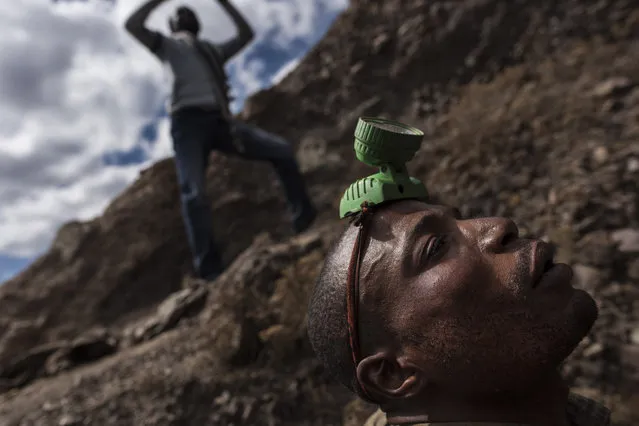
A “creuseur”, or digger, a plastic lantern on his head, readies to enter a copper and cobalt mine in Kawama, Democratic Republic of Congo on June 8, 2016. Cobalt is used in the batteries for electric cars and mobile phones. Working conditions are dangerous, often with no safety equipment or structural support for the tunnels. The diggers say they are paid on average US$2-3/day. (Photo by Michael Robinson Chavez/The Washington Post)

A “creuseur”, or digger, a plastic lantern on his head, readies to enter a copper and cobalt mine in Kawama, Democratic Republic of Congo on June 8, 2016. Cobalt is used in the batteries for electric cars and mobile phones. Working conditions are dangerous, often with no safety equipment or structural support for the tunnels. The diggers say they are paid on average US$2-3/day. (Photo by Michael Robinson Chavez/The Washington Post)
Details
30 Dec 2016 10:29:00
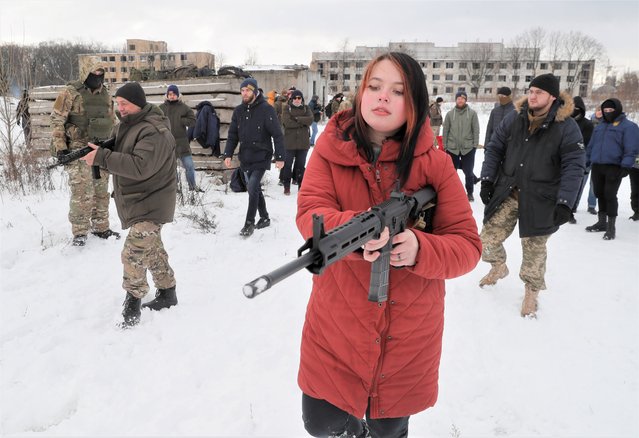
Ukrainians attend an open military training for civilians on a training range in Kiev, Ukraine, 30 January 2022. According to a survey conducted by the Kiev International Institute of Sociology (KIIS) from December 2021, 50.2 percent of Ukrainians said they would resist in case of a Russian military intervention into their city, town or village. Every third respondent to the poll said they were ready to engage in armed resistance, and 21.7 percent said they were ready to participate in civil resistance actions. (Photo by Sergey Dolzhenko/EPA/EFE)

Ukrainians attend an open military training for civilians on a training range in Kiev, Ukraine, 30 January 2022. According to a survey conducted by the Kiev International Institute of Sociology (KIIS) from December 2021, 50.2 percent of Ukrainians said they would resist in case of a Russian military intervention into their city, town or village. Every third respondent to the poll said they were ready to engage in armed resistance, and 21.7 percent said they were ready to participate in civil resistance actions. (Photo by Sergey Dolzhenko/EPA/EFE)
Details
31 Jan 2022 06:47:00
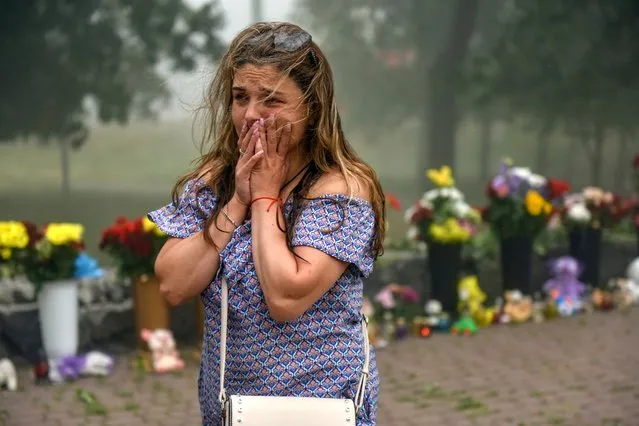
A woman cries near the flowers, brought to  the destroyed Amstor shopping mall in Kremenchuk, Ukraine, 28 June 2022. At least 18 people died following Russian airstrikes on the crowded shopping mall, the State Emergency Service (SES) of Ukraine said in a Telegram post. The Amstor shopping center one-story building was hit by Russian rockets on 27 June afternoon. (Photo by Oleg Petrasyuk/EPA/EFE)

A woman cries near the flowers, brought to the destroyed Amstor shopping mall in Kremenchuk, Ukraine, 28 June 2022. At least 18 people died following Russian airstrikes on the crowded shopping mall, the State Emergency Service (SES) of Ukraine said in a Telegram post. The Amstor shopping center one-story building was hit by Russian rockets on 27 June afternoon. (Photo by Oleg Petrasyuk/EPA/EFE)
Details
30 Jun 2022 05:13:00
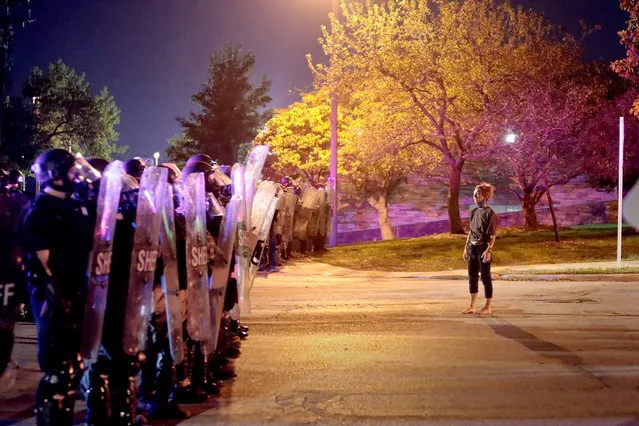
A protestor confronts police and National Guard troops near the Wauwatosa City Hal on October 09, 2020 in Wauwatosa, Wisconsin. The city has faced three days of demonstrations, prompting a 7 PM curfew, after District Attorney John Chisholm refused to press charges against Wauwatosa Police Officer Joseph Mensah for the Feb. 2 fatal shooting of 17-year-old Alvin Cole.  (Photo by Scott Olson/Getty Images)

A protestor confronts police and National Guard troops near the Wauwatosa City Hal on October 09, 2020 in Wauwatosa, Wisconsin. The city has faced three days of demonstrations, prompting a 7 PM curfew, after District Attorney John Chisholm refused to press charges against Wauwatosa Police Officer Joseph Mensah for the Feb. 2 fatal shooting of 17-year-old Alvin Cole. (Photo by Scott Olson/Getty Images)
Details
19 Oct 2020 00:05:00
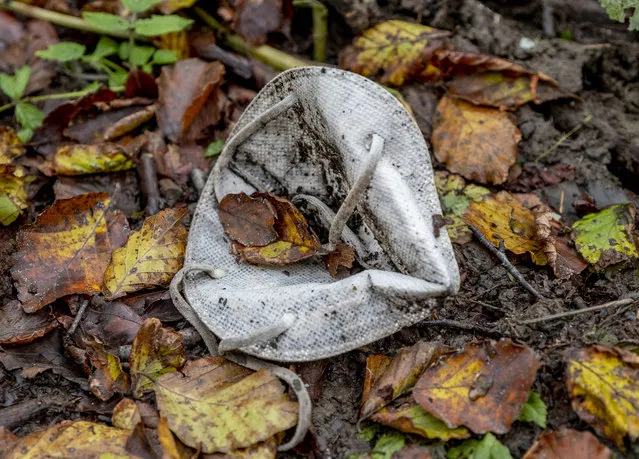
A face mask discarded in a forest in the Taunus region near Frankfurt, Germany, Sunday, October 18, 2020. (Photo by Michael Probst/AP Photo)

A face mask discarded in a forest in the Taunus region near Frankfurt, Germany, Sunday, October 18, 2020. (Photo by Michael Probst/AP Photo)
Details
20 Oct 2020 00:07:00