Loading...
Done
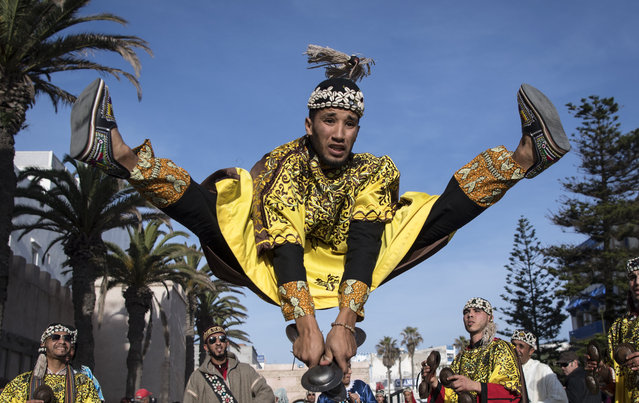
A Gnawa traditional group performs in the city of Essaouira on December 14, 2019, to celebrate the decision of adding the Gnawa culture to UNESCO's list of Intangible Cultural Heritage of Humanity. Gnawa culture, a centuries-old Moroccan practice rooted in music, African rituals and Sufi traditions, was added to UNESCO's list of Intangible Cultural Heritage of Humanity earlier in the week. Gnawa refers to a “set of musical productions, fraternal practices and therapeutic rituals where the secular mixes with the sacred”, according to the nomination submitted by Morocco. Often dressed in colourful outfits, Gnawa musicians play the guenbri, a type of lute with three strings, accompanied by steel castanets called krakebs. (Photo by Fadel Senna/AFP Photo)

A Gnawa traditional group performs in the city of Essaouira on December 14, 2019, to celebrate the decision of adding the Gnawa culture to UNESCO's list of Intangible Cultural Heritage of Humanity. Gnawa culture, a centuries-old Moroccan practice rooted in music, African rituals and Sufi traditions, was added to UNESCO's list of Intangible Cultural Heritage of Humanity earlier in the week. Gnawa refers to a “set of musical productions, fraternal practices and therapeutic rituals where the secular mixes with the sacred”, according to the nomination submitted by Morocco. Often dressed in colourful outfits, Gnawa musicians play the guenbri, a type of lute with three strings, accompanied by steel castanets called krakebs. (Photo by Fadel Senna/AFP Photo)
Details
18 Dec 2019 00:05:00
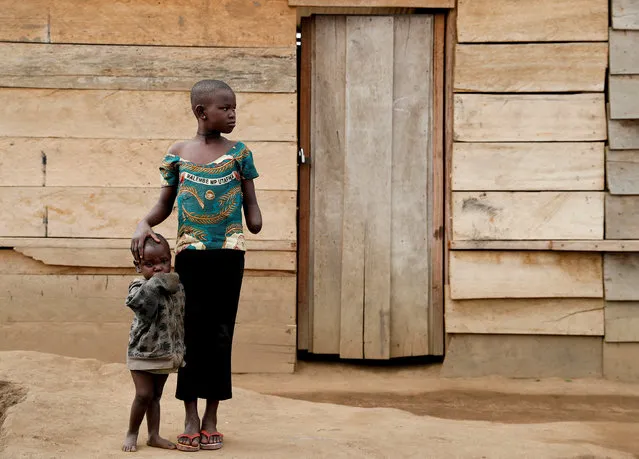
Mave Grace, 11, who had part of her arm chopped off by militiamen when they attacked the village of Tchee, stands with her sister Racahele-Ngabausi, aged two, in an Internally Displaced Camp in Bunia, Ituri province, eastern Democratic Republic of Congo, April 12, 2018. (Photo by Goran Tomasevic/Reuters)

Mave Grace, 11, who had part of her arm chopped off by militiamen when they attacked the village of Tchee, stands with her sister Racahele-Ngabausi, aged two, in an Internally Displaced Camp in Bunia, Ituri province, eastern Democratic Republic of Congo, April 12, 2018. (Photo by Goran Tomasevic/Reuters)
Details
28 Dec 2018 06:55:00
Bathing suit models are shown listening to the radio on the beach, circa 1940's. (Photo by Bettmann Archive/Getty Images)

Bathing suit models are shown listening to the radio on the beach, circa 1940's. (Photo by Bettmann Archive/Getty Images)
Details
11 Jul 2016 12:44:00
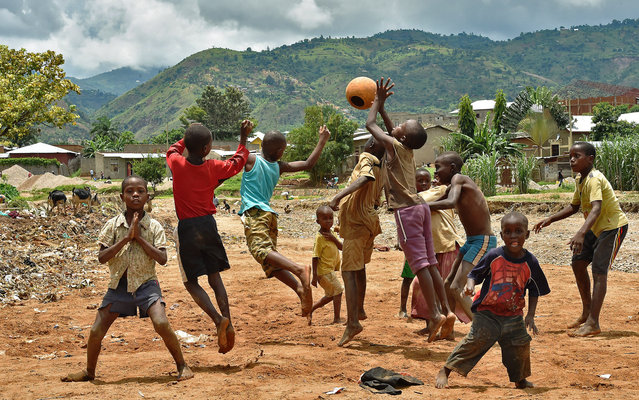
Children play football in Bujumbura, Burundi on March 19, 2015. (Photo by Carl de Souza/AFP Photo)

Children play football in Bujumbura, Burundi on March 19, 2015. (Photo by Carl de Souza/AFP Photo)
Details
21 Mar 2015 12:25:00
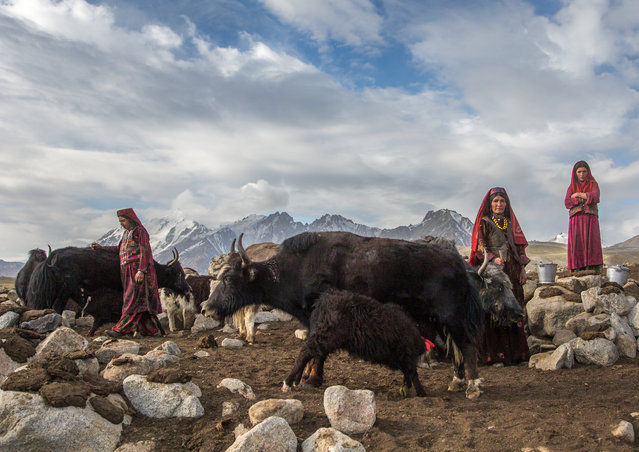
Wakhi nomad women milk yaks in Wakhan, Afghanistan. About 12,000 villagers live at an altitude of 4,500 metres in the harsh, desolate terrain. The Wakhi people live a simple, relaxed life with their livestock. (Photo by Eric Lafforgue/Barcroft Images)

Wakhi nomad women milk yaks in Wakhan, Afghanistan. About 12,000 villagers live at an altitude of 4,500 metres in the harsh, desolate terrain. The Wakhi people live a simple, relaxed life with their livestock. (Photo by Eric Lafforgue/Barcroft Images)
Details
12 Oct 2016 10:13:00
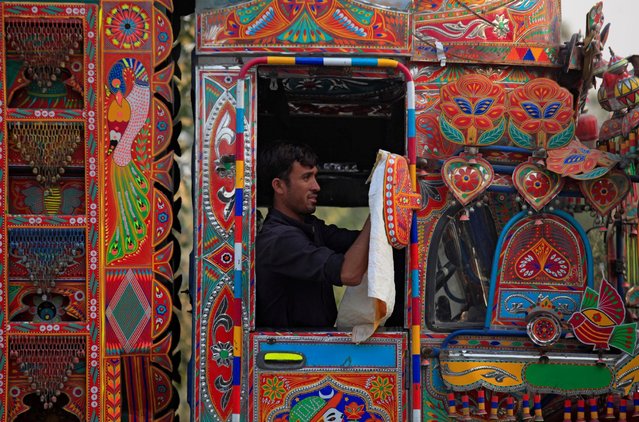
A truck driver cleans the mirror of his decorated truck in Charsadda outside Peshawar, Pakistan October 18, 2016. (Photo by Fayaz Aziz/Reuters)

A truck driver cleans the mirror of his decorated truck in Charsadda outside Peshawar, Pakistan October 18, 2016. (Photo by Fayaz Aziz/Reuters)
Details
10 Nov 2016 12:15:00
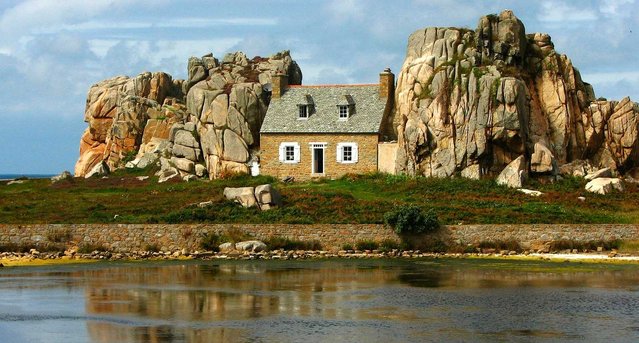
La Maison Du Gouffre Or The House Between The Rocks

Castel Meur, also known as La Maison du Gouffre or “the house between the rocks”, is a charming cottage wedged between two huge jagged rocks that has been drawing tourists to the otherwise quiet little village of Plougrescant, located in the department of Côtes-d’Armor in the region of Brittany, in France, since the 19th century.
Details
13 Aug 2015 09:15:00
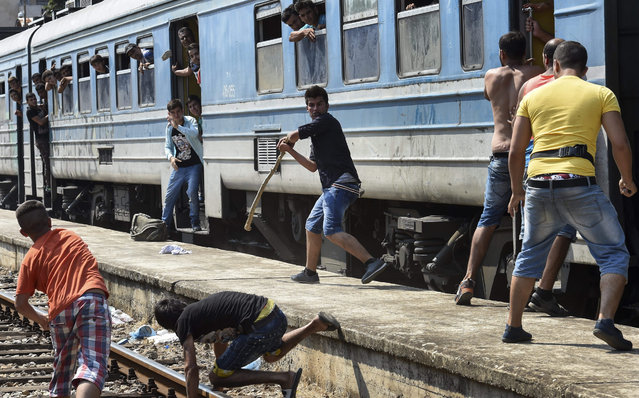
Migrants with a stick, stones and knife fight with each other after a brawl erupted over a place in an overcrowded train heading to the Serbian border at the train station in Gevgelija, The Former Yugoslav Republic of Macedonia, 14 August 2015. (Photo by Georgi Licovski/EPA)

Migrants with a stick, stones and knife fight with each other after a brawl erupted over a place in an overcrowded train heading to the Serbian border at the train station in Gevgelija, The Former Yugoslav Republic of Macedonia, 14 August 2015. The number of migrants passing through Macedonia increases day by day, local sources said. From the beginning of the year to mid-June 2015, nearly 160,000 migrants landed in the southern European countries, mainly Greece and Italy, on their way to wealthier countries in Western and Northern Europe, according to estimates by the International Organization for Migration (IOM). (Photo by Georgi Licovski/EPA)
Details
15 Aug 2015 11:10:00