Loading...
Done
A delegate dressed in a furry Lion costume walks across a Zebra crossing to the convention centre at the Eurofurence convention in Berlin on August 17, 2017. Some 2700 delegates are taking part in the 3-day-long Eurofurence in the German capital, the worlds oldest active Furry-convention for people dressing up in furry costumes. (Photo by Odd Andersen/AFP Photo)

A delegate dressed in a furry Lion costume walks across a Zebra crossing to the convention centre at the Eurofurence convention in Berlin on August 17, 2017. Some 2700 delegates are taking part in the 3-day-long Eurofurence in the German capital, the worlds oldest active Furry-convention for people dressing up in furry costumes. (Photo by Odd Andersen/AFP Photo)
Details
18 Aug 2017 08:57:00
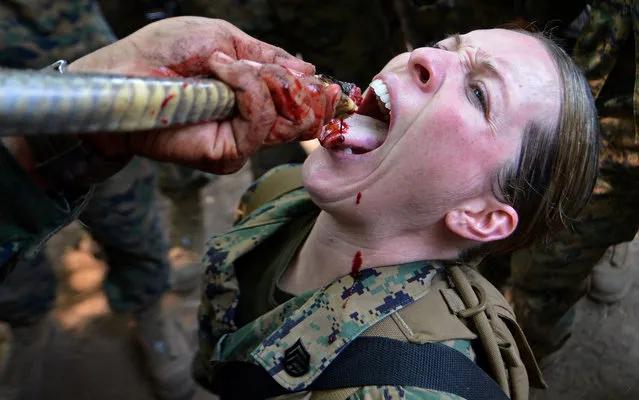
In a military base in the Thai province of Chon Buri February 20 U.S. Marines Navy with Thailand began their studies in jungle survival. The event is held in joint military exercises “Cobra Gold 2013”. During a jungle survival program February 20, 2013 taught by Royal Thai Special Forces in Sannapit, Thailand, U.S. Marines learned to catch cobras and drink their fresh blood, not to mention eat forest insects and pull the heads off of chicken. The training was part of Operation Cobra Gold 13, the 32nd edition of international military exercises hosted by the Thai. According to a U.S. Marines press release, Cobra Gold is the largest exercise of its kind in Asia and incorporates troops from five other nations in addition to the U.S. and Thailand. The Daily Mail reports that the Marines were invited to experience the local custom of drinking cobra blood after being taught to catch and kill cobras in the wild. As CNN notes, Cobra blood is believed to be a panacea and aphrodiasic in parts of Southeast Asia. In Jakarta, vendors can earn over $100 a night selling shots of cobra blood mixed with liquor. (Photo by Pornchai Kittiwongsakul/AFP Photo)


During a jungle survival program February 20, 2013 taught by Royal Thai Special Forces in Sannapit, Thailand, U.S. Marines learned to catch cobras and drink their fresh blood, not to mention eat forest insects and pull the heads off of chicken. The training was part of Operation Cobra Gold 13, the 32nd edition of international military exercises hosted by the Thai. According to a U.S. Marines press release, Cobra Gold is the largest exercise of its kind in Asia and incorporates troops from five other nations in addition to the U.S. and Thailand. The Daily Mail reports that the Marines were invited to experience the local custom of drinking cobra blood after being taught to catch and kill cobras in the wild. As CNN notes, Cobra blood is believed to be a panacea and aphrodiasic in parts of Southeast Asia. In Jakarta, vendors can earn over $100 a night selling shots of cobra blood mixed with liquor. (Photo by Pornchai Kittiwongsakul/AFP Photo)
Details
23 Feb 2013 11:52:00
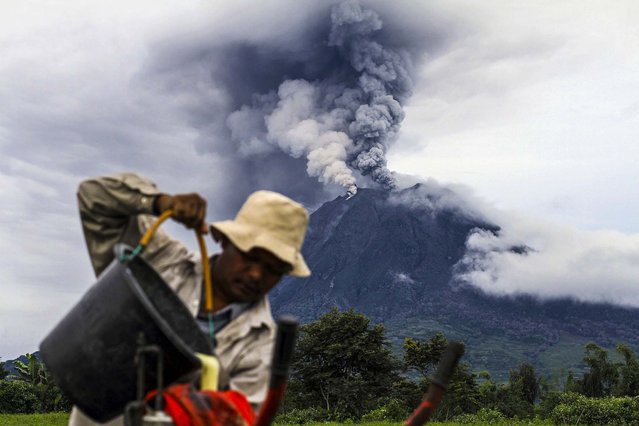
A villager pours pesticide from a bucket as Mount Sinabung spews ash at Kebayaken village in Karo district, Indonesia's North Sumatra province, on December 4, 2013. The country has ordered the evacuation of 15,000 residents near the active volcano. (Photo by Roni Bintang/Reuters)

A villager pours pesticide from a bucket as Mount Sinabung spews ash at Kebayaken village in Karo district, Indonesia's North Sumatra province, on December 4, 2013. The country has ordered the evacuation of 15,000 residents near the active volcano. (Photo by Roni Bintang/Reuters)
Details
07 Dec 2013 11:48:00
A policeman comforts a man next to the body of Maria Duron, a pregnant fruit vendor caught in the crossfire after gunmen opened fire on a vehicle, killing a sixteen year-old student, her police bodyguard and three other people who were on the street in the city of Tegucigalpa, Honduras, on April 15, 2013. (Photo by Fernando Antonio/Associated Press)

A policeman comforts a man next to the body of Maria Duron, a pregnant fruit vendor caught in the crossfire after gunmen opened fire on a vehicle, killing a sixteen year-old student, her police bodyguard and three other people who were on the street in the city of Tegucigalpa, Honduras, on April 15, 2013. (Photo by Fernando Antonio/Associated Press)

P.S. All pictures are presented in high resolution. To see Hi-Res images – just TWICE click on any picture. In other words, click small picture – opens the BIG picture. Click BIG picture – opens VERY BIG picture (if available; this principle works anywhere on the site AvaxNews)
Details
20 Apr 2013 11:43:00
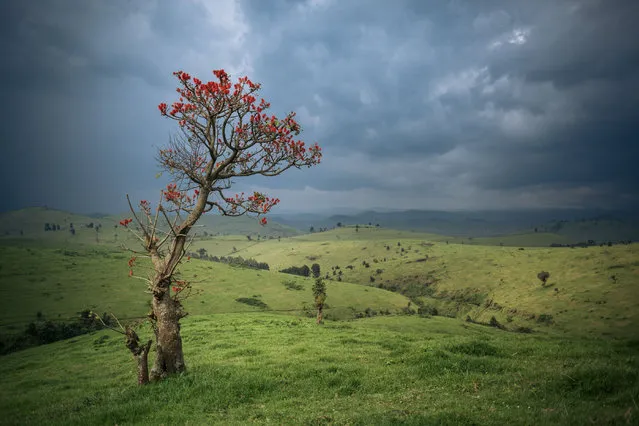
This photograph, taken on September 28, 2019, shows an Erythrina Abyssinica planted in a pasture on Ferme Espoir, owned by former President Joseph Kabila, in Masisi territory, northeast of the Democratic Republic of Congo. (Photo by Alexis Huguet/AFP Photo)

This photograph, taken on September 28, 2019, shows an Erythrina Abyssinica planted in a pasture on Ferme Espoir, owned by former President Joseph Kabila, in Masisi territory, northeast of the Democratic Republic of Congo. (Photo by Alexis Huguet/AFP Photo)
Details
17 Sep 2020 00:01:00
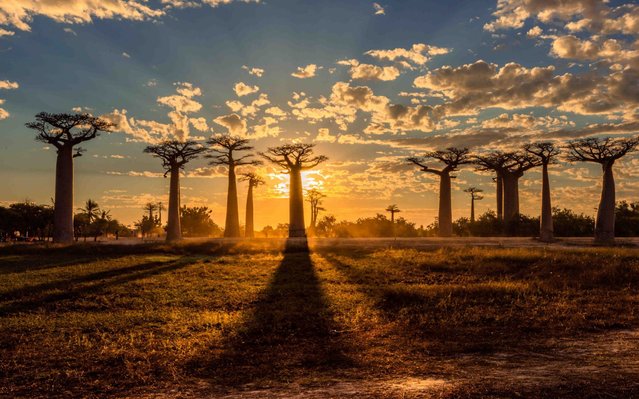
Madagascan sunset setting over the 98-foot-tall baobab trees of the Avenue of the Baobabs located in Menabe, Madagascar on August 2020. (Photo by Kim Paffen/MediaDrumImages)

Madagascan sunset setting over the 98-foot-tall baobab trees of the Avenue of the Baobabs located in Menabe, Madagascar on August 2020. (Photo by Kim Paffen/MediaDrumImages)
Details
23 Sep 2020 00:03:00
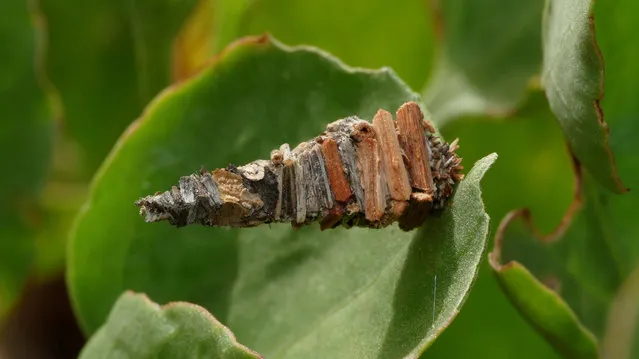
An undated handout photo made available by the Zerynthia Association shows the pupa of an amicta moneiba, a recently discovered species of moth endemic to La Gomera and El Hierro islands in the Canary Islands, Spain (issued 01 July 2020), as those two islands pulled apart from the rest of the Canary Islands 2.5 million years ago. The Institute of Evolutionary Biology of the Spanish National Research Council (CSIC) and the Zerynthia Association have recently discovered two new moth species in El Hierro and La Gomera. (Photo by Yeray Monasterio/Zerynthia/EPA/EFE)

An undated handout photo made available by the Zerynthia Association shows the pupa of an amicta moneiba, a recently discovered species of moth endemic to La Gomera and El Hierro islands in the Canary Islands, Spain (issued 01 July 2020), as those two islands pulled apart from the rest of the Canary Islands 2.5 million years ago. The Institute of Evolutionary Biology of the Spanish National Research Council (CSIC) and the Zerynthia Association have recently discovered two new moth species in El Hierro and La Gomera. (Photo by Yeray Monasterio/Zerynthia/EPA/EFE)
Details
11 Oct 2020 00:01:00
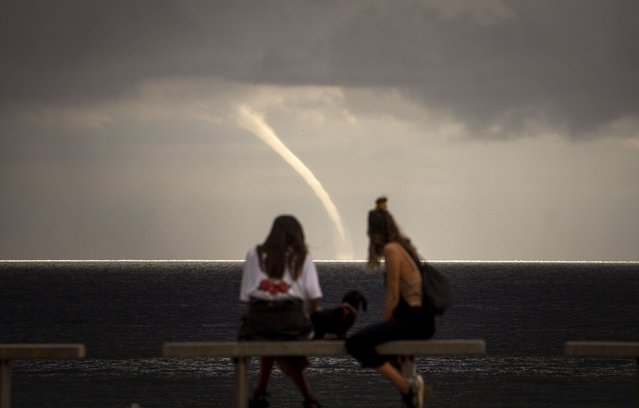
People look at a funnel cloud formed near the beach in Barcelona, Spain, Monday, September 21, 2020. (Photo by Emilio Morenatti/AP Photo)

People look at a funnel cloud formed near the beach in Barcelona, Spain, Monday, September 21, 2020. (Photo by Emilio Morenatti/AP Photo)
Details
19 Oct 2020 00:01:00