Loading...
Done
Tibetan Mastiff

“The Tibetan Mastiff also known as Do-khyi (variously translated as “home guard”, “door guard”, “dog which may be tied”, “dog which may be kept”), reflects its use as a guardian of herds, flocks, tents, villages, monasteries, and palaces, much as the old English ban-dog (also meaning tied dog) was a dog tied outside the home as a guardian. However, in nomad camps and in villages, the Do-khyi is traditionally allowed to run loose at night and woe be unto the stranger who walks abroad after dark”. – Wikipedia

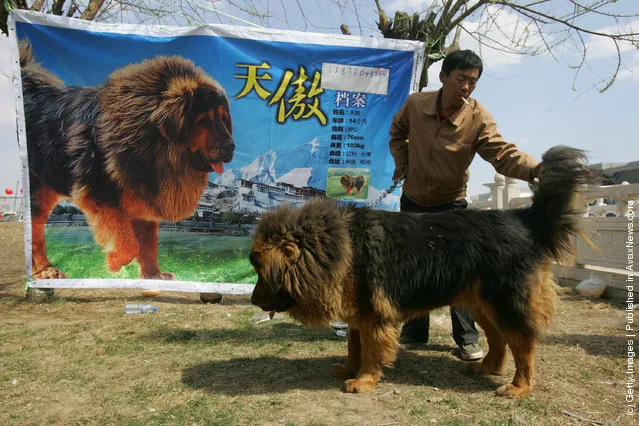
Photo: A man displays a Tibetan Mastiff he raised during the Tibetan Mastiff exposition on April 7, 2007 in Langfang of Hebei Province, China. (Photo by China Photos/Getty Images)
Details
05 Oct 2011 14:27:00
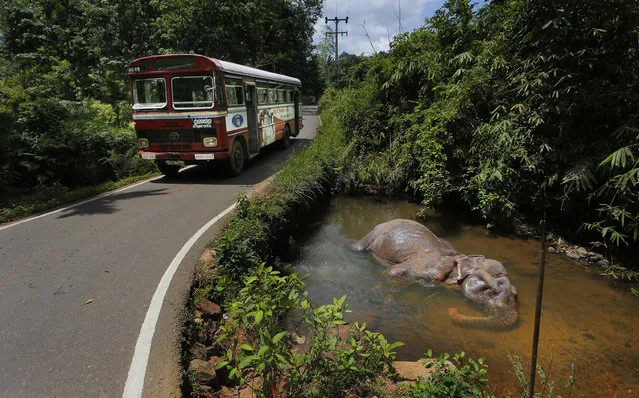
In this July 5, 2016 photo, a tamed elephant rests in a pool of water by a road in Baduraliya, a village outside Colombo, Sri Lanka. Even as the country cracks down on illegal ownership, the enduring demand for elephants has the government planning to set up its own pool of captive animals to be hired out to temples for ceremonies and maintained with budget funds. For Buddhists, who make up 70 percent of the island's 20 million population, elephants are believed to have been a servant of the Buddha and even a previous incarnation of the holy man himself. (Photo by Eranga Jayawardena/AP Photo)

In this July 5, 2016 photo, a tamed elephant rests in a pool of water by a road in Baduraliya, a village outside Colombo, Sri Lanka. Even as the country cracks down on illegal ownership, the enduring demand for elephants has the government planning to set up its own pool of captive animals to be hired out to temples for ceremonies and maintained with budget funds. (Photo by Eranga Jayawardena/AP Photo)
Details
04 Jan 2017 08:10:00
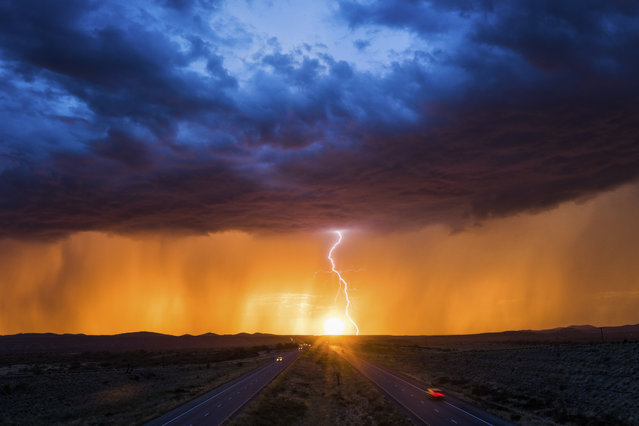
A stunning monsoon sunset coupled with intense lightning creating an amazing scene on August 26, 2017. (Photo by Mike Olbinski/Caters News Agency)

While most people head for cover at the first sign of a storm, this man runs straight toward it. Storm chaser and father of three Mike Olbinski is addicted to photographing extreme weather and regularly takes on tornadoes and supercell thunderstorms in a bid to capture extraordinary images. The photographer, from Phoenix, often travels hundreds of miles a day to reach the eye of a storm. He first became hooked on the unusual hobby almost a decade ago, following the birth of his daughter. Here: A stunning monsoon sunset coupled with intense lightning creating an amazing scene on August 26, 2017. (Photo by Mike Olbinski/Caters News Agency)
Details
06 Dec 2017 07:24:00
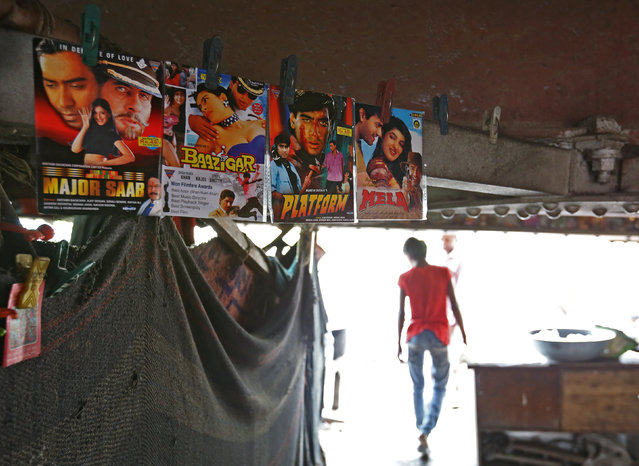
Films that are being screened are advertised in a makeshift cinema located under a bridge in the old quarters of Delhi, India May 25, 2016. (Photo by Cathal McNaughton/Reuters)

Films that are being screened are advertised in a makeshift cinema located under a bridge in the old quarters of Delhi, India May 25, 2016. A makeshift cinema hall under a 140-year-old bridge in the Indian capital is allowing poor rickshaw pullers and migrant labourers to escape daily hardship and sweltering heat into a world of Bollywood song, dance and romance. With the rusty iron floor of the bridge as its ceiling and some old rags acquired on the cheap from a nearby crematorium serving as curtains and floor mats, the cinema shows four films a day. (Photo by Cathal McNaughton/Reuters)
Details
28 May 2016 12:21:00
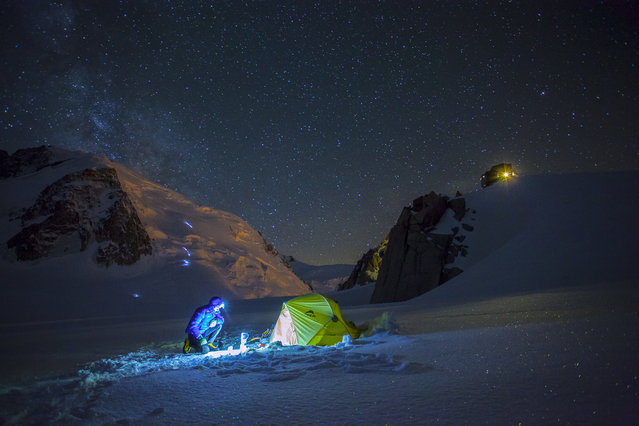
“A snapshot from mountaineer's life”. Have you ever wondered how does a mountaineer's day start? (Photo and caption by Kamil Tamiola/National Geographic Traveler Photo Contest)

“A snapshot from mountaineer's life”. Have you ever wondered how does a mountaineer's day start? I will give you a hint: you wake up at 3 am, set the stove, wake up your partner, pretend it is warm, quickly consume a high-calorie breakfast, watch your friends slowly ascending the icy slopes of your dream summit with their tiny head torches glimmering against perfectly blue ice, and hope for the good weather. One would ask: why all this trouble? The answer is easy: for the love of the adventure and the unknown. Location: Chamonix, Haute Savoye, France. (Photo and caption by Kamil Tamiola/National Geographic Traveler Photo Contest)

ATTENTION! All pictures are presented in high resolution. To see Hi-Res images – just TWICE click on any picture. In other words, click small picture – opens the BIG picture. Click BIG picture – opens VERY BIG picture.
Details
27 Jun 2013 12:47:00


“Kumbh Mela is a mass Hindu pilgrimage in which Hindus gather at the Ganges river. The normal Kumbh Mela is celebrated every 3 years, the Ardh (half) Kumbh Mela is celebrated every six years at Haridwar and Prayag, the Purna (complete) Kumbh takes place every twelve years, at four places (Prayag (Allahabad), Haridwar, Ujjain, and Nashik). The Maha (great) Kumbh Mela which comes after 12 “Purna Kumbh Melas”, or 144 years, is held at Allahabad.

The last Ardh Kumbh Mela was held over a period of 45 days beginning in January 2007, more than 70 million Hindu pilgrims took part in the Ardh Kumbh Mela at Prayag, and on January 15, the most auspicious day of the festival of Makar Sankranti, more than 5 million participated. The previous Maha Kumbh Mela, held in 2001, was attended by around 60 million people, making it at the time the largest gathering anywhere in the world in recorded history”. – Wikipedia

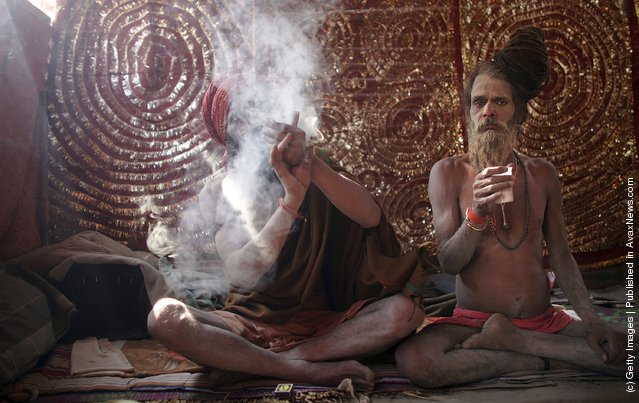
Photo: Sadhus (holy men) smoke at their camp near the ritual site at Sangam, the confluence of the Ganges, Yamuna and mythical Saraswati rivers during the Ardh Kumbh Mela festival (Half Pitcher festival) January 18, 2007 in Allahabad, India. Millions of Hindu pilgrims have flocked to the largest religious gathering in the world which lasts for 45 days in northern India. The festival commemorates the mythical conflict between gods and demons over a pitcher filled with the “nectar of immortality”. Devotees believe that taking a holy dip in the Ganges at this time washes away their sins and paves the path to salvation. (Photo by Mario Tama/Getty Images)
Details
30 Jun 2011 10:27:00
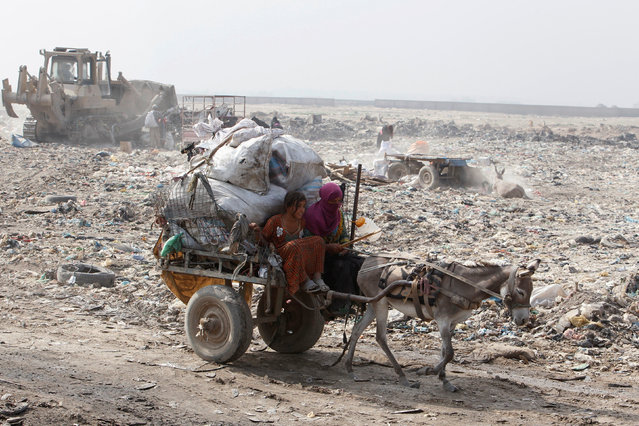
Garbage pickers collect ride on donkey cart while looking for recyclable materials at a rubbish dump in the outskirts of Baghdad, Iraq, August 23, 2016. Despite its huge untapped oil and gas reserves and steadily rising oil output and revenue, 23 percent of the population live below the poverty line, according to the Ministry of Planning. Eg, for 12-year-old Mohammed, life in Sadr City means long days during his school holidays scrabbling through the refuse in the scorching summer heat before selling his daily haul to a middleman. He sells each kilogram (2.2 lb) of plastic bottles or soda cans for 250 Iraqi dinars (around 20 U.S. cents), earning between 2,000 to 4,000 dinars ($1.50–$3) a day. A International Labor Organization report listing dangerous jobs in which children are engaged across the world mentioned collecting garbage as one of the activities in which minors risked suffering violence and injury. (Photo by Khalid al Mousily/Reuters)

Garbage pickers collect ride on donkey cart while looking for recyclable materials at a rubbish dump in the outskirts of Baghdad, Iraq, August 23, 2016. Despite its huge untapped oil and gas reserves and steadily rising oil output and revenue, 23 percent of the population live below the poverty line, according to the Ministry of Planning. (Photo by Khalid al Mousily/Reuters)
Details
24 Aug 2016 11:52:00
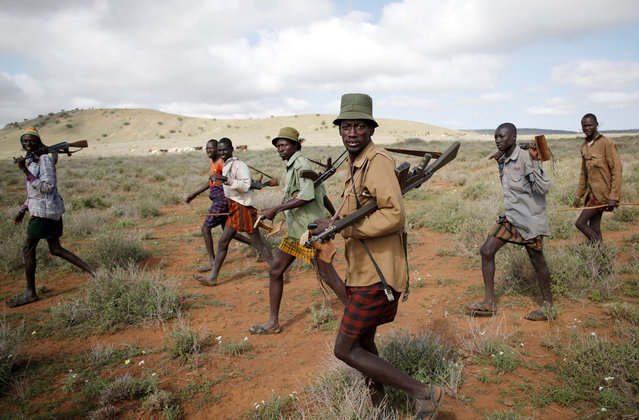
Turkana tribesmen walk with guns to protect their cattle from rival tribes near Baragoy, Kenya August 4, 2017. (Photo by Goran Tomasevic/Reuters)

Turkana tribesmen walk with guns to protect their cattle from rival tribes near Baragoy, Kenya August 4, 2017. (Photo by Goran Tomasevic/Reuters)
Details
05 Aug 2017 08:40:00