Loading...
Done
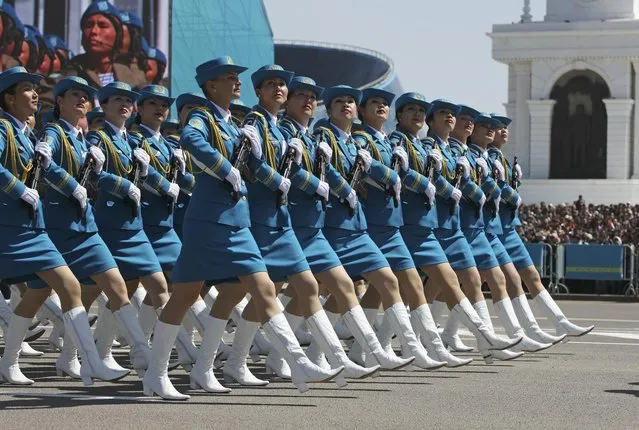
Kazakh troops march during a parade of the armed forces to mark the Defender of the Fatherland Day in Astana, May 7, 2014. (Photo by Mukhtar Kholdorbekov/Reuters)

Kazakh troops march during a parade of the armed forces to mark the Defender of the Fatherland Day in Astana, May 7, 2014. (Photo by Mukhtar Kholdorbekov/Reuters)
Details
24 Sep 2014 12:31:00


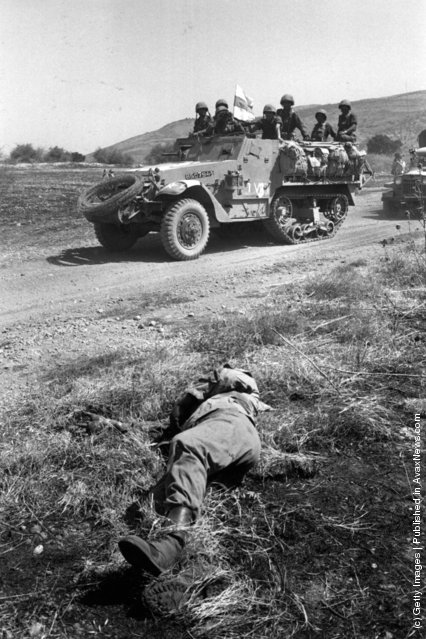
“The Six-Day War or June War, also known as the 1967 Arab-Israeli War or the Third Arab-Israeli War, was fought between June 5 and June 10, 1967, by Israel and the neighboring states of Egypt (known then as the United Arab Republic [UAR]), Jordan, and Syria. The war began with a large-scale surprise air strike by Israel on Egypt. The outcome was a swift and decisive Israeli victory. Israel took effective control of the Gaza Strip and the Sinai Peninsula from Egypt, the West Bank and East Jerusalem from Jordan, and the Golan Heights from Syria. Opinions are divided on whether Israel's attack was an act of aggression or a preemptive strike of a defensive nature”. – Wikipedia

Photo: The corpse of a soldier lying on the line of the Israeli advance into Syria during the Six-Day War. (Photo by Terry Fincher/Getty Images). 1967
Details
21 May 2011 08:29:00
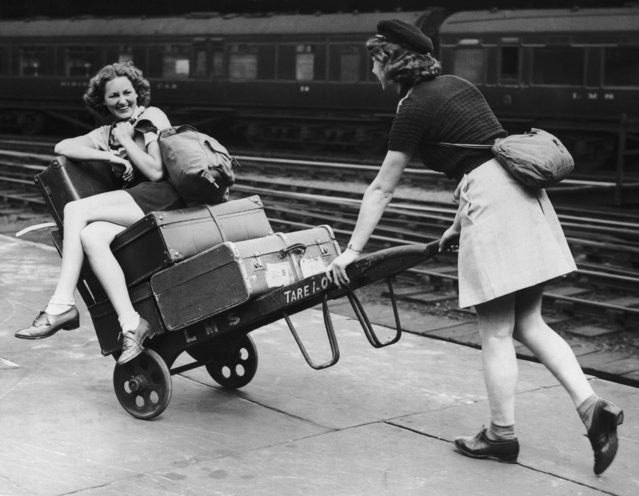
Two holidaymakers amuse themselves with a porter's trolley whilst waiting for their train at Euston Station, London, 5th August 1939. (Photo by A. J. O'Brien/Fox Photos/Getty Images)

Two holidaymakers amuse themselves with a porter's trolley whilst waiting for their train at Euston Station, London, 5th August 1939. (Photo by A. J. O'Brien/Fox Photos/Getty Images)
Details
17 Apr 2017 07:48:00
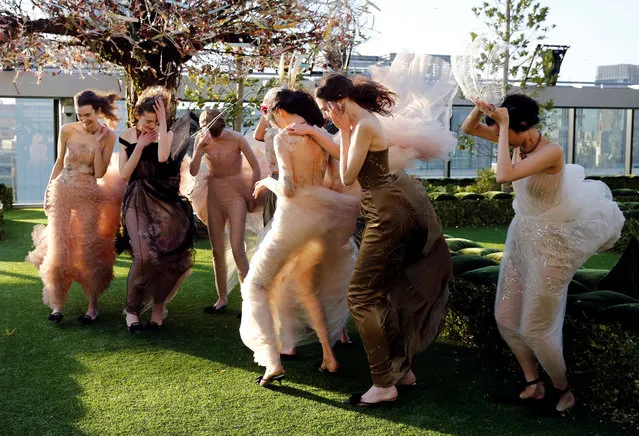
Models struggle against strong wind before the rehearsal of Christian Dior's Haute Couture Spring-Summer 2017 live show to celebrate Dior's new flagship store at the rooftop of Ginza Six mall in Tokyo, Japan, April 19, 2017. (Photo by Toru Hanai/Reuters)

Models struggle against strong wind before the rehearsal of Christian Dior's Haute Couture Spring-Summer 2017 live show to celebrate Dior's new flagship store at the rooftop of Ginza Six mall in Tokyo, Japan, April 19, 2017. (Photo by Toru Hanai/Reuters)
Details
20 Apr 2017 09:12:00
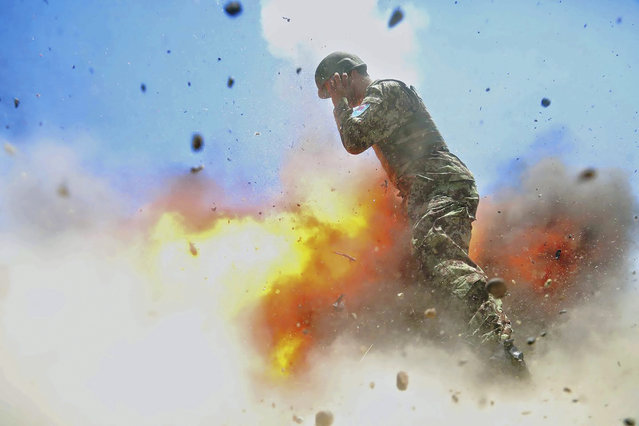
U.S Army combat camera photographer Spc. Hilda Clayton took this photo July 2, 2013 that was released by the U.S. Army, that shows an Afghan soldier engulfed in flame as a mortar tube explodes during an Afghan National Army live-fire training exercise in Laghman Province, Afghanistan. The accident killed Clayton and four Afghan National Army soldiers. (Photo by Spc. Hilda Clayton/U.S. Army via AP Photo)

U.S Army combat camera photographer Spc. Hilda Clayton took this photo July 2, 2013 that was released by the U.S. Army, that shows an Afghan soldier engulfed in flame as a mortar tube explodes during an Afghan National Army live-fire training exercise in Laghman Province, Afghanistan. The accident killed Clayton and four Afghan National Army soldiers. (Photo by Spc. Hilda Clayton/U.S. Army via AP Photo)
Details
26 May 2017 09:09:00
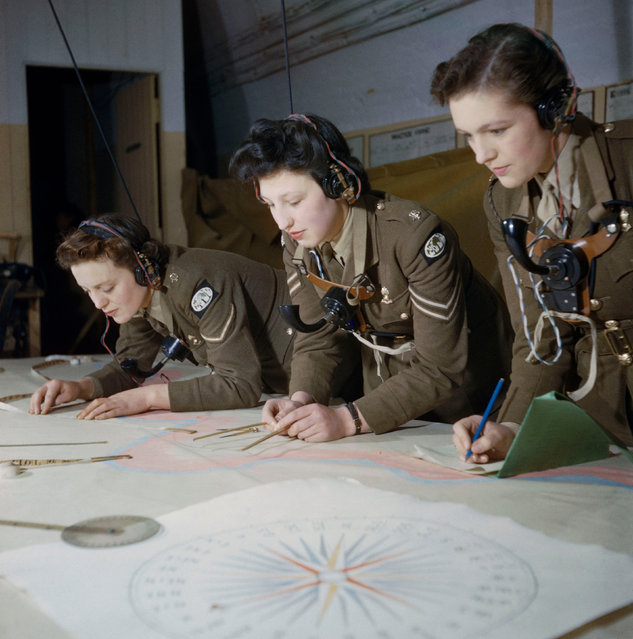
Auxiliary Territorial Service (ATS) plotters at work at Coastal Artillery Headquarters in Dover, December 1942. (Photo by Ted Dearberg/IWM/PA Wire)

Auxiliary Territorial Service (ATS) plotters at work at Coastal Artillery Headquarters in Dover, December 1942. The Auxiliary Territorial Service was the women's branch of the British Army during the Second World War. It was formed on 9 September 1938, initially as a women's voluntary service, and existed until 1 February 1949, when it was merged into the Women's Royal Army Corps. The ATS had its roots in the Women's Auxiliary Army Corps (WAAC), which was formed in 1917 as a voluntary service. During the First World War its members served in a number of jobs including clerks, cooks, telephonists and waitresses. The WAAC was disbanded after four years in 1921. (Photo by Ted Dearberg/IWM/PA Wire)
Details
13 Jul 2017 07:52:00
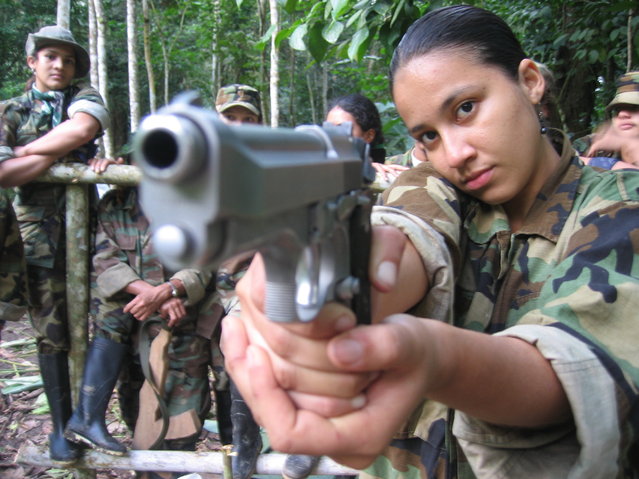
A member of the Revolutionary Armed Forces of Colombia (FARC) pose for a picture at a camp in the Colombian mountains on February 2005. (Photo by Frank Piasecki Poulsen)

A member of the Revolutionary Armed Forces of Colombia (FARC) pose for a picture at a camp in the Colombian mountains on February 2005. (Photo by Frank Piasecki Poulsen)
Details
29 Sep 2016 08:51:00
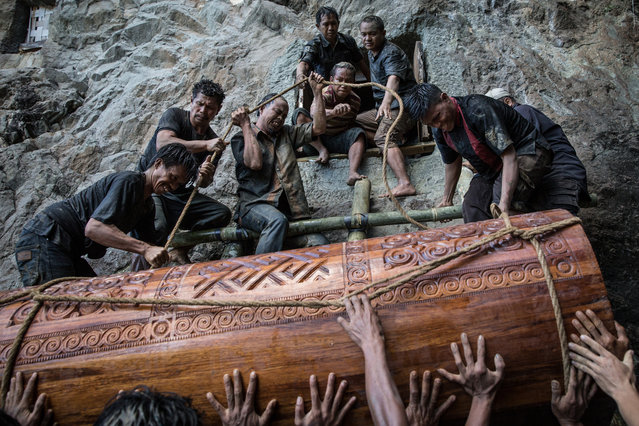
It is said that Torajans are people who “live to die”. For this Indonesian ethnic group, funerals are such extravagant events that they sometimes attract tourists. Families can postpone burials years (and the deceased are considered sick and hosted at home until the funeral) until the family can raise enough money and gather as many relatives as possible. And then it’s a jubilant multiday social event with a parade, dances and animal sacrifices. Agung Parameswara photographed these funerary practices when he traveled to South Sulawesi province, where the Torajans live. But often, their funeral isn’t the last time the dead are seen. In August, crypts are opened, coffins are slid back out and bodies delicately unsheathed. This tender ritual is known as Ma’Nene, which is customarily performed every few years. (Photo by Agung Parameswara/The Washington Post)

It is said that Torajans are people who “live to die”. For this Indonesian ethnic group, funerals are such extravagant events that they sometimes attract tourists. Families can postpone burials years (and the deceased are considered sick and hosted at home until the funeral) until the family can raise enough money and gather as many relatives as possible. And then it’s a jubilant multiday social event with a parade, dances and animal sacrifices. Agung Parameswara photographed these funerary practices when he traveled to South Sulawesi province, where the Torajans live. (Photo by Agung Parameswara/The Washington Post)
Details
06 Oct 2016 09:15:00