Loading...
Done
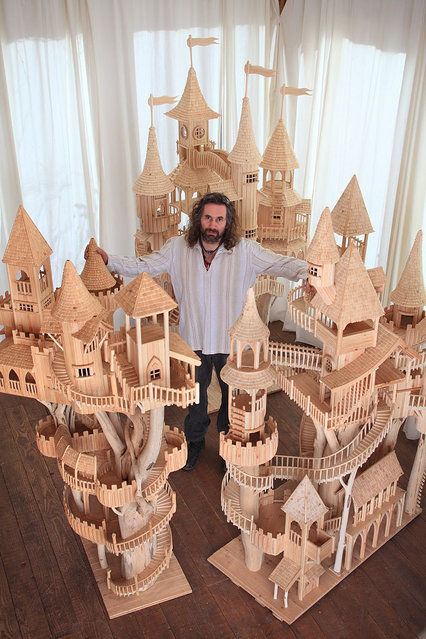
Rob Heard's Wooden Bough House

Living on the edge of Exmoor, Rob takes his inspiration from the rolling countryside surrounding his home, where each Bough House sculpture takes several months to construct. The designs do not follow an explicit plan or process, each piece is unique. They evolve and flow freely, as part of a creative journey which has no natural limit, whilst also revealing great logic and engineering integrity. Every aerial walkway or staircase leads to a room - there are no dead-ends and every turret and tower can be reached.
Details
29 May 2013 10:31:00
Dog Chews  Aston Martin

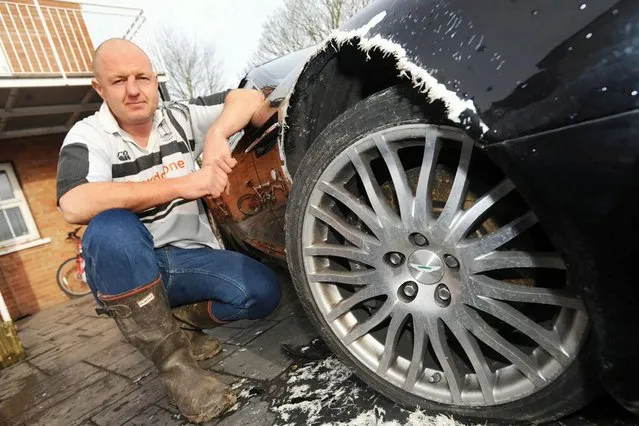
A car buff came home to find his prized motor looking a like a dog's dinner after his pet pooch chewed through the £80,000 Aston Martin.
Luce, a four-year-old border collie spaniel cross, waited until builder Royston Grimstead had left for work before she started chomping her way through the DB9 Volante's wheel arch, doing £3,000 worth of damage.
Details
09 Feb 2014 14:49:00
Robbie Cooper - Immersion

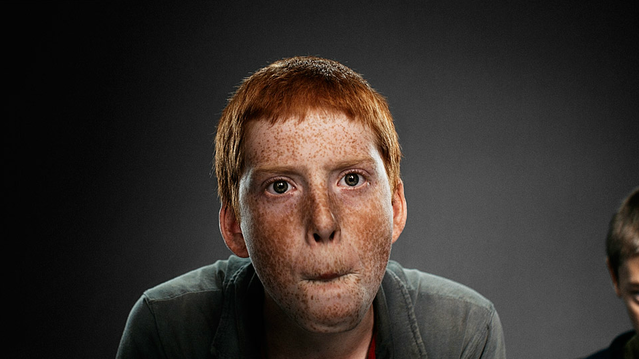
Robbie Cooper is a British artist working in photography, video and 3D. In 2008 he began his project ‘Immersion’ in which he filmed people’s faces as they watched TV, played video games and using the internet. His images have been of interest to me because they link to how playing video games affects your behaviour out of the game. I think that there is a definite link between gaming and behaviour. I think violent games such as Grand Theft Auto and Call of Duty do affect behaviour and can be linked to criminality.
Details
22 Sep 2013 12:21:00
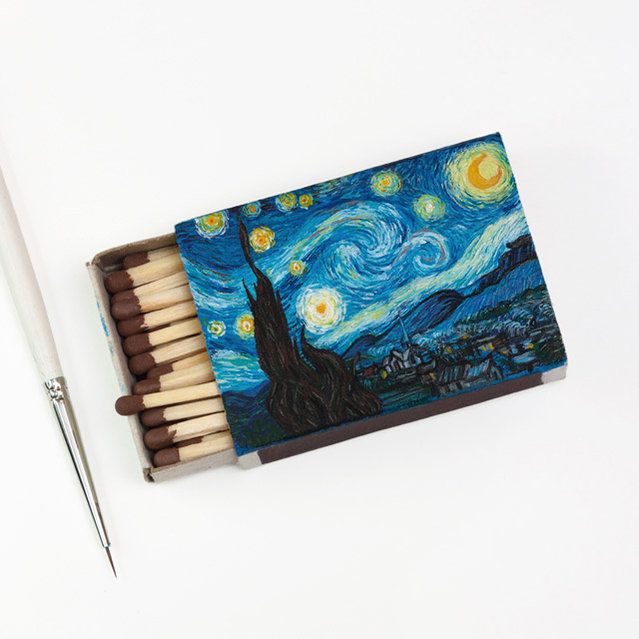
Van Gogh Paintings On Matchboxes By Salavat Fidai

Russian artist Salavat Fidai is obsessed with things in miniature, and he has previously painted miniatures on pumpkin seeds and carved sculptures into the graphite tips of pencils. For this project, he's gone for something a little bit bigger, but not by much. One of Fidai's favorite painters is the legendary Vincent Van Gogh, so he decided to do a series where he recreated some of Van Gogh's famous works on matchboxes.
Details
17 Feb 2016 08:05:00
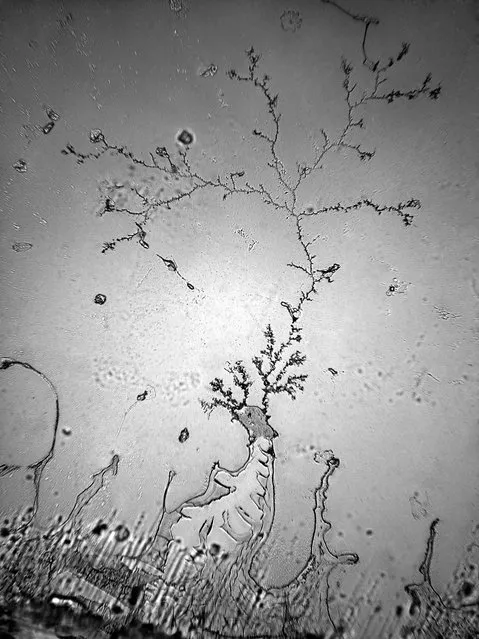
The Topography Of Tears By Rose-Lynn Fisher

Do tears of joy look the same as ones of woe—or ones from chopping onions? In “The Topography of Tears,” the Los Angeles-based photographer Rose-Lynn Fisher explores the physical terrain of one hundred tears emitted during a range of emotional states and physical reactions. Using a Zeiss microscope with an attached digital camera, she captures the composition of tears enclosed in glass slides, magnified between 10x and 40x. “There are many factors that determine the look of each tear image, including the viscosity of the tear, the chemistry of the weeper, the settings of the microscope, and the way I process the images afterwards,” she says.
Details
21 May 2014 17:46:00
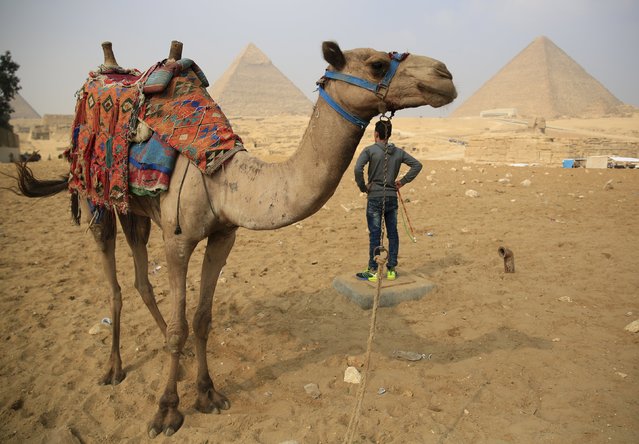
A worker looks on with his camel as he waits for tourists at the Giza Pyramids on the outskirts of Cairo, Egypt, November 8, 2015. (Photo by Amr Abdallah Dalsh/Reuters)

A worker looks on with his camel as he waits for tourists at the Giza Pyramids on the outskirts of Cairo, Egypt, November 8, 2015. Egypt's Tourism Minister Hesham Zaazou said Cairo regretted the suspension of flights and was doing all it could to secure its airports and tourist sites, adding that he would fly to Sharm al-Sheikh to oversee measures to support tourists there. (Photo by Amr Abdallah Dalsh/Reuters)
Details
11 Nov 2015 08:00:00
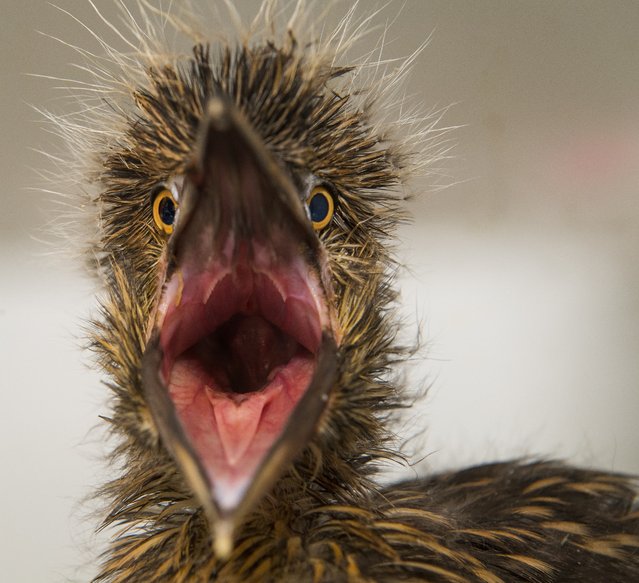
A baby Black-crowned Night Heron squawks in its incubator while being cared for at City Wildlife rescue and rehabilitation center in Washington, DC on May 31, 2017. The heron is one of several that have been brought to CW by the staff at The National Zoo over the past few years. The heron is a native bird and has made an established rookery inside the zoo grounds over a hundred years ago.  Every year at this time, some of the chicks get pushed or fall out of the nest and require human care.  Because the birds are native and not part of the Smithsonian collection, they partnered with CW to rehabilitate the herons for re-release back to the flock inside Zoo. They're reintroduced back to their flock so that they can migrate together in the Fall. The Black-crowned heron usually migrates from the DC area down to southeast North Carolina, some going as far as Jacksonville, FL in winter. The Black-crowned heron is the species of greatest conservation need in the District of Columbia because their numbers are in such rapid decline due to habitat loss. (Photo Linda Davidson/The Washington Post)

A baby Black-crowned Night Heron squawks in its incubator while being cared for at City Wildlife rescue and rehabilitation center in Washington, DC on May 31, 2017. The heron is one of several that have been brought to CW by the staff at The National Zoo over the past few years. (Photo Linda Davidson/The Washington Post)
Details
04 Jun 2017 08:04:00
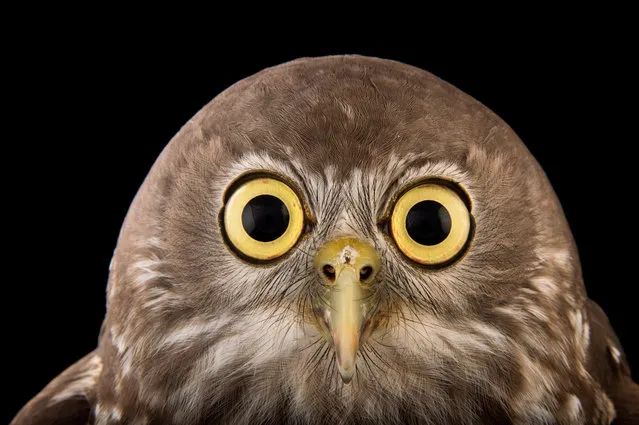
The National Geographic Photo Ark is a travelling exhibition of photographer Joel Sartore’s quest to create a photo archive of biodiversity around the world. So far, Sartore has captured studio portraits of more than 6,000 species – a number that he hopes to double. On 1 July, the ark will open at Melbourne zoo – the first time it has been exhibited in the southern hemisphere. More than 50 portraits will be on display, including many of Australian endangered animals being protected by programs at the zoo itself. These captions have been edited from text supplied by Melbourne zoo. Here: Barking owl. So-named because its call sounds like a barking dog, these birds are native to Australia, Indonesia and Papua New Guinea. In Victoria they are listed as an endangered species, and in 2003 there were estimated to be fewer than 50 breeding pairs. The main threat to the species in Victoria is loss of habitat, especially large trees with hollows in which they can nest and on which many of their prey depend. Apart from a bark, they may utter a chilling scream when they feel threatened. (Photo by Joel Sartore/National Geographic Photo Ark/The Guardian)

The National Geographic Photo Ark is a travelling exhibition of photographer Joel Sartore’s quest to create a photo archive of biodiversity around the world. So far, Sartore has captured studio portraits of more than 6,000 species – a number that he hopes to double. On 1 July, the ark will open at Melbourne zoo – the first time it has been exhibited in the southern hemisphere. More than 50 portraits will be on display, including many of Australian endangered animals being protected by programs at the zoo itself. These captions have been edited from text supplied by Melbourne zoo. Here: Barking owl. (Photo by Joel Sartore/National Geographic Photo Ark/The Guardian)
Details
01 Jul 2017 07:45:00