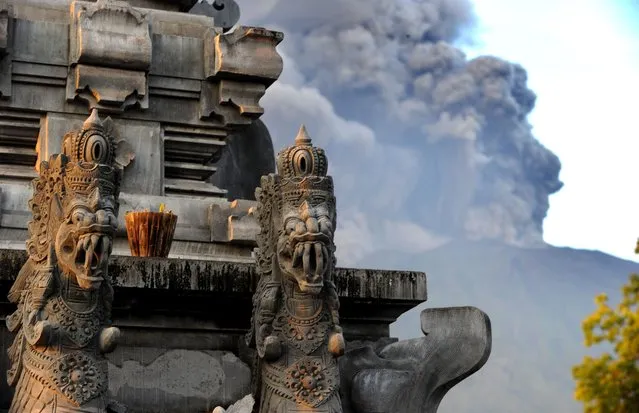
Mount Agung's eruption is seen next to a Balinese temple at Kubu sub-district in Karangasem Regency on Indonesia's resort island of Bali on November 26, 2017. Indonesia authorities raised the alert for the rumbling volcano to highest level on Monday and closed the international airport on tourist island of Bali stranding thousands of travelers. (Photo by Sonny Tumbelaka/AFP Photo)
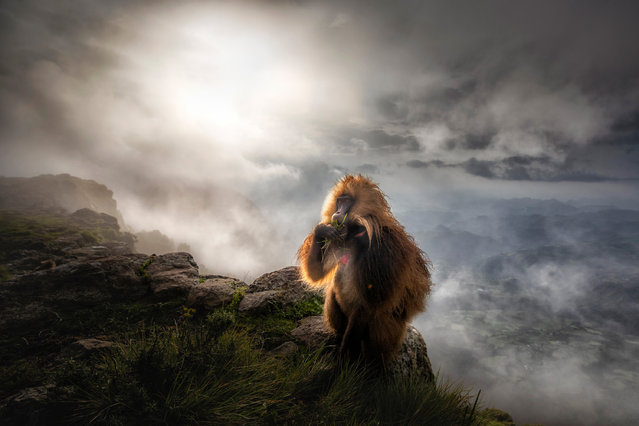
Highly commended, mammals: Gelada after the storm – Marco Gaiotti (Italy). “Gelada baboons are the only monkey species in the world that feed on grasses. They are native to the tableland of Ethiopia. Every morning large family groups wander from their sleeping places in the steep rock face, up to 1,000 metres high, to the feeding grounds at the tablelands. This image clearly depicts their feeding strategy: they pull out bunches of grass, sort the stalks and then lift them to their mouth. This shot was taken towards the end of the rainy season after a heavy storm”. (Photo by Marco Gaiotti/2019 GDT European Wildlife Photographer of the Year)
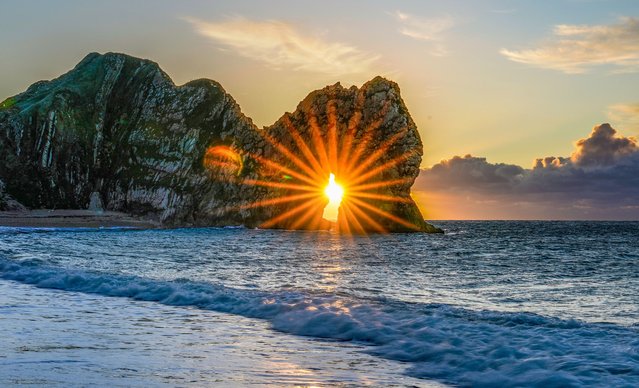
The calm before storm Bert, with the sunrise on November 22, 2024 through Durdle Door in Dorset, UK, the sun beams through the famous rock arch on the Jurassic Coastline, a shot known as “Through the Keyhole”. It only happens from the end of November to early January and not that often as clear skies are needed on the horizon for the sun to shine through. (Photo by Steve Hogan/Picture Exclusive)
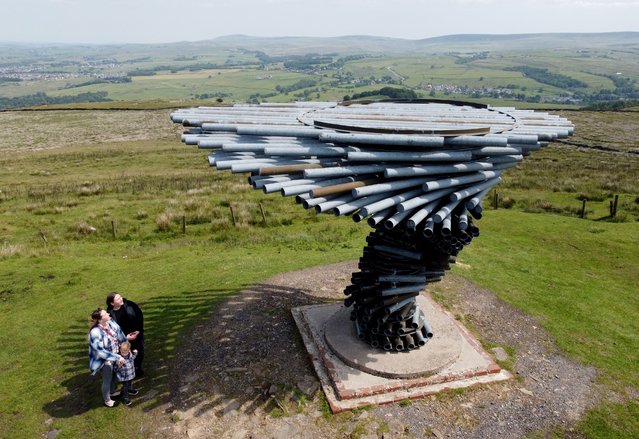
Migle Politike (left) with son Aaron and friend Goda Zubkaityte on Wednesday, June 11, 2025 stop to look at the Singing Ringing Tree, a musical sculpture designed to look like a windswept tree, at Crown Point overlooking Burnley, Lancashire, UK. The wind-powered musical sculpture emits a low, tuneful song when the wind blows. (Photo by Martin Rickett/PA Wire)
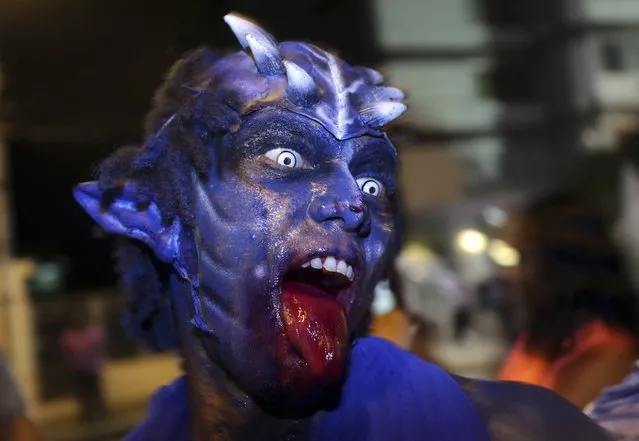
A masquerader from the Paramin Blue Devils parades before judges during the traditional mas competition held by the National Carnival Commission at Victoria Square, in the capital Port-of-Spain, February 12, 2015. (Photo by Andrea De Silva/Reuters)