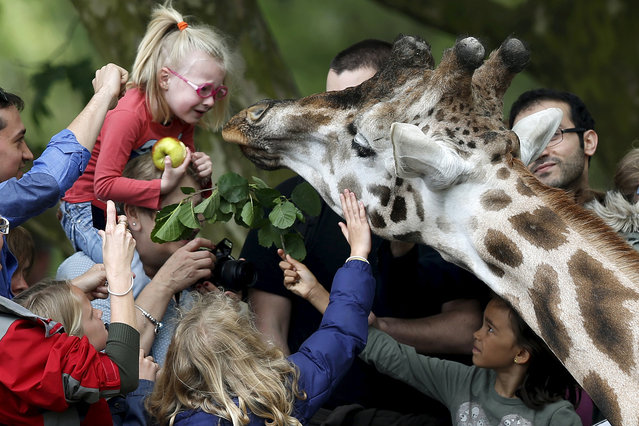
Children feed a giraffe at Pairi Daiza wildlife park, a zoo and botanical garden in Brugelette, Belgium, May 25, 2015. (Photo by Francois Lenoir/Reuters)
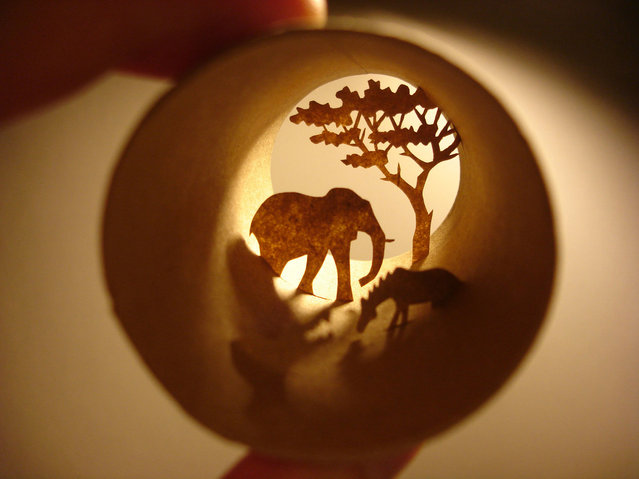
Anastassia Elias spends hours painstakingly cutting out tiny shapes to make detailed models – and then fits them inside used toilet rolls. Elias, 37, uses paper the same color as the cardboard tubes to build up the intricate scenes from wildlife to construction sites. Photo: Toilet paper roll art of African wildlife. (Photo by Anastassia Elias/Caters News)
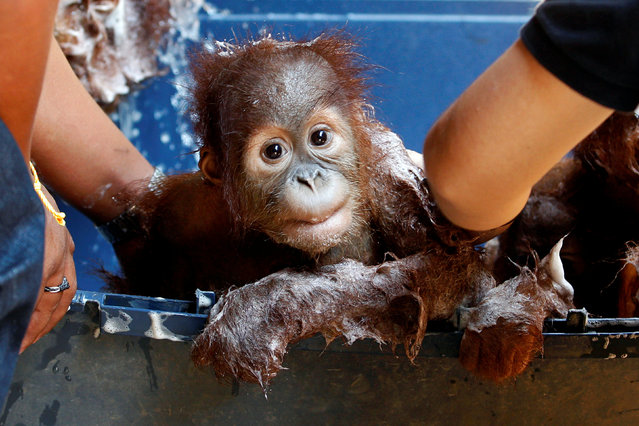
A baby Sumatran orangutan is bathed after arriving at a wildlife center at Ratchaburi province in Thailand September 13, 2017. (Photo by Kerek Wongsa/Reuters)
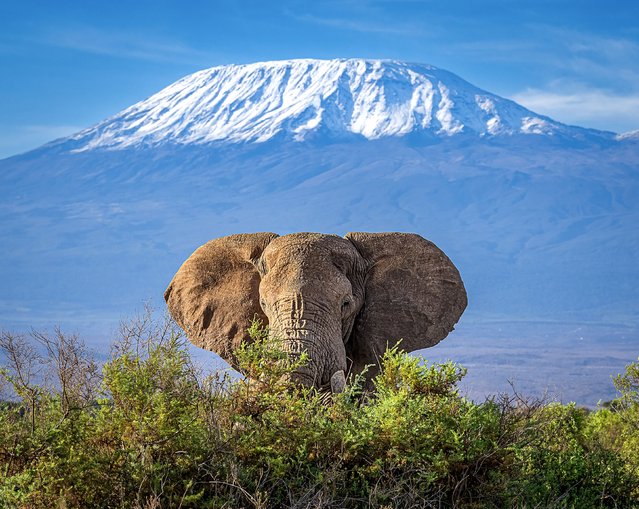
Mount Kilimanjaro looms behind an elephant at Amboseli National Park in southern Kenya, 2024. (Photo byYaron Schmid/YS Wildlife Photography/Solent News)
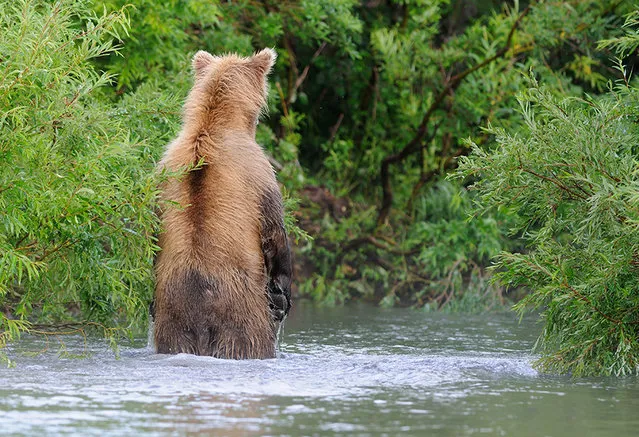
Igor Shpilenok works in the reserve at Kamchatka, Russia. Igor is a fellow of the International League of Conservation Photographers and a winner of the 2006 BBC Wildlife Photographer Competition. Igor’s work has been published in numerous international and Russian magazines, including Smithsonian, National Wildlife, Geo, and BBC Wildlife.
“How does a bear behave when encounter a human? In most cases he runs away. But before running he almost always would rise to stand on his rear feet. And this behavior does not indicate the attack, as many people think...” – Igor Shpilenok. (Photo by Igor Shpilenok via Wildlife Photo Russia)
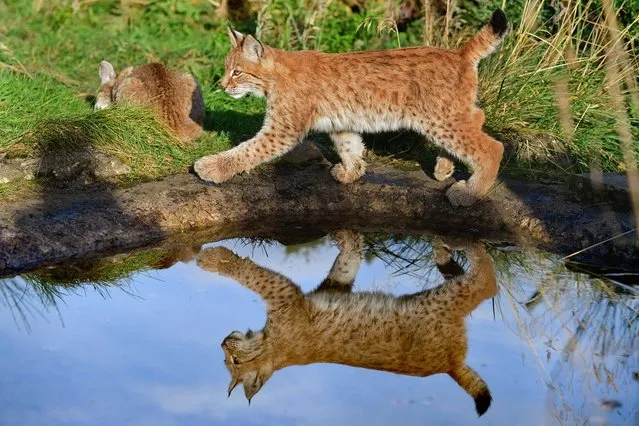
Northern Lynx kittens, explore their enclosure at the Highland Wildlife park on October 9, 2012 in Kingussie, Scotland. The feline twins are believed to be the type of lynx found historically in Scotland. The Highland Wildlife Park specialises in Scottish animal species, both past and present, and species that are well adapted to cold weather. (Photo by Jeff J. Mitchell)
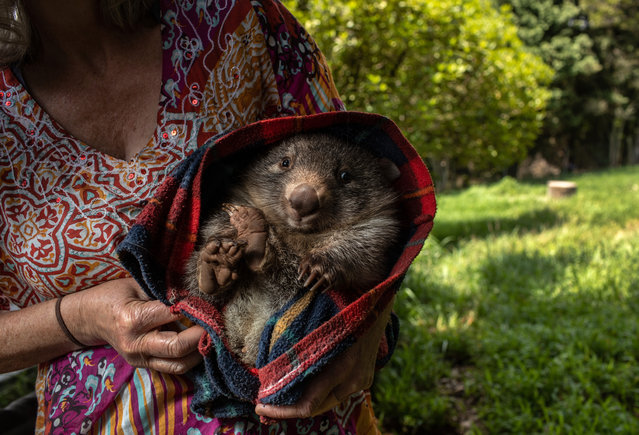
A wildlife caregiver holds an orphaned wombat at the Native Wildlife Rescue center on January 29, 2020 in Robertson, Australia. The center has taken in many burned kangaroos and wallabies injured in recent bushfires. Wombat orphans are often rescued from the pouch of their mothers struck by vehicles. (Photo by John Moore/Getty Images)