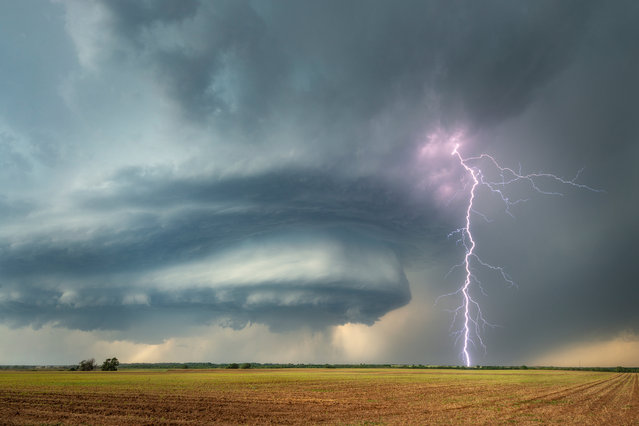
“The Supercell”. This shortlisted image by Dennis Oswald Huge farmland of was taken in south-west Oklahoma, US. (Photo by Dennis Oswald/2019 Weather Photographer of the Year/RMetS)
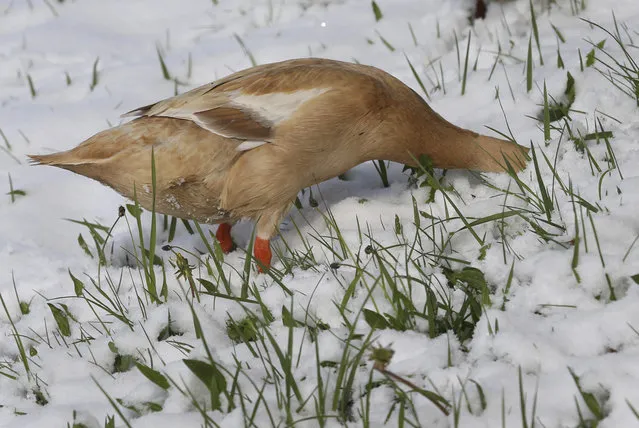
An Indian Runner duck searches for food on a snow-covered meadow in Aitrang, southern Germany, Wednesday. April 19, 2017. (Photo by Karl-Josef Hildenbrand/DPA via AP Photo)
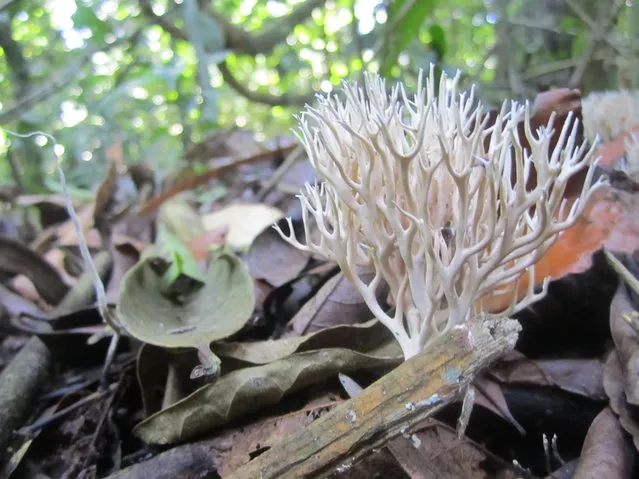
This strange coral-looking specimen is actually a mushroom. The photo, “Beautiful Destroyer”, was taken in the Panamanian tropical rainforest where the mushroom produces nitrogen, an element vital to soil health. (Photo by Sarah A. Batterman)
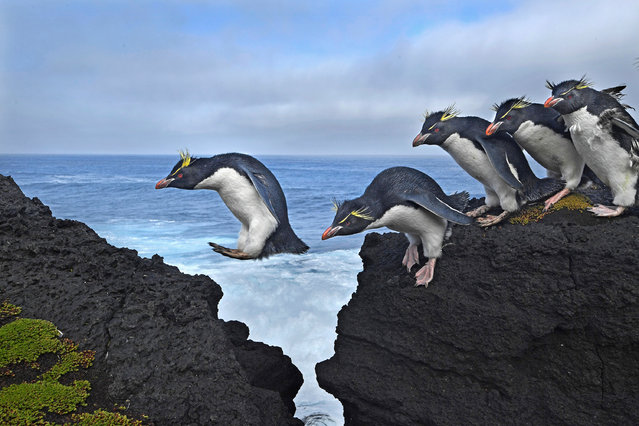
Rockhopper penguins live up to their name as they navigate the rugged coastline of Marion Island in the southern Indian Ocean. (Photo by Thomas P. Peschak)
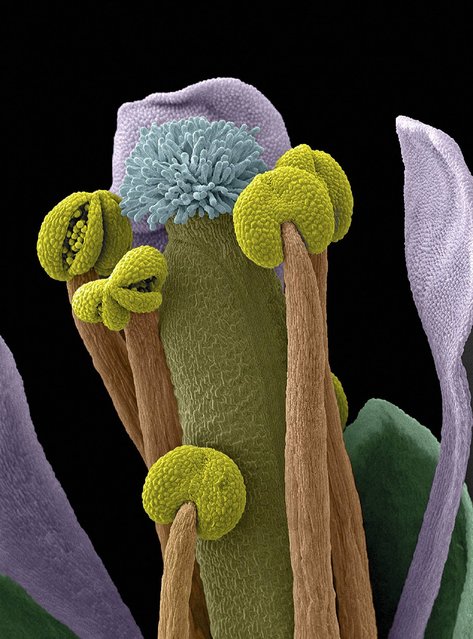
Beautiful, strange and occasionally alarming pictures from the shortlist for this year’s Wellcome image awards – which celebrate the very best in science photography and imaging – from an x-ray of a bat to a micrograph of a kidney stone. The exhibition opens on 12 March at three science centres and the Museum of Science and Industry in Manchester. Photo: Scanning electron micrograph (SEM) of an Arabidopsis thaliana flower, also commonly known as thale cress. Some of the anthers are open, revealing pollen grains ready for dispersal. Arabidopsis was the first plant to have its entire genome sequenced and is widely used as a model organism in molecular and plant biology. Horizontal width of image is 1200 microns. Magnification 100x. (Photo by Stefan Eberhard/Wellcome Images)
Members of the public interact with “Impulse” by Lateral O ce and CS Design during Lumiere London festival of light 2018 on January 18, 2018 in London, England. Lumiere London is a four night long light festival spanning the British capital with more than 50 artworks by UK and international aritsts. (Photo by Dan Kitwood/Getty Images)