Loading...
Done
Tridacna Gigas, or Giant Clams

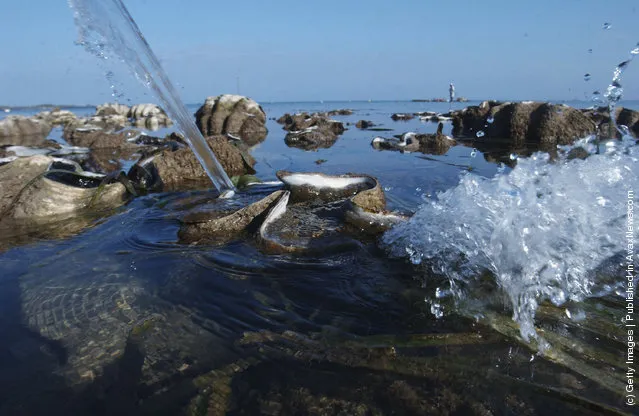
“The giant clam, Tridacna gigas (known as pā’ua in Cook Islands Māori), is the largest living bivalve mollusc. T. gigas is one of the most endangered clam species. It was mentioned as early as 1825 in scientific reports. One of a number of large clam species native to the shallow coral reefs of the South Pacific and Indian oceans, they can weigh more than 200 kilograms (440 lb) measure as much as 120 cm (47 in) across, and have an average lifespan in the wild of 100 years or more”. – Wikipedia

Photo: Tridacna Gigas, or Giant Clams spew water as a traditional fisherman passes by a small sanctuary on January 23, 2004 near Bolinao in the Northern Philippines. The clams, prime builders for coral reefs and providing shelter for spawning fish and other marine life, are exposed by low tides in the sanctuary. Overfishing and pollution throughout the country are not only threatening food security, but are also starting to choke one of the few working clam sanctuaries in the world. (Photo by David Greedy/Getty Images)
Details
01 Oct 2011 13:10:00
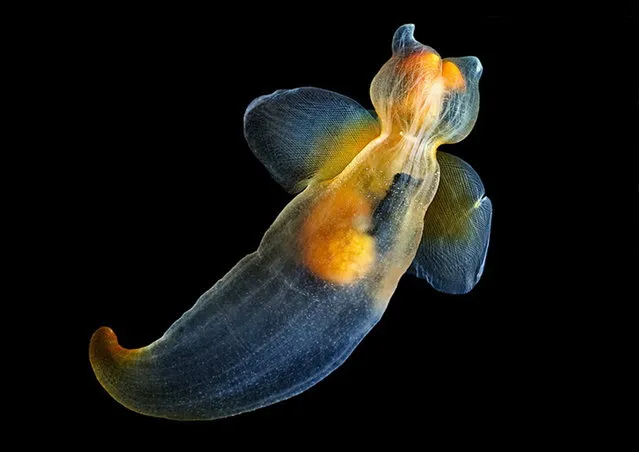
Underwater Photography By Alexander Semenov

In 2007, I graduated from Lomonosov’s Moscow State University in the department of Zoology. I specialized in the study of invertebrate animals, with an emphasis on squid brains. Soon after, I began working at the White Sea Biological Station (WSBS) as a senior laborer. WSBS has a dive station, which is great for all sorts of underwater scientific needs, and after 4 years working there, I became chief of our diving team. I now organize all WSBS underwater projects and dive by myself with a great pleasure and always with a camera.
Details
05 Feb 2013 15:28:00
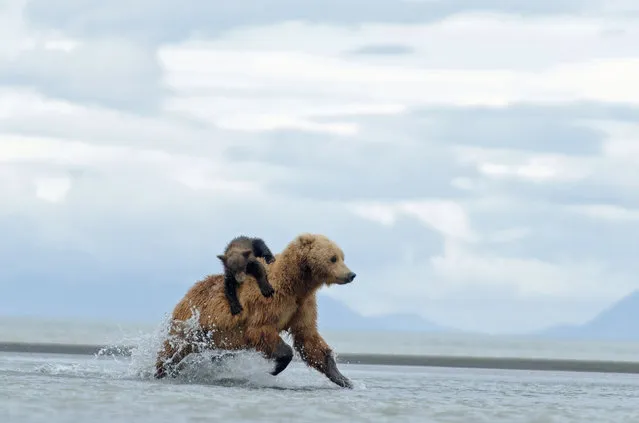
A adorable bear cub cant get enough of playing buckaroo – as it hangs onto its mum splashing about in a river. His mum was attempting to catch a fish supper for the pair as the plucky cub continued to jump on her back. And as she was concentrating on her meal the young bear became a distraction. So she sprung into life with him on her back before he was tossed into the water much to his delight. (Photo by Lisa Sidorsky/Caters News)

A adorable bear cub cant get enough of playing buckaroo – as it hangs onto its mum splashing about in a river. His mum was attempting to catch a fish supper for the pair as the plucky cub continued to jump on her back. And as she was concentrating on her meal the young bear became a distraction. So she sprung into life with him on her back before he was tossed into the water much to his delight. (Photo by Lisa Sidorsky/Caters News)
Details
15 Nov 2014 13:10:00
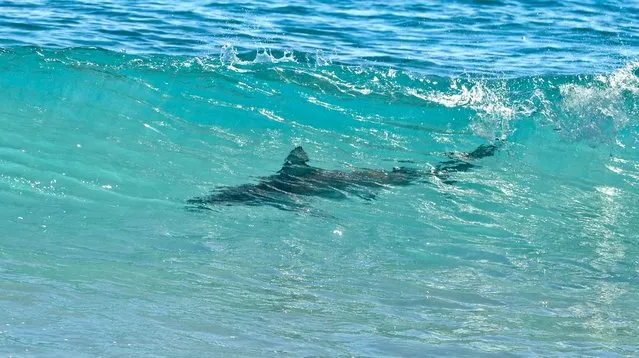
A spinner shark swims just offshore on Midtown Beach in Palm Beach on Tuesday. (Photo by Jeffrey Langlois/Palm Beach Daily News)

Several beaches along South Florida's Atlantic coast line were closed after thousands of sharks were seen migrating in the waters. The sharks were migrating from Boca Raton to Jupiter since the beginning of March, marine biologists told NBC Miami. Photo: A spinner shark swims just offshore on Midtown Beach in Palm Beach on Tuesday. (Photo by Jeffrey Langlois/Palm Beach Daily News)
Details
10 Mar 2013 09:39:00
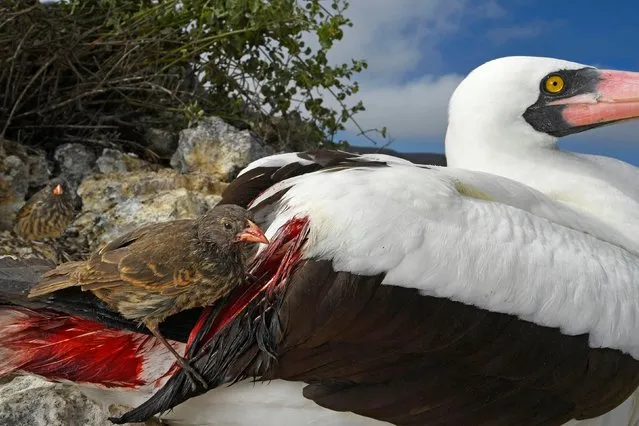
Bloodthirsty by Thomas P Peschak, Germany/South Africa — winner, Behaviour: birds. When rations run short on Wolf Island, in the remote northern Galápagos, the sharp-beaked ground finches become vampires. Their sitting targets are Nazca boobies and other large birds. The finches rely on a scant diet of seeds and insects, which regularly dries up, so they drink blood to survive. ‘I’ve seen more than half a dozen finches drinking from a single Nazca booby,’ says Tom. Rather than leave their nests the boobies tolerate the vampires, and the blood loss doesn’t seem to cause permanent harm. (Photo by Thomas P Peschak/2018 Wildlife Photographer of the Year)

Bloodthirsty by Thomas P. Peschak, Germany/South Africa — winner, Behaviour: birds. When rations run short on Wolf Island, in the remote northern Galápagos, the sharp-beaked ground finches become vampires. Their sitting targets are Nazca boobies and other large birds. The finches rely on a scant diet of seeds and insects, which regularly dries up, so they drink blood to survive. ‘I’ve seen more than half a dozen finches drinking from a single Nazca booby,’ says Tom. Rather than leave their nests the boobies tolerate the vampires, and the blood loss doesn’t seem to cause permanent harm. (Photo by Thomas P. Peschak/2018 Wildlife Photographer of the Year)
Details
19 Oct 2018 00:05:00
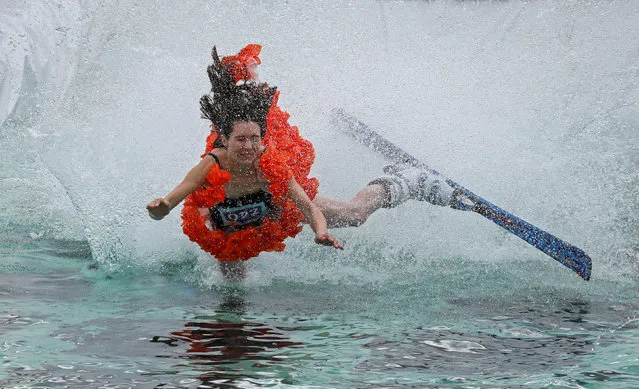
A skier in a festive costume attempts to cross a pool of water at the foot of a ski slope while competing in the annual Gornoluzhnik amateur event to mark the end of the ski season at the Bobrovy Log ski resort in the suburbs of the Siberian city of Krasnoyarsk, Russia, April 14, 2019. (Photo by Ilya Naymushin/Reuters)

A skier in a festive costume attempts to cross a pool of water at the foot of a ski slope while competing in the annual Gornoluzhnik amateur event to mark the end of the ski season at the Bobrovy Log ski resort in the suburbs of the Siberian city of Krasnoyarsk, Russia, April 14, 2019. (Photo by Ilya Naymushin/Reuters)
Details
17 Apr 2019 00:07:00
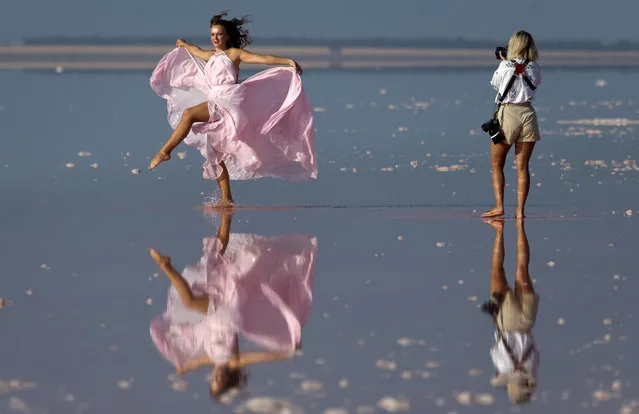
A model showcases a creation during a runway show for the collection by the Crimean designers at the 2020 Crimean Fashion Week on Lake Sasyk in Crimea, Russia on August 22, 2020. (Photo by Sergei Malgavko/TASS)

A model showcases a creation during a runway show for the collection by the Crimean designers at the 2020 Crimean Fashion Week on Lake Sasyk in Crimea, Russia on August 22, 2020. (Photo by Sergei Malgavko/TASS)
Details
03 Sep 2020 00:05:00
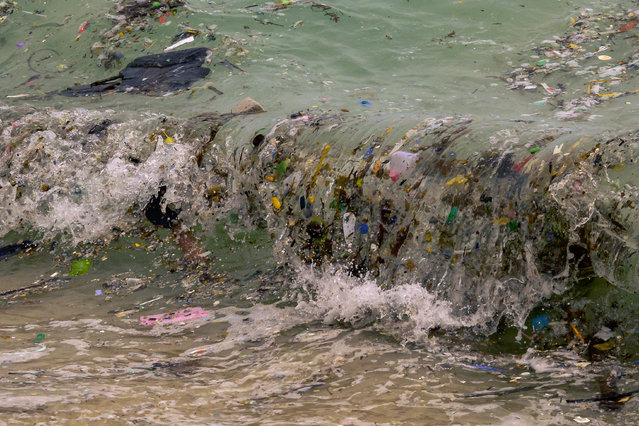
A wave carrying plastic waste and other rubbish washes up on a beach in Koh Samui in the Gulf of Thailand on January 19, 2021. (Photo by Mladen Antonov/AFP Photo)

A wave carrying plastic waste and other rubbish washes up on a beach in Koh Samui in the Gulf of Thailand on January 19, 2021. (Photo by Mladen Antonov/AFP Photo)
Details
20 Aug 2021 08:32:00