Loading...
Done
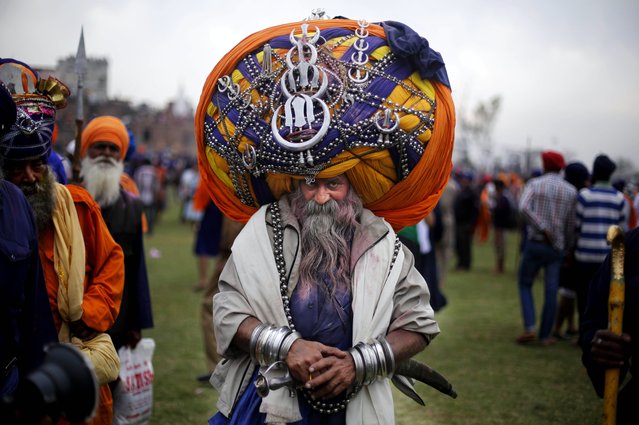
A Sikh warrior, wearing a huge turban attends the annual fair of “Hola Mohalla” in Anandpur Sahib, in the northern Indian state of Punjab, Monday, March 17, 2014. Believers from various parts of northern India collect at the religious fair to celebrate the festival of Holi in a tradition set by the tenth Sikh guru Guru Gobind Singh in the seventeenth century. Nihangs, or Sikh warriors, display their martial skills and attire during the fair, believed to be maintained in the exact tradition as set by the Guru. (Photo by Altaf Qadri/AP Photo)

A Sikh warrior, wearing a huge turban attends the annual fair of “Hola Mohalla” in Anandpur Sahib, in the northern Indian state of Punjab, Monday, March 17, 2014. Believers from various parts of northern India collect at the religious fair to celebrate the festival of Holi in a tradition set by the tenth Sikh guru Guru Gobind Singh in the seventeenth century. Nihangs, or Sikh warriors, display their martial skills and attire during the fair, believed to be maintained in the exact tradition as set by the Guru. (Photo by Altaf Qadri/AP Photo)
Details
22 Mar 2014 13:31:00
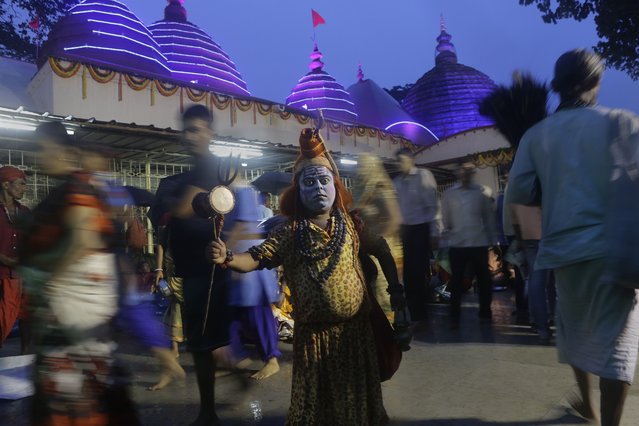
An Indian man stands dressed like Hindu god Shiva to attract alms from devotees during the Ambubasi festival at the Kamakhya Hindu temple in Gauhati, India, Sunday, June 22, 2014. The annual festival where hundreds of holy men from an esoteric form of Hinduism, gather to perform rituals at the temple begins on June 22. (Photo by Anupam Nath/AP Photo)

An Indian man stands dressed like Hindu god Shiva to attract alms from devotees during the Ambubasi festival at the Kamakhya Hindu temple in Gauhati, India, Sunday, June 22, 2014. The annual festival where hundreds of holy men from an esoteric form of Hinduism, gather to perform rituals at the temple begins on June 22. (Photo by Anupam Nath/AP Photo)
Details
23 Jun 2014 11:43:00
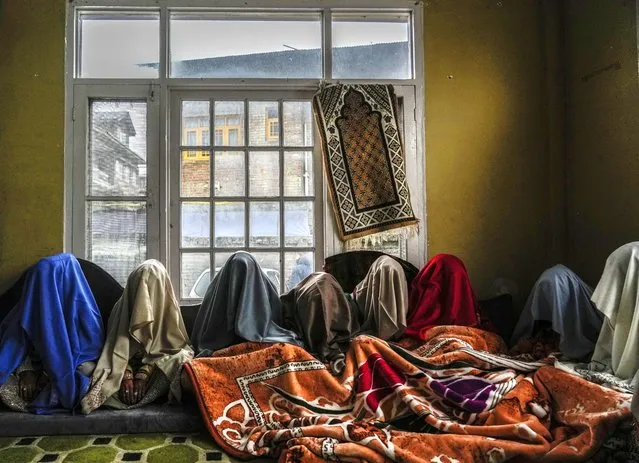
Kashmiri Muslim brides sit during a mass marriage of 30 couples in Srinagar, Indian controlled Kashmir, Wednesday, February 21, 2024. Mass weddings in India are organized by social organizations primarily to help economically weaker families who cannot afford the high ceremony costs as well as the customary dowry and expensive gifts that are still prevalent in many communities. (Photo by Mukhtar Khan/AP Photo)

Kashmiri Muslim brides sit during a mass marriage of 30 couples in Srinagar, Indian controlled Kashmir, Wednesday, February 21, 2024. Mass weddings in India are organized by social organizations primarily to help economically weaker families who cannot afford the high ceremony costs as well as the customary dowry and expensive gifts that are still prevalent in many communities. (Photo by Mukhtar Khan/AP Photo)
Details
27 Feb 2024 07:08:00
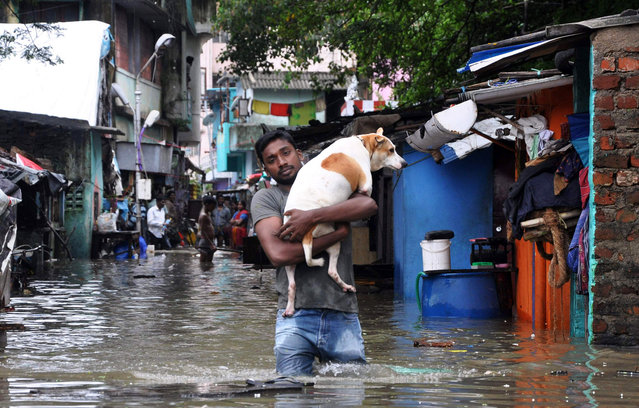
A man carries a dog and wades through a flooded street in Chennai, in the southern Indian state of Tamil Nadu, Wednesday, December 2, 2015. Weeks of torrential rains have forced the airport in the state capital Chennai to close and have cut off several roads and highways, leaving tens of thousands of people stranded in their homes, government officials said Wednesday. (Photo by AP Photo)

A man carries a dog and wades through a flooded street in Chennai, in the southern Indian state of Tamil Nadu, Wednesday, December 2, 2015. Weeks of torrential rains have forced the airport in the state capital Chennai to close and have cut off several roads and highways, leaving tens of thousands of people stranded in their homes, government officials said Wednesday. (Photo by AP Photo)
Details
04 Dec 2015 08:06:00
A Hindu holy man is reflected on a mirror as he prepares a bowl of vermillion powder for devotees near “Sangam”, the confluence of holy rivers of Ganges, Yamuna and the mythical Saraswati, during the annual traditional fair of Magh Mela in Allahabad, in the northern Indian state of Uttar Pradesh, India, Tuesday, January 6, 2015. (Photo by Rajesh Kumar Singh/AP Photo)

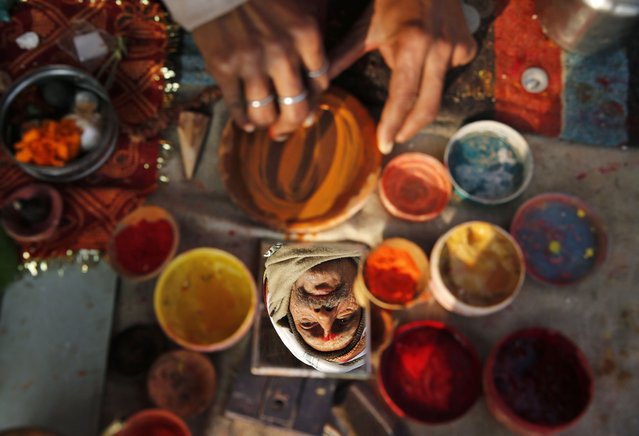
A Hindu holy man is reflected on a mirror as he prepares a bowl of vermillion powder for devotees near “Sangam”, the confluence of holy rivers of Ganges, Yamuna and the mythical Saraswati, during the annual traditional fair of Magh Mela in Allahabad, in the northern Indian state of Uttar Pradesh, India, Tuesday, January 6, 2015. Hundreds of thousands of devout Hindus are expected to take holy dips at the confluence during the astronomically auspicious period of over 45 days celebrated as Magh Mela. (Photo by Rajesh Kumar Singh/AP Photo)
Details
07 Jan 2015 13:41:00
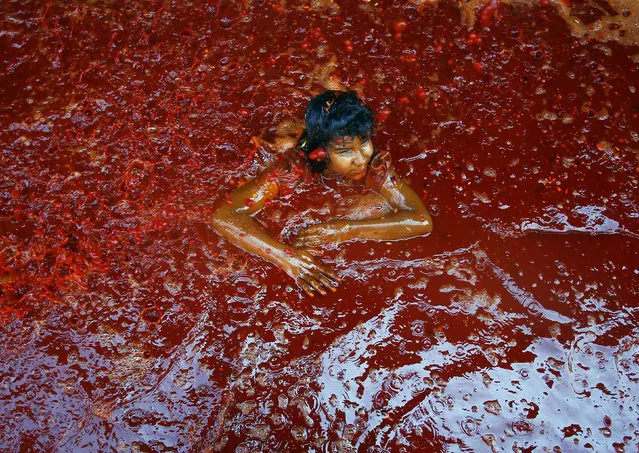
A child lies in a puddle of coloured water during “Huranga” at Dauji temple near the northern Indian city of Mathura, March 7, 2015. “Huranga” is a game played between men and women a day after Holi, the festival of colours, during which men drench women with liquid colours and women tear off the clothes of the men. (Photo by Anindito Mukherjee/Reuters)

A child lies in a puddle of coloured water during “Huranga” at Dauji temple near the northern Indian city of Mathura, March 7, 2015. “Huranga” is a game played between men and women a day after Holi, the festival of colours, during which men drench women with liquid colours and women tear off the clothes of the men. (Photo by Anindito Mukherjee/Reuters)
Details
14 Mar 2015 13:46:00
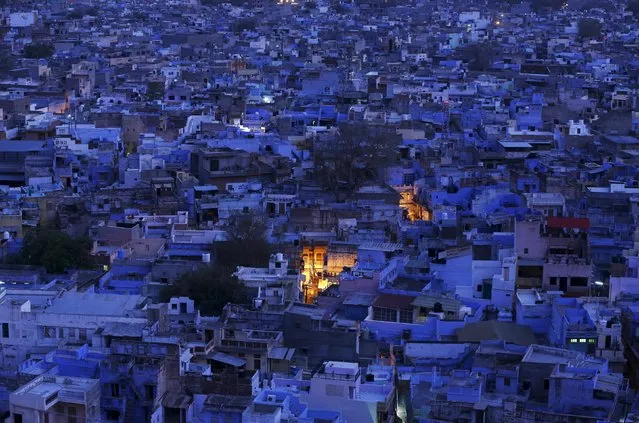
A general view of the residential area is pictured during dusk at Jodhpur in Rajasthan, April 5, 2015. Jodhpur, also known as the blue city in the desert Indian state of Rajasthan, which residents say originally, was used to show where the highest caste of priestly Hindus live, who wanted to set them apart from the rest of the population. Later the rest of the population followed suit. Another reason for the city to be blue is to keep the buildings cool during the summers, local residents said. (Photo by Adnan Abidi/Reuters)

A general view of the residential area is pictured during dusk at Jodhpur in Rajasthan, April 5, 2015. Jodhpur, also known as the blue city in the desert Indian state of Rajasthan, which residents say originally, was used to show where the highest caste of priestly Hindus live, who wanted to set them apart from the rest of the population. Later the rest of the population followed suit. Another reason for the city to be blue is to keep the buildings cool during the summers, local residents said. (Photo by Adnan Abidi/Reuters)
Details
12 Apr 2015 08:27:00
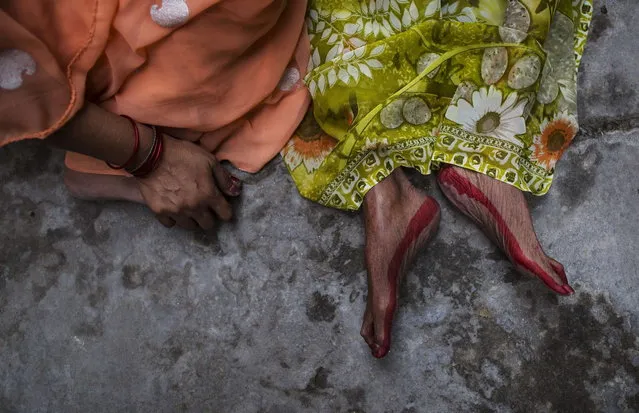
A relative (L) of Champa Devi, 88, sits next to her body, minutes after her death at Mukti Bhavan (Salvation House) at Varanasi, in the northern Indian state of Uttar Pradesh, June 21, 2014. (Photo by Danish Siddiqui/Reuters)

A relative (L) of Champa Devi, 88, sits next to her body, minutes after her death at Mukti Bhavan (Salvation House) at Varanasi, in the northern Indian state of Uttar Pradesh, June 21, 2014. The city of Varanasi, on the banks of the River Ganges, is widely considered Hinduism's holiest city and many Hindus believe that dying there and having their remains scattered in the Ganges allows their soul to escape a cycle of death and rebirth, attaining “moksha” or salvation. “Mukti Bhavan” or “Salvation House”, is a charity-run hostel that caters for people who wish to come to Varanasi to die. Guests can normally stay up to two weeks after which, if they haven't yet passed away, they are gently asked to leave. (Photo by Danish Siddiqui/Reuters)
Details
24 Jul 2014 12:32:00