Loading...
Done
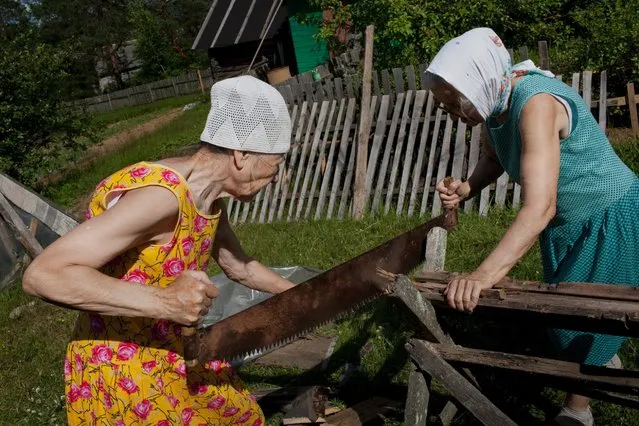
“Two-Handed Saw, 2014”. “Most of the neighbors have switched to power tools to run their households, the buzz of chain saws and weed-whackers overpowering the quieter sounds of country life, but my aunts hold on to the two-handed saw that's decades old, the sickle and scythe that need to be sharpened and polished after each use, the old axe that's becoming heavier each year. Each of these objects is familiar, holding memories of their brother, who succumbed to cancer a few years ago, of days before my grandfather lost his vision in the 50's, of busier days and longer futures”, Sablin told. (Photo by Nadia Sablin)

In northwest Russia, in a small village called Alekhovshchina, Nadia Sablin's aunts spend the warmer months together in the family home and live as the family has always lived, chopping wood to heat the house and making their own clothes. Sablin's book of photographs, “Aunties: The Seven Summers of Alevtina and Ludmila”, is published by Duke University Press. Here: “Two-Handed Saw, 2014”. (Photo by Nadia Sablin)
Details
25 Feb 2016 12:12:00
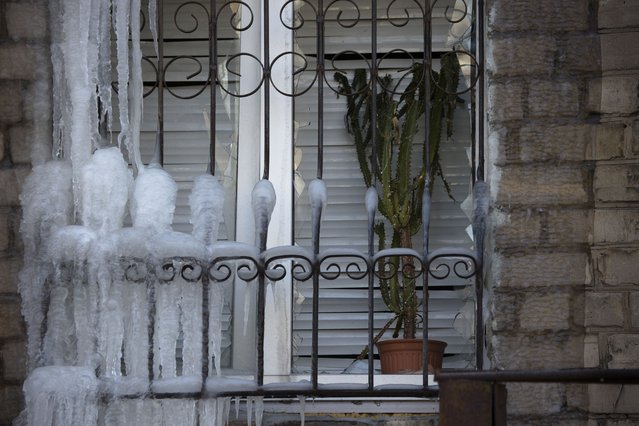
In this photo taken on Monday, October 27, 2014, a cactus stands at a broken window in a damaged house after shelling not far from Donetsk airport in the town of Donetsk, eastern Ukraine. (Photo by Dmitry Lovetsky/AP Photo)

In this photo taken on Monday, October 27, 2014, a cactus stands at a broken window in a damaged house after shelling not far from Donetsk airport in the town of Donetsk, eastern Ukraine. Donetsk, which has lost about 400,000 of its 1 million pre-war population, is bracing to a winter ahead. In a climate like eastern Ukraine's, where temperatures typically stay below zero all winter, the damage to the critical infrastructure and lack of effort to provide adequate shelter to people whose homes were destroyed could literally mean a death from the cold. (Photo by Dmitry Lovetsky/AP Photo)
Details
06 Nov 2014 09:06:00
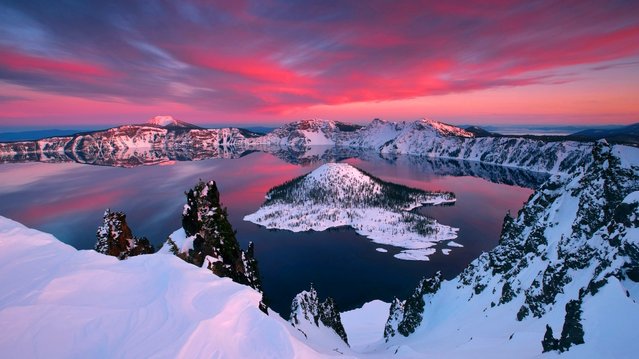
Crater Lake In Oregon

As you look at the majestic Crater Lake, located in south-central Oregon, United States, it is hard to imagine that thousands of years ago this place was one giant crater with scorching hot lava spilling over the sides. Those were the times of turmoil. Now, however, this place is the essence of tranquility. The lake that was formed, after the volcano died down, is amazingly clear due to the fact that the water isn’t moving at all. No rivers go in or out of the Crater Lake, and the water lost through evaporation is compensated by the rain and snowfall. This lake is also frighteningly deep – 1,943 feet (592 m) at its deepest point – making it the deepest lake in the United States. If you love nature and if you ever come to Oregon, this is truly a sight to behold.
Details
19 Nov 2014 14:14:00
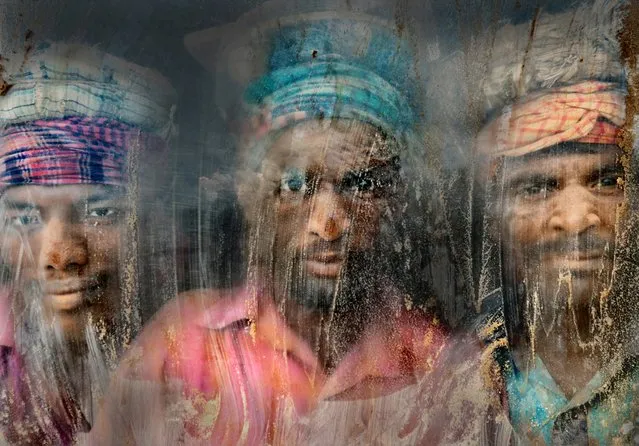
Gravel Workmen of Chittagong, Bangladesh, by Faisal Azim. Gravel workmen look through a glass window at a gravel-crushing yard in Chittagong. Full of dust and sand, it is an extremely unhealthy environment for working, but still hundreds of people work here for their livelihoods. (Photo by Faisal Azim/2016 Atkins CIWEM Environmental Photographer of the Year)

From Tibetan monks playing basket ball with ice thawing high up in the Himalayas, to the pollution that hides behind the Taj Mahal, here’s pick from 60 exceptional environmental photographs, by photographers and filmmakers from 70 countries, that will go on show at the Royal Geographical Society in London from 29 June to 21 August. The winners will be announced on 28 June. Here: Gravel Workmen of Chittagong, Bangladesh, by Faisal Azim. Gravel workmen look through a glass window at a gravel-crushing yard in Chittagong. Full of dust and sand, it is an extremely unhealthy environment for working, but still hundreds of people work here for their livelihoods. (Photo by Faisal Azim/2016 Atkins CIWEM Environmental Photographer of the Year)
Details
01 Jun 2016 12:25:00
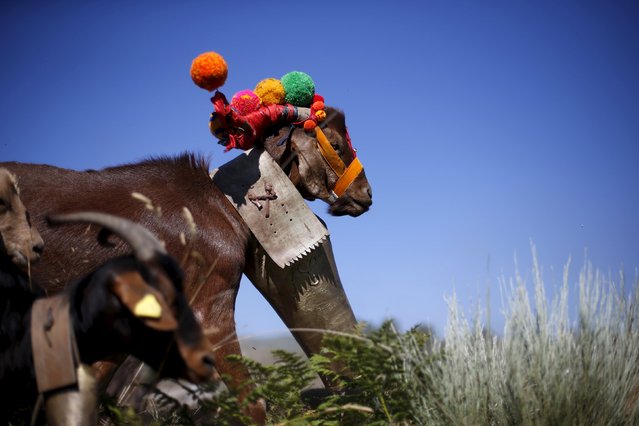
Sheep walk as they are herded to summer pastures in Serra da Estrela, near Seia, Portugal June 27, 2015. (Photo by Rafael Marchante/Reuters)

Sheep walk as they are herded to summer pastures in Serra da Estrela, near Seia, Portugal June 27, 2015. In late June, shepherds young and old in the Seia region of central Portugal start guiding sheep, goats and cattle to the Serra da Estrela, the country’s highest mountains, in search of better pastures. There they stay until the end of September. Modern-day shepherds may have mobile phones to keep in touch with family and friends, but their lifestyle has changed little for centuries. The sound of cowbells and the bark of longhaired mastiffs starts early in the morning as the animals – often decorated with traditional woollen balls on their horns – are herded up steep, narrow paths. (Photo by Rafael Marchante/Reuters)
Details
14 Jul 2015 13:48:00
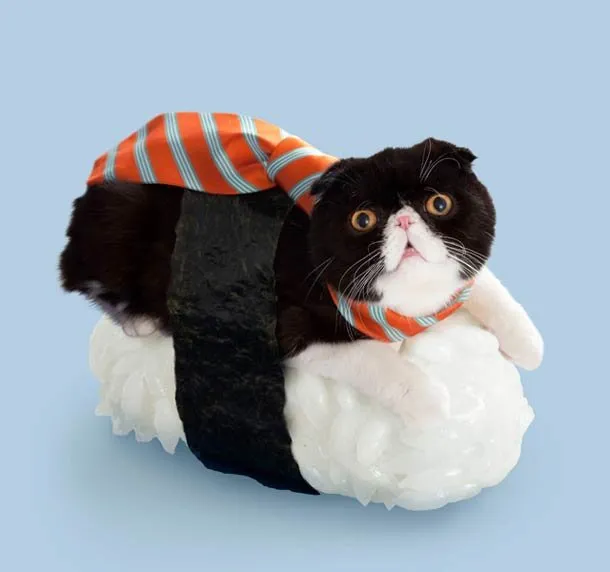
Sushi Cats By Tange & Nakimushi Peanuts

Sushi Cats (originally branded as Neko-Sushi) is a series of photographs created by the Japan-based company Tange & Nakimushi Peanuts. In this series the creators have dressed up a number of cats and placed them on top of oversized balls of sushi rice. The kitties don’t look too happy with what is going on, though they do look adorable in their little outfits. Tange & Nakimushi Peanuts didn’t think that making a set of photos was enough, so they’ve also created an Android and iPhone apps featuring Sushi Cats. Moreover, people living in Japan can visit their website, if they wish to order photo prints, postcards, and other items. (Photo by Tange & Nakimushi Peanuts)
Details
08 Jan 2015 14:14:00
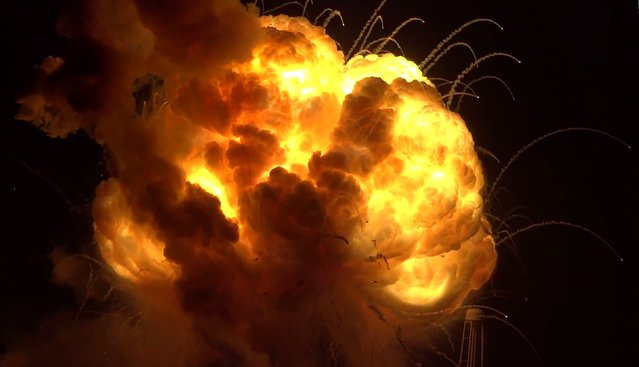
An unmanned Antares rocket is seen exploding seconds after lift off from a commercial launch pad in this still image from video shot by Matthew Travis of Zero-G News from the press area at Wallops Island, Virginia October 28, 2014. (Photo by Matthew Travis/Reuters/Zero-G News)

An unmanned Antares rocket is seen exploding seconds after lift off from a commercial launch pad in this still image from video shot by Matthew Travis of Zero-G News from the press area at Wallops Island, Virginia October 28, 2014. The 14-story rocket, built and launched by Orbital Sciences Corp, bolted off its seaside launch pad at the Wallops Flight Facility at 6:22 p.m. EDT/22:22 GMT. It burst into flames moments later, then plunged to the ground in a huge ball of fire and smoke, but authorities said no one was hurt. The cause of the accident was not immediately known. (Photo by Matthew Travis/Reuters/Zero-G News)


Details
29 Oct 2014 10:57:00
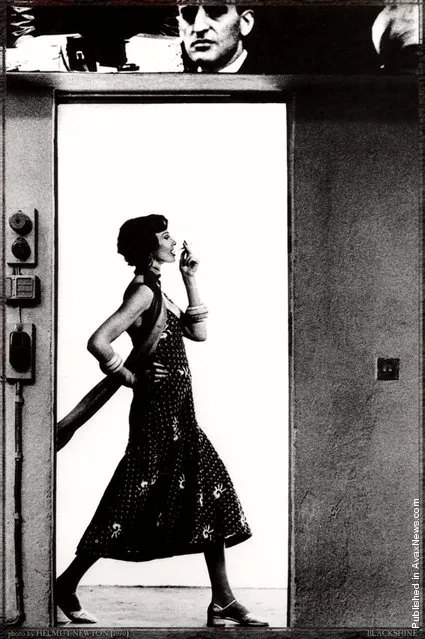
Photographers: Helmut Newton

“Newton was born in Berlin, the son of Klara “Claire” (Marquis) and Max Neustädter, a button factory owner. His family was Jewish. Newton attended the Heinrich-von-Treitschke-Realgymnasium and the American School in Berlin. Interested in photography from the age of 12 when he purchased his first camera, he worked for the German photographer Yva (Elsie Neulander Simon) from 1936. The increasingly oppressive restrictions placed on Jews by the Nuremberg laws meant that his father lost control of the factory in which he manufactured buttons and buckles; he was briefly interned in a concentration camp on “Kristallnacht”, November 9, 1938, which finally compelled the family to leave Germany. Newton's parents fled to South America. He was issued with a passport just after turning 18, and left Germany on December 5, 1938. At Trieste he boarded the “Conte Rosso” (along with about 200 others escaping the Nazis) intending to journey to China. After arriving in Singapore he found he was able to remain there, first and briefly as a photographer for the Straits Times and then as a portrait photographer”. – Wikipedia

Photo: Sigourney Weaver by Helmut Newton, 1995.
Details
08 Apr 2012 13:49:00