Loading...
Done
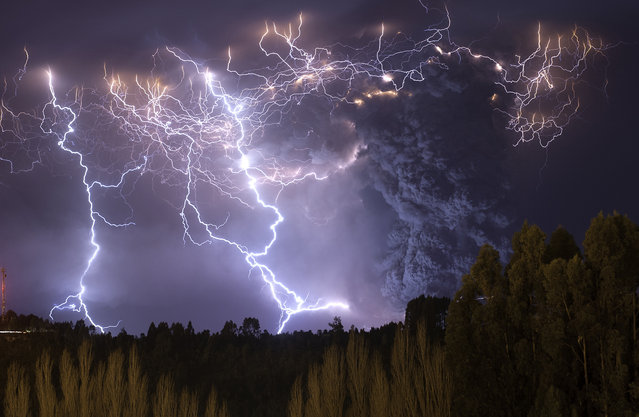
The eruption of Cordon Caulle began on June 4, 2011, located in the Region of Los Rios in Chile. For about 12 months, people and animals became accustomed to living with the daily fall of ash, which also caused problems in the air traffic in South America. The explosions and lightning during first days of the eruption could be seen from hundreds of miles around. This photograph was taken on the second night of eruption from the town of Lago Ranco. (Photo and caption by Francisco Negroni/National Geographic Traveler Photo Contest)

The eruption of Cordon Caulle began on June 4, 2011, located in the Region of Los Rios in Chile. For about 12 months, people and animals became accustomed to living with the daily fall of ash, which also caused problems in the air traffic in South America. The explosions and lightning during first days of the eruption could be seen from hundreds of miles around. This photograph was taken on the second night of eruption from the town of Lago Ranco. (Photo and caption by Francisco Negroni/National Geographic Traveler Photo Contest)

ATTENTION! All pictures are presented in high resolution. To see Hi-Res images – just TWICE click on any picture. In other words, click small picture – opens the BIG picture. Click BIG picture – opens VERY BIG picture.
Details
23 Jun 2013 11:24:00
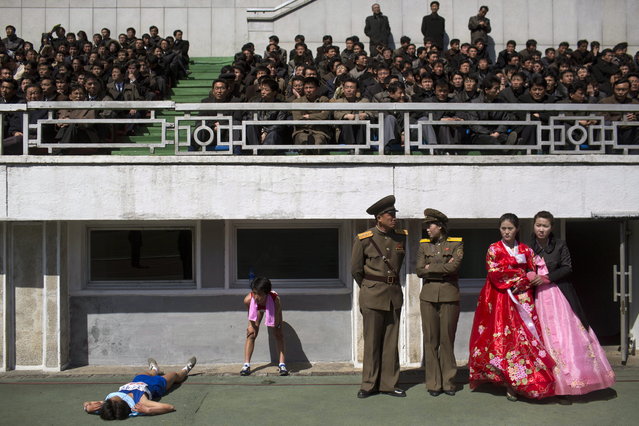
Runners rest inside Kim Il Sung Stadium in Pyongyang, North Korea on Sunday, April 14, 2013. North Korea hosted the 26th Mangyongdae Prize Marathon to mark the upcoming April 15, 2013 birthday of the late leader Kim Il Sung. (Photo by Alexander F. Yuan/AP Photo)

Runners rest inside Kim Il Sung Stadium in Pyongyang, North Korea on Sunday, April 14, 2013. North Korea hosted the 26th Mangyongdae Prize Marathon to mark the upcoming April 15, 2013 birthday of the late leader Kim Il Sung. (Photo by Alexander F. Yuan/AP Photo)
Details
14 Apr 2013 11:27:00
Two Bunny Girls from the Playboy Club and two Penthouse Pets from the Penthouse Club prepare to take part in the annual Good Friday waiters and waitresses race in Battersea Festival Gardens, London, 28th March 1972. (Photo by Ian Showell/Keystone/Hulton Archive/Getty Images)

Two Bunny Girls from the Playboy Club and two Penthouse Pets from the Penthouse Club prepare to take part in the annual Good Friday waiters and waitresses race in Battersea Festival Gardens, London, 28th March 1972. (Photo by Ian Showell/Keystone/Hulton Archive/Getty Images)
Details
19 Jul 2017 08:22:00
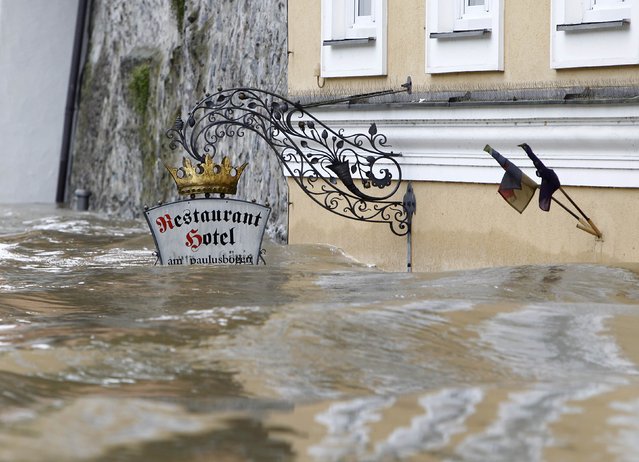
The sign above the door of restaurant and hotel 'Am Paulusbogen' is partially submerged in the flooded centre of the Bavarian town of Passau, about 200 km (124 miles) north-east of Munich June 3, 2013. Torrential rain in the south and south-east of Germany caused heavy flooding over the weekend, forcing people to evacuate their homes. (Photo by Michaela Rehle/Reuters)

The sign above the door of restaurant and hotel “Am Paulusbogen” is partially submerged in the flooded centre of the Bavarian town of Passau, about 200 km (124 miles) north-east of Munich June 3, 2013. (Photo by Michaela Rehle/Reuters)
Details
05 Jun 2013 08:43:00
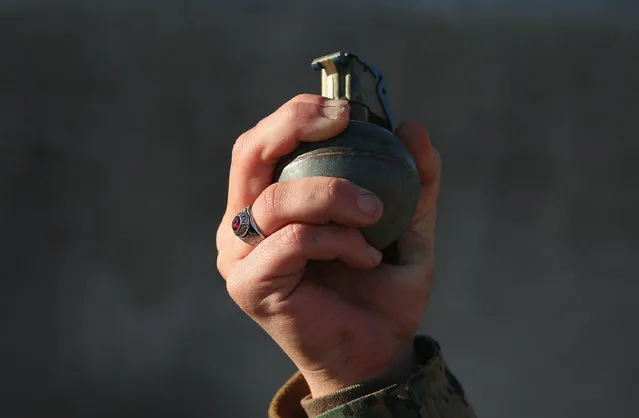
A female Marine prepares to throw a practice grenade during Marine Combat Training (MCT) on February 21, 2013 at Camp Lejeune, North Carolina.  Since 1988 all non-infantry enlisted male Marines have been required to complete 29 days of basic combat skills training at MCT after graduating from boot camp. MCT has been required for all enlisted female Marines since 1997. About six percent of enlisted Marines are female.  (Photo by Scott Olson)

A female Marine prepares to throw a practice grenade during Marine Combat Training (MCT) on February 21, 2013 at Camp Lejeune, North Carolina. Since 1988 all non-infantry enlisted male Marines have been required to complete 29 days of basic combat skills training at MCT after graduating from boot camp. MCT has been required for all enlisted female Marines since 1997. About six percent of enlisted Marines are female. (Photo by Scott Olson)
Details
22 Feb 2013 11:34:00
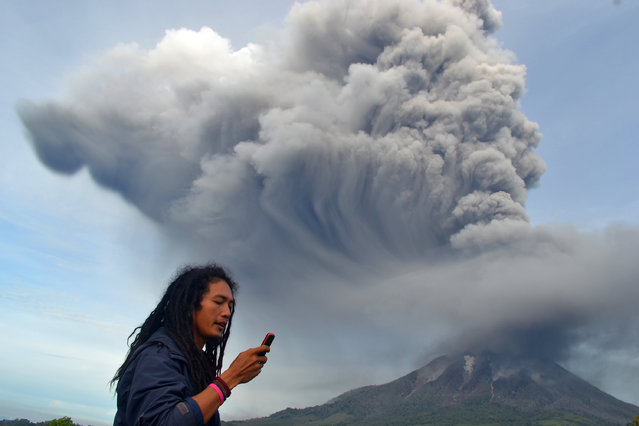
A man uses his mobile phone as Mount Sinabung continues to erupt, with hot smoke spewing from the volcano, in the Karo district on the north of Indonesia's Sumatra island on November 18, 2013. Officials said a week ago at more than 5,000 people had fled their homes since the volcano erupted early this month. (Photo by Sutanta Aditya/AFP Photo)

Starting in September, Indonesia's Mount Sinabung began erupting yet again. In the days that followed, ash and smoke were shot into the air multiple times. As a result, nearby towns turned gray from repeated blows by the volcano. Photo: A man uses his mobile phone as Mount Sinabung continues to erupt, with hot smoke spewing from the volcano, in the Karo district on the north of Indonesia's Sumatra island on November 18, 2013. Officials said a week ago at more than 5,000 people had fled their homes since the volcano erupted early this month. (Photo by Sutanta Aditya/AFP Photo)
Details
22 Nov 2013 08:08:00
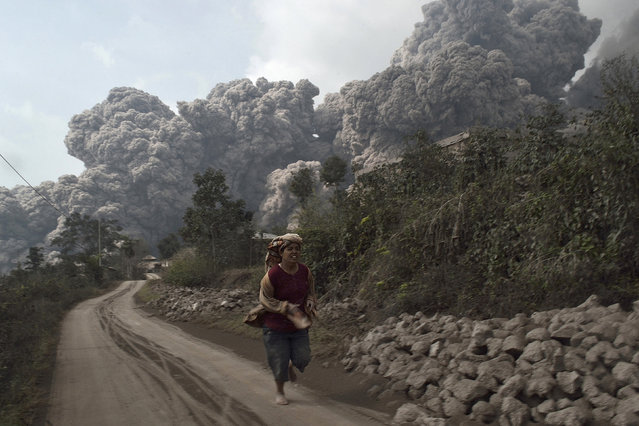
A villager run as Mount Sinabung erupt at Sigarang-Garang village in Karo district, Indonesia's North Sumatra province, February 1, 2014. Four people died and more than 28, 000 villagers have been evacuated since authorities raised the alert status for the volcano to the highest level in November 2013, local media reported on Saturday. (Photo by Reuters/Stringer)

A villager run as Mount Sinabung erupt at Sigarang-Garang village in Karo district, Indonesia's North Sumatra province, February 1, 2014. Four people died and more than 28, 000 villagers have been evacuated since authorities raised the alert status for the volcano to the highest level in November 2013, local media reported on Saturday. (Photo by Reuters/Stringer)
Details
02 Feb 2014 09:16:00
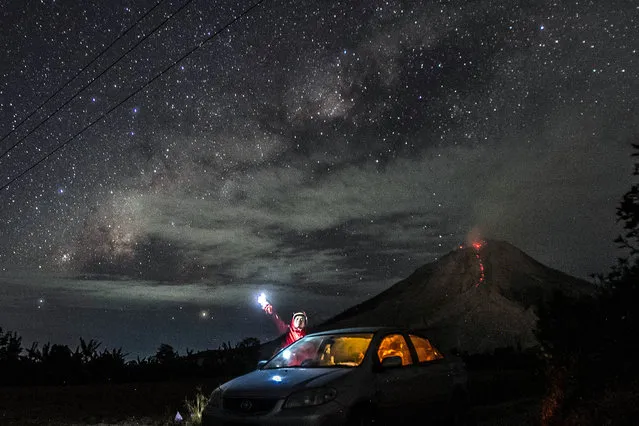
Long Exposure pictures showing Mount Sinabung spewing out hot lava on August 2, 2017 in Karo, Indonesia. Sinabung located in North Sumatra Province roared back to life in 2010 for the first time in 400 years. After another period of inactivity it erupted once more in 2013, and has remained highly active since. (Photo by Albert Damanik/Barcroft Images)

Long Exposure pictures showing Mount Sinabung spewing out hot lava on August 2, 2017 in Karo, Indonesia. Sinabung located in North Sumatra Province roared back to life in 2010 for the first time in 400 years. After another period of inactivity it erupted once more in 2013, and has remained highly active since. (Photo by Albert Damanik/Barcroft Images)
Details
03 Aug 2017 09:09:00