Loading...
Done
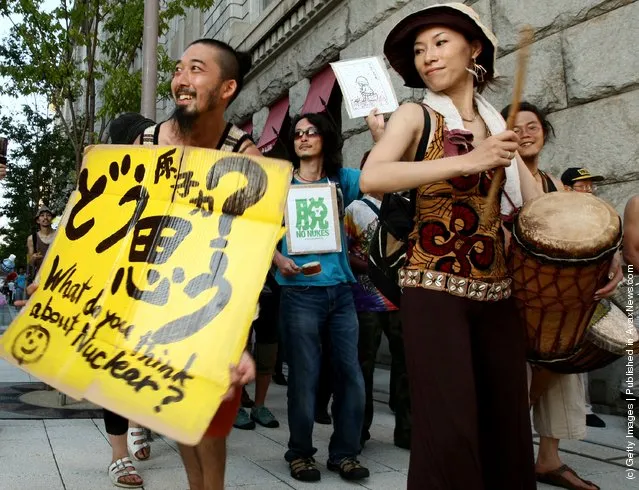
Anti-nuclear activists demonstrate during a Say to Goodbye to Nuclear Energy protest in Kobe, Japan

Anti-nuclear activists demonstrate during a “Say to Goodbye to Nuclear Energy” protest on September 11, 2011 in Kobe, Japan. Japan is marking sixth months since a magnitude 9.0 earthquake struck Japan offshore on March 11 at 2:46pm local time, triggering a tsunami wave of up to ten metres which engulfed large parts of north-eastern Japan and also damaged the Fukushima nuclear plant, causing the worst nuclear crisis in decades. The current number of dead and missing is reportedly estimated to be 22,900. (Photo by Buddhika Weerasinghe/Getty Images)
Details
12 Sep 2011 10:16:00
A woman wears VR glasses while the projection mapping is cast on table and walls during its media preview at “TREE BY NAKED, yoyogi park” restaurant in Tokyo, Japan on July 19, 2018. (Photo by Kim Kyung-Hoon/Reuters)

A woman wears VR glasses while the projection mapping is cast on table and walls during its media preview at “TREE BY NAKED, yoyogi park” restaurant in Tokyo, Japan on July 19, 2018. This restaurant incorporates virtual reality, projection mapping, and music to enhance diners' enjoyment of their food. (Photo by Kim Kyung-Hoon/Reuters)
Details
23 Jul 2018 00:03:00


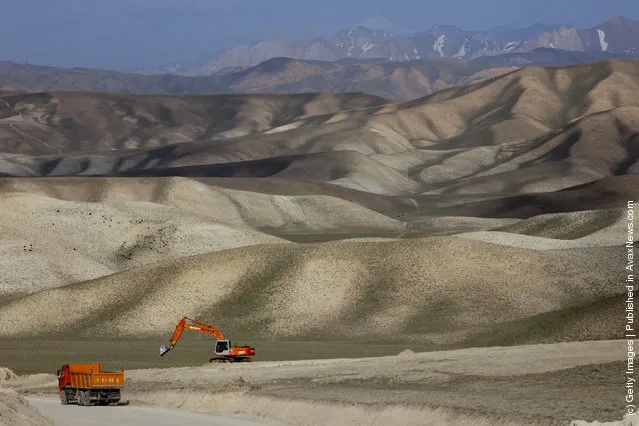
Heavy equipment works along the still under construction Bamiyan-Yakawlang road June 10, 2011 in Yakawlang, Afghanistan. The 69 Million US$ project is supported by the Government of Japan and World Bank. The 90K road project was started three years ago and is slated to be finished within another year. This new road means faster travel from Bamiyan to Afghanistan's only national park, Band-e-Amir. This is in of the safest parts of the country and the hope is to expand tourism in the region. (Photo by Paula Bronstein/Getty Images)
Details
11 Jun 2011 12:32:00
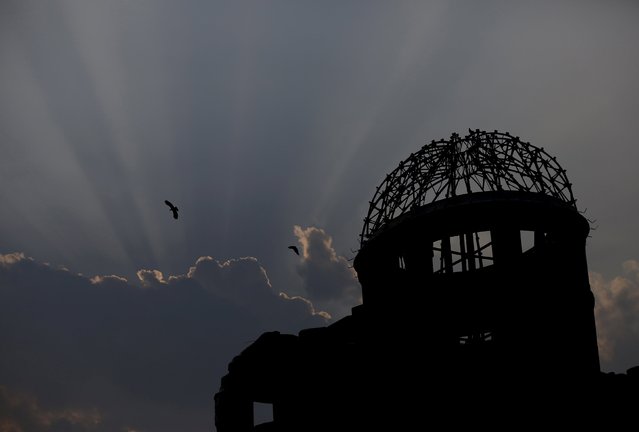
Birds fly over the Atomic Bomb Dome in Hiroshima, western Japan July 29, 2015. On August 6, 1945, the U.S. dropped the atomic bomb on Hiroshima, killing about 140,000 by the end of the year in a city of 350,000 residents, in the world's first nuclear attack. (Photo by Issei Kato/Reuters)

Birds fly over the Atomic Bomb Dome in Hiroshima, western Japan July 29, 2015. On August 6, 1945, the U.S. dropped the atomic bomb on Hiroshima, killing about 140,000 by the end of the year in a city of 350,000 residents, in the world's first nuclear attack. Three days later, a second atomic bomb was dropped on Nagasaki. Influenced by the shadows scorched into outdoor surfaces by the heat of the blasts 70 years ago, Reuters photographer Issei Kato pays homage to survivors, residents and historic buildings in both cities in a personal project that captures the shadows of today. (Photo by Issei Kato/Reuters)
Details
04 Aug 2015 12:01:00
The underbelly of fetish parties has been exposed in photographs captured by Belgian photographer MagLau. The photographer dedicated three years to capturing the obsession with leather and chains, visiting fetish parties through Europe and Japan. The photographer told: “I just took pictures, always finding some beauty in the dark side”. He said that most people were happy to be photographed for the project, with the images included in a new book Fetish Ballad. Aiming to capture the candid moments, he said he never judged but instead wanted to simply observe and understand. Here: Picture from Fetish Ballad book. (Photo by MagLau/Laurent Muschel)

The underbelly of fetish parties has been exposed in photographs captured by Belgian photographer MagLau. The photographer dedicated three years to capturing the obsession with leather and chains, visiting fetish parties through Europe and Japan. The photographer told: “I just took pictures, always finding some beauty in the dark side”. He said that most people were happy to be photographed for the project, with the images included in a new book Fetish Ballad. Aiming to capture the candid moments, he said he never judged but instead wanted to simply observe and understand. Here: Picture from Fetish Ballad book. (Photo by MagLau/Laurent Muschel)
Details
16 Oct 2016 10:49:00
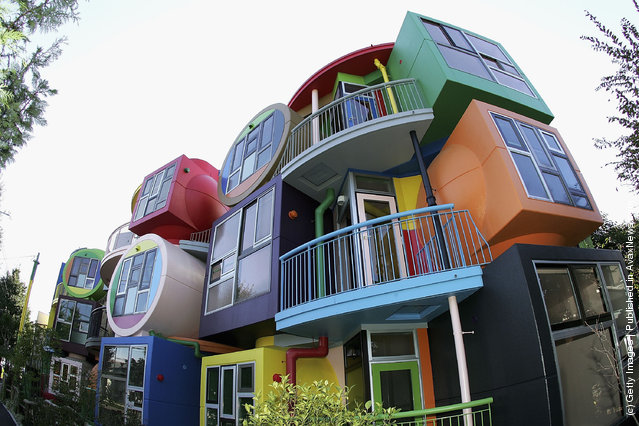
Concept Design Home Reversible Destiny Lofts MITAKA: In Memory Of Helen Keller By Reversible Destiny Foundation and Shusaku Arakawa

“The Reversible Destiny Lofts – Mitaka (In Memory of Helen Keller) is a nine-unit multiple dwelling. It was first completed example of procedural architecture put to residential use. These lofts reflexively articulate the residents’ operative tendencies and coordinating skills essential to and determinative of human thought and behavior; which means to say, the lofts manage, by virtue of how they are constructed, to reveal to their residents the ins and outs of what makes a person, in this case the resident. This is the same set of tendencies and skills to which Arakawa and Madeline Gins gave diagrammatic form in their decades-long research project The Mechanism of Meaning”. – Wikipedia

Photo: The exterior of the concept design home “Reversible Destiny Lofts MITAKA: In Memory of Helen Keller” is seen on October 27, 2005 in Tokyo, Japan. (Photo by Koichi Kamoshida/Getty Images)
Details
30 Nov 2011 11:58:00
A Japan soccer fan reacts as she watches Japan's FIFA Women's World Cup final match against the U.S. in Vancouver, at a public viewing event in Tokyo, Japan, July 6, 2015. Japan lost the match 5-2 to the U.S. (Photo by Toru Hanai/Reuters)

A Japan soccer fan reacts as she watches Japan's FIFA Women's World Cup final match against the U.S. in Vancouver, at a public viewing event in Tokyo, Japan, July 6, 2015. Japan lost the match 5-2 to the U.S. (Photo by Toru Hanai/Reuters)
Details
08 Jul 2015 12:22:00
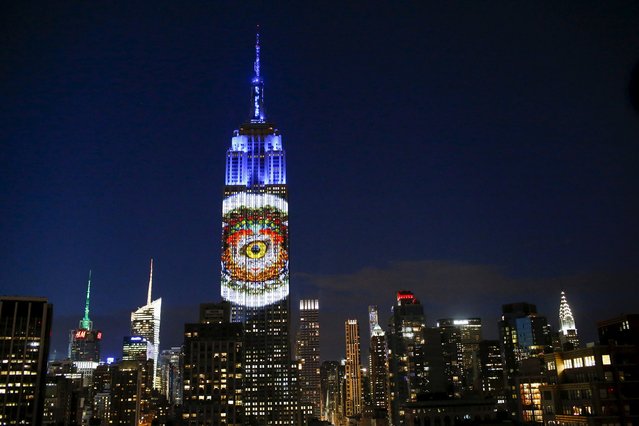
Images are projected onto the Empire State Building as part of an endangered species projection to raise awareness, in New York August 1, 2015. (Photo by Eduardo Munoz/Reuters)

Images are projected onto the Empire State Building as part of an endangered species projection to raise awareness, in New York August 1, 2015. (Photo by Eduardo Munoz/Reuters)
Details
03 Aug 2015 11:53:00