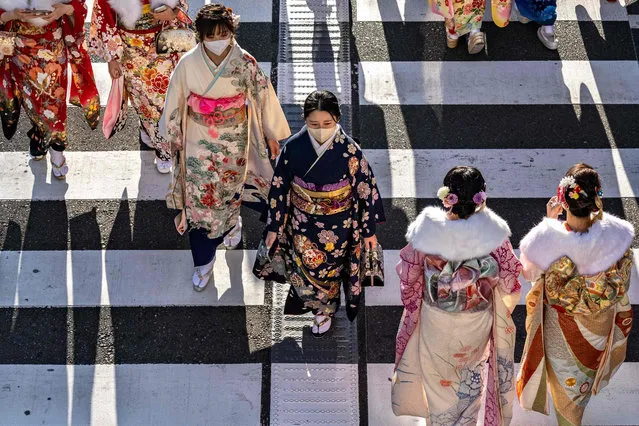
Young women wear kimonos to mark “Coming of Age Day” to honour people who turn 20 this year to signify adulthood, in Yokohama, Kanagawa prefecture on January 9, 2023. (Photo by Philip Fong/AFP Photo)
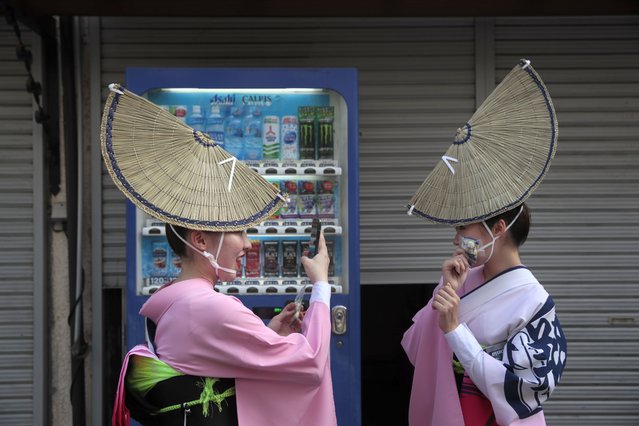
Two young dancers take pictures while waiting for the start of the Koenji Awa-Odori dance festival, in the Koenji neighborhood of Tokyo. Saturday, August 24, 2019, Started in the 1950s, the Koenji Awa-Odori has grown to be one of Tokyo's largest and most popular summer festivals an estimated 10,000 dancers participating in the dance festival. Hundreds of thousands of spectators gather in the neighborhood to watch the two-day summer spectacle. The event is held on the last weekend of August each year. (Photo by Jae C. Hong/AP Photo)
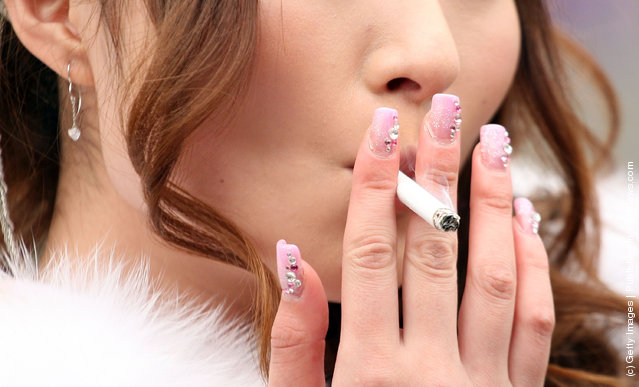
A Japanese twenty-year-old woman enjoys a cigarette during the annual Coming-of-Age Day ceremony at Toshimaen Amusement Park on January 11, 2010 in Tokyo, Japan. 1.27 million young people celebrate their passage into adulthood on the day while they become eligible to drink alcohol, smoke and vote at the age of 20. (Photo by Koichi Kamoshida/Getty Images)
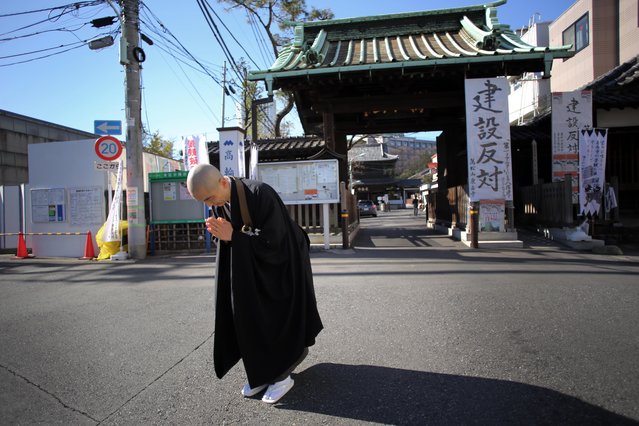
In this January 8, 2015 photo, a monk Kenmyo Muta bows at the condominium construction site and the gate of Sengakuji temple in Tokyo. The “47 ronin” samurai who inspired the long-loved saga of loyalty and honor eulogized in films, books and plays are fighting a new kind of battle in urban Japan. An apartment complex is going up next to the curved tile-roofed Sengakuji temple where the three-century-old graves of the ronin, or masterless samurai, lie. The banner reads: “We only hope to protect landscape of Sengakuji temple”. (Photo by Eugene Hoshiko/AP Photo)
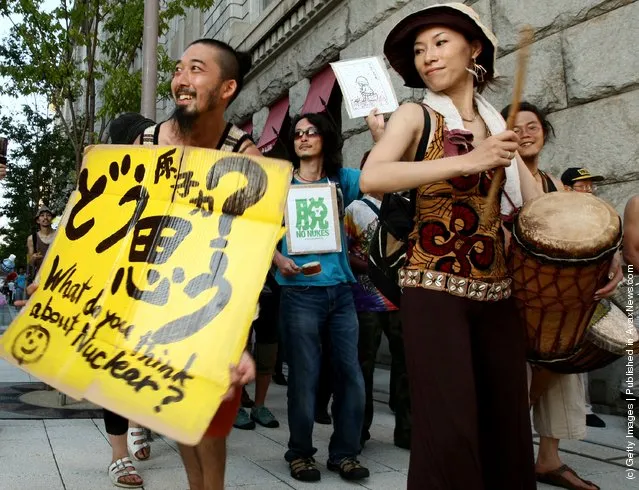
Anti-nuclear activists demonstrate during a “Say to Goodbye to Nuclear Energy” protest on September 11, 2011 in Kobe, Japan. Japan is marking sixth months since a magnitude 9.0 earthquake struck Japan offshore on March 11 at 2:46pm local time, triggering a tsunami wave of up to ten metres which engulfed large parts of north-eastern Japan and also damaged the Fukushima nuclear plant, causing the worst nuclear crisis in decades. The current number of dead and missing is reportedly estimated to be 22,900. (Photo by Buddhika Weerasinghe/Getty Images)
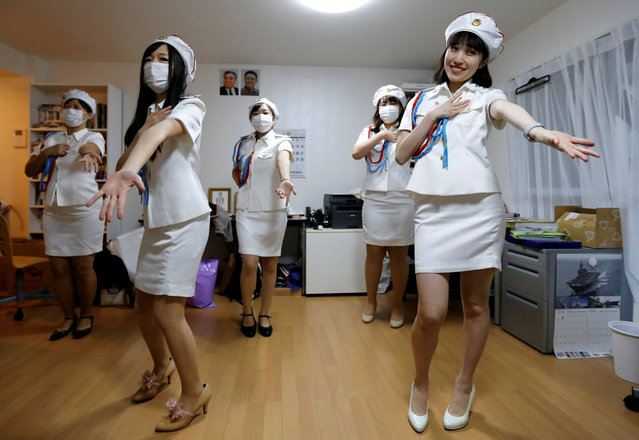
Chunhun (R), the leader of Japan's North Korea fan club called sengun-joshi, or military-first girls, and other members practice a Moranbong Band dance in Tokyo, Japan on November 2, 2017. (Photo by Toru Hanai/Reuters)
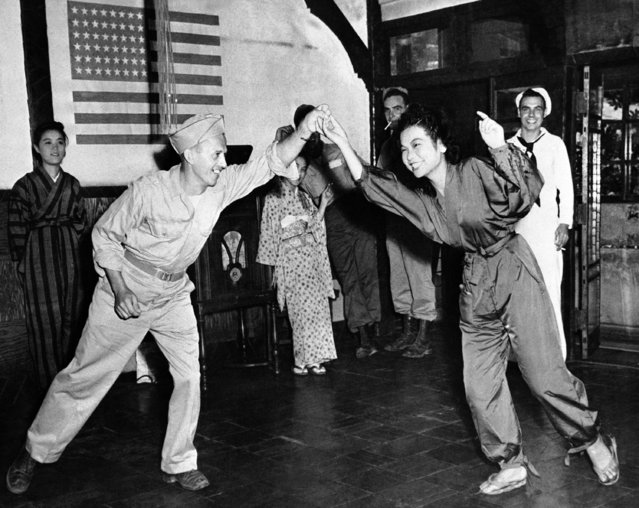
U.S. Corporal Stanley Suski, left, and Miss Tamako, a Geisha girl, whirl a bit of Jitterbug, in a bar, in Tokyo, Japan, on October 1, 1945. (Photo by AP Photo)