Loading...
Done
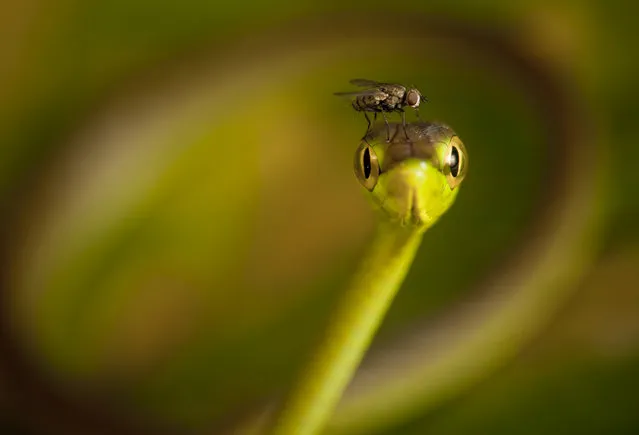
“Fly cap for a vine snake”. A fly lands on the head of a vine snake in the Choco of Colombia. (Photo and caption by Robin Moore/National Geographic Traveler Photo Contest)

“Fly cap for a vine snake”. A fly lands on the head of a vine snake in the Choco of Colombia. (Photo and caption by Robin Moore/National Geographic Traveler Photo Contest)

ATTENTION! All pictures are presented in high resolution. To see Hi-Res images – just TWICE click on any picture. In other words, click small picture – opens the BIG picture. Click BIG picture – opens VERY BIG picture.
Details
24 Jun 2013 11:36:00
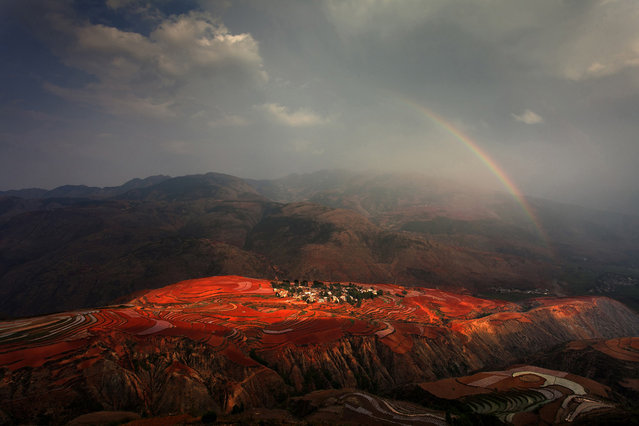
“Red Land: Sunset Cloud Village is one of the most picturesque places in Red Land, China. As its name indicates, it's best to see before sunset. The reddish brown soil turns redder after rainfall and after farmers plow the land”. (Photo and comment by Peng Jiang/National Geographic Photo Contest via The Atlantic)

“Red Land: Sunset Cloud Village is one of the most picturesque places in Red Land, China. As its name indicates, it's best to see before sunset. The reddish brown soil turns redder after rainfall and after farmers plow the land”. (Photo and comment by Peng Jiang/National Geographic Photo Contest via The Atlantic)


Details
05 Dec 2012 11:07:00
Models prepare backstage before a presentation as part of Fashion Weekend Plus Size Summer 2015 collection show in Sao Paulo, July 25, 2015. (Photo by Nacho Doce/Reuters)

Models prepare backstage before a presentation as part of Fashion Weekend Plus Size Summer 2015 collection show in Sao Paulo, July 25, 2015. (Photo by Nacho Doce/Reuters)
Details
27 Jul 2015 11:30:00
People watch as an acrobat rides his motorcycle around a circular track at an entertainment park set up outside a shrine in Rawalpindi, Pakistan, on June 19, 2013. (Photo by Muhammed Muheisen/Associated Press)

People watch as an acrobat rides his motorcycle around a circular track at an entertainment park set up outside a shrine in Rawalpindi, Pakistan, on June 19, 2013. (Photo by Muhammed Muheisen/Associated Press)
Details
22 Jun 2013 13:32:00
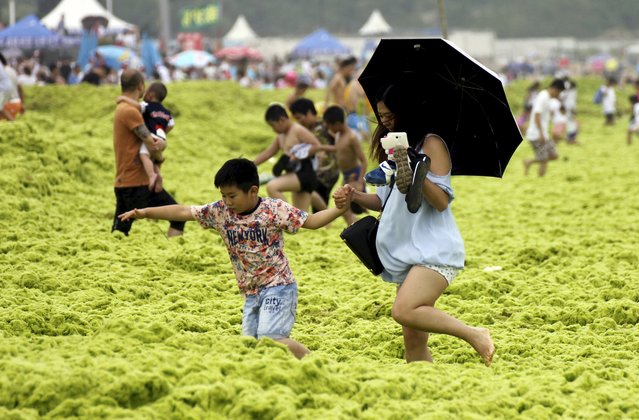
People make their way on an algae-covered beach in Qingdao, Shandong province, China, July 19, 2015. (Photo by Reuters/Stringer)

People make their way on an algae-covered beach in Qingdao, Shandong province, China, July 19, 2015. (Photo by Reuters/Stringer)
Details
20 Jul 2015 10:44:00
Singer Katy Perry arrives at the Metropolitan Museum of Art Costume Institute Gala 2015 celebrating the opening of “China: Through the Looking Glass” in Manhattan, New York May 4, 2015. (Photo by Lucas Jackson/Reuters)

Singer Katy Perry arrives at the Metropolitan Museum of Art Costume Institute Gala 2015 celebrating the opening of “China: Through the Looking Glass” in Manhattan, New York May 4, 2015. (Photo by Lucas Jackson/Reuters)
Details
09 May 2015 10:46:00
Galapagos – Rocking the Cradle: Four major ocean currents converge along the Galapagos archipelago, creating the conditions for an extraordinary diversity of animal life, April 25, 2016. The islands are home to at least 7,000 flora and fauna species, of which 97 percent of the reptiles, 80 percent of the land birds, 50 percent of the insects and 30 percent of the plants are endemic. The local ecosystem is highly sensitive to the changes in temperature, rainfall and ocean currents that characterize the climatic events known as El Niño and La Niña. These changes cause marked fluctuations in weather and food availability. Many scientists expect the frequency of El Niño and La Niña to increase as a result of climate change, making the Galapagos a possible early-warning location for its effects. (Photo by Thomas P. Peschak for National Geographic/World Press Photo)

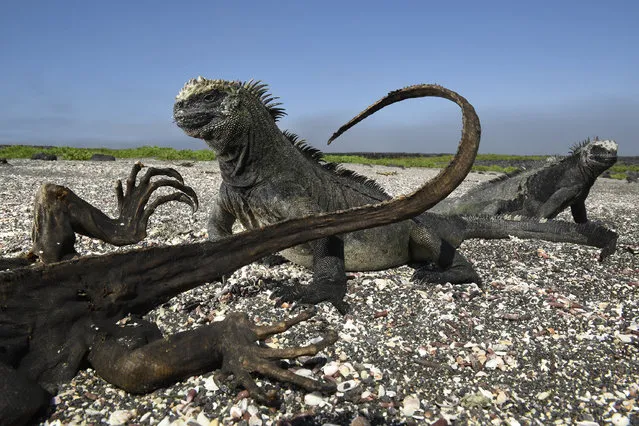
Galapagos – Rocking the Cradle: Four major ocean currents converge along the Galapagos archipelago, creating the conditions for an extraordinary diversity of animal life, April 25, 2016. The islands are home to at least 7,000 flora and fauna species, of which 97 percent of the reptiles, 80 percent of the land birds, 50 percent of the insects and 30 percent of the plants are endemic. (Photo by Thomas P. Peschak for National Geographic/World Press Photo)
Details
16 Apr 2018 00:01:00