Loading...
Done
Mercedes-Benz Unimog Concept

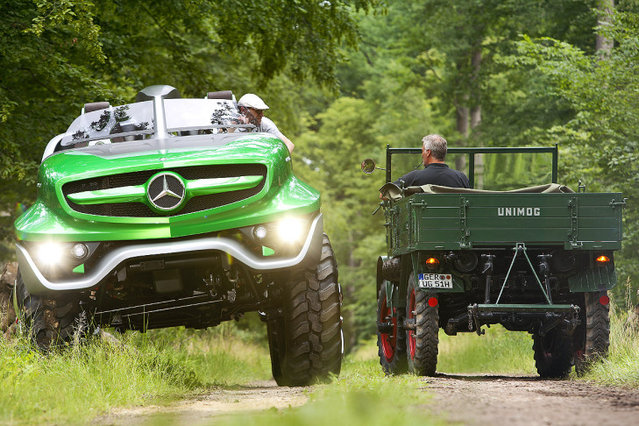
How much do things change in 60 years? Sometimes the best answer to that kind of question is a picture. Here you can see an original Unimog (right), built sometime between the start of production in 1948 and 1951, when Mercedes bought the operation in order to expand it enough to keep up with demand. On the left is a “60th Anniversary” Unimog design concept, celebrating not the actual birth of the Unimog, but its purchase by Mercedes. Needless to say, the contrast between the two is… breathtaking. And if you’re curious about the evolution of this hugely influential vehicle, if you can’t help wondering how it grew from a (relatively) tiny, spartan utility vehicle to a garish, Mercedes-starred behemoth.
Details
31 Oct 2012 11:24:00
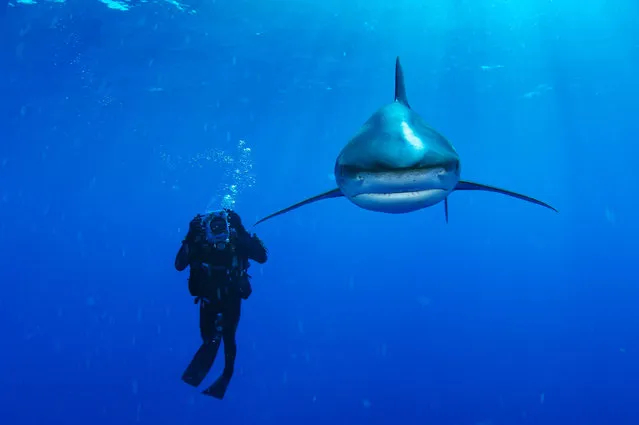
This Bahamian oceanic whitetip shark, known for the distinctive coloring on its white-tipped, rounded extremities, is part of a globally threatened species due to overfishing demands, primarily for its fins. (Photo by Brian Skerry)

Brian Skerry can be called many things – explorer, journalist, conservation advocate – but he is first and foremost a photographer. His journeys to capture amazing underwater photographs have taken him across the world’s oceans. Photo: This Bahamian oceanic whitetip shark, known for the distinctive coloring on its white-tipped, rounded extremities, is part of a globally threatened species due to overfishing demands, primarily for its fins. (Photo by Brian Skerry)
Details
08 Sep 2013 07:26:00
The 6th Siberian Tattoo Festival at Podzemka Loft Park in Novosibirsk, Russia on August 20, 2017. (Photo by Kirill Kukhmar/TASS)

The 6th Siberian Tattoo Festival at Podzemka Loft Park in Novosibirsk, Russia on August 20, 2017. Tattoo lovers have been showing off their impressive inkings at annual conventions in LA and Russia this weekend. This year marks the sixth Siberian Tattoo Festival in Novosibirsk, Russia, while stateside tattoo fanatics have been celebrating all things body-art at the LA Tattoo Convention in Long Beach, California. (Photo by Kirill Kukhmar/TASS)
Details
21 Aug 2017 07:36:00
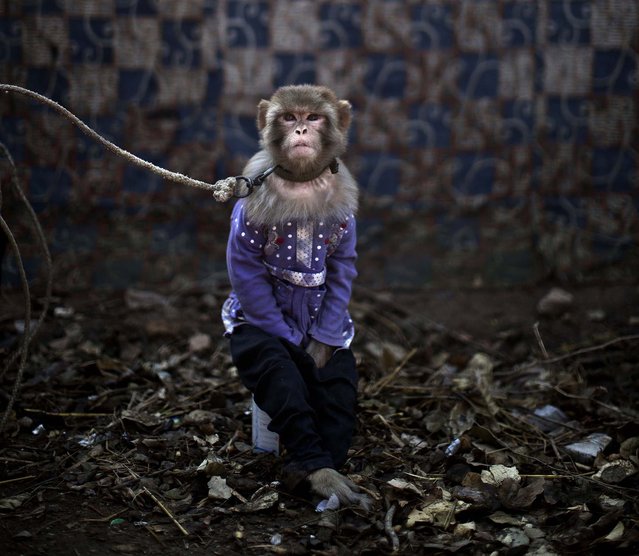
In this Tuesday, February 11, 2014, photo, a trained monkey, that makes a living for her Pakistani owner by performing to a crowd in public and private places, sits held by a leash, in Rawalpindi, Pakistan. For Pakistanis who raise and train the monkeys they are an important source of income in an impoverished country, and they form a strong bond with the animals. The monkeys are usually captured in the wild when they are babies and then trained. A trained monkey can fetch 20,000 to 30,000 rupees ($190 to $285). (Photo by Muhammed Muheisen/Associated Press)

In this Tuesday, February 11, 2014, photo, a trained monkey, that makes a living for her Pakistani owner by performing to a crowd in public and private places, sits held by a leash, in Rawalpindi, Pakistan. For Pakistanis who raise and train the monkeys they are an important source of income in an impoverished country, and they form a strong bond with the animals. The monkeys are usually captured in the wild when they are babies and then trained. A trained monkey can fetch 20,000 to 30,000 rupees ($190 to $285). (Photo by Muhammed Muheisen/Associated Press)
Details
23 Feb 2014 09:50:00
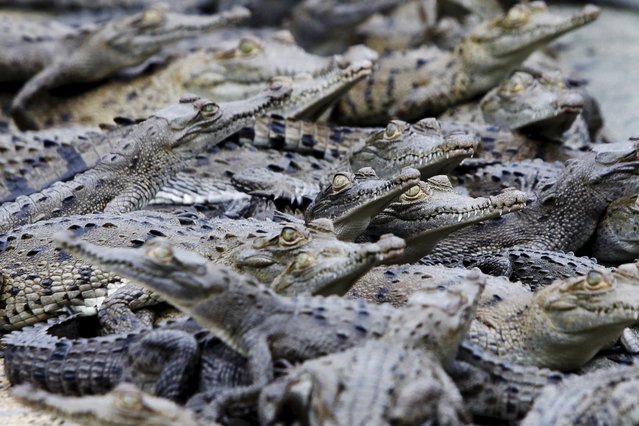
Young acutus crocodile are pictured at Panagator, a sustainable crocodile farm, on the outskirts of Panama City September 11, 2015. Gladys Vallarino, owner of the farm and of a specialty boutique shop selling items made from crocodiles, says the farm looks after more than 19,000 Acutus and Fuscus species of crocodiles and donates five percent of its crocodiles annually to the Panamanian authorities to be put into the wild. (Photo by Carlos Jasso/Reuters)

Young acutus crocodile are pictured at Panagator, a sustainable crocodile farm, on the outskirts of Panama City September 11, 2015. Gladys Vallarino, owner of the farm and of a specialty boutique shop selling items made from crocodiles, says the farm looks after more than 19,000 Acutus and Fuscus species of crocodiles and donates five percent of its crocodiles annually to the Panamanian authorities to be put into the wild, in accordance with the regulations of the CITES (Convention of International Trade in Endangered Species). The handmade fashion items sell for $200 to $3,000. (Photo by Carlos Jasso/Reuters)
Details
13 Sep 2015 13:00:00
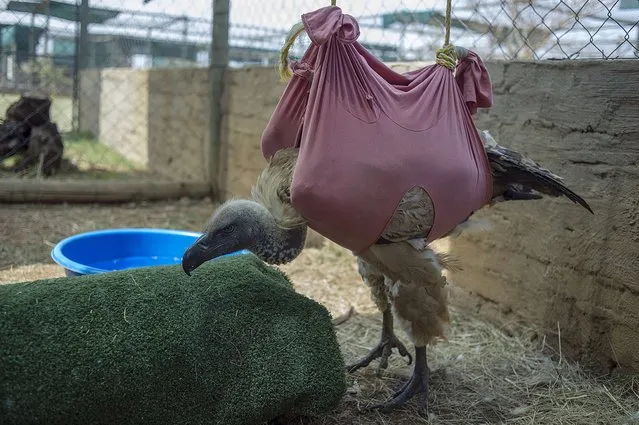
An injured vulture is treated at the VulPro Vulture Rehabilitation Centre in Hartebeepoortdam in the Magalisburg region on September 15, 2015. Confined to southern Africa, just under 4,000 breeding pairs of Cape Vultures remain in the wild, mostly in South Africa, Lesotho and Botswana. Unless conservation efforts are successful, Africa's largest vulture species may be facing eventual extinction. (Photo by Mujahid Safodien/AFP Photo)

An injured vulture is treated at the VulPro Vulture Rehabilitation Centre in Hartebeepoortdam in the Magalisburg region on September 15, 2015. Confined to southern Africa, just under 4,000 breeding pairs of Cape Vultures remain in the wild, mostly in South Africa, Lesotho and Botswana. Unless conservation efforts are successful, Africa's largest vulture species may be facing eventual extinction. (Photo by Mujahid Safodien/AFP Photo)
Details
19 Sep 2015 12:27:00
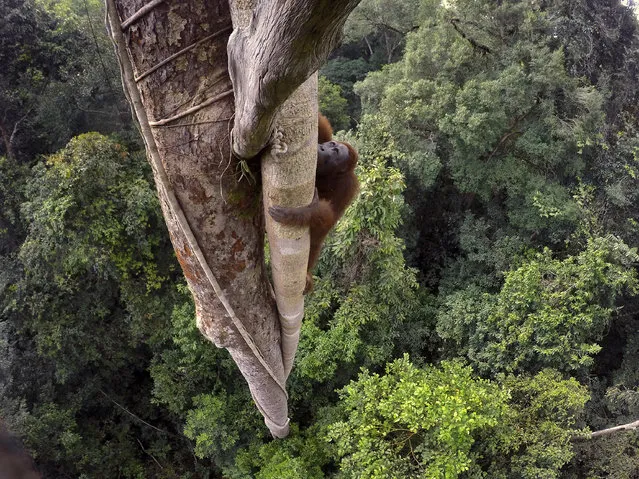
“Tough Times for Orangutans”. Nature, first prize stories. Tim Laman, USA. Location: West Kalimantan, Indonesia. A Bornean orangutan climbs over 30 meters up a tree in the rain forest of Gunung Palung National Park, West Kalimantan, Indonesia, August 12, 2015. The lives of wild orangutans are brought to light. Threats to these orangutans from fires, the illegal animal trade and loss of habitat due to deforestation have resulted in many orphan orangutans ending up at rehabilitation centers. (Photo by Tim Laman/World Press Photo Contest)

“Tough Times for Orangutans”. Nature, first prize stories. Tim Laman, USA. Location: West Kalimantan, Indonesia. A Bornean orangutan climbs over 30 meters up a tree in the rain forest of Gunung Palung National Park, West Kalimantan, Indonesia, August 12, 2015. The lives of wild orangutans are brought to light. Threats to these orangutans from fires, the illegal animal trade and loss of habitat due to deforestation have resulted in many orphan orangutans ending up at rehabilitation centers. (Photo by Tim Laman/World Press Photo Contest)
Details
19 Feb 2016 13:06:00
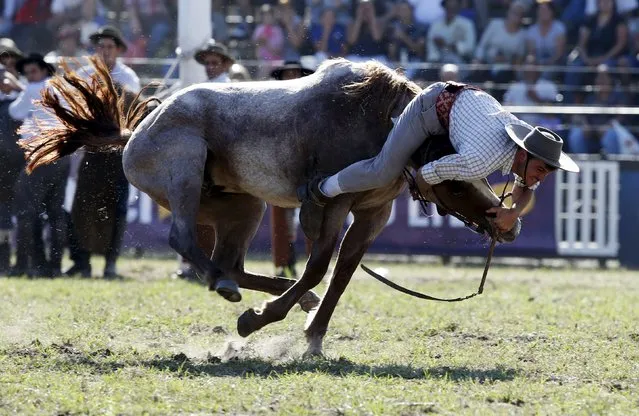
A gaucho is unseat by a wild horse during the annual celebration of Criolla Week in Montevideo, March 30, 2015. Throughout Easter Week, “gauchos”, the Latin American equivalent of the North American cowboy, from all over Uruguay and neighboring Argentina and Brazil will visit Montevideo to participate in the Criolla Week to win the best rider award. The competition is held from March 29 to April 5 this year. (Photo by Andres Stapff/Reuters)

A gaucho is unseat by a wild horse during the annual celebration of Criolla Week in Montevideo, March 30, 2015. Throughout Easter Week, “gauchos”, the Latin American equivalent of the North American cowboy, from all over Uruguay and neighboring Argentina and Brazil will visit Montevideo to participate in the Criolla Week to win the best rider award. The competition is held from March 29 to April 5 this year. (Photo by Andres Stapff/Reuters)
Details
01 Apr 2015 12:22:00