Loading...
Done
“Fish Love” Project by Photographer Denis Rouvre. Gillian Anderson. (Photo by Denis Rouvre)

The photo project was done for the organization Fishlove and included some other U.K.-based celebrities posing in the buff with critters ranging from bass fish to sharks. Its goal is to raise awareness of how overfishing is destroying the oceans. The release of Gillian's nearly nude pic, which was snapped by French portrait photographer Denis Rouvre, is timed with a European Parliament vote on banning destructive forms of deep-sea fishing in the Northeast Atlantic. The Fishlove organization is trying to rally voters to sign a petition ending deep-sea trawling – which, according to scientists, is negatively impacting the fish population and their habits – and Gillian solicited signatures in a Twitter post. Photo: “Fish Love” Project by Photographer Denis Rouvre. Gillian Anderson. (Photo by Denis Rouvre)
Details
04 Dec 2013 20:33:00
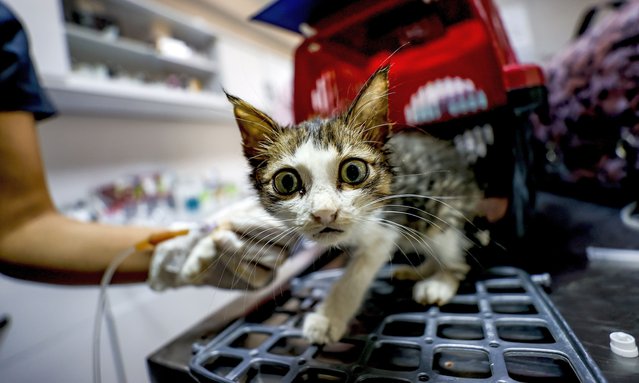
An injured cat receives treatment at a veterinary clinic by volunteer vets after a forest fire that broke out in Manavgat district of Turkeyâs Antalya on July 31, 2021. At least seven people have died in the wildfires raging in Turkey’s Mediterranean towns, the Turkish health ministry confirmed on 01 August 2021. (Photo by Mustafa Ciftci/Anadolu Agency via Getty Images)

An injured cat receives treatment at a veterinary clinic by volunteer vets after a forest fire that broke out in Manavgat district of Turkeyâs Antalya on July 31, 2021. At least seven people have died in the wildfires raging in Turkey’s Mediterranean towns, the Turkish health ministry confirmed on 01 August 2021. (Photo by Mustafa Ciftci/Anadolu Agency via Getty Images)
Details
02 Aug 2021 08:19:00
New Zealand Defence Force personal perform a haka during Te Rau Aroha, an evening to commemorate Maori service in the New Zealand Armed Forces on February 05, 2020 in Waitangi, New Zealand. The Waitangi Day national holiday celebrates the signing of the treaty of Waitangi on February 6, 1840 by Maori chiefs and the British Crown, that granted the Maori people the rights of British Citizens and ownership of their lands and other properties. (Photo by Fiona Goodall/Getty Images)

New Zealand Defence Force personal perform a haka during Te Rau Aroha, an evening to commemorate Maori service in the New Zealand Armed Forces on February 05, 2020 in Waitangi, New Zealand. The Waitangi Day national holiday celebrates the signing of the treaty of Waitangi on February 6, 1840 by Maori chiefs and the British Crown, that granted the Maori people the rights of British Citizens and ownership of their lands and other properties. (Photo by Fiona Goodall/Getty Images)
Details
07 Feb 2020 00:07:00
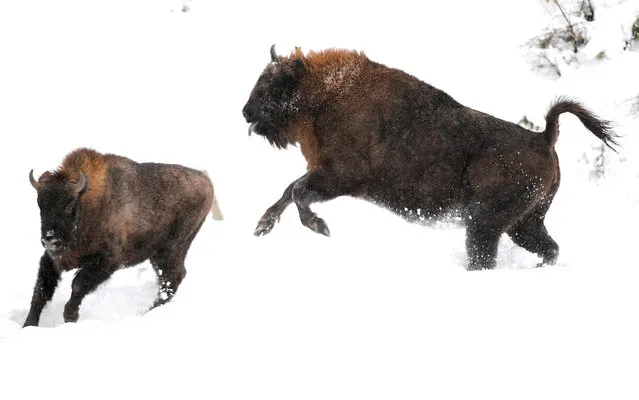
European bisons (also known as Wisent) at the Bison farm in Muczne, southeastern Poland, 30 December 2018. The Bison farm is a continuation of bison breeding in Bieszczady, which was started in 1963. Here visitors can admire the bison of Bialowieza-Caucasian line, also called the mountain race. The European Bison is the national animal of Poland. (Photo by Darek Delmanowicz/EPA/EFE)

European bisons (also known as Wisent) at the Bison farm in Muczne, southeastern Poland, 30 December 2018. The Bison farm is a continuation of bison breeding in Bieszczady, which was started in 1963. Here visitors can admire the bison of Bialowieza-Caucasian line, also called the mountain race. The European Bison is the national animal of Poland. (Photo by Darek Delmanowicz/EPA/EFE)
Details
06 Jan 2019 00:03:00
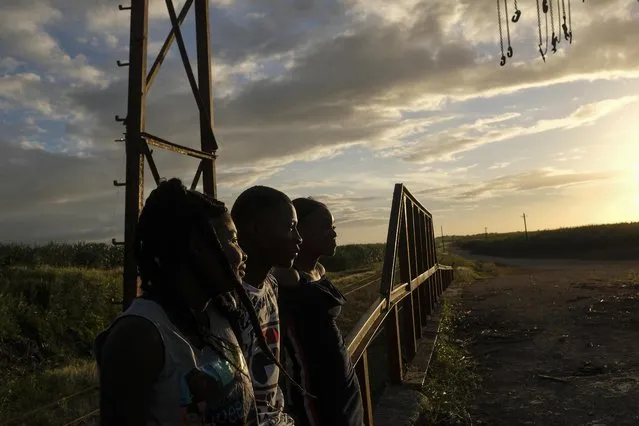
Young Haitian migrants hang out in the Batey La Lima community, an impoverished community surrounded by a massive sugarcane plantation in the coastal city of La Romana, Dominican Republic, Wednesday, November 17, 2021. As the rest of the world closes its doors to Haitian migrants, the country that shares an island with Haiti also is cracking down in a way that human rights activists say hasn’t been seen in decades. (Photo by Matias Delacroix/AP Photo)

Young Haitian migrants hang out in the Batey La Lima community, an impoverished community surrounded by a massive sugarcane plantation in the coastal city of La Romana, Dominican Republic, Wednesday, November 17, 2021. As the rest of the world closes its doors to Haitian migrants, the country that shares an island with Haiti also is cracking down in a way that human rights activists say hasn’t been seen in decades. (Photo by Matias Delacroix/AP Photo)
Details
06 Jan 2022 07:32:00
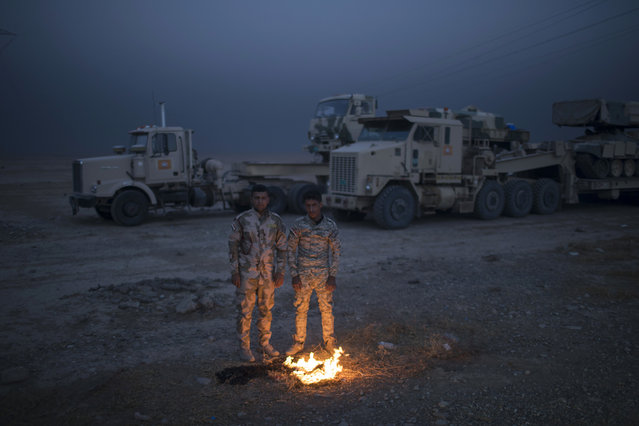
Iraqi army soldiers warm themselves next to a fire near the Qayara air base, south of Mosul, Iraq, Tuesday, November 1, 2016. The U.N. human rights office is lauding efforts by the U.S.-led coalition in the battle against the Islamic State group in Mosul. The office in Geneva says coalition flights over Iraq have largely succeeded in preventing IS from bringing in 25,000 more civilians to the city center, where the militant group has been using people as human shields as Iraqi forces advance on Mosul. (Photo by Felipe Dana/AP Photo)

Iraqi army soldiers warm themselves next to a fire near the Qayara air base, south of Mosul, Iraq, Tuesday, November 1, 2016. The U.N. human rights office is lauding efforts by the U.S.-led coalition in the battle against the Islamic State group in Mosul. The office in Geneva says coalition flights over Iraq have largely succeeded in preventing IS from bringing in 25,000 more civilians to the city center, where the militant group has been using people as human shields as Iraqi forces advance on Mosul. (Photo by Felipe Dana/AP Photo)
Details
03 Nov 2016 12:43:00
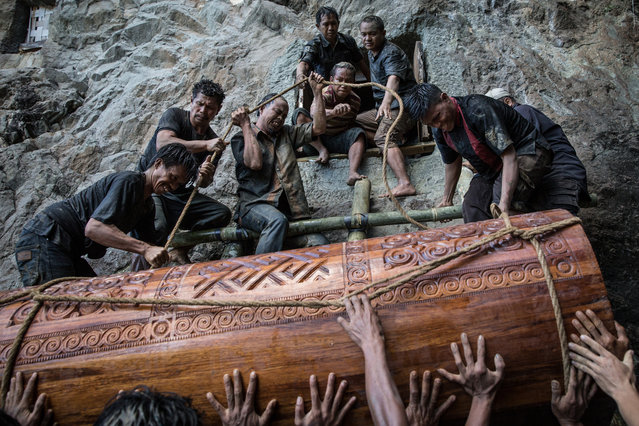
It is said that Torajans are people who “live to die”. For this Indonesian ethnic group, funerals are such extravagant events that they sometimes attract tourists. Families can postpone burials years (and the deceased are considered sick and hosted at home until the funeral) until the family can raise enough money and gather as many relatives as possible. And then it’s a jubilant multiday social event with a parade, dances and animal sacrifices. Agung Parameswara photographed these funerary practices when he traveled to South Sulawesi province, where the Torajans live. But often, their funeral isn’t the last time the dead are seen. In August, crypts are opened, coffins are slid back out and bodies delicately unsheathed. This tender ritual is known as Ma’Nene, which is customarily performed every few years. (Photo by Agung Parameswara/The Washington Post)

It is said that Torajans are people who “live to die”. For this Indonesian ethnic group, funerals are such extravagant events that they sometimes attract tourists. Families can postpone burials years (and the deceased are considered sick and hosted at home until the funeral) until the family can raise enough money and gather as many relatives as possible. And then it’s a jubilant multiday social event with a parade, dances and animal sacrifices. Agung Parameswara photographed these funerary practices when he traveled to South Sulawesi province, where the Torajans live. (Photo by Agung Parameswara/The Washington Post)
Details
06 Oct 2016 09:15:00
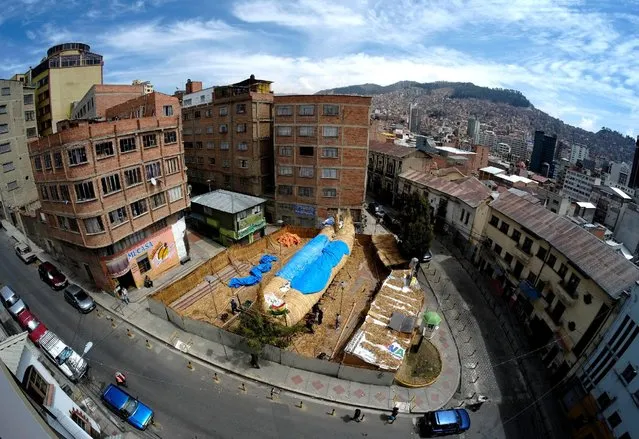
Aerial view of the “Viracocha III”, a boat made only from the totora reed, as it is being prepared to cross the Pacific from Chile to Australia on an expected six-month journey, La Paz, Bolivia, October 19, 2016. An expedition in a boat made only of reeds crafted by indigenous Bolivians is getting ready to cross the Pacific from South America to Australia, in a fresh attempt to prove that ancient mariners were capable of making the journey. Phil Buck, a 51-year-old explorer from the United States, already has led two similar expeditions and will captain the “Viracocha III” set to depart from northern Chile in February on an expected six-month journey. (Photo by David Mercado/Reuters)

Aerial view of the “Viracocha III”, a boat made only from the totora reed, as it is being prepared to cross the Pacific from Chile to Australia on an expected six-month journey, La Paz, Bolivia, October 19, 2016. An expedition in a boat made only of reeds crafted by indigenous Bolivians is getting ready to cross the Pacific from South America to Australia, in a fresh attempt to prove that ancient mariners were capable of making the journey. (Photo by David Mercado/Reuters)
Details
20 Oct 2016 10:53:00