Loading...
Done
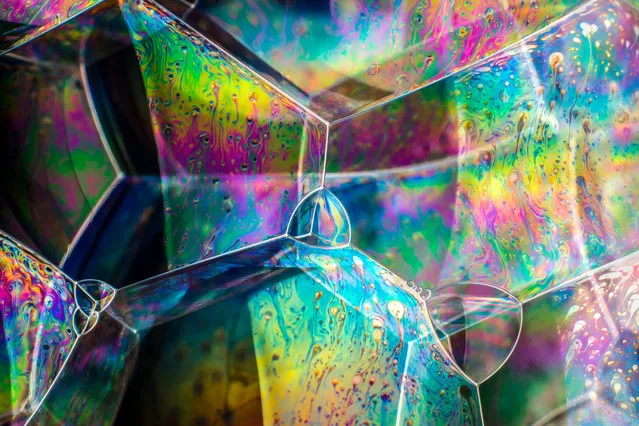
Soap Bubble Structures by Kym Cox. Bubbles optimise space and minimise their surface area for a given volume of air. This phenomenon makes them a useful tool in many areas of research, in particular, materials science and ‘packing’ – how things fit together. Bubble walls drain under gravity, thin at the top, thick at the bottom, which interferes with travelling lightwaves to create bands of colour. Black spots show the wall is too thin for interference colours, indicating the bubble is about to burst. (Photo by Kym Cox/2019 Science Photographer of the Year/RPS)

Soap Bubble Structures by Kym Cox. Bubbles optimise space and minimise their surface area for a given volume of air. This phenomenon makes them a useful tool in many areas of research, in particular, materials science and “packing” – how things fit together. Bubble walls drain under gravity, thin at the top, thick at the bottom, which interferes with travelling lightwaves to create bands of colour. Black spots show the wall is too thin for interference colours, indicating the bubble is about to burst. (Photo by Kym Cox/2019 Science Photographer of the Year/RPS)
Details
15 Aug 2019 00:03:00
The dominant woman in a leather dress with a stack and a whip in her hand. Bdsm outfit. (Photo by Getty Images)

The dominant woman in a leather dress with a stack and a whip in her hand. Bdsm outfit. (Photo by Getty Images)
Details
01 Feb 2026 08:04:00


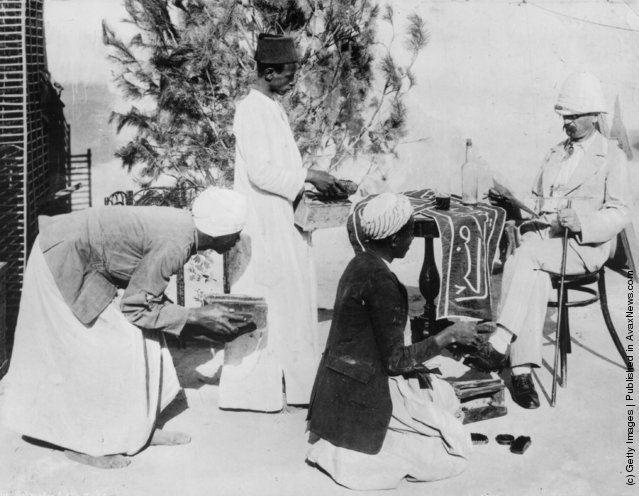
Egyptian bootblacks cleaning a European's shoes in Cairo. (Photo by Hulton Archive/Getty Images). Circa 1870
Details
24 Mar 2011 15:55:00
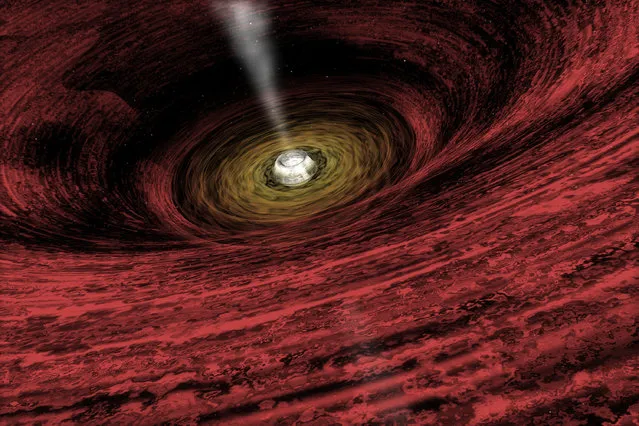
An artist's impression of a growing supermassive black hole located in the early Universe is seen in this NASA handout illustration released on June 15, 2011. Using the deepest X-ray image ever taken, astronomers found the first direct evidence that massive black holes were common in the early universe. This discovery from NASA's Chandra X-Ray Observatory shows that very young black holes grew more aggressively than previously thought, in tandem with the growth of their host galaxies. (Photo by Reuters/NASA/Chandra X-Ray Observatory/A.Hobart)

An artist's impression of a growing supermassive black hole located in the early Universe is seen in this NASA handout illustration released on June 15, 2011. Using the deepest X-ray image ever taken, astronomers found the first direct evidence that massive black holes were common in the early universe. This discovery from NASA's Chandra X-Ray Observatory shows that very young black holes grew more aggressively than previously thought, in tandem with the growth of their host galaxies. (Photo by Reuters/NASA/Chandra X-Ray Observatory/A.Hobart)
Details
11 Feb 2016 12:57:00
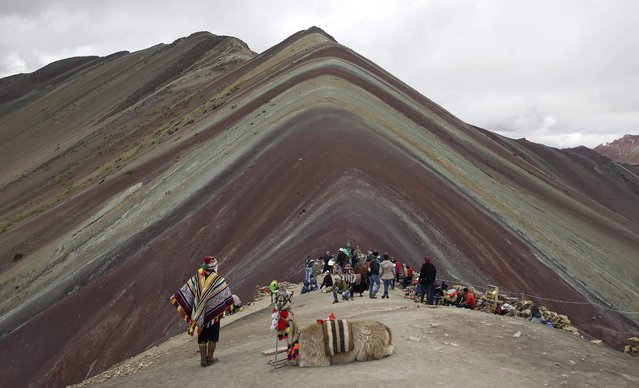
In this March 2, 2018 photo, an Andean man rests with his llama while tourists take in the natural wonder of Rainbow Mountain in Pitumarca, Peru. Tourists gasp for breath as they climb for two hours to the 16,404-foot (5,000-meter) peak in the Peruvian Andes, but stunned by the magical beauty that unfurls before them. (Photo by Martin Mejia/AP Photo)

In this March 2, 2018 photo, an Andean man rests with his llama while tourists take in the natural wonder of Rainbow Mountain in Pitumarca, Peru. Tourists gasp for breath as they climb for two hours to the 16,404-foot (5,000-meter) peak in the Peruvian Andes, but stunned by the magical beauty that unfurls before them. (Photo by Martin Mejia/AP Photo)
Details
07 May 2018 00:01:00
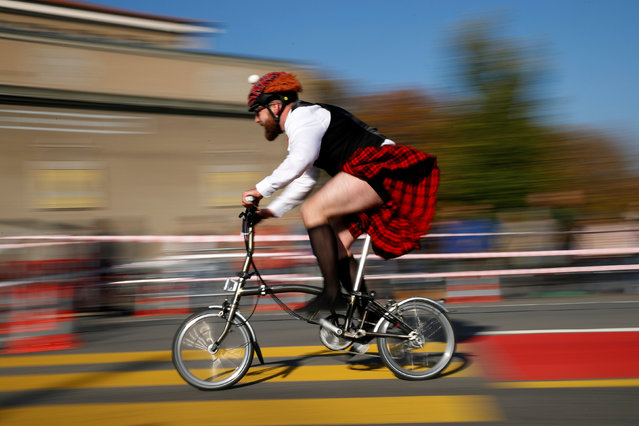
A participant races in the Brompton World Championship in Bern, Switzerland October 21, 2018. (Photo by Stefan Wermuth/Reuters)

A participant races in the Brompton World Championship in Bern, Switzerland October 21, 2018. (Photo by Stefan Wermuth/Reuters)
Details
22 Oct 2018 09:40:00
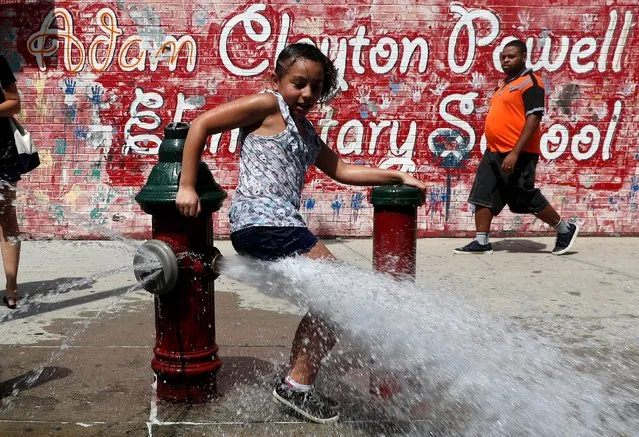
A girl cools off from the heat in water from an open fire hydrant in the Washington Heights section of upper Manhattan in New York City, New York, U.S., July 19, 2019. (Photo by Mike Segar/Reuters)

A girl cools off from the heat in water from an open fire hydrant in the Washington Heights section of upper Manhattan in New York City, New York, U.S., July 19, 2019. (Photo by Mike Segar/Reuters)
Details
27 Jul 2019 00:03:00
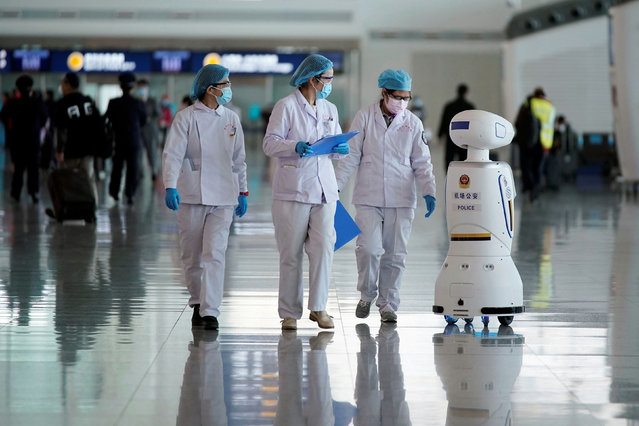
Medical workers walk by a police robot at the Wuhan Tianhe International Airport after travel restrictions to leave Wuhan, the capital of Hubei province and China's epicentre of the novel coronavirus disease (COVID-19) outbreak, were lifted, April 8, 2020. (Photo by Aly Song/Reuters)

Medical workers walk by a police robot at the Wuhan Tianhe International Airport after travel restrictions to leave Wuhan, the capital of Hubei province and China's epicentre of the novel coronavirus disease (COVID-19) outbreak, were lifted, April 8, 2020. (Photo by Aly Song/Reuters)
Details
12 Apr 2020 00:01:00