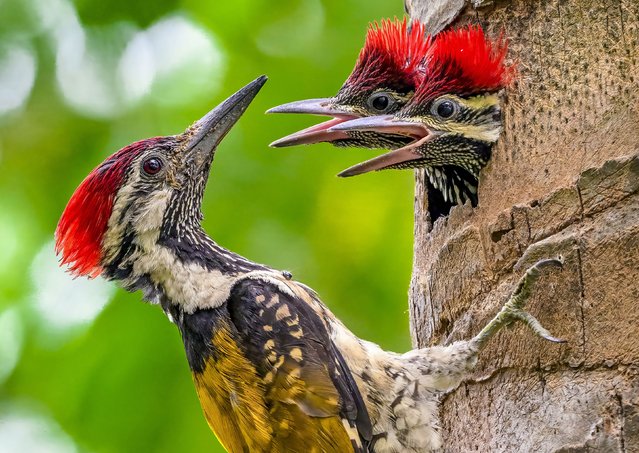
An adult black-rumped flameback woodpecker is pestered by a pair of hungry chicks in Rajarhat, India in the second decade of May 2024. (Photo by Kalyan Acharya/Solent News)
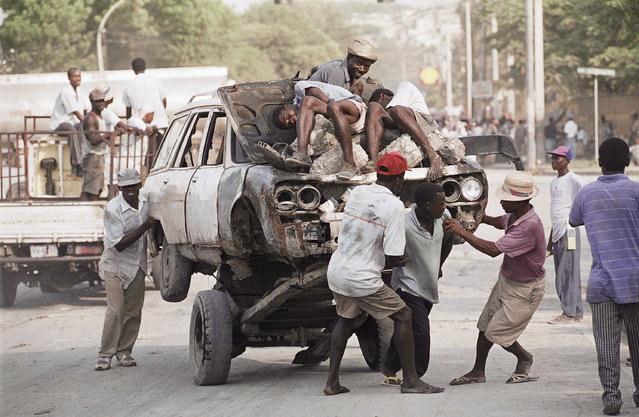
Haitians pull a car atop a pushcart in Port-au-Prince, October 11, 1994. The price of gasoline has fallen to about $6 US per gallon since U.S. forces occupied Haiti. Before, gasoline had cost as much as $10 U.S. per gallon. (Photo by Eric Draper/AP Photo)
In this June 20, 2015 photo, Niberta Galvez uses the bottom half of his shirt to collect coca leaves in Samugari, Peru. Coca farmers were among the locals who, in 1984, formed citizen militias to help the military beat back Shining Path rebels, reducing them to a small group of fewer than 500 who now are deeply involved in drug trafficking. (Photo by Rodrigo Abd/AP Photo)
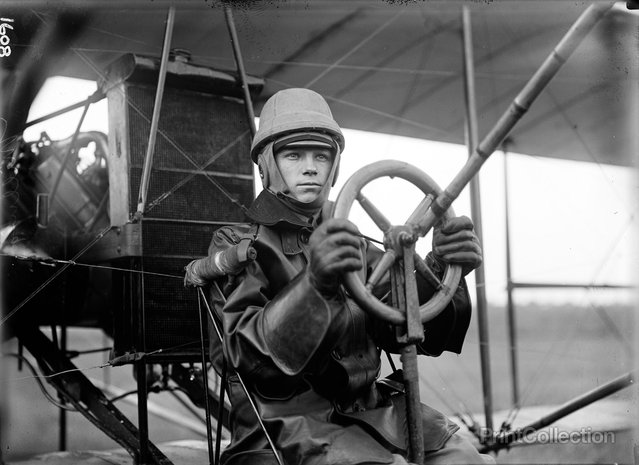
Harris & Ewing Inc. photographed people, events, and architecture, particularly in Washington, D.C., during the period 1905-1945. Photo: Tests of Curtiss Palne for Army, Single Control. Created by Harris & Ewing. Published in 1912.
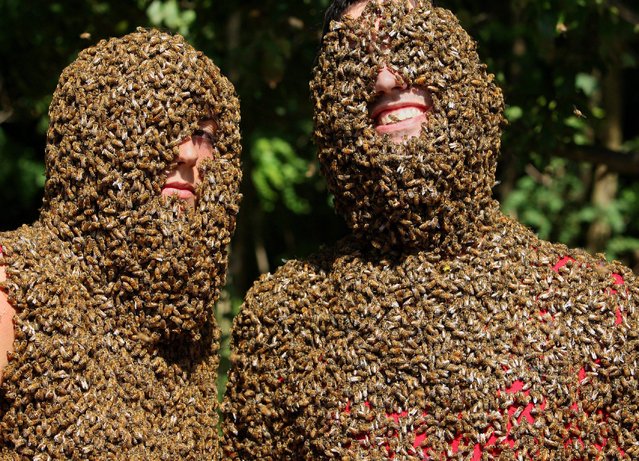
Marenda Schipper and Patrick Boelsterli show of their bee beards at an annual competition at Clovermead Adventure Farm, Saturday August 10, 2013 in Aylmer, Ontario, Canada. (Photo by Dave Chidley/AP Photo/The Canadian Press)
Artists wearing Japanese traditional clown masks march during the First Konpira Festival at Kotohiragu shrine in Tokyo Wednesday, January 10, 2018. The shrine is dedicated to sailors and seafaring. (Photo by Eugene Hoshiko/AP Photo)
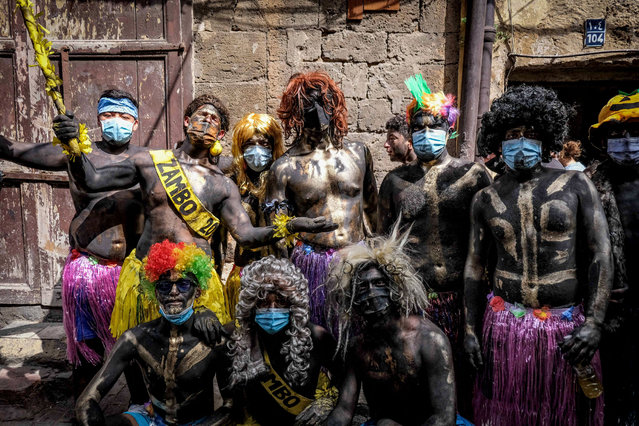
Carnival participants dressed in costume and wearing body paint pose for a group picture during the annual Zambo carnival held in Lebanon's northern city of Tripoli on March 14, 2021, marking the last period of excess on the eve of the Christian Greek Orthodox lent. The inspiration of the annual Zambo celebration is unclear, despite it being a tradition that stretches back over a century to when an emigrant to Brazil returned to his native Tripoli bringing the carnival with him. (Photo by Ibrahim Chalhoub/AFP Photo)
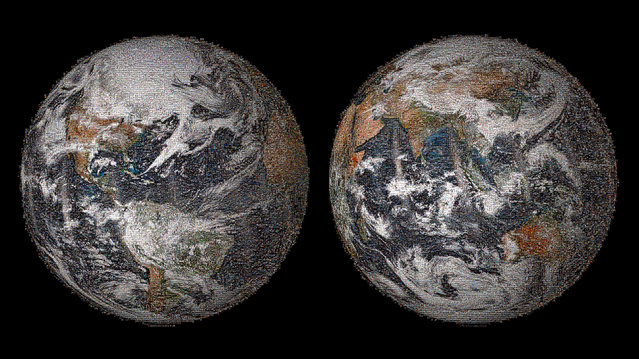
On Earth Day this year, NASA asked people all around the world a question: “Where are you on Earth Right Now?” To answer this question people were asked to post their selfie on social media. The goal was to use each picture as a pixel in the creation of a “Global Selfie” – a mosaic image that would look like Earth appeared from the space. The 3.2 gigapixel “Global Selfie”, was made the with 36,422 individual images.