Loading...
Done
Labourers walk near trucks loaded with logs, which are trapped on a muddy road, near an unreserved forest in the village of Igbatoro, southwest Nigeria, August 28, 2014. (Photo by Akintunde Akinleye/Reuters)

Labourers walk near trucks loaded with logs, which are trapped on a muddy road, near an unreserved forest in the village of Igbatoro, southwest Nigeria, August 28, 2014. Wood, a form of biomass, is the sole source of energy for hundreds of millions of Africans who lack access to modern sources of power, and logging, both legal and illegal, remains a lucrative business that has contributed to the rapid shrinking of Africa's rainforests and woodlands. (Photo by Akintunde Akinleye/Reuters)
Details
21 Nov 2014 12:50:00
Africanis 18. Murraysburg, Western Cape, May 10, 2010. (Photo by Daniel Naudé)

“The Africanis is a landrace of South African dogs. It is believed to be of ancient origin, directly descended from hounds and pariah dogs of ancient Africa, introduced into the Nile Valley from the Levant. The Swahili name for the breed is umbwa wa ki-shenzi meaning common or mongrel or “traditional dog”. Africanis is also an umbrella name for all the aboriginal dogs in southern Africa”. – Wikipedia. Photo: Africanis 18. Murraysburg, Western Cape, May 10, 2010. (Photo by Daniel Naudé)
Details
19 May 2013 11:51:00
Assimilation By Dillon Marsh

Captured by South African photographer Dillon Marsh, these fantastic photographs depict the many designs employed by sociable weavers to build sturdy nests that are safe from intruders such as cobras and tree snakes. They are also nice cool during the day, and stay warm during cold desert nights. A University of Stellenbosch graduate, Marsh is currently interested in landscape photographer who seeks out anomalies that can be arranged in a photographic series. Assimilation depicts scores of intricate weaver’s nests atop utility poles in Southern Africa. Colonies of sociable weavers have been known to stay attached to one particular nest for up to 100 years, according to The San Diego Zoo.
Details
15 Feb 2014 14:47:00
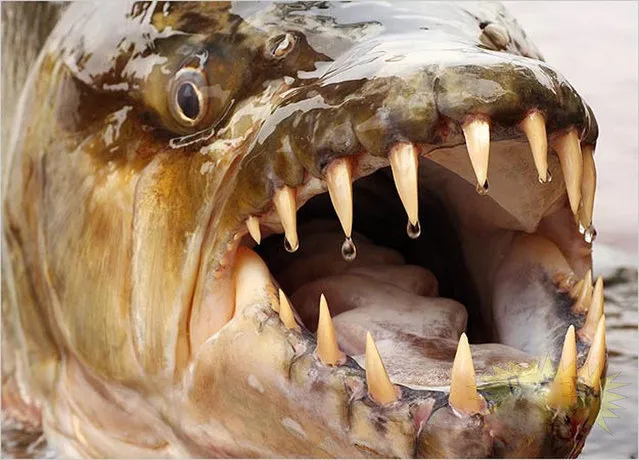
Hydrocynus goliath, also known as the goliath tigerfish, giant tigerfish or mbenga

“Hydrocynus goliath, also known as the goliath tigerfish, giant tigerfish or mbenga, is a very large African predatory freshwater fish. The giant tigerfish is restricted to the Zaire River system, Lualaba River, Lake Upemba and Lake Tanganyika”. (Photo by Tigerfishcamp / Tourettefishing / Bigfishesoftheworld)
Details
15 May 2012 12:04:00
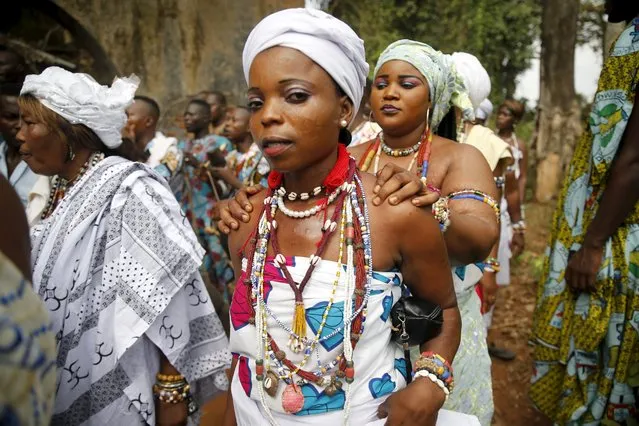
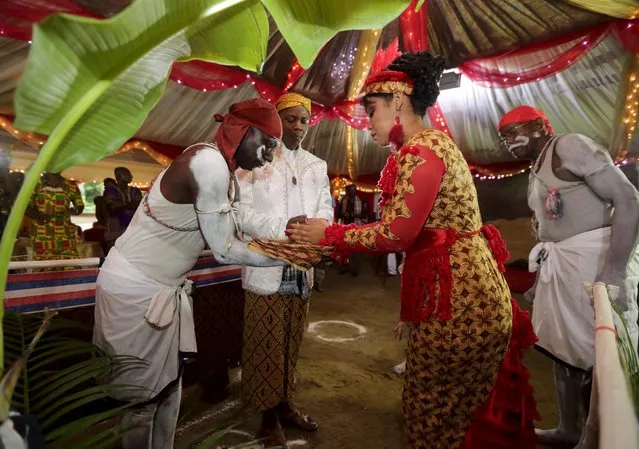
Devotees attend the annual voodoo festival in Ouidah January 10, 2016. (Photo by Akintunde Akinleye/Reuters)

Devotees attend the annual voodoo festival in Ouidah January 10, 2016. The national voodoo holiday in the West African country of Benin had a distinctively political accent this year as practitioners from Africa and the Americas gathered on Sunday to offer prayers and sacrifices for peace. Hundreds of followers of the traditional religion gathered in the Atlantic coast town of Ouidah, once an important port in the slave trade, to pray for calm during the tiny country's presidential election scheduled for February. (Photo by Akintunde Akinleye/Reuters)
Details
12 Jan 2016 08:05:00
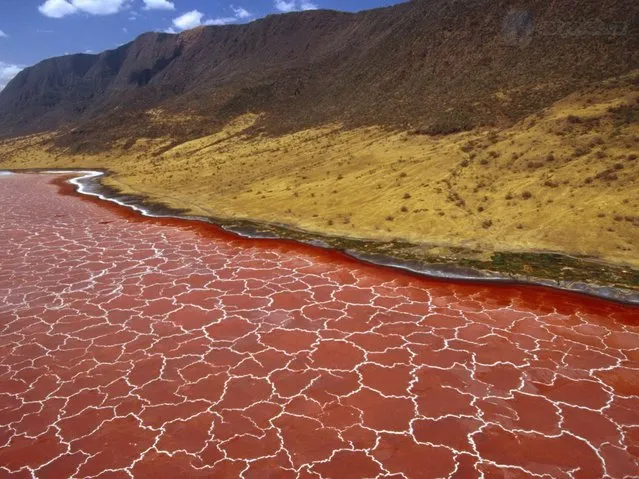
[Lake Natron in Tanzania

Lake Natron is a salt lake located in northern Tanzania, close to the Kenyan border, in the eastern branch of the East African Rift. The lake is fed by the Southern Ewaso Ng'iro River and also by mineral-rich hot springs. It is quite shallow, less than three meters (10 feet) deep, and varies in width depending on its water level, which changes due to high levels of evaporation, leaving concentrations of salt and other minerals, notably sodium carbonate (natron).
Details
05 Jun 2013 10:29:00
A curvy woman is considered prosperous, healthy and s*xy in Ivory Coast, photographer Joana Choumali explains. Here: An apprentice lines up his work on a roadside. (Photo by Joana Choumali)

Photographer Joana Choumali’s latest project explores body image and beauty by documenting the men building Abidjan’s clothing models. The “Awoulaba” mannequin is a customised model designed with the African ideal of beauty in mind, curvier than the stick-thin examples usually seen in the west. They first appeared in 2011, and have since become a familiar sight outside the numerous clothing shops dotted throughout Ivory Coast’s capital, Abidjan. Here: An apprentice lines up his work on a roadside. (Photo by Joana Choumali)
Details
06 Jun 2016 11:05:00
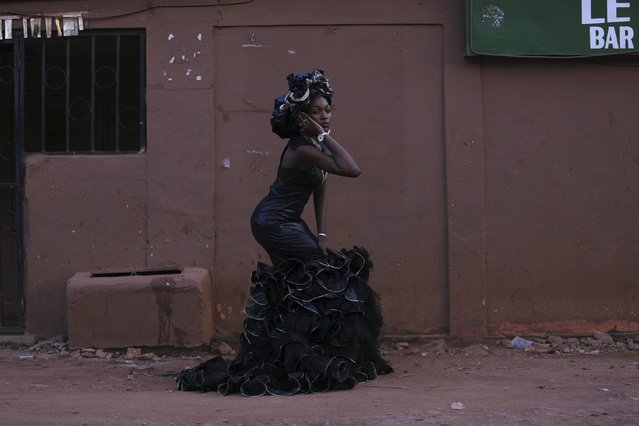
A model wears a bazin dress made by designer Fadi Maiga in Bamako, Mali, October 21, 2015. (Photo by Joe Penney/Reuters)

A model wears a bazin dress made by designer Fadi Maiga in Bamako, Mali, October 21, 2015. Gasps of delight filled the convention hall as models, decked out in Mali's signature bazin fabric in crimson reds, indigoes and neon greens, strutted the catwalk while musicians from across the West African nation provided the soundtrack. (Photo by Joe Penney/Reuters)
Details
20 Nov 2015 08:04:00