Loading...
Done
A neighborhood watch volunteer stands guard on her street on February 9, 2017 in Peronia, Guatemala. (Photo by John Moore/Getty Images)

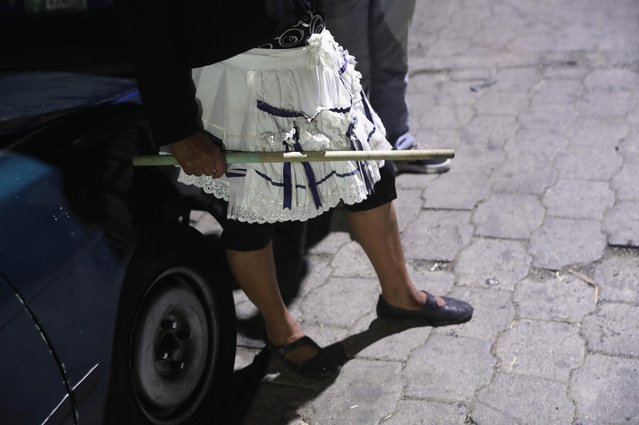
A neighborhood watch volunteer stands guard on her street on February 9, 2017 in Peronia, Guatemala. Residents of Peronia, south of Guatemala City organized block by block to secure their community after ten of their neighbors in January were killed, they say, for refusing to pay extortion money to gangs. Armed with machetes and sticks, residents take turns each night, baring strangers' entry into their neighborhoods. Violence and poverty continue to drive emigration from Central America to the United States, even as the Trump administration moves to tighten border security. (Photo by John Moore/Getty Images)
Details
11 Feb 2017 00:00:00
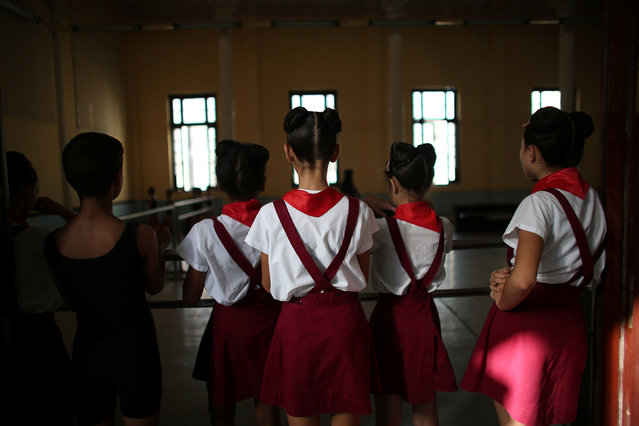
Students at the Cuba's National Ballet School (ENB) watch a class from outside the classroom in Havana, Cuba, October 12, 2016. (Photo by Alexandre Meneghini/Reuters)

Students at the Cuba's National Ballet School (ENB) watch a class from outside the classroom in Havana, Cuba, October 12, 2016. Catherine Conley, the first American full-time student at Cuba's prestigious National Ballet School, hopes to gain an edge back home by learning the powerful Cuban style with its dazzling turns and jumps. (Photo by Alexandre Meneghini/Reuters)
Details
19 Oct 2016 11:46:00
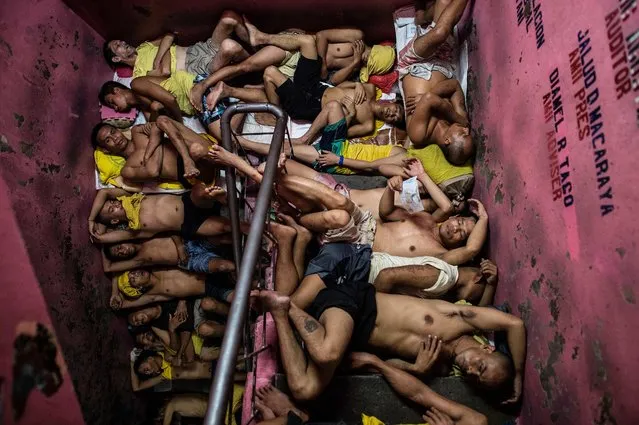
Inmates sleep on the steps of a ladder inside the Quezon City jail at night in Manila in this picture taken on July 21, 2016. (Photo by Noel Celis/AFP Photo)

Inmates sleep on the steps of a ladder inside the Quezon City jail at night in Manila in this picture taken on July 21, 2016. There are 3,800 inmates at the jail, which was built six decades ago to house 800, and they engage in a relentless contest for space. Men take turns to sleep on the cracked cement floor of an open-air basketball court, the steps of staircases, underneath beds and hammocks made out of old blankets. (Photo by Noel Celis/AFP Photo)
Details
06 Aug 2016 13:24:00
His goal with the project is to make the invisible visible. (Photo by Luis Hernan)

Luis Hernan was always curious about how wireless technologies like radio are transmitted through the air. So after finishing up his studies in architecture, computer science, and design, Hernan decided to research these invisible signals through a PhD at Newcastle University. Hernan set up a system that turned the wireless signals around him into colourful, ghostlike images using long-exposure photography, allowing people to see the strength of the signals around them. (Photo by Luis Hernan)
Details
13 Aug 2014 09:38:00
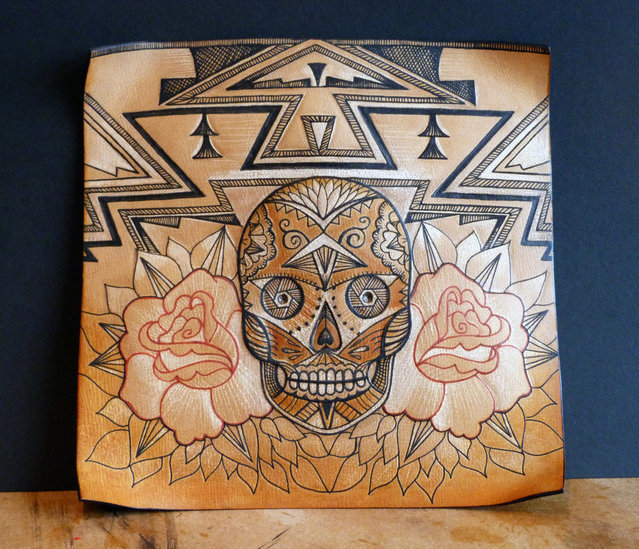
Tattooed Leather Art By Punctured Artefact

Tattoos always seem to fascinate us, which is probably one of the reasons why Dionne Marshall has turned to tattooing patterns onto leather. The designs she creates are reminiscent of tattoos favored by people in Central America. Working with leather is a lot harder than working with paints or pencils. Unlike the latter, there is no room for mistakes when you make a tattoo. This is the reason why there are so few artists that specialize in creating art by tattooing leather. However, the results are definitely worth it, as this is a truly unique form of art with a primal feeling to it. (Photo by Dionne Marshall)
Details
18 Oct 2014 06:01:00
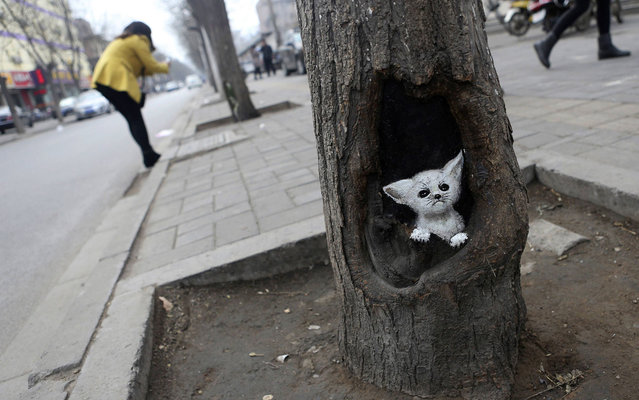
An image of a Fennec fox painted on a tree hole by Wang Yue is seen in Shijiazhuang, on March 13, 2013. Wang Yue, a senior at Dalian Industry University, uses her paintbrush to turn ugly tree holes into lovely views in Shijiazhuang, capital city of Hebei Province, China. Wang and her companions call the tree-hole paintings “meitu”, which means “beautiful journey”. The paintings on the trees have brightened the city during the dull, grey winter. (Photo by Pillar Lee/Reuters)

An image of a Fennec fox painted on a tree hole by Wang Yue is seen in Shijiazhuang, on March 13, 2013. Wang Yue, a senior at Dalian Industry University, uses her paintbrush to turn ugly tree holes into lovely views in Shijiazhuang, capital city of Hebei Province, China. Wang and her companions call the tree-hole paintings “meitu”, which means “beautiful journey”. The paintings on the trees have brightened the city during the dull, grey winter. (Photo by Pillar Lee/Reuters)

P.S. All pictures are presented in high resolution. To see Hi-Res images – just TWICE click on any picture. In other words, click small picture – opens the BIG picture. Click BIG picture – opens VERY BIG picture (if available; this principle works anywhere on the site AvaxNews).
Details
16 Mar 2013 11:27:00
Two women wearing nun outfits drink beer while watching the 2014 Tim Hortons Brier curling championships in Kamloops, British Columbia in this March 8, 2014 file photo. (Photo and caption by Ben Nelms/Reuters)

Two women wearing nun outfits drink beer while watching the 2014 Tim Hortons Brier curling championships in Kamloops, British Columbia in this March 8, 2014 file photo. Although some people might conclude that a curling event could produce a dull atmosphere, it is actually far from it. Some of the most energetic and loyal fans are committed to showing their colours at tournaments around the world. There was a lull in the games that were being held on this day and I remember spotting these nuns sitting in their seats earlier. Although them just sitting there didn't produce a picture, I kept my eye on them for the entire match. As soon as I spotted them with beer in their hands, I slowly turned my camera towards them and waited for them to take a drink. One of the challenges of shooting this image was to not have everyone notice me taking the photo. I had a longer lens on and was right in the middle of the rink. I slowly turned my lens, not to make my intentions too obvious, and waited until they drank from their beers together. (Photo and caption by Ben Nelms/Reuters)
Details
27 Nov 2014 14:39:00
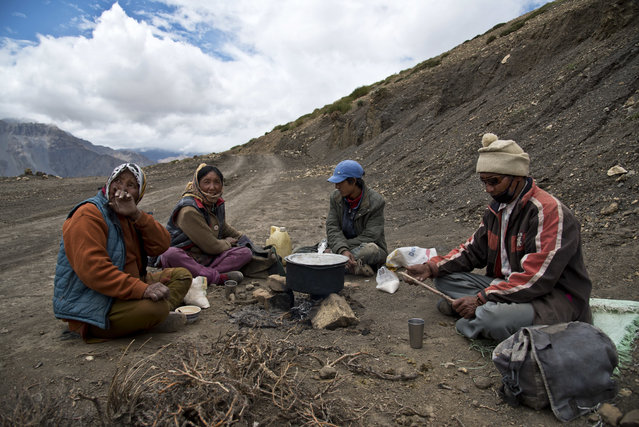
In this August 17, 2016, photo, from left to right, Chhering Chodom, 60, Tashi Yangzom, 50, Lobsang Chhering, 27, and Dorje Tandup, 58, drink milk tea on the side of the road. For centuries, the sleepy valley nestled in the Indian Himalayas remained a hidden Buddhist enclave forbidden to outsiders. Enduring the harsh year-round conditions of the high mountain desert, the people of Spiti Valley lived by a simple communal code – share the Earth's bounty, be hospitable to neighbors, and eschew greed and temptation at all turns. That's all starting to change, for better or worse. Since India began allowing its own citizens as well as outsiders to visit the valley in the early 1990s, tourism and trade have boomed. And the marks of modernization, such as solar panels, asphalt roads and concrete buildings, have begun to appear around some of the villages that dot the remote landscape at altitudes above 4,000 meters (13,000 feet). (Photo by Thomas Cytrynowicz/AP Photo)

In this August 17, 2016, photo, from left to right, Chhering Chodom, 60, Tashi Yangzom, 50, Lobsang Chhering, 27, and Dorje Tandup, 58, drink milk tea on the side of the road. For centuries, the sleepy valley nestled in the Indian Himalayas remained a hidden Buddhist enclave forbidden to outsiders. Enduring the harsh year-round conditions of the high mountain desert, the people of Spiti Valley lived by a simple communal code – share the Earth's bounty, be hospitable to neighbors, and eschew greed and temptation at all turns. That's all starting to change, for better or worse. (Photo by Thomas Cytrynowicz/AP Photo)
Details
15 Sep 2016 09:22:00