Loading...
Done
Photo Collages By Corinne Vionnet

That's exactly what Vionnet's "Photo Opportunities" series does: takes hundreds of tourist photos of iconic landmarks, superimposes them into semi-transparency, and lets a dreamlike meta-image emerge.
Details
17 Aug 2014 08:30:00
This Dog Was Raised By Cats

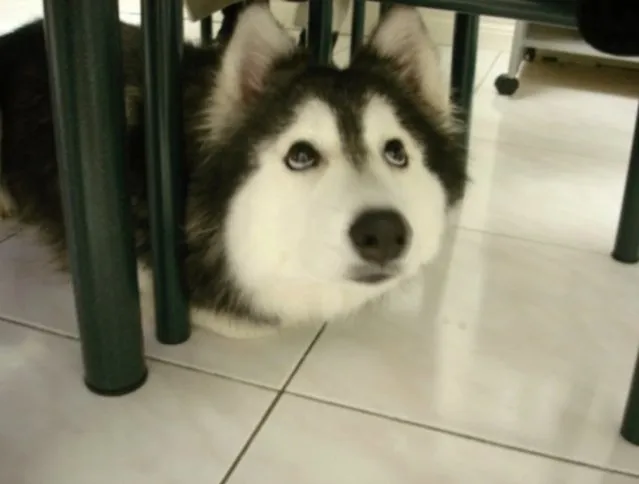
Tally the husky does not act like a normal dog. She was raised with cats so she has picked up some very cat-like mannerisms. Her owner, a reddit user, posted these photos of her and she’s become a bit of a celebrity.
Details
28 May 2014 08:46:00


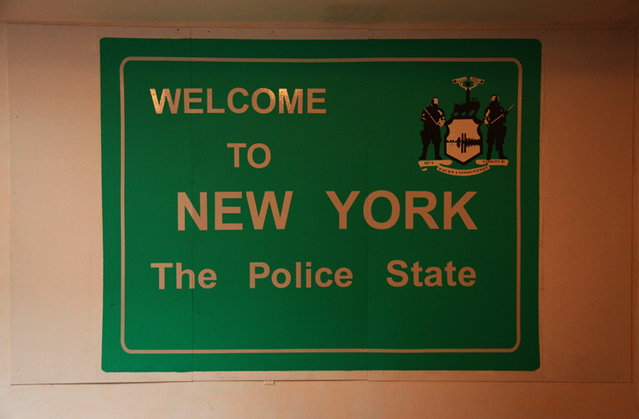
Gilf! does a stripped back road sign satire as part of the installation that she curated for BOS 2012 official opening party. (photo © Jaime Rojo)
Details
11 Jun 2012 06:23:00
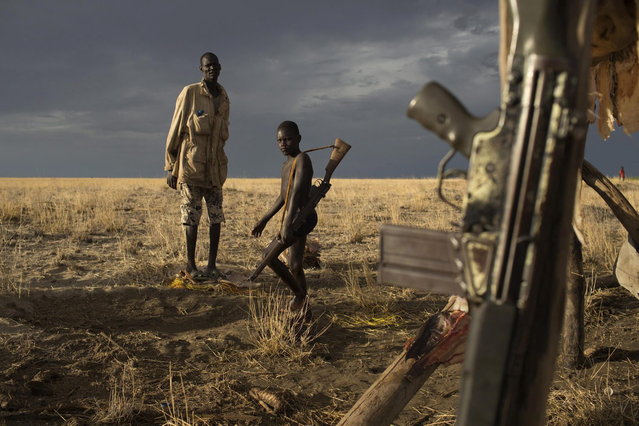
A Turkana man and a boy carrying a gun look on as a G3 battle rifle hangs from a structure used to dry fish at a fishing camp on the shores of Lake Turkana, some kilometres from Todonyang near the Kenya-Ethiopia border in northwestern Kenya October 12, 2013. (Photo by Siegfried Modola/Reuters)

A Turkana man and a boy carrying a gun look on as a G3 battle rifle hangs from a structure used to dry fish at a fishing camp on the shores of Lake Turkana, some kilometres from Todonyang near the Kenya-Ethiopia border in northwestern Kenya October 12, 2013The Turkana are traditionally nomadic pastoralists, but they have seen the pasture that they need to feed their herds suffer from recurring droughts and many have turned to fishing. However, Lake Turkana is overfished, and scarcity of food and pastureland is fuelling long-standing conflict with Ethiopian indigenous Dhaasanac, who have seen grazing grounds squeezed by large-scale government agricultural schemes in southern Ethiopia. The Dhaasanac now venture ever deeper into Kenyan territory in search of fish and grass, clashing with neighbours. Fighting between the communities has a long history, but the conflict has become ever more fatal as automatic weapons from other regional conflicts seep into the area. While the Turkana region is short of basics like grass and ground-water, it contains other resources including oil reserves and massive, newly discovered underground aquifers. (Photo by Siegfried Modola/Reuters)

Details
05 Dec 2013 12:08:00
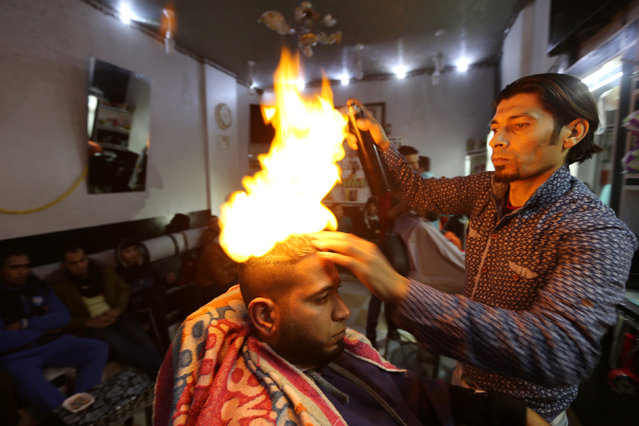
Palestinian barber Ramadan Odwan styles and straightens the hair of a customer with fire at his salon in Rafah, in the southern Gaza Strip February 2, 2017. In Ramadan Odwan's barbershop in Gaza, hair isn't just blow-dried, it's blowtorch-dried. “People have gone crazy about it, many people are curious to go through the experience and they are not afraid”, he told Reuters. “People here love adventures”. Odwan, 37, is not the first stylist in the world to use flame to straighten hair, but his craft is unique in the Gaza Strip. In his salon in the southern Gaza town of Rafah, Odwan applied what he described as a protective liquid coating to a customer's hair – he declined to disclose its contents – before aiming for the head and pressing the button on a small blowtorch. “I control how long I apply fire, I keep it on and off for 10 seconds or 15 seconds. It is completely safe and I have not encountered any accident since I started it two months ago”, Odwan added. Odwan charges 20 shekels ($5.20) for a haircut and fire-straightening. A barber for the past 18 years, he said part of the reason he uses the technique is to show that Palestinian barbers are as “professional as those out there around the world”. (Photo by Ibraheem Abu Mustafa/Reuters)

Palestinian barber Ramadan Odwan styles and straightens the hair of a customer with fire at his salon in Rafah, in the southern Gaza Strip February 2, 2017. In Ramadan Odwan's barbershop in Gaza, hair isn't just blow-dried, it's blowtorch-dried. “People have gone crazy about it, many people are curious to go through the experience and they are not afraid”, he told Reuters. “People here love adventures”. (Photo by Ibraheem Abu Mustafa/Reuters)
Details
11 Feb 2017 00:05:00
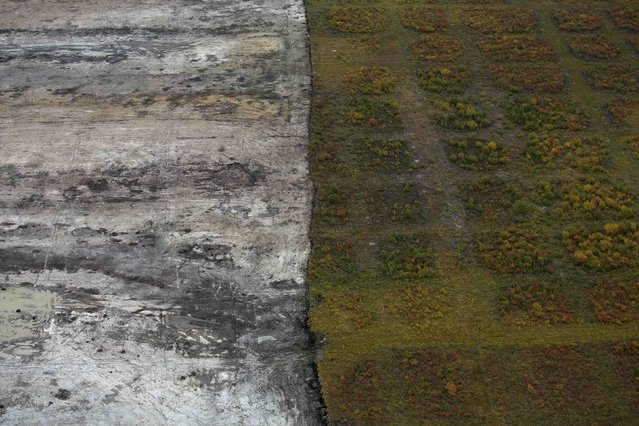
The top layer of muskeg and earth (L) is removed at the Syncrude tar sands operations near Fort McMurray, Alberta, September 17, 2014. Syncrude currently produces 350,000 barrels per day of high quality light, low sulphur crude oil according to company reports. (Photo by Todd Korol/Reuters)

The top layer of muskeg and earth (L) is removed at the Syncrude tar sands operations near Fort McMurray, Alberta, September 17, 2014. Syncrude currently produces 350,000 barrels per day of high quality light, low sulphur crude oil according to company reports. (Photo by Todd Korol/Reuters)
Details
21 Sep 2014 11:06:00
Indian brides and grooms wait for the start of a mass wedding in New Delhi on June 15, 2014. Some 92 low-income and disabled couples tied the knot in a free mass wedding ceremony organised by the non-profit organisation Narayan Sewa Sansthan. (Photo by Chandan Khanna/AFP Photo)

Indian brides and grooms wait for the start of a mass wedding in New Delhi on June 15, 2014. Some 92 low-income and disabled couples tied the knot in a free mass wedding ceremony organised by the non-profit organisation Narayan Sewa Sansthan. (Photo by Chandan Khanna/AFP Photo)
Details
17 Jun 2014 10:43:00
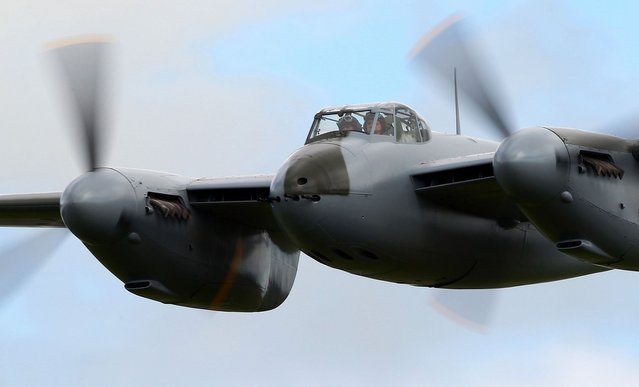
Havilland Mosquito KA 114 performs a low pass during an airshow commemorating the completion of its rebuild on September 29, 2012 in Ardmore, New Zealand. The plane was restored by Warbird Restorations at Ardmore Aerodrome and is the only flying Mosquito in the world.  (Photo by Simon Watts)

Havilland Mosquito KA 114 performs a low pass during an airshow commemorating the completion of its rebuild on September 29, 2012 in Ardmore, New Zealand. The plane was restored by Warbird Restorations at Ardmore Aerodrome and is the only flying Mosquito in the world. (Photo by Simon Watts)
Details
30 Sep 2012 10:25:00