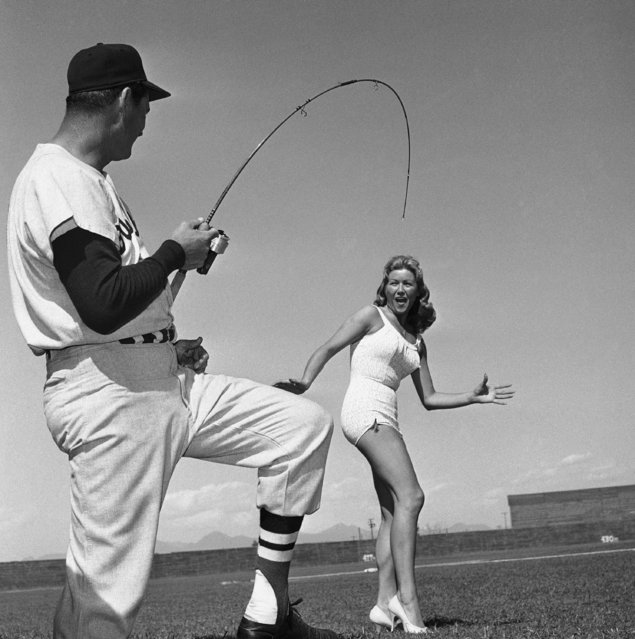
Ardent fisherman Ted Williams of the Boston Red Sox appears to have hooked Frances Flajnik, Tempe queen of Anglers World Series, March 15, 1960. (Photo by AP Photo)
A tamed hawk sits on a chair next to a participant during a traditional hunting contest in Almaty, Kazakhstan on December 1, 2018. (Photo by Pavel Mikheyev/Reuters)
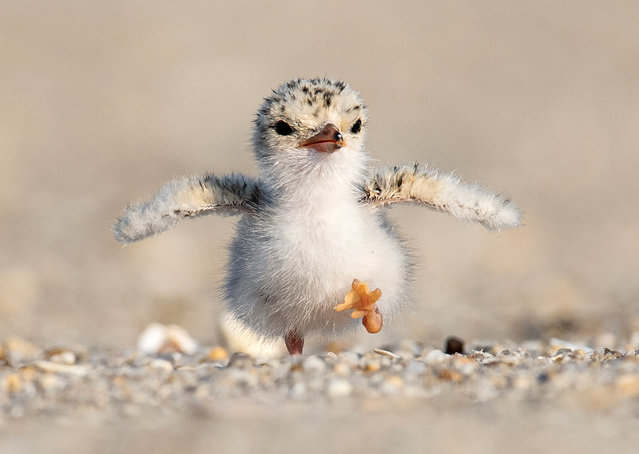
A tern chick takes its first steps in the first decade of June 2024 at Nickerson Beach, New York, a common nesting location. (Photo by Suraj Ramamurthy/Solent News)
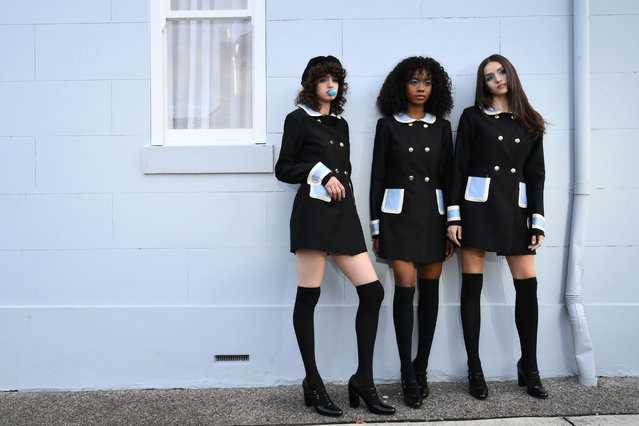
Models pose during the Macgraw presentation show during Afterpay Australian Fashion Week 2023 on May 18, 2023 in Sydney, Australia. (Photo by James Gourley/Getty Images for AAFW)
During Madrid's pride week, participants compete during the annual high heel race in Madrid, Spain, Thursday, July 29, 2023. Competitors must wear shoes with a heel of a minimum of 15 centimetres (5.9 inches). (Photo by Bernat Armangue/AP Photo)
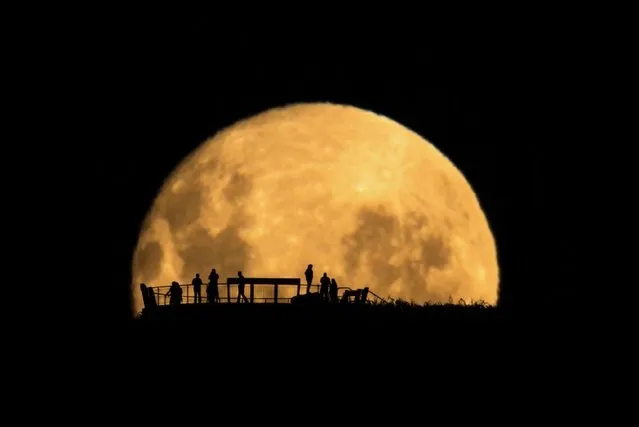
The Royal Observatory just announced its Astronomy Photographer Of The Year 2013 winners. Australian photographer Mark Gee was chosen among a thousand amateur and professional photographers around the globe to win the top title. His work is part of an exhibition of the winning photographers, which opened on Sept. 19 at the Royal Observatory Greenwich. The Royal Observatory shared with us the winners and notable mentions of the competition. Their descriptions of the prizewinners can be found below the images.
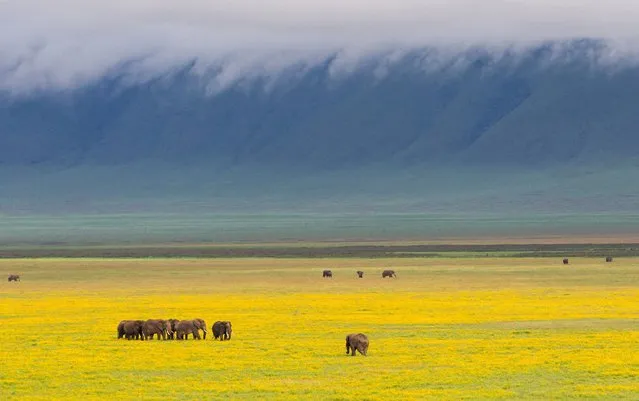
Ngorongoro Crater (Tanzania). At 610m deep and 260 sq km, this is the largest unflooded caldera in the world. A blue-green vision from above it's a haven for engangered wildlife and Maasai livestock. The crater was formed three million years ago when a giant volcano, which could have been as high as Kilimanjaro, exploded and collapsed. The caldera formed the concentric fractures in the crust cracked down to a magma reservoir deep underground. (Photo by John Bryant/Getty Images)