Loading...
Done
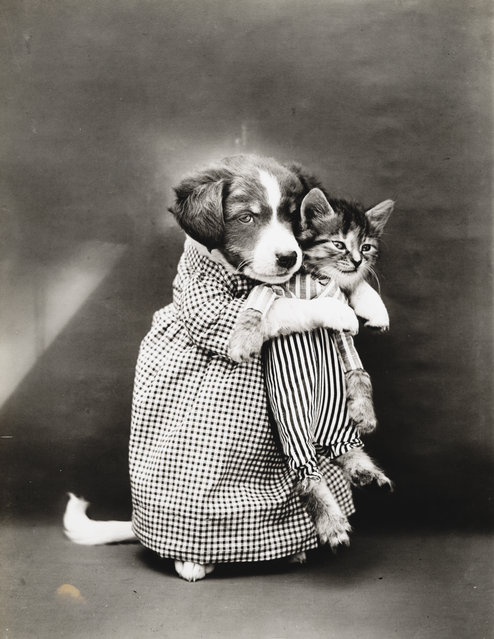
Photograph shows a puppy holding a kitten, 1914. (Photo by Harry Whittier Frees/Library of Congress)

“Harry Whittier Frees (1879–1953) was an American photographer who created novelty postcards and children's books based on his photographs of animals. He dressed the animals and posed them in human situations with props, often with captions; these can be seen as progenitors of modern lolcats”. – Wikipedia. Photo: “The nurse”. Photograph shows a puppy holding a kitten, 1914. (Photo by Harry Whittier Frees/Library of Congress)

P.S. All pictures are presented in high resolution. To see Hi-Res images – just TWICE click on any picture. In other words, click small picture – opens the BIG picture. Click BIG picture – opens VERY BIG picture (if available; this principle works anywhere on the site AvaxNews).
Details
28 Mar 2014 11:20:00


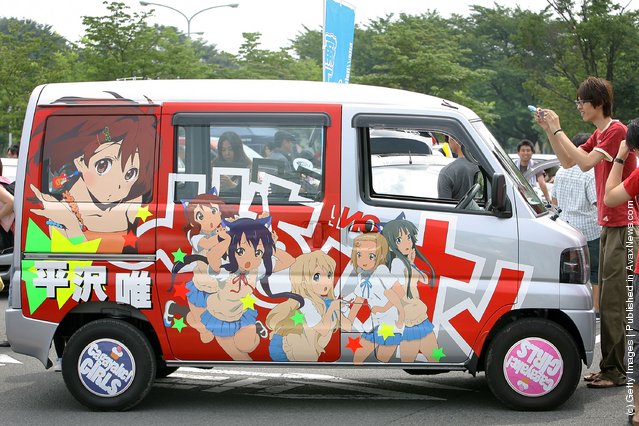
“Itasha (痛車), literally “painmobile”, is a Japanese term for an otaku fad of individuals decorating the bodies of their cars with fictional characters of anime, manga, or video games (especially bishōjo game or eroge). These characters are predominately “cute” female. The decorations usually involve paint schemes and stickers. Automobiles are called Itasha, while similar motorcycles and bicycles are called itansha (痛単車) and itachari (痛チャリ), respectively”. – Wikipedia


Photo: A visitor takes pictures of an anime-decorated «Itasha» car displayed during the “Moe Fes in Washimiya” at Washimiya Town Hall on July 18, 2009 in Washimiya, Saitama, Japan. Itasha, a word derived from “itai” (painful) and “sha” (car), are vehicles decorated with mostly female characters from Japanese manga, anime and video games. (Photo by Kiyoshi Ota/Getty Images)
Details
02 May 2011 08:38:00
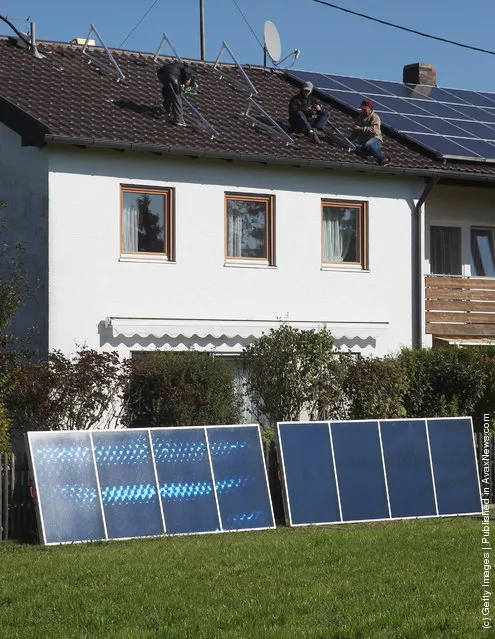
Workers install solar power modules for producing heat on the roof of a house

Workers prepare the roof of a house to get installed solar power modules for producing heat on October 15, 2011 in Wessling, Germany. Germany has and is continuing to invest heavily in solar energy, both in the public and private sectors. The German government introduced a feed-in tariff with its Renewable Energy Act in 2000 that guarantees homeowners a minimum rate for selling electricity from renewable energy sources into the nation's electricity grid. (Photo by Alexandra Beier/Getty Images)
Details
16 Oct 2011 10:58:00
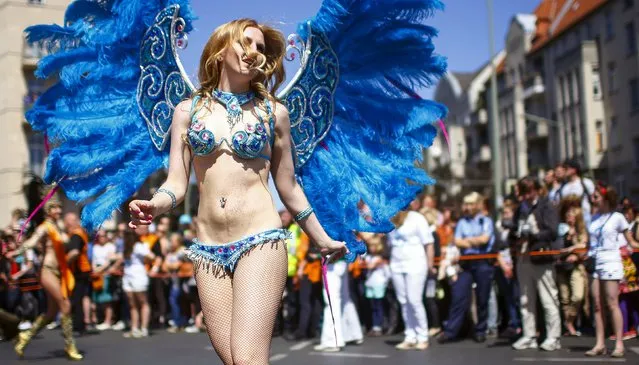
Dancers take part in the Karneval der Kulturen (Carnival of Cultures) street parade of ethnic minorities, in Berlin, Germany, May 24, 2015. (Photo by Hannibal Hanschke/Reuters)

Dancers take part in the Karneval der Kulturen (Carnival of Cultures) street parade of ethnic minorities, in Berlin, Germany, May 24, 2015. A few dozen dancers, musicians and performers from dozens of communities took part in the urban festival on Sunday that aspires to reflect the multi-ethnic diversity of the German capital. (Photo by Hannibal Hanschke/Reuters)
Details
25 May 2015 09:20:00
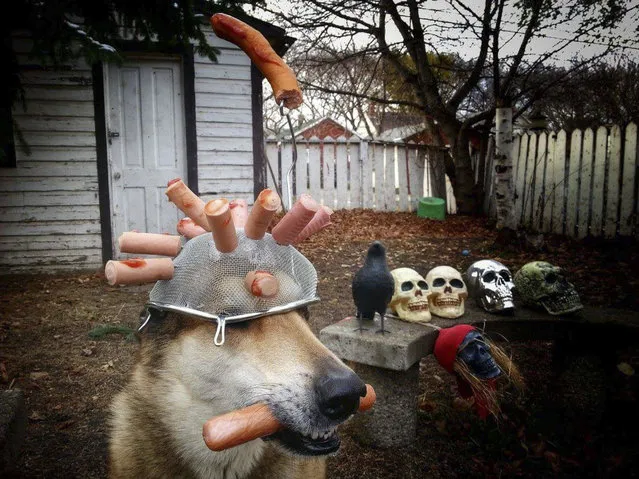
Toby balances halloween decorations on his head. (Photo by Pat Langer/Caters News Agency)

Toby, an 11-year-old German shepherd-husky mix, can hold almost anything on his head that his owner, Pat Langner, can think up, including balls, Christmas trees, and even the ingredients for a peanut butter and jelly sandwich. He also shows remarkable self-restraint by not immediately gobbling down the food that his owner gives him to balance. Here: Toby balances halloween decorations on his head. (Photo by Pat Langer/Caters News Agency)
Details
19 Dec 2017 08:05:00
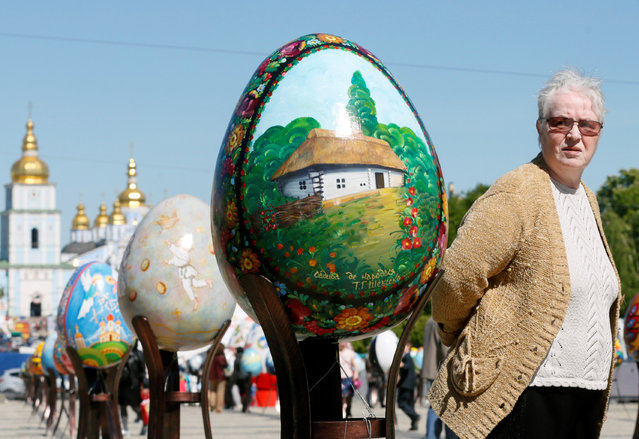
A woman looks at traditional Ukrainian Easter eggs “Pysanka”, installed as part of the upcoming celebrations of Easter, in central Kiev, Ukraine, April 29, 2016. A pysanka is a Ukrainian Easter egg, decorated with traditional Ukrainian folk designs using a wax-resist (batik) method. The word pysanka comes from the verb pysaty, “to write”, as the designs are not painted on, but written with beeswax. Many other eastern European ethnic groups decorate eggs using wax resist for Easter. These include the Belarusians, Bulgarians, Croats, Czechs, Hungarians, Lithuanians, Poles, Romanians, Serbs, Slovaks, Slovenes and Sorbs. (Photo by Valentyn Ogirenko/Reuters)

A woman looks at traditional Ukrainian Easter eggs “Pysanka”, installed as part of the upcoming celebrations of Easter, in central Kiev, Ukraine, April 29, 2016. A pysanka is a Ukrainian Easter egg, decorated with traditional Ukrainian folk designs using a wax-resist (batik) method. The word pysanka comes from the verb pysaty, “to write”, as the designs are not painted on, but written with beeswax. Many other eastern European ethnic groups decorate eggs using wax resist for Easter. These include the Belarusians, Bulgarians, Croats, Czechs, Hungarians, Lithuanians, Poles, Romanians, Serbs, Slovaks, Slovenes and Sorbs. (Photo by Valentyn Ogirenko/Reuters)
Details
30 Apr 2016 09:00:00
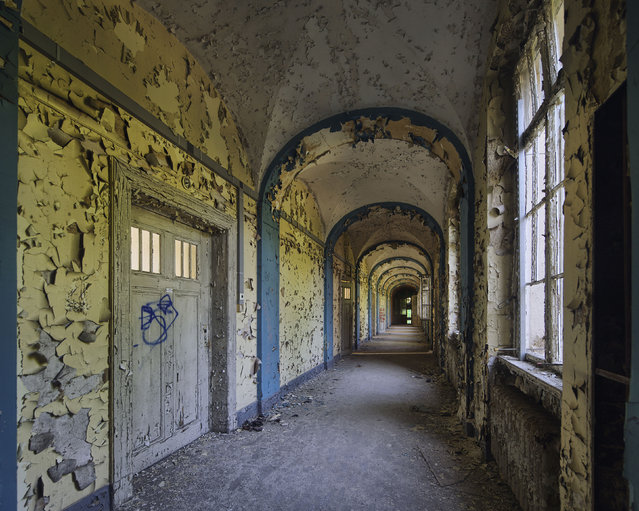
Lung sanatorium. (Photo by Daniel Barter/Caters News)

Even the powerhouse of Europe has its fair share of abandoned properties and empty shop fronts as seen in these pictures of decaying buildings in Germany. Photographer Daniel Barter, 30, from London traveled Berlin and the surrounding countryside to capture buildings in need of work on film. Far from being resplendent in vintage glory, the deserted music venues and crumbling hospitals are a shadow of their former selves. German eagle motifs flake off ceilings and concert halls designed for hundreds have not seen a show for years. Photo: Lung sanatorium. (Photo by Daniel Barter/Caters News)
Details
04 Aug 2014 13:12:00
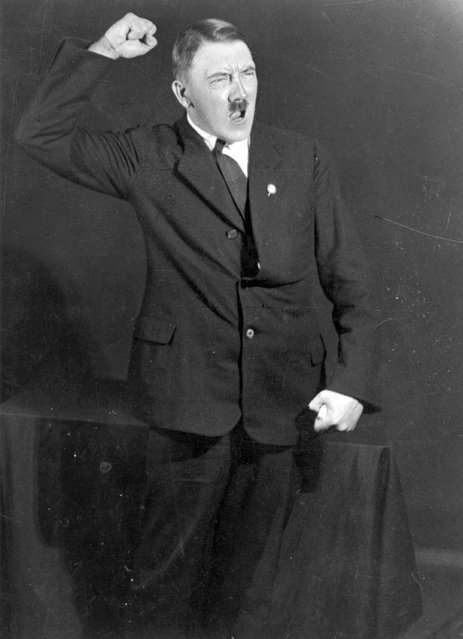
1925: Hitler posing to a recording of one of his speeches after his release from Landsberg Prison. (Photo by Heinrich Hoffmann/Keystone Features)

Adolf Hitler (1889–1945), leader of the National Socialist German Workers' Party (NSDAP), strikes a pose for photographer Heinrich Hoffmann whilst listening to a recording of his own speeches, 1925. After seeing the photographs, Hitler ordered Hoffmann to destroy the negatives, but he disobeyed. (Photo by Heinrich Hoffmann). P.S. All pictures are presented in high resolution.
Details
15 Sep 2012 09:08:00