Loading...
Done
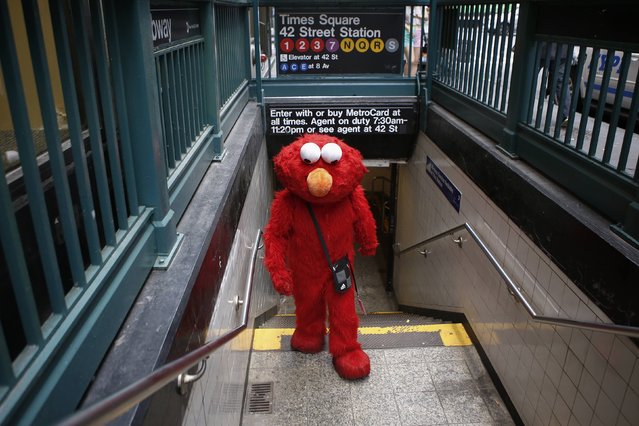
Jorge, an immigrant from Mexico, exits a subway station dressed as the Sesame Street character Elmo in Times Square, New York July 30, 2014. (Photo by Eduardo Munoz/Reuters)

Jorge, an immigrant from Mexico, exits a subway station dressed as the Sesame Street character Elmo in Times Square, New York July 30, 2014. Elmo and Cookie Monster have long delighted young viewers on TV's “Sesame Street”, but the recent antics of New York street performers dressed as the beloved characters have drawn the ire of city officials and now the show's producers. Sesame Workshop, which owns the rights to Big Bird, Ernie and the assorted puppet monsters on the 45-year-old program, said on July 29, 2014 it was drafting plans to stop performers who dress up as the characters from appearing in Times Square, where they pose for photos with tourists and then demand tips. (Photo by Eduardo Munoz/Reuters)
Details
05 Aug 2014 11:50:00
Imagine living in the sea where it is permanently dark, cold, and food is hard to find. For many animals at depth, it may be weeks to months between meals. If you find something to eat, you have to hang on to it

Imagine living in the sea where it is permanently dark, cold, and food is hard to find. For many animals at depth, it may be weeks to months between meals. If you find something to eat, you have to hang on to it. This is why so many deep-sea fishes have lots of big teeth. This dragonfish, spotted off the coast of Australia, even has teeth on its tongue. They would be terrifying animals ... if they weren’t the size of a banana. (Photo by Julian Finn/Museum Victoria)
Details
21 May 2012 12:14:00
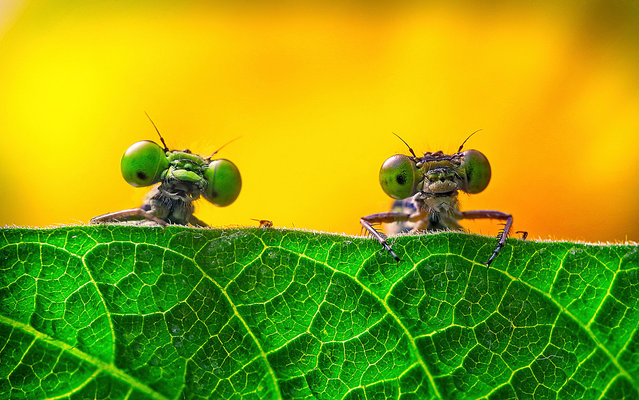
Shortlisted: “Two big eyes” by Miao Yong (Zejiang province, China). Damselflies look over the leaves. “I was photographing insects in a park near my home when suddenly I found two damselflies in the grass. They kept flying and it was very difficult to focus until suddenly they parked behind a leaf”. (Photo by Miao Yong/2017 Royal Society of Biology Photographer of the Year)

Shortlisted: “Two big eyes” by Miao Yong (Zejiang province, China). Damselflies look over the leaves. “I was photographing insects in a park near my home when suddenly I found two damselflies in the grass. They kept flying and it was very difficult to focus until suddenly they parked behind a leaf”. (Photo by Miao Yong/2017 Royal Society of Biology Photographer of the Year)
Details
16 Oct 2017 09:04:00
“The most difficult aspect of this shoot was to get each African pygmy dormouse – also known as micro squirrels – on to a separate camera. Once in place, they needed to remain still long enough to get them both in the frame and looking at me. Often solitary, they naturally wanted to move away”. (Photo by David Yeo/Leica Studio Mayfair/The Guardian)

David Yeo’s photography places naturally small species alongside animals that have been selectively bred to be tiny and cute. Here: “The most difficult aspect of this shoot was to get each African pygmy dormouse – also known as micro squirrels – on to a separate camera. Once in place, they needed to remain still long enough to get them both in the frame and looking at me. Often solitary, they naturally wanted to move away”. (Photo by David Yeo/Leica Studio Mayfair/The Guardian)
Details
24 Oct 2017 08:20:00
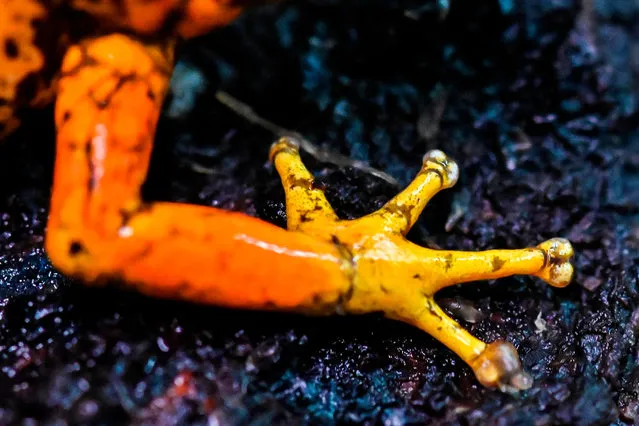
A leg of a “diablito” frog (Oophaga sylvatica) is photographed in a laboratory at a laboratory in the zoo of Cali, Colombia, on July 19, 2019. Colombia is the second country with the largest number of amphibians in the world after Brazil. More than 40% of amphibian species worldwide are in danger of extinction. (Photo by Luis Robayo/AFP Photo)

A leg of a “diablito” frog (Oophaga sylvatica) is photographed in a laboratory at a laboratory in the zoo of Cali, Colombia, on July 19, 2019. Colombia is the second country with the largest number of amphibians in the world after Brazil. More than 40% of amphibian species worldwide are in danger of extinction. (Photo by Luis Robayo/AFP Photo)
Details
28 Nov 2020 00:03:00
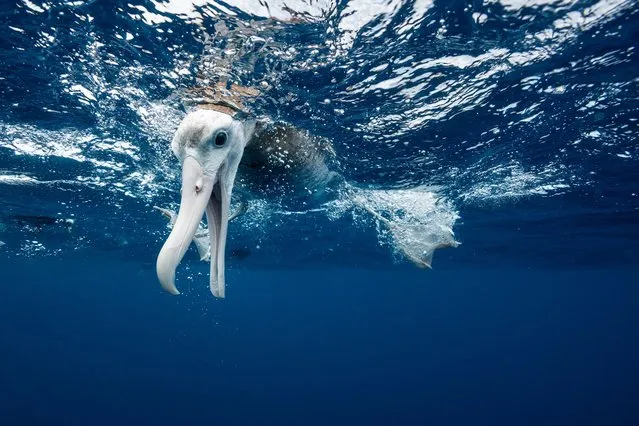
The endangered antipodean albatross, which is often caught in fishing nets, won most first-choice votes out of the more than 55,000 votes cast during the 2020 New Zealand’s bird of the year competition. (Photo by Wildestanimal/Getty Images)

The endangered antipodean albatross, which is often caught in fishing nets, won most first-choice votes out of the more than 55,000 votes cast during the 2020 New Zealand’s bird of the year competition. (Photo by Wildestanimal/Getty Images)
Details
20 Dec 2020 00:05:00
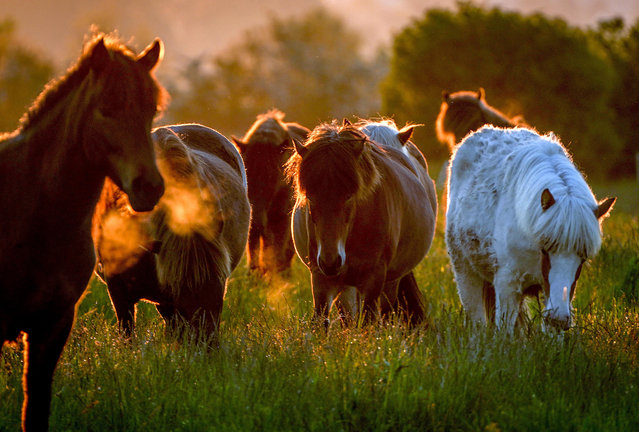
Icelandic horses walk in their paddock at a stud farm in Wehrheim near Frankfurt, Germany, as the sun rises Tuesday, June 1, 2021. (Photo by Michael Probst/AP Photo)

Icelandic horses walk in their paddock at a stud farm in Wehrheim near Frankfurt, Germany, as the sun rises Tuesday, June 1, 2021. (Photo by Michael Probst/AP Photo)
Details
09 Jul 2021 09:07:00
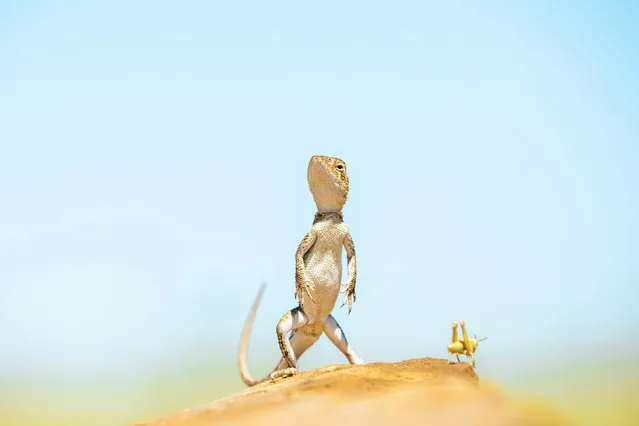
“The Dragon and The Hopper”. Eyrean earless dragon (Tympanocryptis tetraporophora) standing tall on a very hot rock in western Queensland. For a short time it was joined by a hopper, who jumped off before becoming lunch. (Photo by Harrison Warne/Nature Conservancy Australia 2021 Photo Contest)

“The Dragon and The Hopper”. Eyrean earless dragon (Tympanocryptis tetraporophora) standing tall on a very hot rock in western Queensland. For a short time it was joined by a hopper, who jumped off before becoming lunch. (Photo by Harrison Warne/Nature Conservancy Australia 2021 Photo Contest)
Details
01 Oct 2021 08:33:00