Loading...
Done
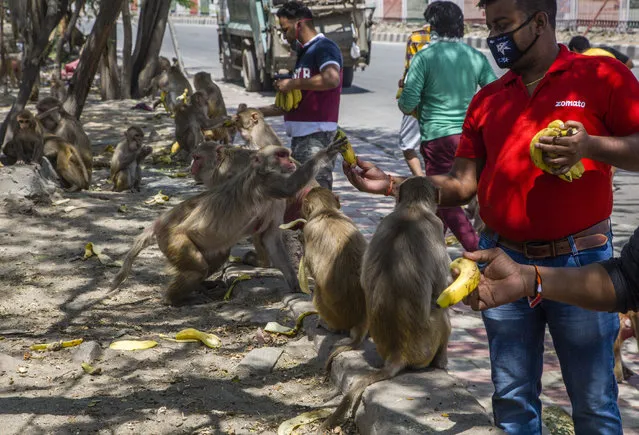
Men give bananas to monkeys gathered on the side of the road as India remains under an unprecedented lockdown over the highly contagious coronavirus (COVID-19) on April 08, 2020 in New Delhi, India. Wild animals, including monkeys, are roaming human settlements in India as people are staying indoors due to the 21-day lockdown. With India's 1.3 billion population and tens of millions of cars off the roads, wildlife is moving towards areas inhabited by humans. Wild animals in many countries have been seen roaming streets. A study says some 60 percent of the new diseases found around the globe every year are zoonotic, meaning they originate in animals and are passed on to humans. COVID-19 is a zoonotic disease that is suspected to have come from the wet markets of Wuhan, China. (Photo by Yawar Nazir/Getty Images)

Men give bananas to monkeys gathered on the side of the road as India remains under an unprecedented lockdown over the highly contagious coronavirus (COVID-19) on April 08, 2020 in New Delhi, India. Wild animals, including monkeys, are roaming human settlements in India as people are staying indoors due to the 21-day lockdown. (Photo by Yawar Nazir/Getty Images)
Details
12 Apr 2020 00:05:00
A clown plays the violin during the XXI Convention of Clowns, at the Jimenez Rueda Theatre, in Mexico City, Mexico, October 19, 2016. (Photo by Carlos Jasso/Reuters)

A clown plays the violin during the XXI Convention of Clowns, at the Jimenez Rueda Theatre, in Mexico City, Mexico, October 19, 2016. In the wake of the creepy clown sightings in several states of North and South Americas and Europe that caused widespread panic, professional clowns from across Latin America came together at an annual convention in Mexico to give a serious message: “We are clowns, not killers!”. Around 200 clowns took part in the 21st International Clown Convention, dressed in bright coloured clothes and makeup, and chanted the word as they clicked group pictures to counter the “creepy clown” craze. (Photo by Carlos Jasso/Reuters)
Details
20 Oct 2016 10:58:00
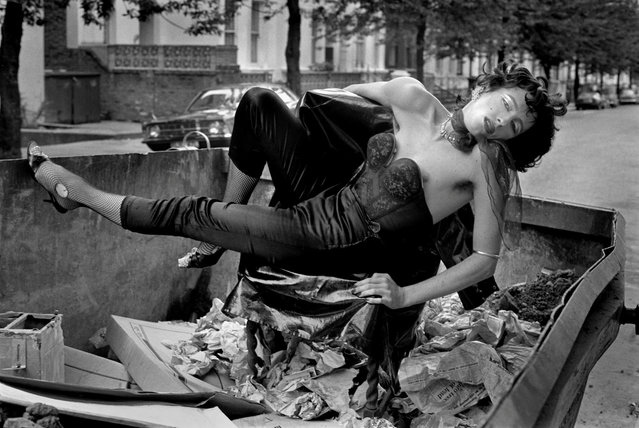
“A very delicate person, beneath the flamboyance”. Jasper, Ladbroke Grove, 1977. “In the 1970s, Australia was rather cut off. I’d always wanted to live abroad, so I moved to Rome and then London. I was an art historian, but started studying photography part-time. I was interested in the demi-monde culture and began mixing in all sorts of circles. Jasper was a rather wonderful character. He was from Sydney, but he was living downstairs from me in Ladbroke Grove, in a flat rented to some gay friends. It was fairly eclectic. Jasper was always playing around with clothes and makeup. If he was looking particularly wonderful, I might get out my lights and take a shot. Or he might put makeup on me. He wasn’t always in drag, but he was permanently in diva mode, dependably louche, funny and naughty. I think all that comes across in the image. He was actually a very delicate person, though, beneath the wit and flamboyance. Jasper floated through London all too briefly. His real name was Peter MacMahon, but to us he was only ever Jasper Havoc, an alter ego he’d created while part of a transvestite troupe called Sylvia and the Synthetics. They were legendary in Sydney gay culture. On this day, we’d been taking some pictures inside and had gone out into the streets to fool around some more. Jasper was wearing a corset and fishnets ensemble, with other bits and pieces, and we joked about him being trashy as he lay in the skip. We just took the shot for ourselves. It wasn’t done with any publication in mind, or anything else. This was way before the internet and people didn’t share images. If you dressed up, it was just for that moment”. (Photo by Jane England)

“A very delicate person, beneath the flamboyance”. Jasper, Ladbroke Grove, 1977. “In the 1970s, Australia was rather cut off. I’d always wanted to live abroad, so I moved to Rome and then London. I was an art historian, but started studying photography part-time. I was interested in the demi-monde culture and began mixing in all sorts of circles. Jasper was a rather wonderful character...”. (Photo by Jane England)
Details
26 Jun 2017 09:04:00
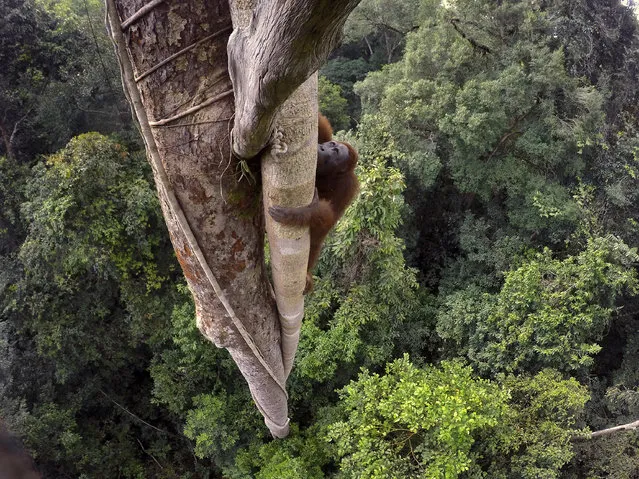
“Tough Times for Orangutans”. Nature, first prize stories. Tim Laman, USA. Location: West Kalimantan, Indonesia. A Bornean orangutan climbs over 30 meters up a tree in the rain forest of Gunung Palung National Park, West Kalimantan, Indonesia, August 12, 2015. The lives of wild orangutans are brought to light. Threats to these orangutans from fires, the illegal animal trade and loss of habitat due to deforestation have resulted in many orphan orangutans ending up at rehabilitation centers. (Photo by Tim Laman/World Press Photo Contest)

“Tough Times for Orangutans”. Nature, first prize stories. Tim Laman, USA. Location: West Kalimantan, Indonesia. A Bornean orangutan climbs over 30 meters up a tree in the rain forest of Gunung Palung National Park, West Kalimantan, Indonesia, August 12, 2015. The lives of wild orangutans are brought to light. Threats to these orangutans from fires, the illegal animal trade and loss of habitat due to deforestation have resulted in many orphan orangutans ending up at rehabilitation centers. (Photo by Tim Laman/World Press Photo Contest)
Details
19 Feb 2016 13:06:00
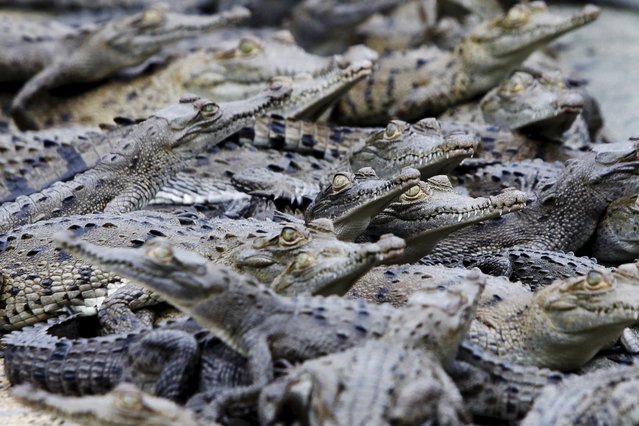
Young acutus crocodile are pictured at Panagator, a sustainable crocodile farm, on the outskirts of Panama City September 11, 2015. Gladys Vallarino, owner of the farm and of a specialty boutique shop selling items made from crocodiles, says the farm looks after more than 19,000 Acutus and Fuscus species of crocodiles and donates five percent of its crocodiles annually to the Panamanian authorities to be put into the wild. (Photo by Carlos Jasso/Reuters)

Young acutus crocodile are pictured at Panagator, a sustainable crocodile farm, on the outskirts of Panama City September 11, 2015. Gladys Vallarino, owner of the farm and of a specialty boutique shop selling items made from crocodiles, says the farm looks after more than 19,000 Acutus and Fuscus species of crocodiles and donates five percent of its crocodiles annually to the Panamanian authorities to be put into the wild, in accordance with the regulations of the CITES (Convention of International Trade in Endangered Species). The handmade fashion items sell for $200 to $3,000. (Photo by Carlos Jasso/Reuters)
Details
13 Sep 2015 13:00:00
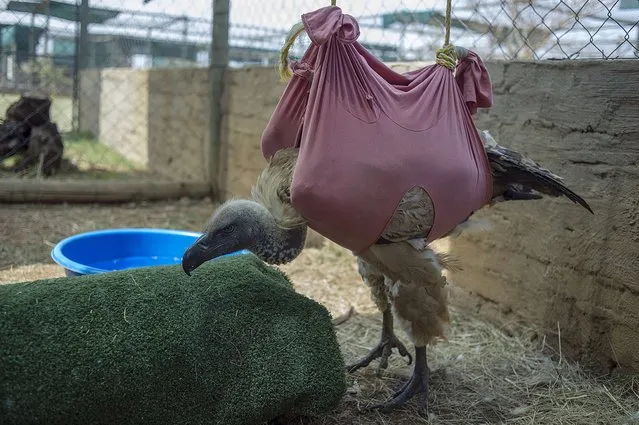
An injured vulture is treated at the VulPro Vulture Rehabilitation Centre in Hartebeepoortdam in the Magalisburg region on September 15, 2015. Confined to southern Africa, just under 4,000 breeding pairs of Cape Vultures remain in the wild, mostly in South Africa, Lesotho and Botswana. Unless conservation efforts are successful, Africa's largest vulture species may be facing eventual extinction. (Photo by Mujahid Safodien/AFP Photo)

An injured vulture is treated at the VulPro Vulture Rehabilitation Centre in Hartebeepoortdam in the Magalisburg region on September 15, 2015. Confined to southern Africa, just under 4,000 breeding pairs of Cape Vultures remain in the wild, mostly in South Africa, Lesotho and Botswana. Unless conservation efforts are successful, Africa's largest vulture species may be facing eventual extinction. (Photo by Mujahid Safodien/AFP Photo)
Details
19 Sep 2015 12:27:00
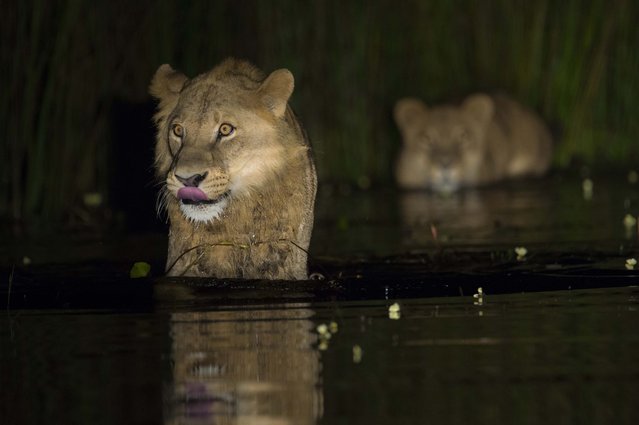
Lions submerged in water. (Photo by Wim van den Heever/Caters News)

These breath-taking photographs reveal the everyday lives of animals living in the wild. The incredible images were taken by wildlife photographer Wim van dan Heever, from Pretoria, South Africa, during trips to locations including Japan, Botswana and Svalbard. The 43-year-old has been photographing wildlife since he was a young boy and turned his passion for animals into a career and set up ODP Safaris. He has travelled across the globe to photograph wild animals – from lions and tigers, to elephants, dolphins and eagles – as they hunt, give birth and graze in their natural habitats. Here: Lions submerged in water. (Photo by Wim van den Heever/Caters News)
Details
07 Aug 2015 11:43:00
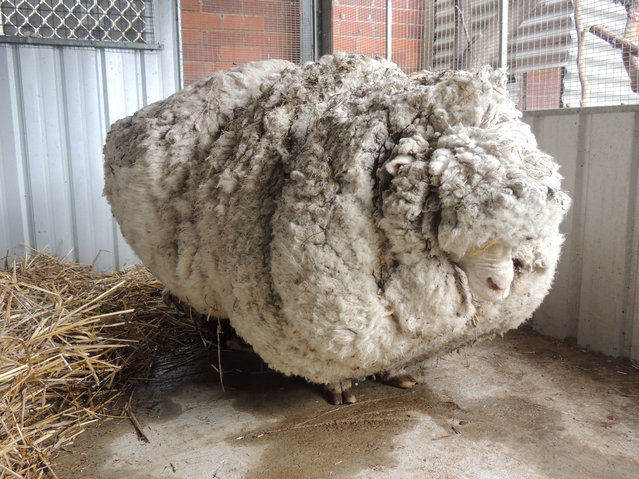
In this photo provided by the RSPCA/Australian Capital Territory, an overgrown sheep found in Australian scrubland is prepared to be shorn in Canberra, Australia, Thursday, September 3, 2015. The wild, castrated merino ram named Chris, yielded 40 kilograms (89 pounds) of wool – the equivalent of 30 sweaters – and sheded almost half his body weight. (Photo by RSPCA ACTvia AP Photo)

In this photo provided by the RSPCA/Australian Capital Territory, an overgrown sheep found in Australian scrubland is prepared to be shorn in Canberra, Australia, Thursday, September 3, 2015. The wild, castrated merino ram named Chris, yielded 40 kilograms (89 pounds) of wool – the equivalent of 30 sweaters – and sheded almost half his body weight. (Photo by RSPCA ACTvia AP Photo)
Details
04 Sep 2015 13:50:00