Loading...
Done
A clown nose is placed on a child's face during a protest opposing violence against women after the murder of Venezuelan actress and clown Julieta Inés Hernández Martínez in Rio de Janeiro, Brazil, Monday, January 8, 2024. The body of Hern·ndez, who had been missing since Dec. 23 while traveling by bicycle, was found in Presidente Figueiredo city, near Manaus in Amazonas state. (Photo by Bruna Prado/AP Photo)

A clown nose is placed on a child's face during a protest opposing violence against women after the murder of Venezuelan actress and clown Julieta Inés Hernández Martínez in Rio de Janeiro, Brazil, Monday, January 8, 2024. The body of Hern·ndez, who had been missing since Dec. 23 while traveling by bicycle, was found in Presidente Figueiredo city, near Manaus in Amazonas state. (Photo by Bruna Prado/AP Photo)
Details
24 Jan 2024 08:21:00
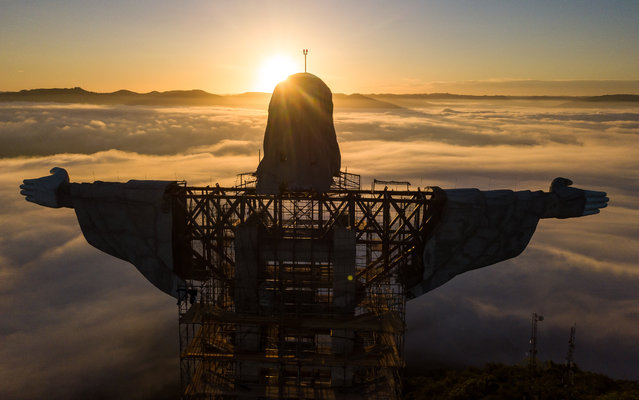
Aerial view of Christ The Protector Statue at sunrise on April 21, 2021 in Encantado, Brazil. The statue under construction in Encantado, Southern Brazil, will be named Cristo the Protector and will surpass the iconic Christ The Redeemer of Rio de Janeiro by five meters. Made of steel and concrete, it will stand 43 meters including its pedestal, and become the third-tallest statue of Jesus Christ in the world. (Photo by Buda Mendes/Getty Images)

Aerial view of Christ The Protector Statue at sunrise on April 21, 2021 in Encantado, Brazil. The statue under construction in Encantado, Southern Brazil, will be named Cristo the Protector and will surpass the iconic Christ The Redeemer of Rio de Janeiro by five meters. Made of steel and concrete, it will stand 43 meters including its pedestal, and become the third-tallest statue of Jesus Christ in the world. (Photo by Buda Mendes/Getty Images)
Details
22 Apr 2021 10:10:00
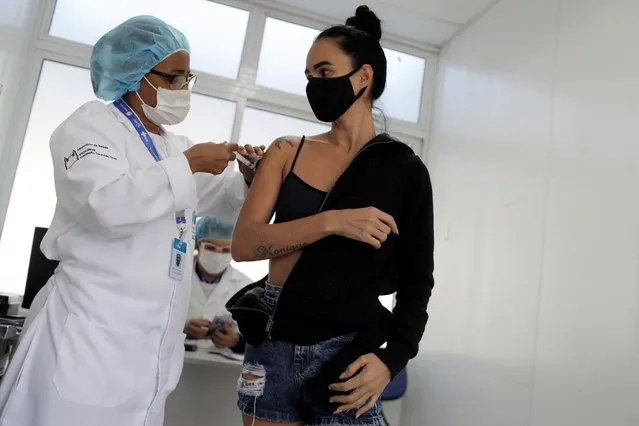
A health worker applies a dose of the AstraZeneca vaccine during the first day of a three-day COVID-19 vaccination campaign for people over age 35 in the Complexo da Maré favela of Rio de Janeiro, Brazil, Brazil, Thursday, July 29, 2021. Some recipients will be monitored to study the rate of protection the vaccines provide and the extent to which virus variants are circulating. (Photo by Bruna Prado/AP Photo)

A health worker applies a dose of the AstraZeneca vaccine during the first day of a three-day COVID-19 vaccination campaign for people over age 35 in the Complexo da Maré favela of Rio de Janeiro, Brazil, Brazil, Thursday, July 29, 2021. Some recipients will be monitored to study the rate of protection the vaccines provide and the extent to which virus variants are circulating. (Photo by Bruna Prado/AP Photo)
Details
30 Jul 2021 09:31:00
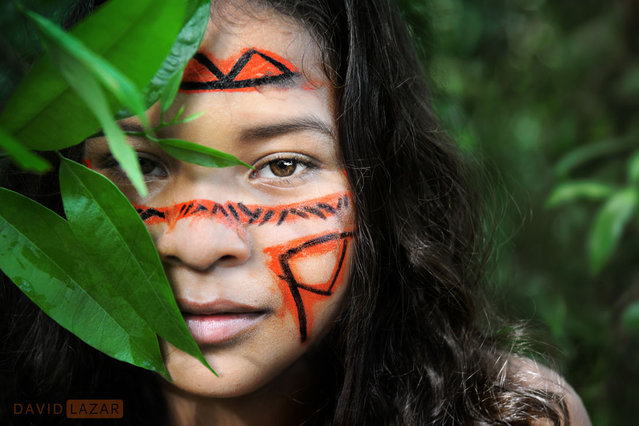
Amazon Tribe By David Lazar (Video)

Photographer David Lazar captured photos of native Dessana tribe, nearly 3,000 miles away from Brazil's capital. Tribe is only accessible by boat from city of Manaus. Surrounded by trees, waterfalls and tropical wildlife, this Amazon tribe is a world away from the beaches of Rio.
Details
27 Oct 2016 21:46:00
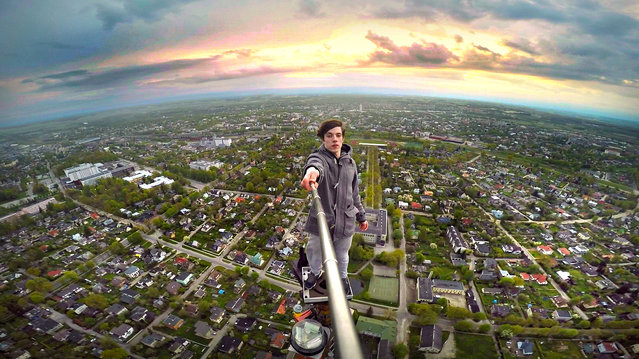
Ervin Punkar using a selfie stick to take a photo from the very top of the 600ft TV tower in Tartu, Estonia. (Photo by Ervin Punkar/Caters News Agency)

The adventurous explorers have snapped themselves in shark-infested waters, at the side of an active volcano, atop a Hong Kong skyscraper surrounded by toxic smog, and even perched on the top of iconic Rio statue of Christ the Redeemer. Here: Ervin Punkar using a selfie stick to take a photo from the very top of the 600ft TV tower in Tartu, Estonia. (Photo by Ervin Punkar/Caters News Agency)
Details
28 Sep 2018 00:05:00
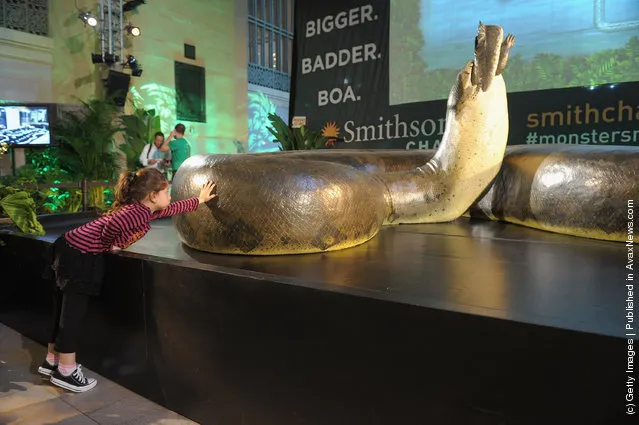
Attendees view a replica of the prehistoric Titanoboa, the largest snake to ever live, on display at Grand Central Terminal in New York City

“Titanoboa is a genus of snake that lived approximately 58–60 million years ago, during the Paleocene epoch, a 10-million-year period immediately following the dinosaur extinction event. The only known species is the Titanoboa cerrejonensis, the largest snake ever discovered, which supplanted the previous record holder, Gigantophis”. – Wikipedia

Photo: Leah Del Rio views a replica of the prehistoric Titanoboa, the largest snake to ever live, on display at Grand Central Terminal on March 23, 2012 in New York City. (Photo by Michael Loccisano/Getty Images)
Details
24 Mar 2012 10:14:00
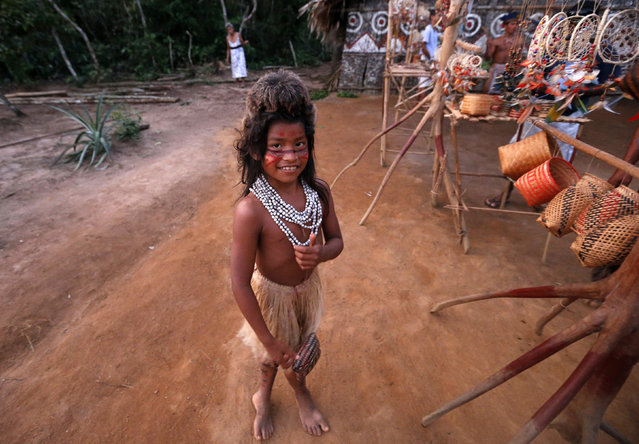
A girl of the Amazonian Tatuyo tribe poses while waiting to sell crafts to tourists in her village in the Rio Negro (Black River) near Manaus city, a World Cup host city, June 23, 2014. Because of their proximity to host city Manaus and their warm welcome, the Tatuyo have enjoyed three weeks of brisk business thanks to the World Cup. Usually, they host between 10 and 30 tourists a day. During the World Cup, this number has rocketed to 250 a day, They have become richer and other communities now come to them to sell them juices and fishes. (Photo by Andres Stapff/Reuters)

A girl of the Amazonian Tatuyo tribe poses while waiting to sell crafts to tourists in her village in the Rio Negro (Black River) near Manaus city, a World Cup host city, June 23, 2014. Because of their proximity to host city Manaus and their warm welcome, the Tatuyo have enjoyed three weeks of brisk business thanks to the World Cup. Usually, they host between 10 and 30 tourists a day. During the World Cup, this number has rocketed to 250 a day, They have become richer and other communities now come to them to sell them juices and fishes. (Photo by Andres Stapff/Reuters)
Details
27 Jun 2014 10:30:00
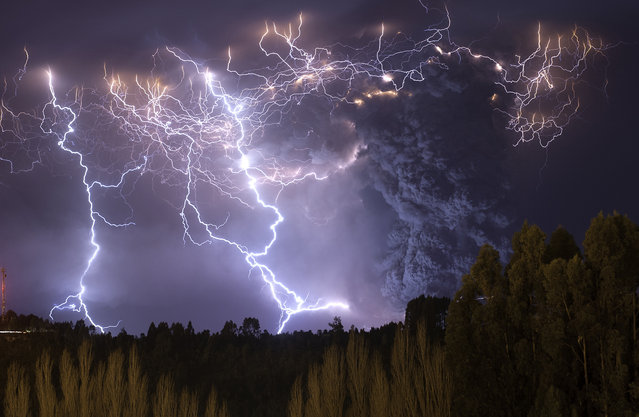
The eruption of Cordon Caulle began on June 4, 2011, located in the Region of Los Rios in Chile. For about 12 months, people and animals became accustomed to living with the daily fall of ash, which also caused problems in the air traffic in South America. The explosions and lightning during first days of the eruption could be seen from hundreds of miles around. This photograph was taken on the second night of eruption from the town of Lago Ranco. (Photo and caption by Francisco Negroni/National Geographic Traveler Photo Contest)

The eruption of Cordon Caulle began on June 4, 2011, located in the Region of Los Rios in Chile. For about 12 months, people and animals became accustomed to living with the daily fall of ash, which also caused problems in the air traffic in South America. The explosions and lightning during first days of the eruption could be seen from hundreds of miles around. This photograph was taken on the second night of eruption from the town of Lago Ranco. (Photo and caption by Francisco Negroni/National Geographic Traveler Photo Contest)

ATTENTION! All pictures are presented in high resolution. To see Hi-Res images – just TWICE click on any picture. In other words, click small picture – opens the BIG picture. Click BIG picture – opens VERY BIG picture.
Details
23 Jun 2013 11:24:00