Loading...
Done
Lumberjacks From California

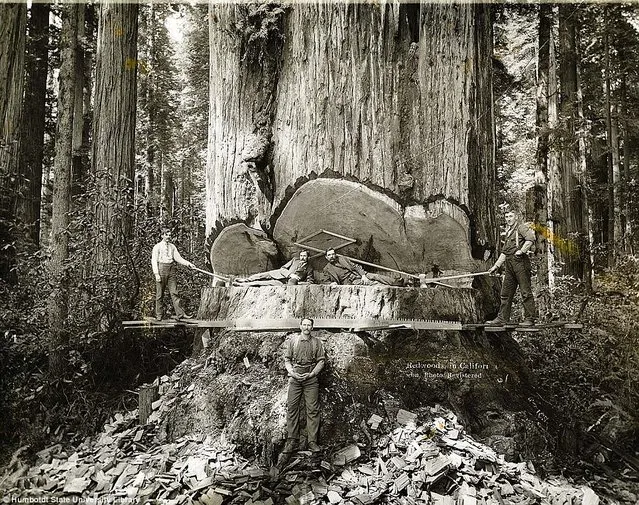
Dramatic photos show the measure of a man in contrast to the enormity of nature.
A series of photos from the Humboldt State University Library capture lumberjacks working among the redwoods in Humboldt County, California.
The photos are part of the Ericson Collection....


SEE ALSO: «Huge Plants» AND «Loggers»

Details
09 Oct 2012 05:57:00
The Pothole Gardener

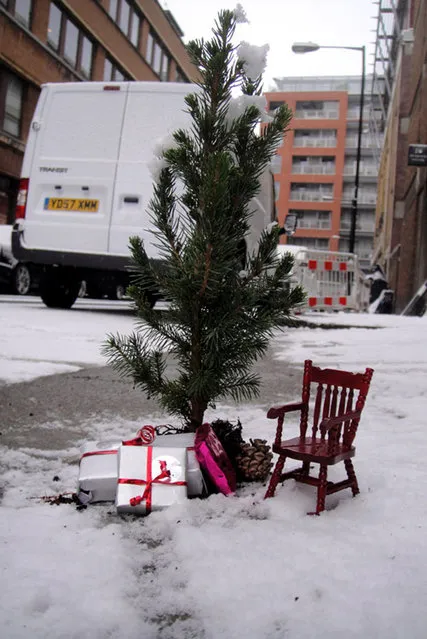
Steve Wheen understands that nobody likes to pay a pile of taxes only to hit potholes on their way to work every day, so he started filling up the pesky cracks in East London with mini living worlds comprised of soil, plants, and adorable props. The guerrilla gardener creates these mini (mostly domestic) scenes on quiet streets, dead end lanes, and foot paths, snaps photographs of his work, and then removes the props so that nobody gets a chair in their tire! When he's satisfied with his projects, he documents them over at The Pothole Gardener.
Details
17 Nov 2012 10:02:00


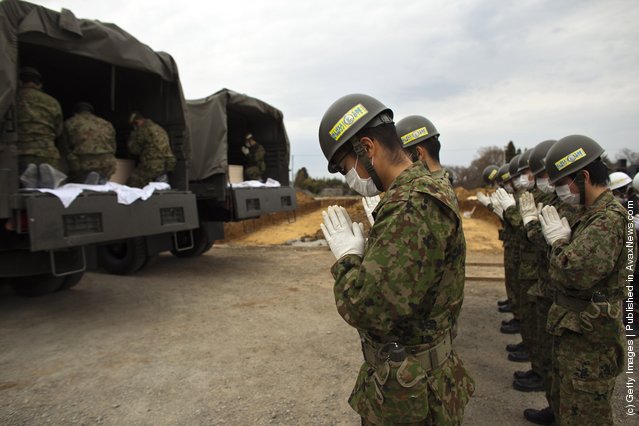
Japan Self-Defense Force members pay their respect to unidentified earthquake victims in vehicles during a mess funeral on April 8, 2011 in Yamamoto, Miyagi Prefecture, Japan. The 9.0 magnitude strong earthquake struck offshore on March 11 at 2:46pm local time, triggering a tsunami wave of up to ten metres which engulfed large parts of north-eastern Japan, and also damaging the Fukushima nuclear plant and threatening a nuclear catastrophe. The death toll continues to rise with numbers of dead and missing exceeding 20,000 in a tragedy not seen since World War II in Japan. (Photo by Athit Perawongmetha/Getty Images)
Details
10 Apr 2011 07:41:00
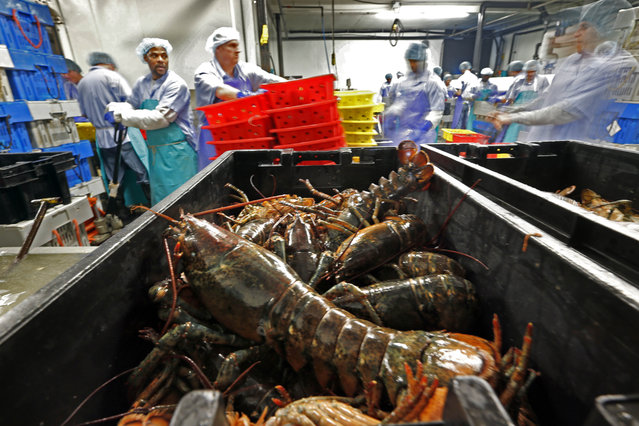
In this June 20, 2014, file photo, lobsters are processed at the Sea Hag Seafood plant in St. George, Maine. More and more American and Canadian-caught lobsters have been turning up at fancy restaurants in China, marketed as “Boston lobster”, say Maine-based processors. One processing firm owner says it's now the biggest live lobster important day of the year after Christmas in Europe. (Photo by Robert F. Bukaty/AP Photo)

In this June 20, 2014, file photo, lobsters are processed at the Sea Hag Seafood plant in St. George, Maine. More and more American and Canadian-caught lobsters have been turning up at fancy restaurants in China, marketed as “Boston lobster”, say Maine-based processors. One processing firm owner says it's now the biggest live lobster important day of the year after Christmas in Europe. (Photo by Robert F. Bukaty/AP Photo)
Details
18 Feb 2015 13:11:00
In this Sunday, March 29, 2015 photo, a young performer from the Parinacochas district of Ayacuhco dances in the Vencedores de Ayacucho dance festival, in the Acho bullring in Lima, Peru. The performers sang in the Quechua language, portraying the planting of corn and potatoes. From very young children to elderly people dressed as farmers, tigers, and foxes, as well as members of auto-defense groups, soldiers and police officers, to portray the violence that tore apart their families and communities. (Photo by Rodrigo Abd/AP Photo)

In this Sunday, March 29, 2015 photo, a young performer from the Parinacochas district of Ayacuhco dances in the Vencedores de Ayacucho dance festival, in the Acho bullring in Lima, Peru. The performers sang in the Quechua language, portraying the planting of corn and potatoes. From very young children to elderly people dressed as farmers, tigers, and foxes, as well as members of auto-defense groups, soldiers and police officers, to portray the violence that tore apart their families and communities. (Photo by Rodrigo Abd/AP Photo)
Details
01 Apr 2015 12:07:00
Aisha, 15, (L) (who asked to withhold her last name), a Syrian refugee from Raqqa, waits with a fellow refugee while harvesting cannabis in the Bekaa valley, Lebanon October 19, 2015. Syrian refugees work to harvest and process spiky-leafed cannabis plants in neighbouring Lebanon’s Bekaa Valley. (Photo by Alia Haju/Reuters)

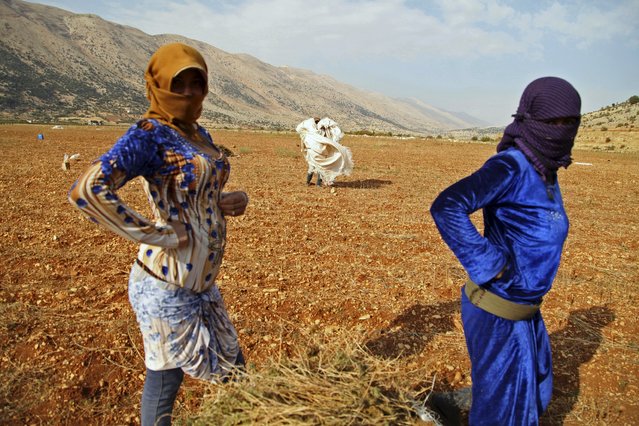
Aisha, 15, (L) (who asked to withhold her last name), a Syrian refugee from Raqqa, waits with a fellow refugee while harvesting cannabis in the Bekaa valley, Lebanon October 19, 2015. Syrian refugees work to harvest and process spiky-leafed cannabis plants in neighbouring Lebanon’s Bekaa Valley. Often farmers of cotton and wheat back home in Raqqa province – now the de facto capital of Islamic State – the conflict in Syria drove them to seek safety in a region where Syrian migrant workers used to spend a few months a year before returning home. (Photo by Alia Haju/Reuters)
Details
24 Dec 2015 08:03:00
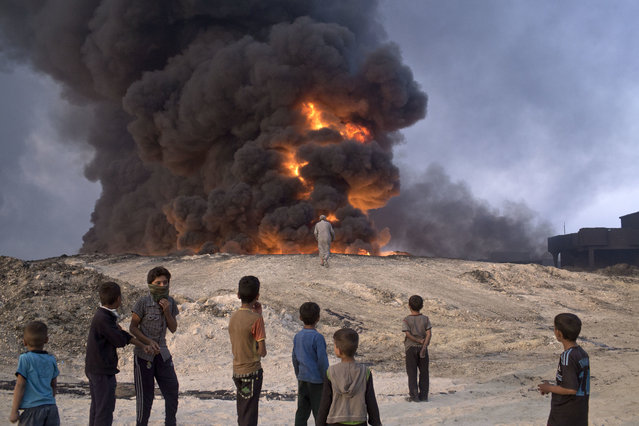
in Qayyarah, about 31 miles (50 km) south of Mosul, Iraq, Sunday, October 23, 2016.in Qayyarah, some 50 kilometers south of Mosul, Iraq, Sunday, Oct. 23, 2016. Islamic State fighters torched a sulfur plant south of Mosul, sending a cloud of toxic fumes into the air that mingled with oil wells the militants had lit on fire to create a smoke screen. (Photo by Marko Drobnjakovic/AP Photo)

in Qayyarah, about 31 miles (50 km) south of Mosul, Iraq, Sunday, October 23, 2016.in Qayyarah, some 50 kilometers south of Mosul, Iraq, Sunday, Oct. 23, 2016. Islamic State fighters torched a sulfur plant south of Mosul, sending a cloud of toxic fumes into the air that mingled with oil wells the militants had lit on fire to create a smoke screen. (Photo by Marko Drobnjakovic/AP Photo)
Details
24 Oct 2016 12:56:00
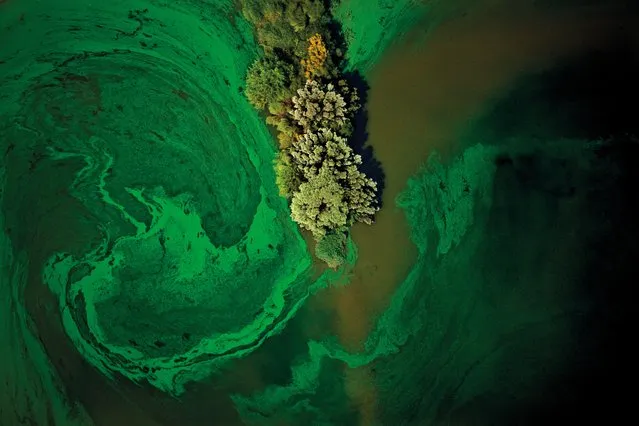
Luling, Louisiana US. New evidence contradicts previous claims of the relative safety of glyphosate, the world’s most widely used herbicide, which is manufactured here. It is often used in conjunction with seeds that have been genetically modified to tolerate its application, meaning that anyone consuming these crops is eating a genetically modified plant, and whatever residue of the pesticide that remains. (Photo by J. Henry Fair/Industrial Scars/Papadakis Publisher)

Luling, Louisiana, US. New evidence contradicts previous claims of the relative safety of glyphosate, the world’s most widely used herbicide, which is manufactured here. It is often used in conjunction with seeds that have been genetically modified to tolerate its application, meaning that anyone consuming these crops is eating a genetically modified plant, and whatever residue of the pesticide that remains. (Photo by J. Henry Fair/Industrial Scars/Papadakis Publisher)
Details
25 Oct 2016 10:40:00