Loading...
Done
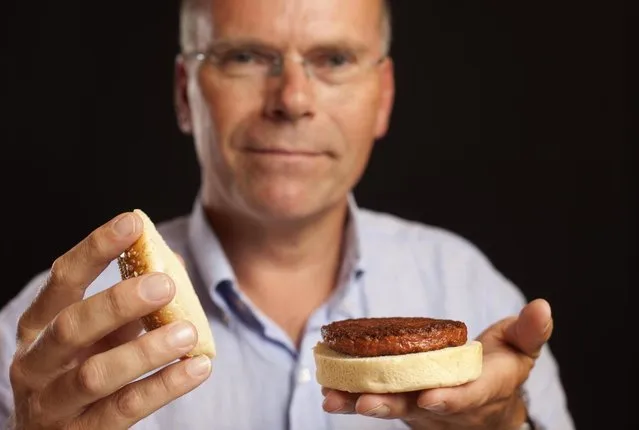
In this handout image provided by Ogilvy, a burger made from cultured beef, which has been developed by Professor Mark Post of Maastricht University in the Netherlands (pictured) is shown to the media during a press conference on August 5, 2013 in London, England. Cultured Beef could help solve the coming food crisis and combat climate change with commercial production of Cultured Beef beginning within ten to twenty years. (Photo by David Parry via Getty Images)

In this handout image provided by Ogilvy, a burger made from cultured beef, which has been developed by Professor Mark Post of Maastricht University in the Netherlands (pictured) is shown to the media during a press conference on August 5, 2013 in London, England. The in-vitro burger, cultured from cattle stem cells, the first example of what its creator says could provide an answer to global food shortages and help combat climate change, was fried in a pan and tasted by two volunteers. The burger is the result of years of research by Dutch scientist Mark Post, a vascular biologist at the University of Maastricht, who is working to show how meat grown in petri dishes might one day be a true alternative to meat from livestock.The meat in the burger has been made by knitting together around 20,000 strands of protein that has been cultured from cattle stem cells in Post's lab. (Photo by David Parry)
Details
06 Aug 2013 08:48:00
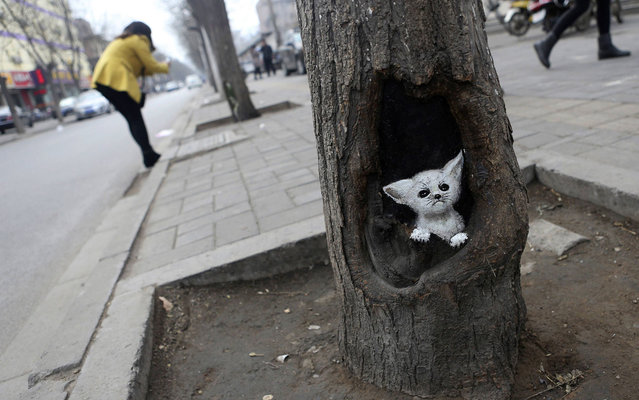
An image of a Fennec fox painted on a tree hole by Wang Yue is seen in Shijiazhuang, on March 13, 2013. Wang Yue, a senior at Dalian Industry University, uses her paintbrush to turn ugly tree holes into lovely views in Shijiazhuang, capital city of Hebei Province, China. Wang and her companions call the tree-hole paintings “meitu”, which means “beautiful journey”. The paintings on the trees have brightened the city during the dull, grey winter. (Photo by Pillar Lee/Reuters)

An image of a Fennec fox painted on a tree hole by Wang Yue is seen in Shijiazhuang, on March 13, 2013. Wang Yue, a senior at Dalian Industry University, uses her paintbrush to turn ugly tree holes into lovely views in Shijiazhuang, capital city of Hebei Province, China. Wang and her companions call the tree-hole paintings “meitu”, which means “beautiful journey”. The paintings on the trees have brightened the city during the dull, grey winter. (Photo by Pillar Lee/Reuters)

P.S. All pictures are presented in high resolution. To see Hi-Res images – just TWICE click on any picture. In other words, click small picture – opens the BIG picture. Click BIG picture – opens VERY BIG picture (if available; this principle works anywhere on the site AvaxNews).
Details
16 Mar 2013 11:27:00
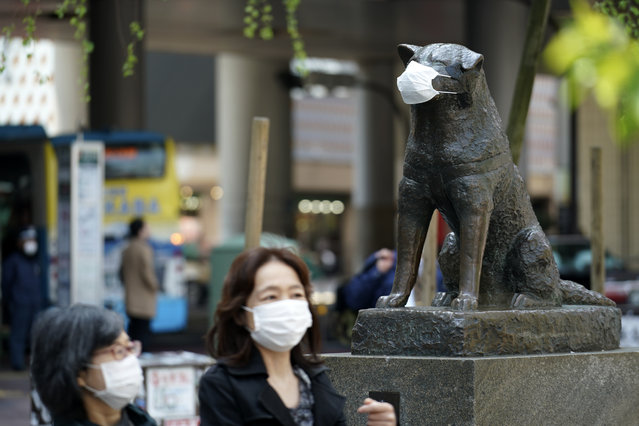
A statue of a Japanese Akita dog named “Hachiko” wearing a face mask is seen near Shibuya Station Wednesday, April 8, 2020, in Tokyo. Japanese Prime Minister Shinzo Abe declared a state of emergency on Tuesday for Tokyo and six other prefectures to ramp up defenses against the spread of the new coronavirus. Hachiko has waited for his owner University of Tokyo Prof. Eizaburo Ueno at the same place by the station every afternoon, expecting him to return home for nearly 11 years even after Ueno's death at work. (Photo by Eugene Hoshiko/AP Photo)

A statue of a Japanese Akita dog named “Hachiko” wearing a face mask is seen near Shibuya Station Wednesday, April 8, 2020, in Tokyo. Japanese Prime Minister Shinzo Abe declared a state of emergency on Tuesday for Tokyo and six other prefectures to ramp up defenses against the spread of the new coronavirus. Hachiko has waited for his owner University of Tokyo Prof. Eizaburo Ueno at the same place by the station every afternoon, expecting him to return home for nearly 11 years even after Ueno's death at work. (Photo by Eugene Hoshiko/AP Photo)
Details
15 Apr 2020 00:05:00
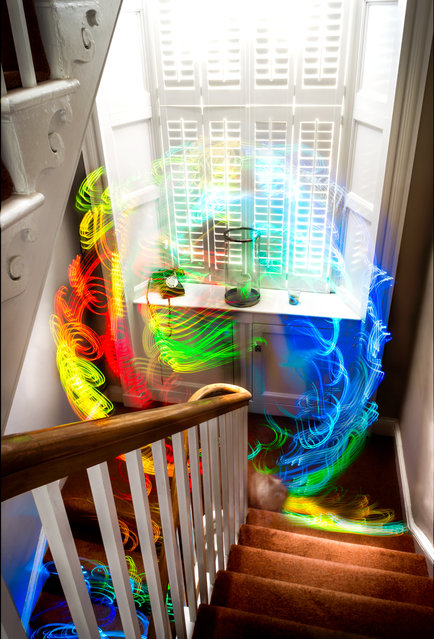
His goal with the project is to make the invisible visible. (Photo by Luis Hernan)

Luis Hernan was always curious about how wireless technologies like radio are transmitted through the air. So after finishing up his studies in architecture, computer science, and design, Hernan decided to research these invisible signals through a PhD at Newcastle University. Hernan set up a system that turned the wireless signals around him into colourful, ghostlike images using long-exposure photography, allowing people to see the strength of the signals around them. (Photo by Luis Hernan)
Details
13 Aug 2014 09:38:00
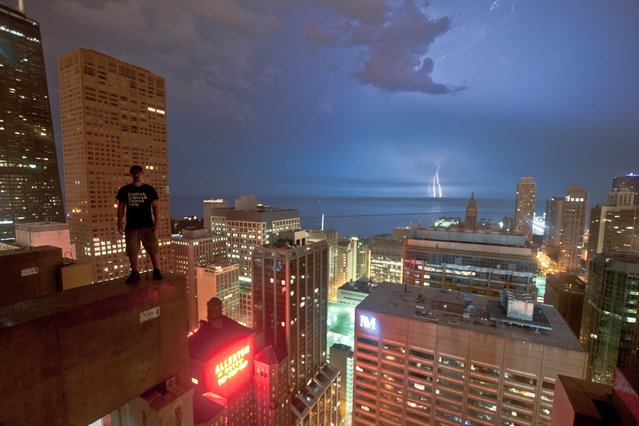
Bradley Garrett stands on the edge of the Ritz-Carlton Chicago as lightning strikes in the distance in Chicago, US. (Photo by Bradley L. Garrett/Barcroft Media)

These photographs are the work of urban explorer Dr Bradley Garrett who made headlines back in 2012 when he posted a series of snaps from the top of The Shard skyscraper while it was still under construction. Garrett, now a researcher at the University of Oxford, took these shots during his time with the London Consolidation Crew (LCC), a loose collection of urban explorers based in the English capital. Photo: Bradley Garrett stands on the edge of the Ritz-Carlton Chicago as lightning strikes in the distance in Chicago, US. (Photo by Bradley L. Garrett/Barcroft Media)
Details
24 Sep 2013 08:09:00
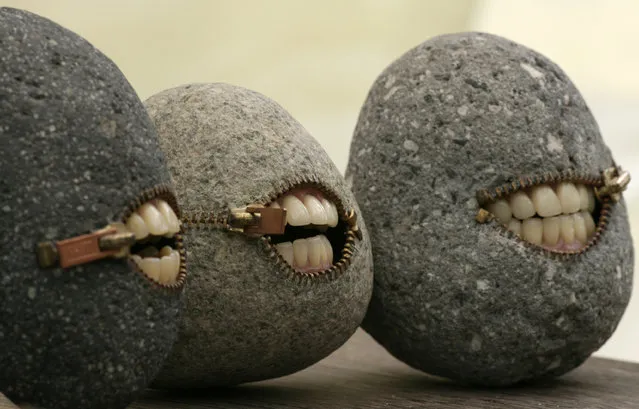
stone art by Hirotoshi Itoh

Hirotoshi Itoh graduated from Tokyo National Fine Arts University in 1982 and later went into his family business as a stonemason. He spent several years working with metal before turning his attention to stones. He utilizes stones found in a river bank near his home, and he creates sculptures that juxtapose the original shape and hardness of the material with surprising humor and texture. You can find more of his work on his Deviant Art page.
Details
17 May 2012 10:58:00
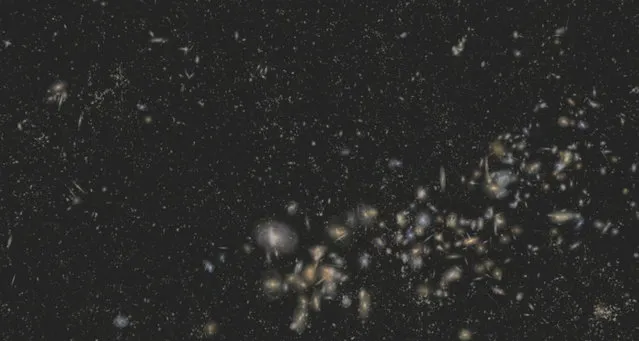
New 3-D Map of Massive Galaxies and Distant Black Holes Offers Clues to Dark Matter and Dark Energy

“The Sloan Digital Sky Survey III (SDSS-III) has released the largest-ever three-dimensional map of massive galaxies and distant black holes, which will help astronomers explain the mysterious “dark matter” and “dark energy” that scientists know makes up 96 percent of the Universe”. – SDSS-III
Details
10 Aug 2012 09:01:00


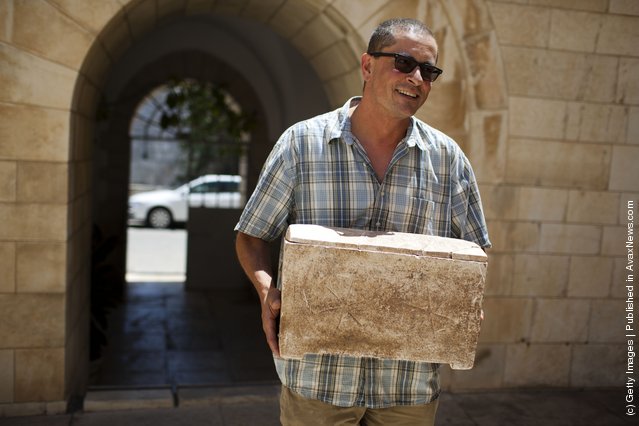
Doctor Boaz Zissu of the Bar Ilan University shows the inscription on a 2,000-year-old ossuary at the Rockefeller Museum on June 30, 2011 in Jerusalem, Israel. The Israel Antiquities Authority have confirmed the credibility of the ancient ossuary, otherwise known as a stone chest in which to store bones, as bearing the name of a relative of the high priest Caiaphas from the New Testament. Laboratory tests have come back saying that the inscription with the name of “Miriam daughter of Yeshua son of Caiaphas, priest of Maaziah from Beth Imri” is both “genuine and ancient”. (Photo by Uriel Sinai/Getty Images)
Details
01 Jul 2011 11:35:00