Loading...
Done
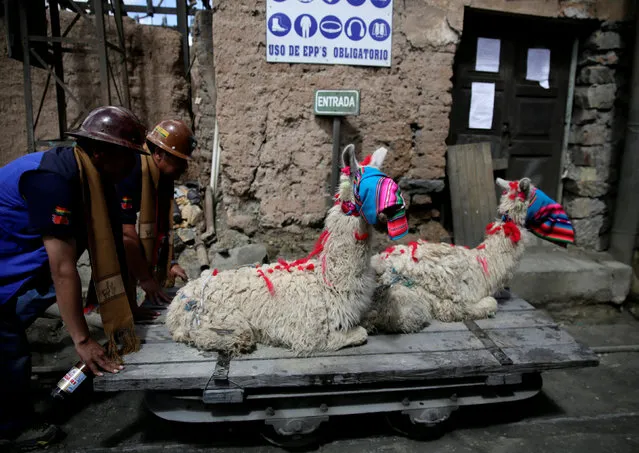
Independent miners transport llamas to sacrifice them for good fortune during the year as part of Andean carnival celebrations, outside the Mina Itos on the outskirts of Oruro, Bolivia February 24, 2017. (Photo by David Mercado/Reuters)

Independent miners transport llamas to sacrifice them for good fortune during the year as part of Andean carnival celebrations, outside the Mina Itos on the outskirts of Oruro, Bolivia February 24, 2017. (Photo by David Mercado/Reuters)
Details
26 Feb 2017 00:03:00
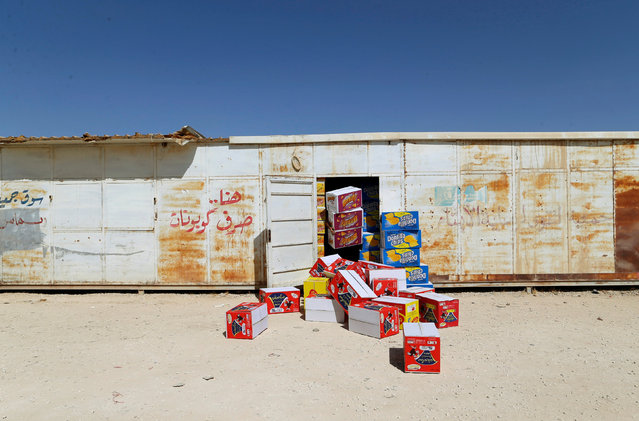
A Syrian refugee man (obscured) moves boxes of goods at his shop in Zaatari refugee camp near the border with Syria, in Mafraq, Jordan October 15, 2016. (Photo by Ammar Awad/Reuters)

A Syrian refugee man (obscured) moves boxes of goods at his shop in Zaatari refugee camp near the border with Syria, in Mafraq, Jordan October 15, 2016. (Photo by Ammar Awad/Reuters)
Details
23 Nov 2016 11:54:00
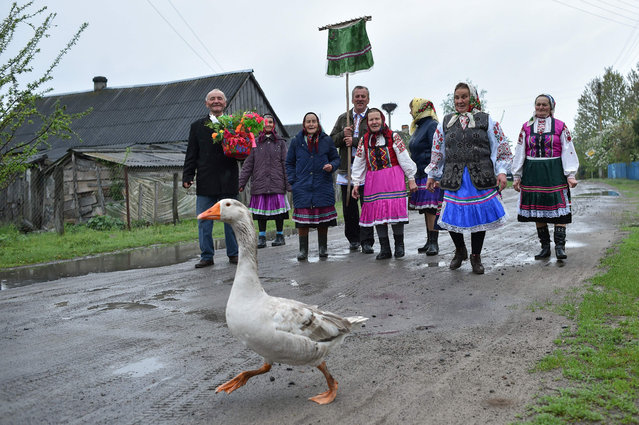
A goose walks on the road as Belarusian villagers take part in the Yurya religious rite to bring a good harvest in the village of Lutki, some 270 km south of Minsk, on May 6, 2019. (Photo by Sergei Gapon/AFP Photo)

A goose walks on the road as Belarusian villagers take part in the Yurya religious rite to bring a good harvest in the village of Lutki, some 270 km south of Minsk, on May 6, 2019. (Photo by Sergei Gapon/AFP Photo)
Details
02 Jan 2020 00:01:00
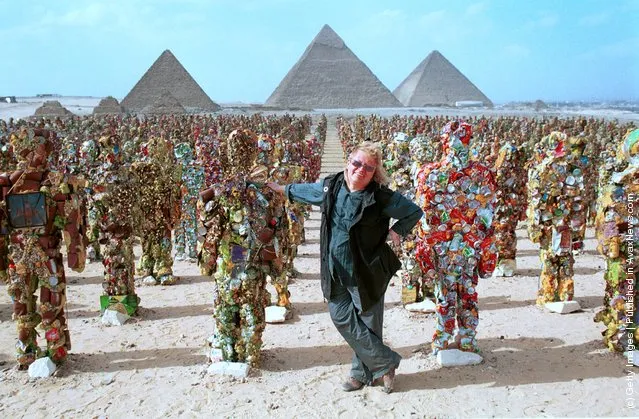
German artist Ha Schult stands with his trash people below the pyramids May 15, 2002 in Giza, Egypt

“HA Schult, born Hans-Jürgen Schult on June 24, 1939 in Parchim, Mecklenburg is a German installation, happening and conceptual artist known primarily for his object and performance art and more specifically his work with garbage”. – Wikipedia

Photo: German artist Ha Schult stands with his “trash people” below the pyramids May 15, 2002 in Giza, Egypt. Inspired by the statues of the terracotta army of Chinese Emperor Quin Shi Huangdi (247–206 B.C.), the thousand piece sulpture has stood in Red Square in Moscow, La Defense in Paris and the Great Wall in China. Schult, born in 1939 wants to bring the “trash war” to the world's attention beause trash is the greatest battle facing mankind. (Photo by Norbert Schiller/Getty Images)
Details
31 Jul 2011 13:37:00


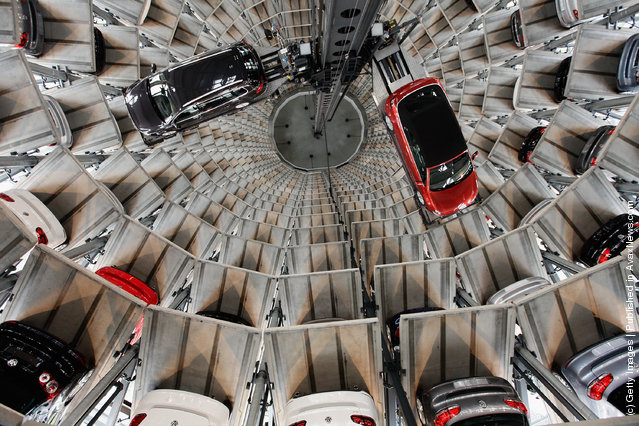
The new 2011 Volkswagen Passant Variant (L) and new Golf Cabrio are lifted into one of two storage towers at the Autostadt customer reception center at the Volkswagen factory on the day of the German automaker's annual press conference on March 10, 2011 in Wolfsburg, Germany. (Photo by Sean Gallup/Getty Images)
Details
26 Mar 2011 11:49:00
EURO 2012 Qualifier

German football fans before the start of the EURO 2012 Group A qualifier match between Germany and Kazakhstan at Fritz-Walter-Stadium on March 26, 2011 in Kaiserslautern, Germany.
Details
26 Mar 2011 20:23:00


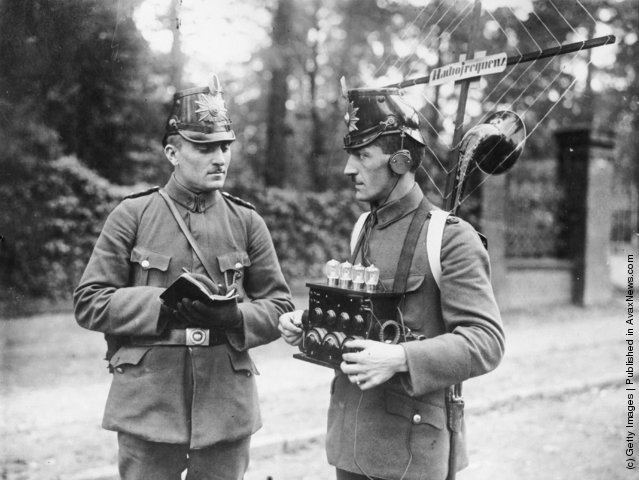
A member of the German wireless police picks up signals on the radio equipment he carries on his back, while his colleague takes notes. (Photo by General Photographic Agency/Getty Images). Circa 1925
Details
22 Jul 2013 22:48:00


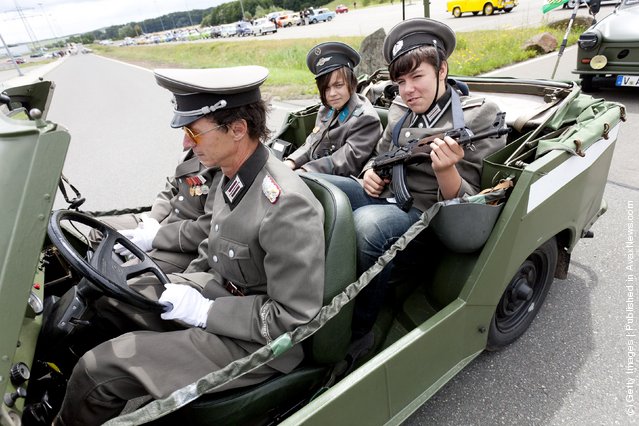
“The Trabant is a car that was produced by former East German auto maker VEB Sachsenring Automobilwerke Zwickau in Zwickau, Sachsen. It was the most common vehicle in East Germany, and was also exported to countries both inside and outside the communist bloc. The main selling points was that it had room for four adults and luggage in a compact, light and durable shell and that it was fast (when introduced) and durable. With its mediocre performance, smoky two-stroke engine, and production shortages, the Trabant is often cited as an example of the disadvantages of centralized planning; on the other hand, it is regarded with derisive affection as a symbol of the failed former East Germany and of the fall of communism (in former West Germany, as many East Germans streamed into West Berlin and West Germany in their Trabants after the opening of the Berlin Wall in 1989). It was in production without any significant changes for nearly 30 years with 3,096,099 Trabants produced in total”. – Wikipedia

Photo: Enthusiasts weared in uniforms of the former eastern german army trive in a military Trabant car as fans and owners of East German-era Trabant cars gather at the 2011 International Trabantfahrer Treffen (International Trabant Drivers Meeting) on June 26, 2011 in Zwickau, Germany. The Trabant, also known as the Trabi, was among the main cars produced in communist East Germany and built by VEB Sachsenring Automobilwerke in Zwickau for 30 years until 1989. Today the car has cult status for many followers and one company, IndiKar, is even seeking to revive the brand in a modern, electric version. (Photo by Carsten Koall/Getty Images)

Details
27 Jun 2011 12:21:00