Loading...
Done
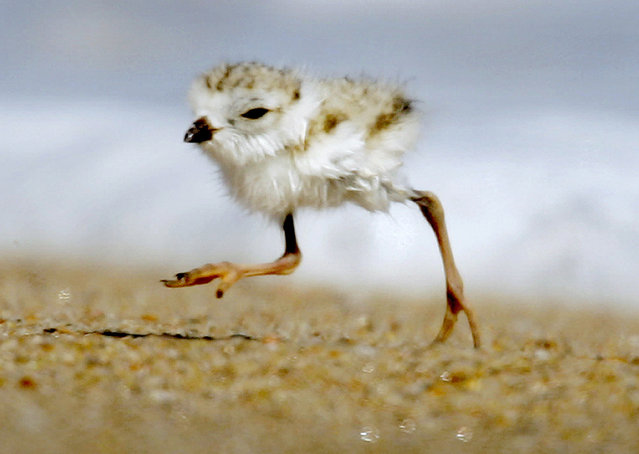
In this July 12, 2007 file photo, a two-day-old piping plover runs along a beach in the Quonochontaug Conservation Area in Westerly, R.I. A court fight to protect the piping plover, a bird listed as “threatened” under the federal Endangered Species Act, is holding up a $207 million plan to replenish sand along a 19-mile stretch of shoreline on New York's Fire Island. The sand was eroded during Superstorm Sandy. (Photo by Steven Senne/AP Photo)

In this July 12, 2007 file photo, a two-day-old piping plover runs along a beach in the Quonochontaug Conservation Area in Westerly, R.I. (Photo by Steven Senne/AP Photo)
Details
25 Nov 2014 11:28:00
1948: Elizabeth Taylor feeds the pigeons in Trafalgar Square, London

British born leading lady Elizabeth Taylor feeds the pigeons in Trafalgar Square, London. (Photo by Chris Ware/Keystone/Getty Images). November 1948
Details
20 Sep 2011 11:48:00


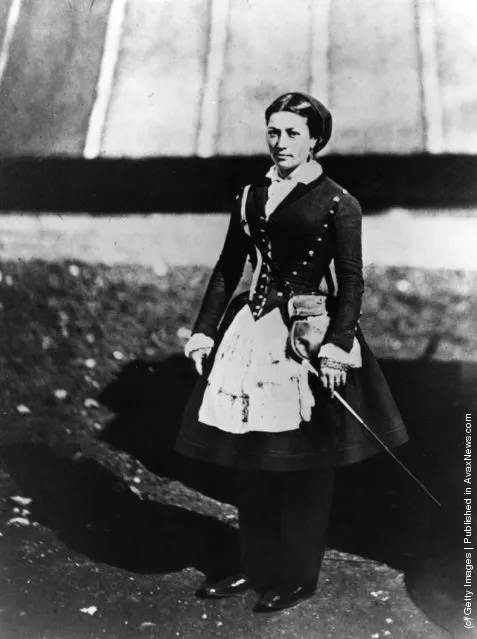
“The Crimean War (October 1853 – February 1856) was a conflict fought between the Russian Empire and an alliance of the French Empire, the British Empire, the Ottoman Empire, and the Kingdom of Sardinia. The war was part of a long-running contest between the major European powers for influence over territories of the declining Ottoman Empire. Most of the conflict took place on the Crimean Peninsula, but there were smaller campaigns in western Anatolia, Caucasus, the Baltic Sea, the Pacific Ocean and the White Sea”. – Wikipedia

Photo: A vivandiere, a female soldier selling provisions and spirits, with the Allied forces during the Crimean War. (Photo by Hulton Archive/Getty Images)
Details
18 Jul 2011 11:57:00
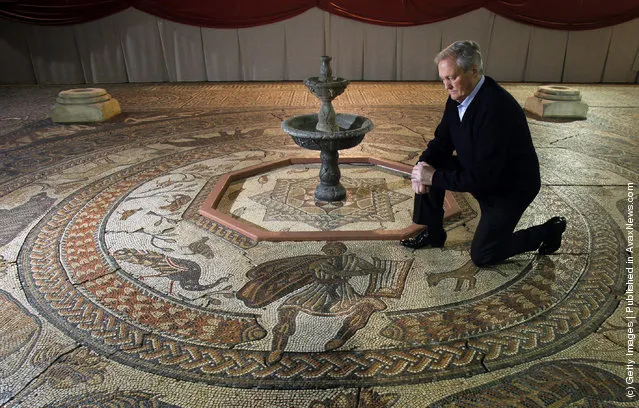
Orpheus Pavement

Bob Woodward looks at the reconstruction he built of the Orpheus Pavement at Prinknash Abbey on March 31, 2010 in Gloucester, England. The replica mosiac, made of more than one-and-a-half million pieces of stone is described as one of the most significant archaeological projects of recent times. (Photo by Matt Cardy/Getty Images)
Details
03 Oct 2011 09:24:00
A municipal worker sits on a bench, next to a statue, in Nizhny Novgorod, Russia, during the 2018 soccer World Cup, Thursday, June 28, 2018. (Photo by Vadim Ghirda/AP Photo)

A municipal worker sits on a bench, next to a statue, in Nizhny Novgorod, Russia, during the 2018 soccer World Cup, Thursday, June 28, 2018. Nizhny Novgorod was a “closed city” during the Soviet era. It was known as Gorky until 1990 and it was here that dissident scientist Andrei Sakharov was held under house arrest. Now the city hosts six World Cup matches and is teeming with tourists. That was unthinkable in the Soviet era and even rare now in a city that is seldom visited by outsiders. (Photo by Vadim Ghirda/AP Photo)
Details
03 Jul 2018 00:03:00
1950:  Passengers queue for a free ride on a new monorail service in Houston, Texas

A new monorail service in Houston, Texas, ready for its inaugural service. (Photo by Evans/Three Lions/Getty Images). Circa 1950
Details
26 Mar 2012 11:06:00
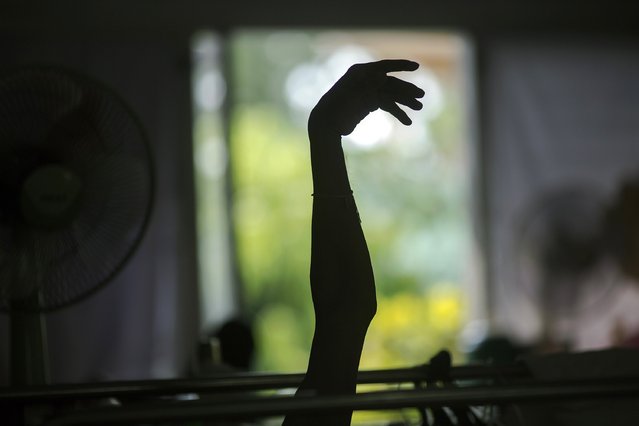
A terminally ill patient raises his arm in a hospice for those dying of AIDS at the Buddhist temple Wat Prabat Nampu in Lopburi province, north of Bangkok November 30, 2014. From 1992, the temple has provided housing for HIV positive patients and palliative care for those in the final stages of the AIDS disease. (Photo by Damir Sagolj/Reuters)

A terminally ill patient raises his arm in a hospice for those dying of AIDS at the Buddhist temple Wat Prabat Nampu in Lopburi province, north of Bangkok November 30, 2014. From 1992, the temple has provided housing for HIV positive patients and palliative care for those in the final stages of the AIDS disease. Data from 2013 estimates Thailand has 450,000 people living with HIV/AIDS, but only 353,000 have access to life-saving antiretroviral drugs. (Photo by Damir Sagolj/Reuters)
Details
08 Dec 2014 11:52:00
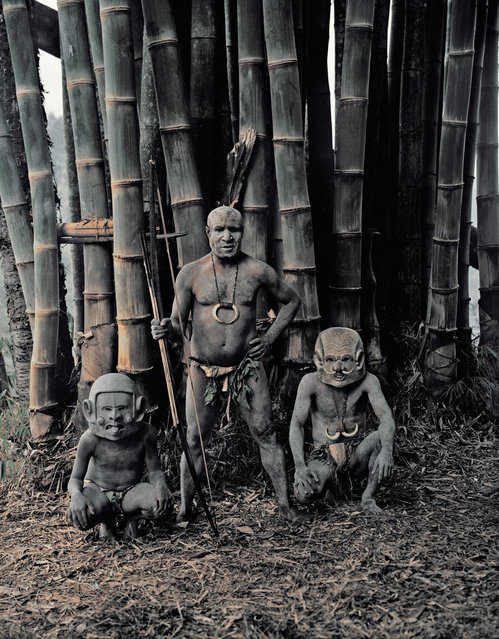
“Asaro from the Eastern Highlands”. The mudmen could not cover their faces with mud because the people of Papua New Guinea thought that the mud from the Asaro river was poisonous. So instead of covering their faces with this alleged poison, they made masks from pebbles that they heated and water from the waterfall, with unusual designs such as long or very short ears either going down to the chin or sticking up at the top, long joined eyebrows attached to the top of the ears, horns and sideways mouths. (Jimmy Nelson)

“Asaro from the Eastern Highlands”. The mudmen could not cover their faces with mud because the people of Papua New Guinea thought that the mud from the Asaro river was poisonous. So instead of covering their faces with this alleged poison, they made masks from pebbles that they heated and water from the waterfall, with unusual designs such as long or very short ears either going down to the chin or sticking up at the top, long joined eyebrows attached to the top of the ears, horns and sideways mouths. (Photo and caption by Jimmy Nelson)
Details
20 Oct 2013 08:54:00