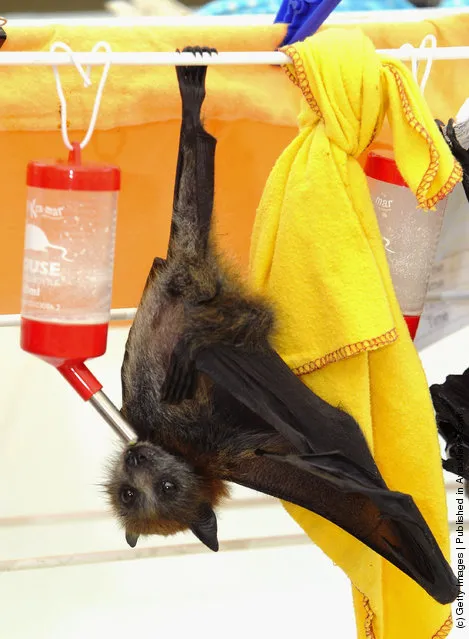
A Baby Flying Fox (Pteropus) hangs from a clothes line at a temporary bat rehabilitation centre on December 3, 2008 on the Gold Coast, Australia. (Photo by David Hardenberg/Getty Images)
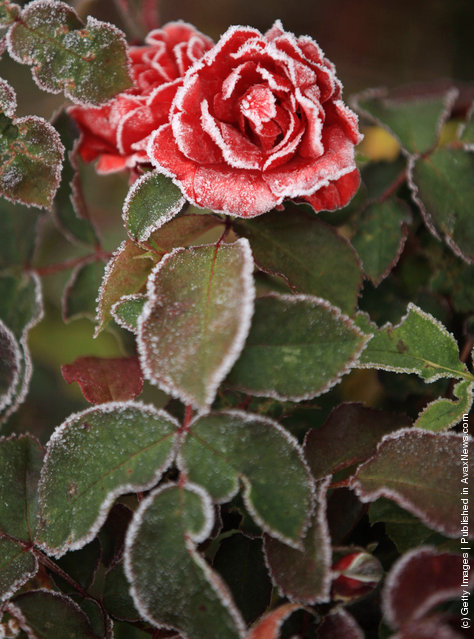
The last of the summer roses are dusted with a coating of frost as the first freezing temperatures descend on Britain on November 7, 2011 in Knutsford, England. The roses are the last blooms to survive the Summer at Curbishleys specialist rose nursery in Cheshire. (Photo by Christopher Furlong/Getty Images)
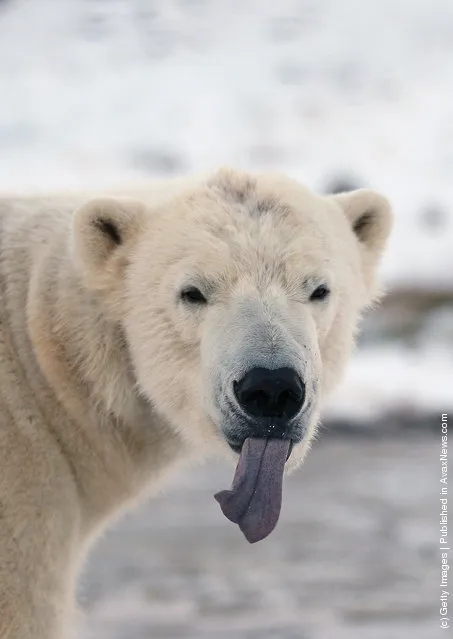
Walker the polar bear on his third birthday at the Highland Wildlife Park on December 7, 2011 in Kingussie, Scotland. (Photo by Jeff J. Mitchell/Getty Images)
Female panda Tian Tian makes her first appearance in front of the media since arriving from China on December 12, 2011 in Edinburgh, Scotland. (Photo by Jeff J. Mitchell/Getty Images)
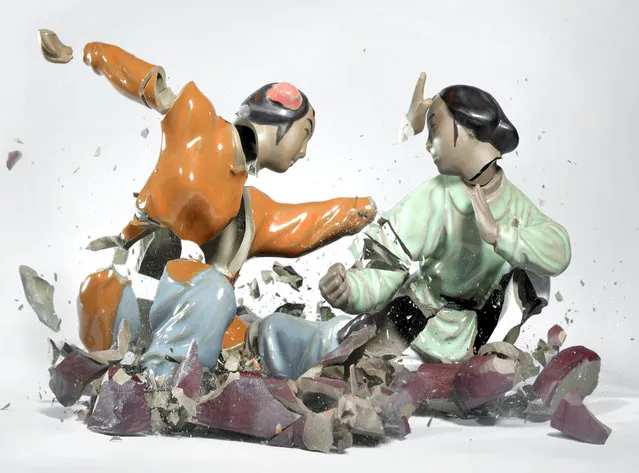
From a height of three meters, porcelain figurines are dropped on the ground, and the sound they make when they hit trips the shutter release. The result: razor-sharp images of disturbing beauty—temporary sculptures made visible to the human eye by high-speed photography technology. The porcelain statuette bursting into pieces isn't what really captures the attention; the fascination lies in the genesis of a dynamic figure that replaces the static pose. In contrast to the inertness of the intact kitsch figurines Klimas started out with, the photographs of their destruction possess a powerfully narrative character.
These are the stomach-churning pictures of the swing at the end of the world – a rickety wooden swing hanging over a precipice 2,660 metres above sea level – and not a seatbelt in sight. (Photo by Caters News)
Storm clouds blanket the sky over Great American Ball Park as Starlin Castro #13 of the Chicago Cubs fields a ground ball in the fifth inning against the Cincinnati Reds as on July 7, 2014 in Cincinnati, Ohio. (Photo by Jamie Sabau/Getty Images)
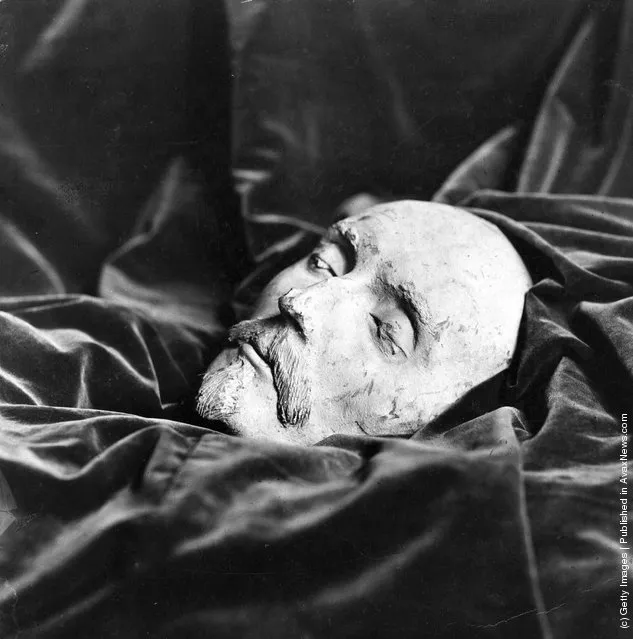
A death mask thought to be that of English dramatist William Shakespeare (1566–1616). Found by Dr. Ludwig Becker in Mainz in 1849, the mask was linked to Shakespeare because of its 1616 date and its supposed facial resemblance to the writer. A rival theory, however, maintains that the mask is more likely to be that of English poet Ben Johnson. (Photo by Hulton Archive/Getty Images). Circa 1900