Loading...
Done
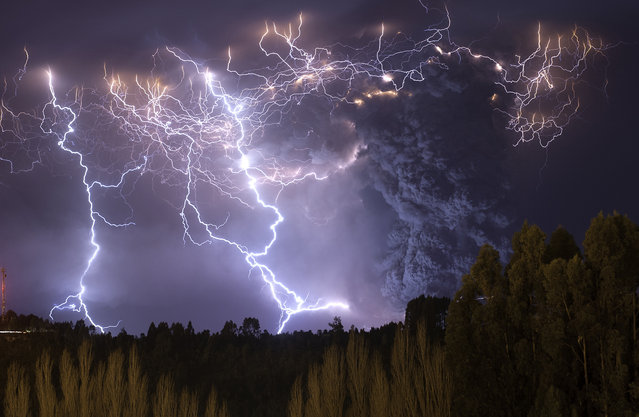
The eruption of Cordon Caulle began on June 4, 2011, located in the Region of Los Rios in Chile. For about 12 months, people and animals became accustomed to living with the daily fall of ash, which also caused problems in the air traffic in South America. The explosions and lightning during first days of the eruption could be seen from hundreds of miles around. This photograph was taken on the second night of eruption from the town of Lago Ranco. (Photo and caption by Francisco Negroni/National Geographic Traveler Photo Contest)

The eruption of Cordon Caulle began on June 4, 2011, located in the Region of Los Rios in Chile. For about 12 months, people and animals became accustomed to living with the daily fall of ash, which also caused problems in the air traffic in South America. The explosions and lightning during first days of the eruption could be seen from hundreds of miles around. This photograph was taken on the second night of eruption from the town of Lago Ranco. (Photo and caption by Francisco Negroni/National Geographic Traveler Photo Contest)

ATTENTION! All pictures are presented in high resolution. To see Hi-Res images – just TWICE click on any picture. In other words, click small picture – opens the BIG picture. Click BIG picture – opens VERY BIG picture.
Details
23 Jun 2013 11:24:00
This photo taken on May 20, 2020 shows elementary school students wearing wings to maintain social distancing amid concerns of the COVID-19 coronavirus, in a classroom in Taiyuan in China's northern Shanxi province. (Photo by AFP Photo/China Stringer Network)

This photo taken on May 20, 2020 shows elementary school students wearing wings to maintain social distancing amid concerns of the COVID-19 coronavirus, in a classroom in Taiyuan in China's northern Shanxi province. (Photo by AFP Photo/China Stringer Network)
Details
27 May 2020 00:03:00
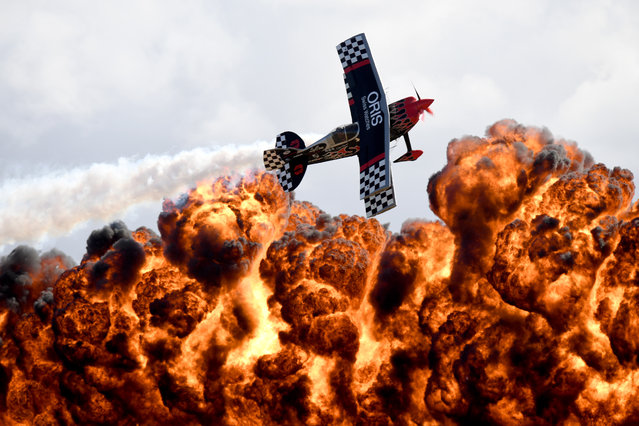
A member of the Tinstix of Dynamite aerobatics team flies in front of a wall of fire during the Australian International Airshow in Melbourne on March 5, 2017. The annual event sees 180,000 visitors over the 3-day public event held at the Avalon Airfield some 80kms south-west of Melbourne. (Photo by Mal Fairclough/AFP Photo)

A member of the Tinstix of Dynamite aerobatics team flies in front of a wall of fire during the Australian International Airshow in Melbourne on March 5, 2017. The annual event sees 180,000 visitors over the 3-day public event held at the Avalon Airfield some 80kms south-west of Melbourne. (Photo by Mal Fairclough/AFP Photo)
Details
06 Mar 2017 10:03:00
A Chinese woman wears a mask to protect from particles blown in during a sandstorm as she walks in the street on May 4, 2017 in Beijing, China. Sandstorms are common in northern China during the spring season and are caused when heavy winds from Mongolia in the north brings sand and pollutants that can blanket Chinese cities and cause air quality to deteriorate. (Photo by Kevin Frayer/Getty Images)

A Chinese woman wears a mask to protect from particles blown in during a sandstorm as she walks in the street on May 4, 2017 in Beijing, China. Sandstorms are common in northern China during the spring season and are caused when heavy winds from Mongolia in the north brings sand and pollutants that can blanket Chinese cities and cause air quality to deteriorate. (Photo by Kevin Frayer/Getty Images)
Details
12 May 2017 07:06:00
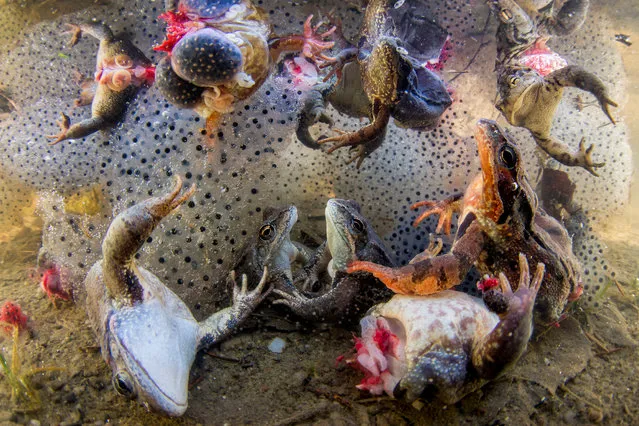
Nature, singles winner: Frogs with their legs severed struggle to the surface, surrounded by frogspawn, after being thrown back into the water in Covasna, Romania. (Photo by Bence Mate/World Press Photo 2019)

Nature, singles winner: Frogs with their legs severed struggle to the surface, surrounded by frogspawn, after being thrown back into the water in Covasna, Romania. (Photo by Bence Mate/World Press Photo 2019)
Details
13 Apr 2019 00:03:00
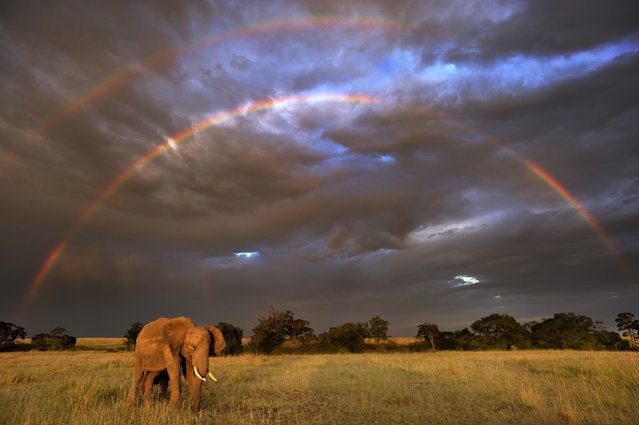
This photo provided by Netflix/naturepl.com and WWF-International shows an African Elephant (Loxodonta africana) in front of double rainbow, in Masai Mara, Kenya, included in the Netflix natural history series, “Our Planet”, in collaboration with Silverback Films and WWF. The eight-part series debuts in 2019. (Photo by Andy Rouse/Naturepl.com/WWF-International/Netflix via AP Photo)

This photo provided by Netflix/naturepl.com and WWF-International shows an African Elephant (Loxodonta africana) in front of double rainbow, in Masai Mara, Kenya, included in the Netflix natural history series, “Our Planet”, in collaboration with Silverback Films and WWF. The eight-part series debuts in 2019. (Photo by Andy Rouse/Naturepl/WWF-International/Netflix via AP Photo)
Details
09 Oct 2015 08:05:00
Children play football in front of an abandoned train compartment next to a railway track in Dhaka, in this May 29, 2014 file photo. (Photo by Andrew Biraj/Reuters)

Children play football in front of an abandoned train compartment next to a railway track in Dhaka, in this May 29, 2014 file photo. (Photo by Andrew Biraj/Reuters)
Details
03 Dec 2014 14:22:00
“The Queen” painted fibreglass by artist John Humphreys is displayed backdropped by other works which feature in this year's Summer Exhibition on it's 250th year at the Royal Academy of Arts in London, Tuesday, June 5, 2018. The Summer Exhibition has been held since 1769, with around 1300 works on display this year and most of them available for purchase. It runs from June 12 until August 19. (Photo by Matt Dunham/AP Photo)

“The Queen” painted fibreglass by artist John Humphreys is displayed backdropped by other works which feature in this year's Summer Exhibition on it's 250th year at the Royal Academy of Arts in London, Tuesday, June 5, 2018. The Summer Exhibition has been held since 1769, with around 1300 works on display this year and most of them available for purchase. It runs from June 12 until August 19. (Photo by Matt Dunham/AP Photo)
Details
06 Jun 2018 10:21:00