Loading...
Done
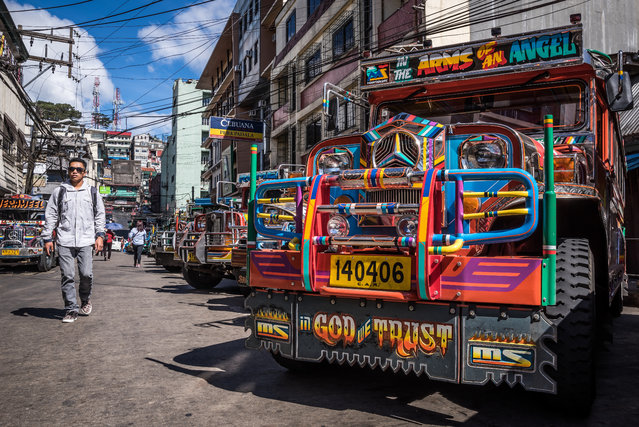
A jeepney waits for departure at Baguio (North Luzon). (Photo by Claudio Sieber/Barcroft Media)

These Filipino icons of ingenuity were originally re-crafted from abandoned US army jeeps after the second world war, and helped to establish a new system of urban transportation. Jeepneys are being phased to help ease city congestion, but the move will also cause unemployment for experienced drivers – and higher fares for commuters. (Photo by Claudio Sieber/Barcroft Media)
Details
30 May 2019 00:01:00
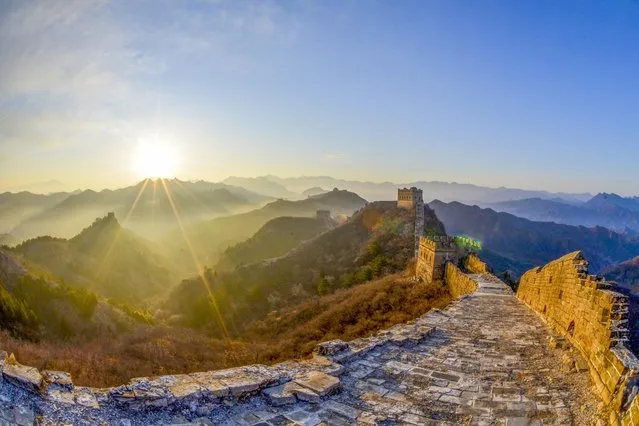
The Jinshanling Great Wall is seen after a rainfall on March 31, 2022 in Chengde, Hebei Province of China. (Photo by Zhou Wanping/VCG via Getty Images)

The Jinshanling Great Wall is seen after a rainfall on March 31, 2022 in Chengde, Hebei Province of China. (Photo by Zhou Wanping/VCG via Getty Images)
Details
20 May 2022 05:08:00
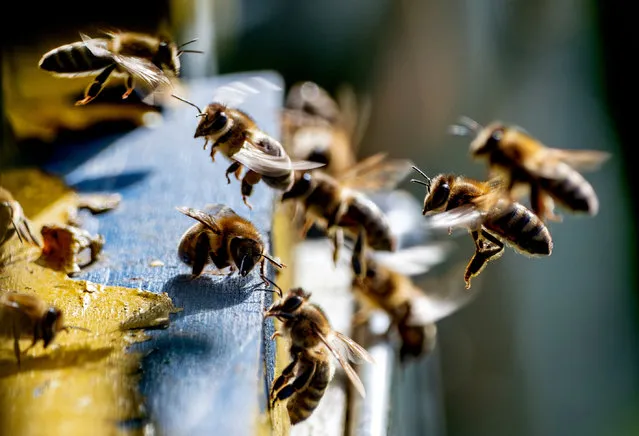
Bees fly in front of a beehive in the outskirts of Frankfurt, Germany, Monday, April 8, 2024. (Photo by Michael Probst/AP Photo)

Bees fly in front of a beehive in the outskirts of Frankfurt, Germany, Monday, April 8, 2024. (Photo by Michael Probst/AP Photo)
Details
22 Apr 2024 04:16:00
Black women in Brazil sit at the intersection of racism and misogyny, and have in recent years been at the forefront of a movement that challenges issues ranging from sexual and domestic violence to police brutality and stereotyping. Kolor Collective considers itself to be a part of this movement and questions expectations imposed on black women with satirical and subversive images, as seen here. (Photo by Kolor Art Collective/The Guardian)

Photographer Pol Kurucz’s vivid collection of photos explores issues faced by black Brazilian women, from political misrepresentation to unrealistic beauty standards. Kolor Collective is a Rio de Janeiro-based creative group that challenges the struggle faced by black women in Brazil through theatrical and provocative art. It was founded in 2015 by Franco-Hungarian photographer Pol Kurucz, who often touches on his own experiences of discrimination to call out sensitive social problems. (Photo by Kolor Art Collective/The Guardian)
Details
28 Dec 2016 07:24:00
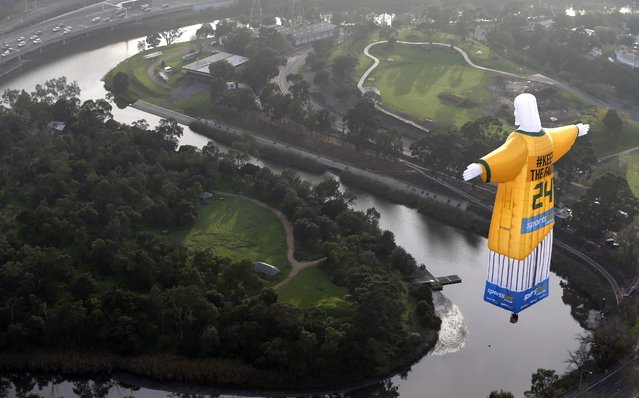
Jesus World Cup Balloon

A giant floating replica of the Brazilian Christ The Redeemer statue rolled into Melbourne today ahead of next week’s World Cup, and the city wasn’t overly pleased with the display.
Details
21 Jun 2014 12:24:00
A Flash of Lightning by Bert Hickman

Hickman's experimental art, which reflects the vein-like extensions that electrical charges burn into surfaces they come in contact with, are referred to as Lichtenberg figures. The diverging patterns present in each of the artist's "paintings" are natural occurrences from subjecting the panels to tiny lightning storms through a handy device known as a particle accelerator. Hickman is like a modern-day Zeus, painting with lightning bolts.
Details
26 Nov 2012 14:15:00
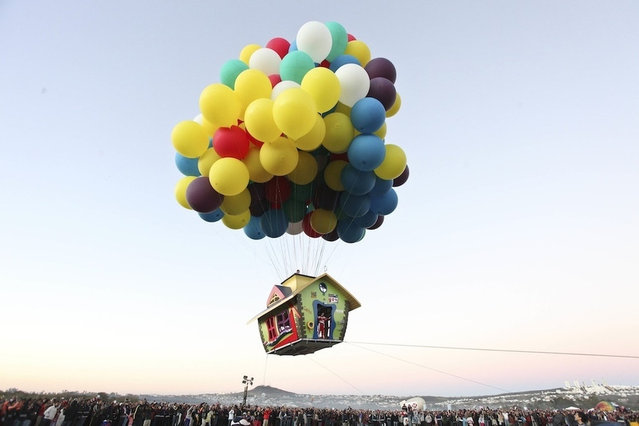
Real-life Up House Flys

Adventurer Jonathan Trappe, successfully flew a house over 20,000 feet in the air, lifted by helium-filled balloons in Leon, Mexico, as inspired by the Pixar film Up.
Details
28 Nov 2012 10:14:00
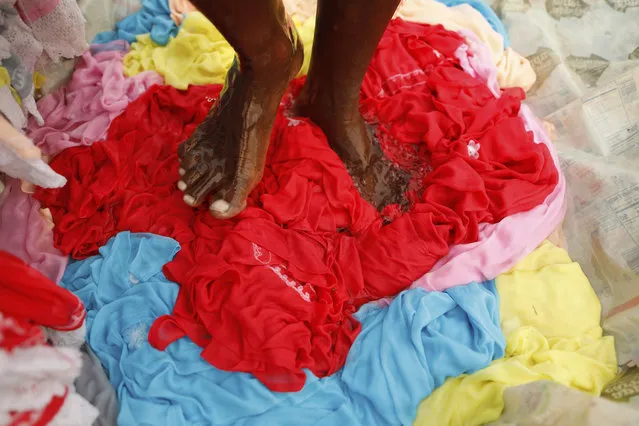
A dhobi, or a washerman washes cloths on the banks of the River Gomti in Lucknow, India, Saturday, September 12, 2020. Dhobis are traditional laundry workers who wash clothes by hand and dry them in the sun, an occupation which has been in existence for generations. Most cities in India have a Dhobi Ghat, or washermen's area, where the city's pile of clothes is laundered. This practice is still popular in India, despite of modern technology. Around 1,000 families work in Lucknow's Dhobi Ghat. However, in light of the novel coronavirus, their wages have decreased drastically. With each family earning around US$100-200 per month. (Photo by Rajesh Kumar Singh/AP Photo)

A dhobi, or a washerman washes cloths on the banks of the River Gomti in Lucknow, India, Saturday, September 12, 2020. Dhobis are traditional laundry workers who wash clothes by hand and dry them in the sun, an occupation which has been in existence for generations. Most cities in India have a Dhobi Ghat, or washermen's area, where the city's pile of clothes is laundered. This practice is still popular in India, despite of modern technology. Around 1,000 families work in Lucknow's Dhobi Ghat. However, in light of the novel coronavirus, their wages have decreased drastically. With each family earning around US$100-200 per month. (Photo by Rajesh Kumar Singh/AP Photo)
Details
25 Sep 2020 00:03:00