Loading...
Done
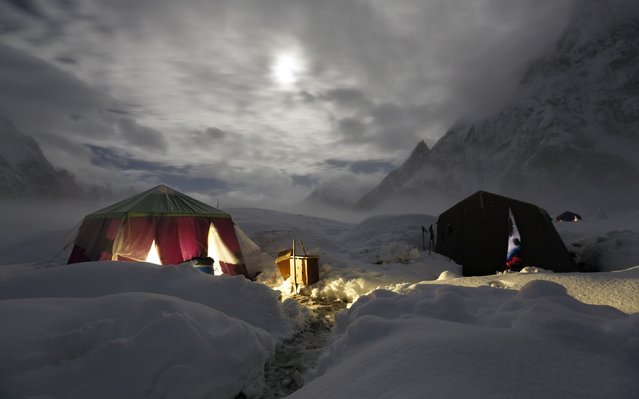
The moon illuminates the snow-covered Concordia, the confluence of the Baltoro and Godwin-Austen glaciers, near the world's second highest mountain the K2 (8,000 meters) in the Karakoram mountain range in Pakistan September 6, 2014. (Photo by Wolfgang Rattay/Reuters)

The moon illuminates the snow-covered Concordia, the confluence of the Baltoro and Godwin-Austen glaciers, near the world's second highest mountain the K2 (8,000 meters) in the Karakoram mountain range in Pakistan September 6, 2014. While other parts of Pakistan and northern India were flooded, Concordia in the Karakoram mountain range was covered with a seasonally unusual amount of snow. Geographically, Pakistan is a climbers paradise. It rivals Nepal for the number of peaks over 7,000 meters and is home to the world's second tallest mountain, K2, as well as four of the world's 14 summits higher than 8,000 meters. (Photo by Wolfgang Rattay/Reuters)
Details
24 Oct 2014 12:27:00
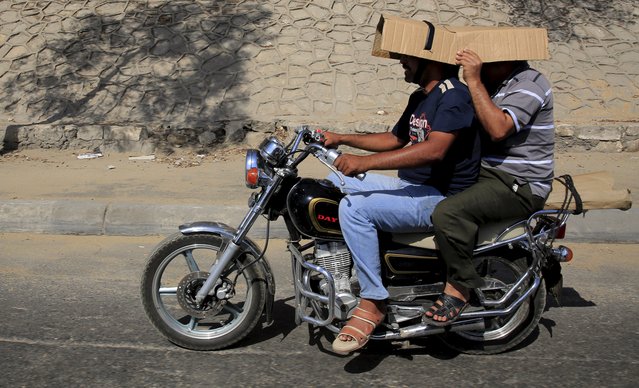
Men cover their heads from the sun while riding on a motorcycle during a hot day in Cairo, Egypt, August 17, 2015. A heatwave killed at least 61 people across Egypt from Sunday to Tuesday and caused nearly 600 people to be admitted to hospital, Egypt's health ministry said on state news agency MENA on Wednesday. (Photo by Amr Abdallah Dalsh/Reuters)

Men cover their heads from the sun while riding on a motorcycle during a hot day in Cairo, Egypt, August 17, 2015. A heatwave killed at least 61 people across Egypt from Sunday to Tuesday and caused nearly 600 people to be admitted to hospital, Egypt's health ministry said on state news agency MENA on Wednesday. (Photo by Amr Abdallah Dalsh/Reuters)
Details
18 Aug 2015 13:47:00
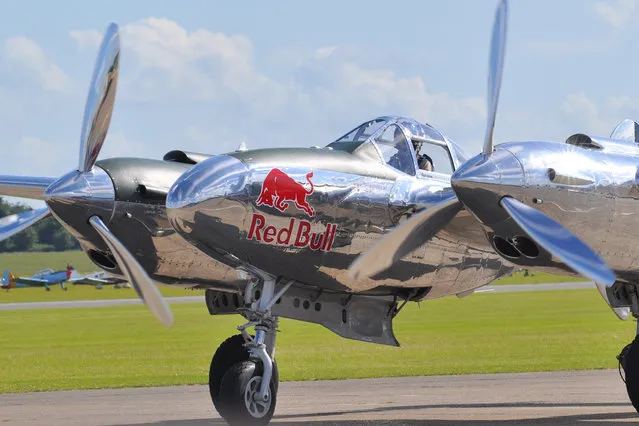
The Flying Bull's P-38 Lockheed Lightning N25Y / 13 – Red Bull – Flying Legends Airshow 2012 Duxford (Rob Lovesey)

The Flying Bull's P-38 Lockheed Lightning N25Y / 13 – Red Bull – Flying Legends Airshow 2012 Duxford (Photo by Rob Lovesey)


Details
20 Nov 2012 12:10:00
New York City policemen tangled with demonstrators at a subway station on the opening day of the New York World's Fair, April 22, 1964. Youths attempted to stall the train, which was headed from the city to the fairgrounds, as a form of protest on behalf of civil rights for blacks. (Photo by Charles Gorry/AP Photo)

New York City policemen tangled with demonstrators at a subway station on the opening day of the New York World's Fair, April 22, 1964. Youths attempted to stall the train, which was headed from the city to the fairgrounds, as a form of protest on behalf of civil rights for blacks. (Photo by Charles Gorry/AP Photo)
Details
26 Jan 2015 11:52:00
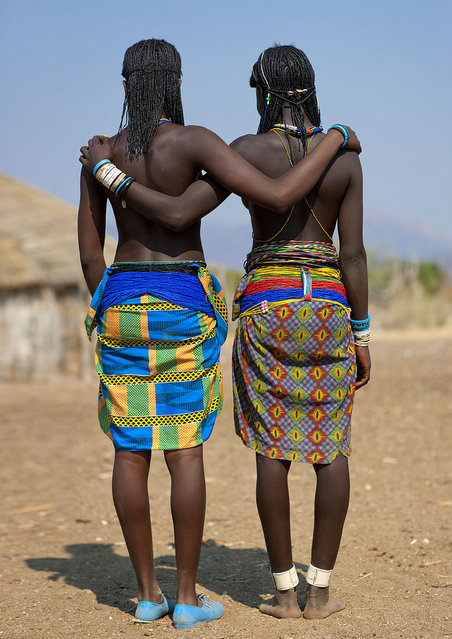
“Show us our butts! Mucawana tribe – Angola. In Soba village, the Muhacaona (Mucawana) tribe, perhaps the best place i have visited. They use cow dung and fat to make this so nice haircut, and love the beads. They asked me to make pictures of their backs... and butts to see on the camera screen if everything was perfect!”. (Eric Lafforgue)

“Show us our butts! Mucawana tribe – Angola. In Soba village, the Muhacaona (Mucawana) tribe, perhaps the best place i have visited. They use cow dung and fat to make this so nice haircut, and love the beads. They asked me to make pictures of their backs... and butts to see on the camera screen if everything was perfect!”. (Photo and comments by Eric Lafforgue)
Details
09 Nov 2012 15:04:00
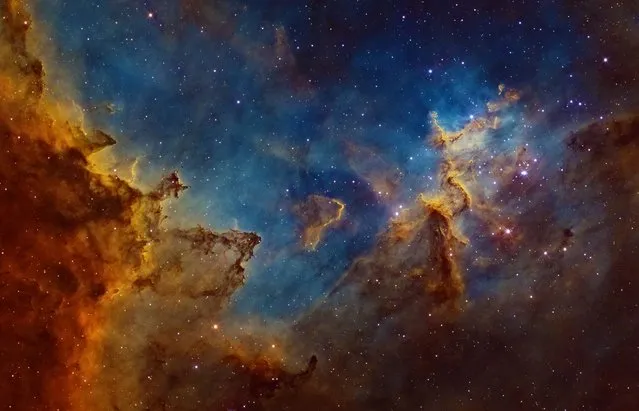
Centre of the Heart Nebula by Ivan Eder (Hungary). Situated 7500 light years away in the ‘W’-shaped constellation of Cassiopeia, the Heart Nebula is a vast region of glowing gas, energized by a cluster of young stars at its centre. The image depicts the central region, where dust clouds are being eroded and moulded into rugged shapes by the searing cosmic radiation. (Photo by Ivan Eder)

The competition, which is run by the Royal Observatory Greenwich in association with BBC Sky at Night Magazine, is now in its sixth year and has received over 2,500 entries. Photo: Centre of the Heart Nebula by Ivan Eder (Hungary). Situated 7500 light years away in the “W”-shaped constellation of Cassiopeia, the Heart Nebula is a vast region of glowing gas, energized by a cluster of young stars at its centre. The image depicts the central region, where dust clouds are being eroded and moulded into rugged shapes by the searing cosmic radiation. (Photo by Ivan Eder)
Details
03 Jul 2014 11:59:00
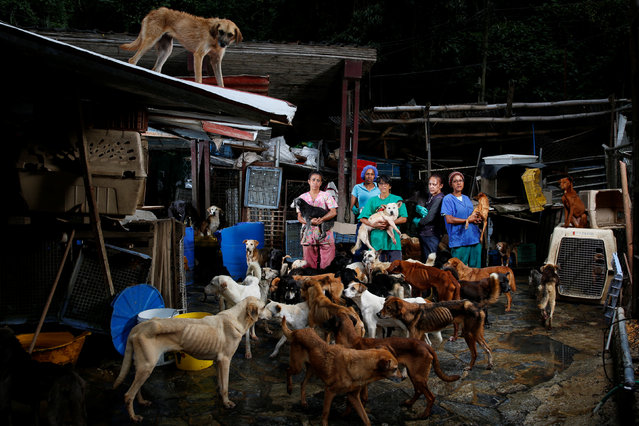
(L-R) Maria Silva, Milena Cortes, Maria Arteaga, Jackeline Bastidas and Gissy Abello pose for a picture at the Famproa dogs shelter where they work, in Los Teques, Venezuela, August 25, 2016. Venezuelans struggling to feed their families let alone their pets are dumping animals on the streets, in parks and at makeshift homes overrun with scrawny animals amid an economic crisis. An hour from Caracas in Los Teques, hundreds of dogs bark and run around the streets scavenging for food outside a makeshift shelter. People come by every few hours to hand over scrawny dogs which are fed by volunteers every day. Venezuela is undergoing a major economic and social crisis, with shortages of basic foods and medicines. Triple digit inflation is hitting everybody hard, including those who own pets. (Photo by Carlos Garcia Rawlins/Reuters)

(L-R) Maria Silva, Milena Cortes, Maria Arteaga, Jackeline Bastidas and Gissy Abello pose for a picture at the Famproa dogs shelter where they work, in Los Teques, Venezuela, August 25, 2016. Venezuelans struggling to feed their families let alone their pets are dumping animals on the streets, in parks and at makeshift homes overrun with scrawny animals amid an economic crisis. An hour from Caracas in Los Teques, hundreds of dogs bark and run around the streets scavenging for food outside a makeshift shelter. (Photo by Carlos Garcia Rawlins/Reuters)
Details
08 Sep 2016 10:01:00
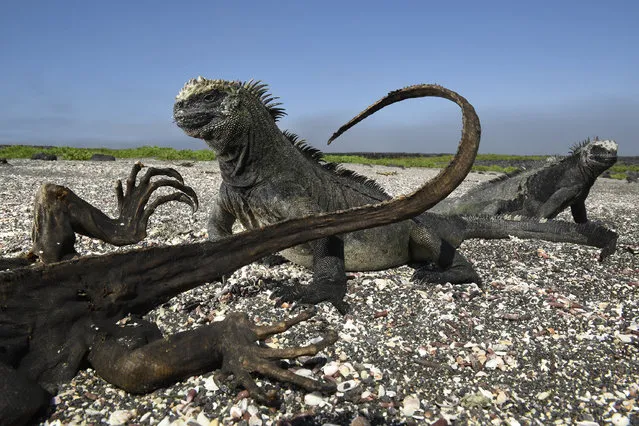
Galapagos – Rocking the Cradle: Four major ocean currents converge along the Galapagos archipelago, creating the conditions for an extraordinary diversity of animal life, April 25, 2016. The islands are home to at least 7,000 flora and fauna species, of which 97 percent of the reptiles, 80 percent of the land birds, 50 percent of the insects and 30 percent of the plants are endemic. The local ecosystem is highly sensitive to the changes in temperature, rainfall and ocean currents that characterize the climatic events known as El Niño and La Niña. These changes cause marked fluctuations in weather and food availability. Many scientists expect the frequency of El Niño and La Niña to increase as a result of climate change, making the Galapagos a possible early-warning location for its effects. (Photo by Thomas P. Peschak for National Geographic/World Press Photo)

Galapagos – Rocking the Cradle: Four major ocean currents converge along the Galapagos archipelago, creating the conditions for an extraordinary diversity of animal life, April 25, 2016. The islands are home to at least 7,000 flora and fauna species, of which 97 percent of the reptiles, 80 percent of the land birds, 50 percent of the insects and 30 percent of the plants are endemic. (Photo by Thomas P. Peschak for National Geographic/World Press Photo)
Details
16 Apr 2018 00:01:00