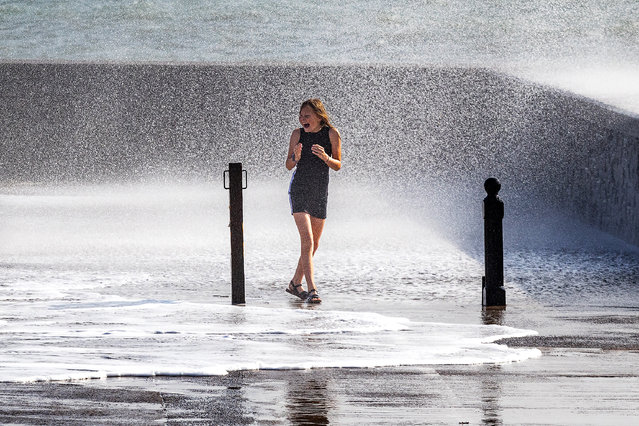
“The Reward”. “A spot that a friend and I found that takes a bit of effort to get to. Needs the right swell and wind direction to come together for the backwash to really happen. We had been many times with OK results, but this morning everything lined up perfectly and I was rewarded with this split-second moment in time under some amazing morning light”. (Photo by Scott Harrison/2019 UK Surf Photo of the Year)
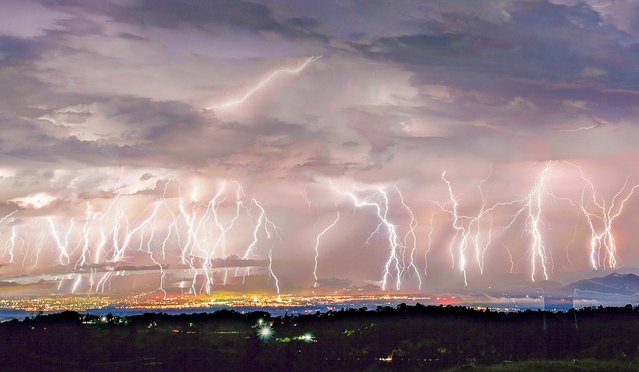
Composite picture of lightning strikes over Colima, Mexico in just 5 minutes on July 14, 2020. These incredible photos show over 50 forks of lightning striking a city in just five minutes – in a storm being dubbed “The Night of a Thousand Forks”. The amazing, panoramic photos over the valley shows the whole sky light up as the forks of lightning strike at different points along the length of the city's 165 square miles. (Photo by South West News Service/Action Press)
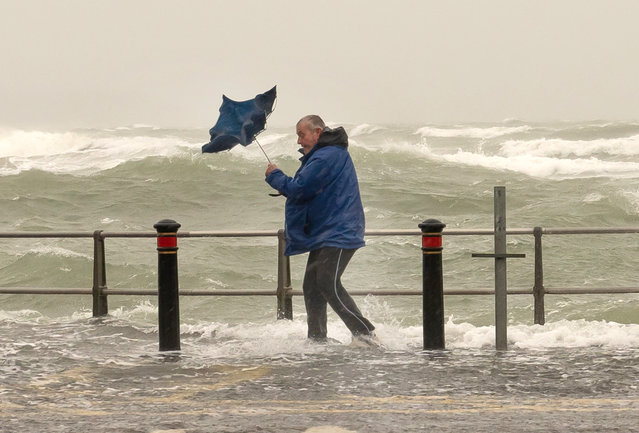
Someone struggles with an umbrella on Mudeford Quay seafront in Dorset, UK during storm Nelson on March 28, 2024. (Photo by Steve Hogan/Picture Exclusive)
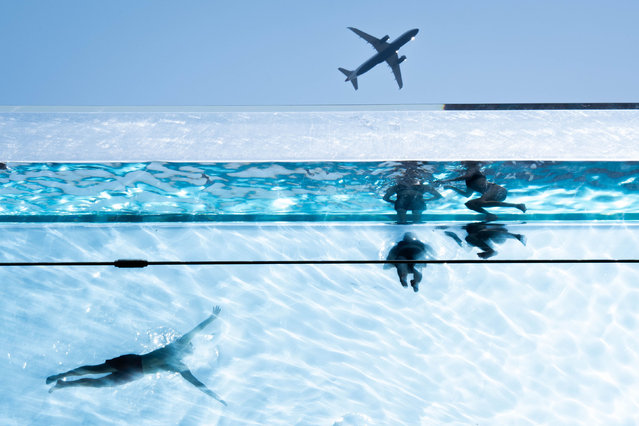
Swimmers in the Sky Pool, a transparent swimming pool suspended 35 meters above ground between two apartment buildings, during hot weather in Nine Elms, central London on Monday, August 12, 2024. (Photo by James Manning/PA Images via Getty Images)
Waves batter the North Devon coast at Ilfracombe, UK on August 23, 2024, as Storm Lilian hits the UK and the Met Office issues a yellow weather warning. (Photo by Mark Passmore Photography)
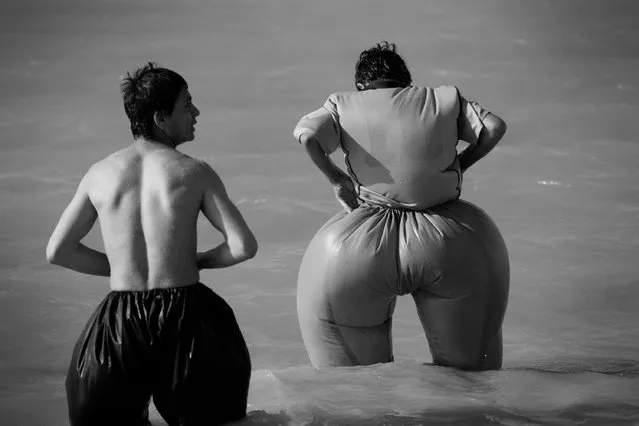
“Life in War” (FotoEvidence Press) by Iranian photographer Majid Saeedi is probably the only book about Afghanistan that doesn’t show images of war. For ten years his camera photographed daily life in the context of war. His photographs reveal the humanity of a people living through decades of war. Here: Afghan men escape increasing summer temperatures by wading in the Qarga reservoir on July 9, 2010 in a suburb of Kabul, Afghanistan. (Photo by Majid Saeedi/Getty Images)
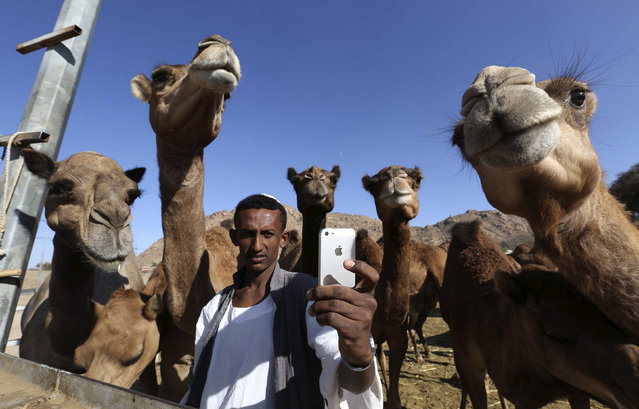
A man takes a “selfie” with camels at a farm in Taif November 1, 2014. Saudi Arabia said late on Wednesday it had detected six new cases of the deadly Middle East Respiratory Syndrome (MERS) in 24 hours, the biggest daily jump for months with officials blaming lax hospital procedures. Scientists are not sure of the origin of the virus, but several studies have linked it to camels and some experts think it is being passed to humans through close physical contact or through the consumption of camel meat or camel milk. (Photo by Mohamed Alhwaity/Reuters)