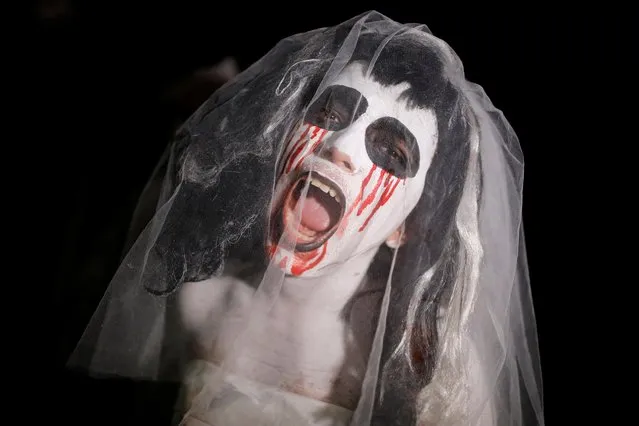
A young man dressed as “La Llorona”, participates in a parade called “La Calabiuza” on the eve of the Day of the Dead in Tonacatepeque, El Salvador, November 1, 2019. (Photo by Jose Cabezas/Reuters)
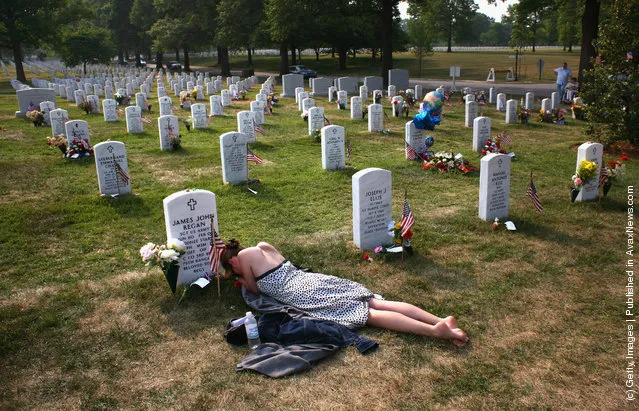
Mary McHugh mourns her slain fiance Sgt. James Regan at “Section 60” of the Arlington National Cemetery May 27, 2007. Regan, a US Army Ranger, was killed by an IED explosion in Iraq. (Photo by John Moore/Getty Images)
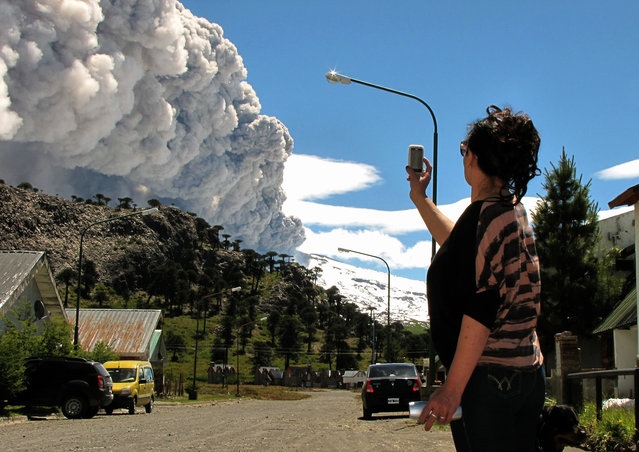
A woman takes a picture with her mobile phone from Caviahue, Neuquen province, Argentina, some 1500 km southwest of Buenos Aires, of the Copahue volcano spewing ashes on December 22, 2012. The authorities of Chile and Argentina issued yellow alerts due to the eruption of the Copahue volcano, placed in the border between both countries. (Photo by Antonio Huglich/AFP Photo)
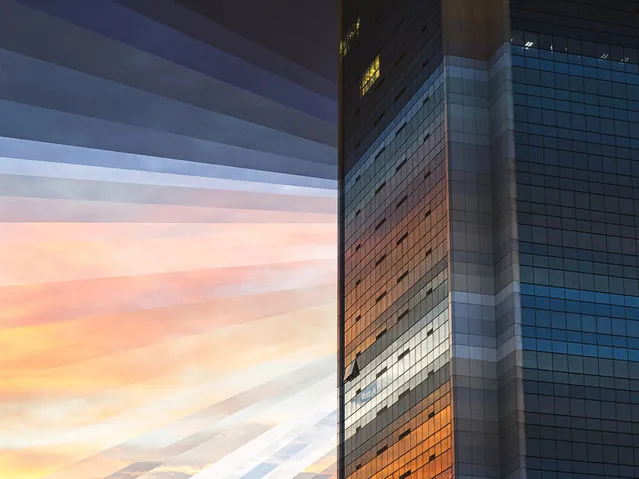
Intrigued by photographing time, Singapore-based photographer Fong Qi Wei created single, composite pictures from a sequence of images spanning 2-4 hours. He concentrated on capturing sunrises and sunsets as they evolved over different landscapes, seascapes, and cityscapes. He then digitally stitched the images together to get a snapshot of time passing over the scene for his series “Time is a Dimension”. “Most paintings and photographs are an instance of time”, Wei explained in his artist’s statement. “That’s not the way the world works. We experience a sequence of time, and that’s why a video is somehow more compelling than a freeze frame”. (Photo by Fong Qi Wei/Thoughtful Photography)
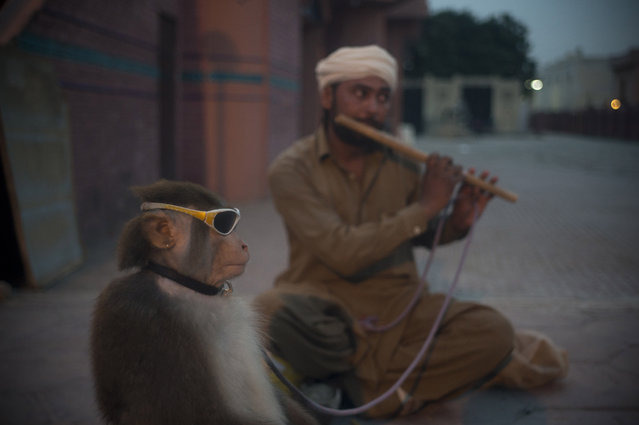
A Pakistani monkey handler Naseer Khan plays flute to attract passers by for a monkey show to earn his living in Islamabad, Pakistan, Monday, September 7, 2015. (Photo by B. K. Bangash/AP Photo)
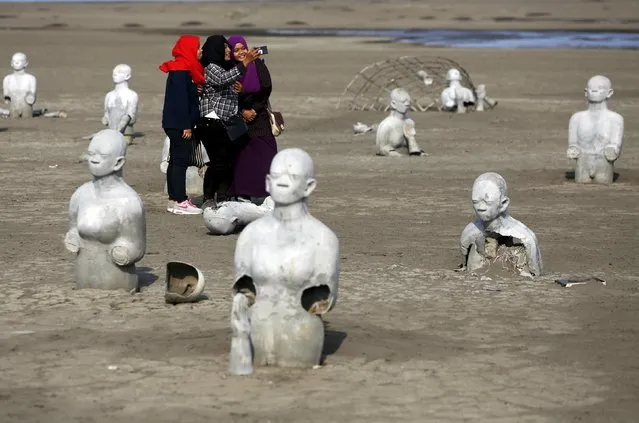
Women take pictures between stone sculptures of half-buried people at the Lapindo mud field in Sidoarjo, October 11, 2015. Disaster tourism has become more common in Indonesia, where visitors are drawn to sites of earthquakes, floods and volcanic eruptions to witness the aftermath of catastrophes or simply do some soul-searching. (Photo by Reuters/Beawiharta)