Loading...
Done
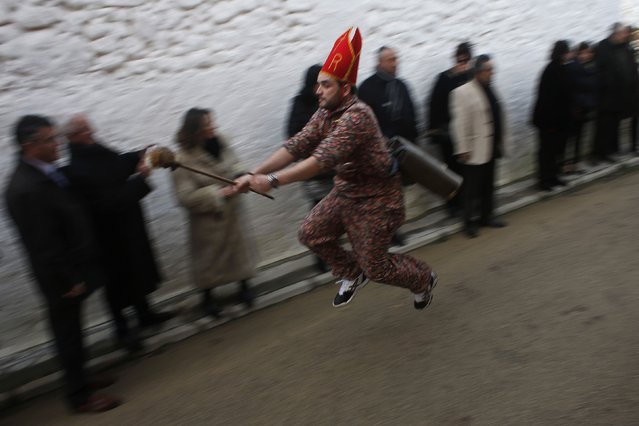
A believer dressed as a “diablo” (devil) jumps at the San Blas' (Saint Blaise) procession during the “Endiablada” festival in Almonacid del Marquesado, in central Spain February 3, 2015. In the “Endiablada”, an undated traditional festival in honour of the Candelaria Virgin and San Blas. (Photo by Susana Vera/Reuters)

A believer dressed as a “diablo” (devil) jumps at the San Blas' (Saint Blaise) procession during the “Endiablada” festival in Almonacid del Marquesado, in central Spain February 3, 2015. In the “Endiablada”, an undated traditional festival in honour of the Candelaria Virgin and San Blas, believers are dressed in colourful costumes, wear a mitre with lead cowbells tied to their waists that ring as they wander around the village and in front of the saints' statues during their processions. (Photo by Susana Vera/Reuters)
Details
05 Feb 2015 12:02:00
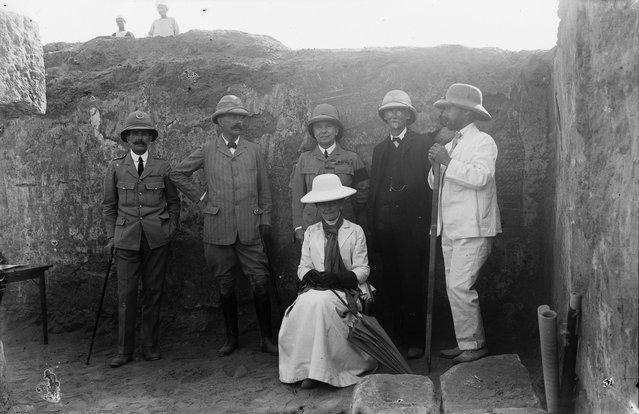
Remarkable discoveries were made, like the decapitated head of a bronze statue of Roman emperor Augustus, sacked from a raid on Roman garrisons further north in Egypt. Here: A group visiting the excavations at Meroë, including (from left) Midwinter Bey, director of Sudan Railways; Lord Kitchener; General Sir Francis Reginald Wingate, Sirdar of the Egyptian Army; Professor Archibald Sayce; John Garstang; and Lady Catherine Wingate, 1911. (Photo by Garstang Museum of Archaeology)

The city of Meroë laid undiscovered for two millennia before British archaeologist John Garstang excavated it in the early 20th century. Garstang took the radical decision to document his discoveries with photography – and immortalised an ancient world. “Meroë: Africa’s Forgotten Empire” is being shown until 14 September at Garstang Museum of Archaeology, Liverpool. Here: A group visiting the excavations at Meroë, including (from left) Midwinter Bey, director of Sudan Railways; Lord Kitchener; General Sir Francis Reginald Wingate, Sirdar of the Egyptian Army; Professor Archibald Sayce; John Garstang; and Lady Catherine Wingate, 1911. (Photo by Garstang Museum of Archaeology)
Details
15 Jun 2016 14:49:00


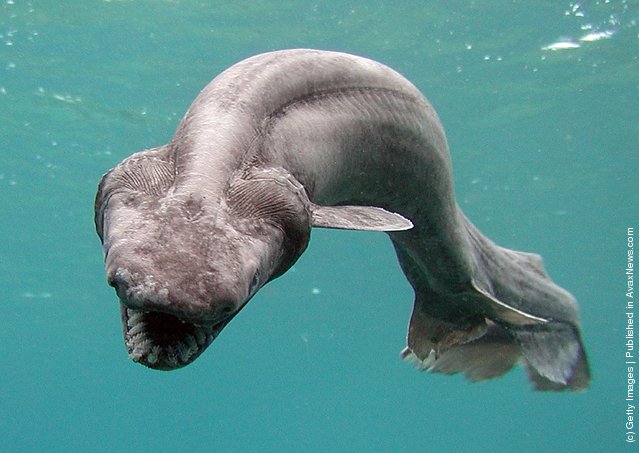
“The frilled shark (Chlamydoselachus anguineus) is one of two extant species of shark in the family Chlamydoselachidae, with a wide but patchy distribution in the Atlantic and Pacific Oceans. This uncommon species is found over the outer continental shelf and upper continental slope, generally near the bottom though there is evidence of substantial upward movements. It has been caught as deep as 1,570 m (5,150 ft), whereas in Suruga Bay, Japan it is most common at depths of 50–200 m (160–660 ft). Exhibiting several “primitive” features, the frilled shark has often been termed a «living fossil»”. – Wikipedia

Photo: A 1.6 meter long Frill shark swims in a tank after being found by a fisherman at a bay in Numazu, on January 21, 2007 in Numazu, Japan. The frill shark, also known as a Frilled shark usually lives in waters of a depth of 600 meters and so it is very rare that this shark is found alive at sea-level. It's body shape and the number of gill are similar to fossils of sharks which lived 350,000,000 years ago. (Photo by Awashima Marine Park/Getty Images)
Details
05 May 2011 10:01:00
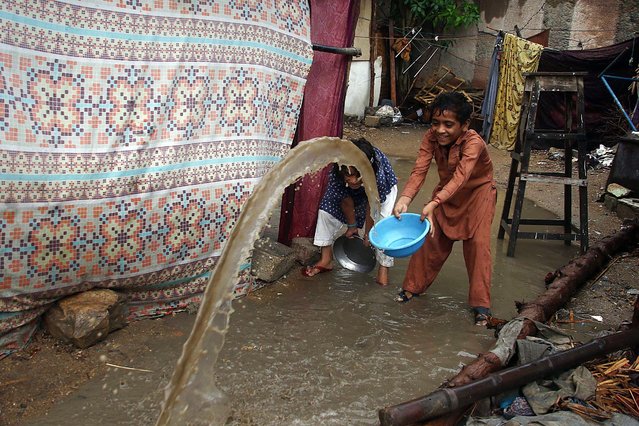
A boy removes rain water from his hut after a heavy downpour in Karachi, Pakistan, 28 August 2016. Heavy monsoon rains across the country has claimed dozens of lives in last few weeks as Pakistan Meteorological Departmen office predict more rains in coming days. (Photo by Shahzaib Akber/EPA)

A boy removes rain water from his hut after a heavy downpour in Karachi, Pakistan, 28 August 2016. Heavy monsoon rains across the country has claimed dozens of lives in last few weeks as Pakistan Meteorological Departmen office predict more rains in coming days. (Photo by Shahzaib Akber/EPA)
Details
30 Aug 2016 11:41:00
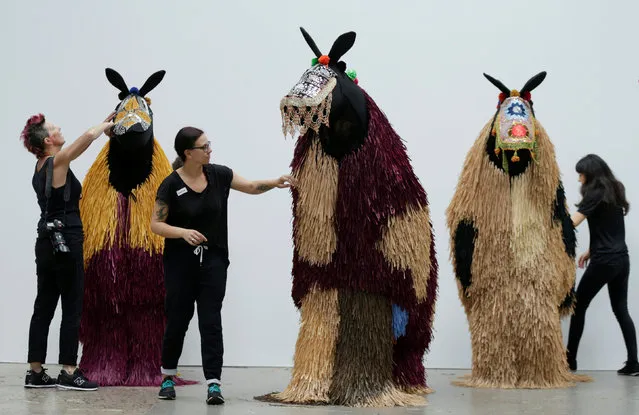
Dressers make last minute adjustments to the costumes of dancers performing as horses during a press preview of American artist Nick Cave's first major work shown in Australia, entitled HEARD.SYD in Sydney, November 8, 2016. (Photo by Jason Reed/Reuters)

Dressers make last minute adjustments to the costumes of dancers performing as horses during a press preview of American artist Nick Cave's first major work shown in Australia, entitled HEARD.SYD in Sydney, November 8, 2016. Over several days the live art performance will feature 30 “horses” dancing to live percussion beats in suits made from coloured raffia plant fibres. (Photo by Jason Reed/Reuters)
Details
09 Nov 2016 06:16:00
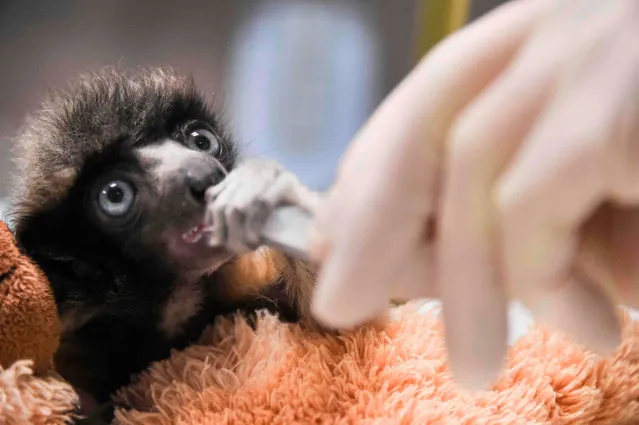
A veterinarian from the zoo of Besancon feeds “Soa”, a female crowned sifaka, in Besancon, eastern France, on February 18, 2019. The crowned sifaka is a critically endangered species from Madagascar. There were only 6 females over 20 individuals living in 7 zoos worldwide end of 2018. (Photo by Sébastien Bozon/AFP Photo)

A veterinarian from the zoo of Besancon feeds “Soa”, a female crowned sifaka, in Besancon, eastern France, on February 18, 2019. The crowned sifaka is a critically endangered species from Madagascar. There were only 6 females over 20 individuals living in 7 zoos worldwide end of 2018. (Photo by Sébastien Bozon/AFP Photo)
Details
24 Feb 2019 00:03:00
People walk to the Venezuela Aid Live concert that will play on the Colombian side of the border near the Simon Bolivar International Bridge, from San Antonio del Tachira, Venezuela, Friday, February 22, 2019. (Photo by Rodrigo Abd/AP Photo)

People walk to the Venezuela Aid Live concert that will play on the Colombian side of the border near the Simon Bolivar International Bridge, from San Antonio del Tachira, Venezuela, Friday, February 22, 2019. (Photo by Rodrigo Abd/AP Photo)
Details
25 Feb 2019 00:05:00
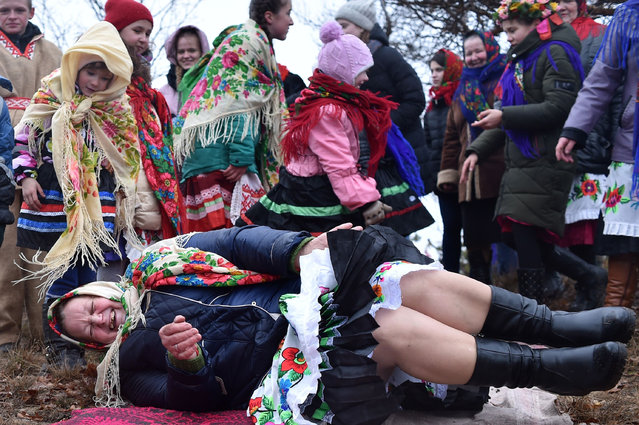
Villagers play traditional games as they take part in a Chyrachka rite during the Shrovetide celebration in the village of Tonezh, some 280 km of Minsk, on March 10, 2019. Chyrachka is a kind of birds that live in this area. (Photo by Sergei Gapon/AFP Photo)

Villagers play traditional games as they take part in a Chyrachka rite during the Shrovetide celebration in the village of Tonezh, some 280 km of Minsk, on March 10, 2019. Chyrachka is a kind of birds that live in this area. (Photo by Sergei Gapon/AFP Photo)
Details
12 Mar 2019 00:03:00