Loading...
Done
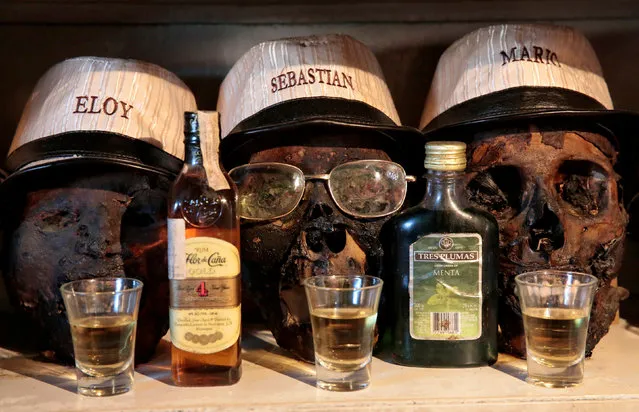
Skulls are seen at the witch doctor kiosk during the day of offerings to the “Pachamama” (Mother Earth) in El Alto, Bolivia, August 1, 2016. (Photo by David Mercado/Reuters)

Skulls are seen at the witch doctor kiosk during the day of offerings to the “Pachamama” (Mother Earth) in El Alto, Bolivia, August 1, 2016. Pachamama is a goddess revered by the indigenous people of the Andes. She is also known as the earth/time mother. In Inca mythology, Pachamama is a fertility goddess who presides over planting and harvesting, embodies the mountains, and causes earthquakes. (Photo by David Mercado/Reuters)
Details
02 Aug 2016 08:11:00
Massive Landslide Buries Remote Afghan Village

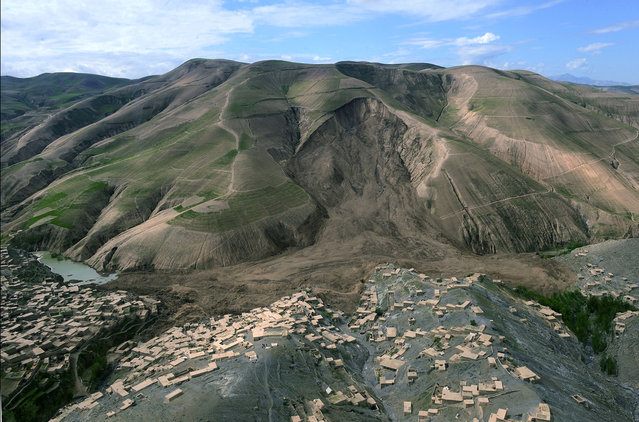
Last Friday, in Afghanistan's mountainous northeastern province of Badakhshan, an enormous landslide took place, burying much of a small village, and killing hundreds. Officials say that at least 300 residents of Abi Barik village were killed, but are uncertain about exact numbers, cautioning that the final number could be 500 or more. Rescue teams gave up hope on Saturday of finding any survivors, focusing energy on helping the hundreds suddenly made homeless. Many of the surviving families have struggled to get aid. Some have gone to nearby villages to stay with relatives or friends, while others have slept in tents provided by aid groups.
Details
30 May 2014 11:27:00
Awesome Ring By Clive Roddy

If you ever wanted to wear houses on your finger, now’s your chance (though it’s hard to imagine that any sane person would have such a desire)! Clive Roddy offers you an opportunity to fulfill your dream of having a ring that features houses, waves, mountains, or trees. In order to create these rings, first the metal is cut using a laser, and then the whole thing is hand painted using colored enamel. Though these rings are very pretty, it is hard to imagine someone wearing such a ring on everyday basis. These types of rings should probably be reserved for special occasions or festivals, rather than for everyday use. (Photo by Clive Roddy)
Details
09 Dec 2014 09:36:00
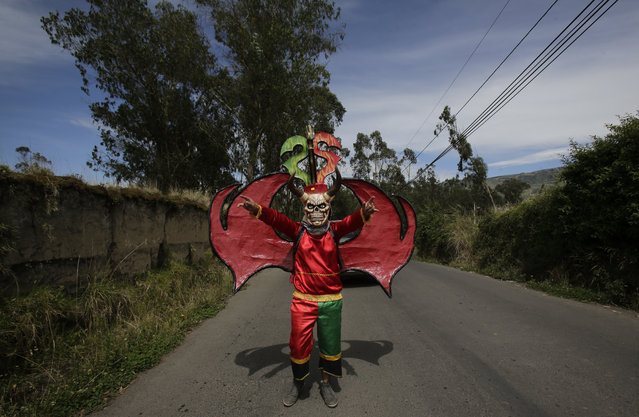
Dressed for the traditional New Year's festival known as “La Diablada”, in Pillaro, Ecuador, Friday, January 5, 2018. (Photo by Dolores Ochoa/AP Photo)

Dressed for the traditional New Year's festival known as “La Diablada”, in Pillaro, Ecuador, Friday, January 5, 2018. Thousands of singing and dancing devils take over the mountain town for six days of revelry in the streets. Local legend holds that anyone who adopts a costume for the celebration and wears it at the event six years in a row will have good luck. (Photo by Dolores Ochoa/AP Photo)
Details
12 Jan 2018 06:47:00
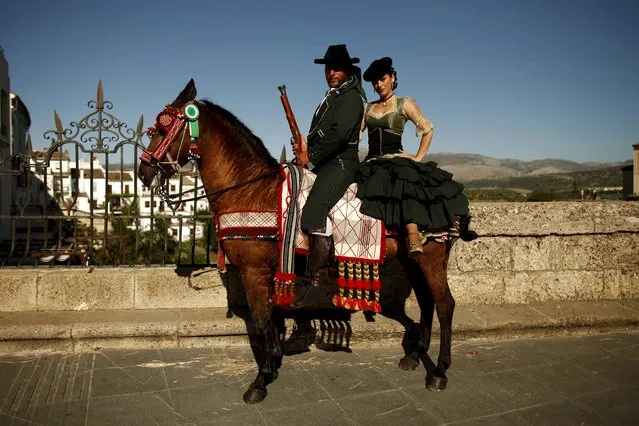
Francisco Javier Moreno (L), 35, and his wife Maria Auxiliadora Canca, 34, dressed as bandits pose for a photo with their horse as they participate in the third edition of “Ronda Romantica” (Romantic Ronda) in Ronda, southern Spain, May 16, 2015. (Photo by Jon Nazca/Reuters)

Francisco Javier Moreno (L), 35, and his wife Maria Auxiliadora Canca, 34, dressed as bandits pose for a photo with their horse as they participate in the third edition of “Ronda Romantica” (Romantic Ronda) in Ronda, southern Spain, May 16, 2015. Ronda Romantica is a cultural, historical and tourist event during the three days where thousands of people of Ronda and about fifty towns around of “Serrania de Ronda” (Ronda Mountain Ranges), dressed in traditional costumes, recreate the era of the bandits, drovers and romantic travelers in the nineteenth century. (Photo by Jon Nazca/Reuters)
Details
18 May 2015 11:32:00
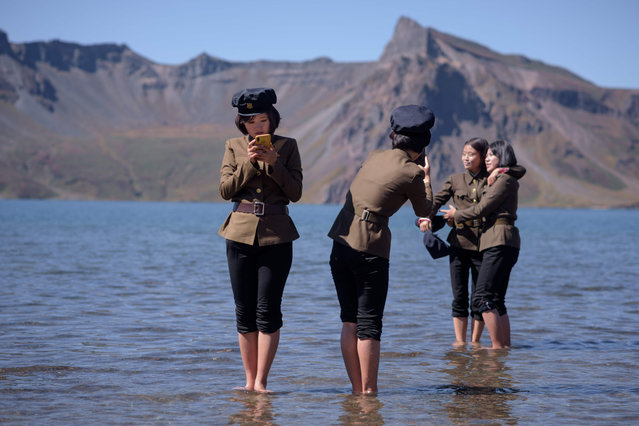
In a photo taken on September 11, 2019, North Korean students pose for photos in Chonji lake, or “Heaven lake”, as they visit the crater of Mount Paektu, near Samjiyon. Mount Paektu has long been considered the spiritual birthplace of the Korean nation and is a place of pilgrimage for tens of thousands of North Koreans every year, who are trained from birth to revere their leaders. Every year 100,000 North Koreans or more are taken on study tours to the camp, the mountain, and nearby revolutionary sites where relics of operations are preserved. Dressing in khaki uniforms said to resemble guerrillas' outfits and carrying red flags, they march to the summit of the volcano. (Photo by Ed Jones/AFP Photo)

In a photo taken on September 11, 2019, North Korean students pose for photos in Chonji lake, or “Heaven lake”, as they visit the crater of Mount Paektu, near Samjiyon. Mount Paektu has long been considered the spiritual birthplace of the Korean nation and is a place of pilgrimage for tens of thousands of North Koreans every year, who are trained from birth to revere their leaders. (Photo by Ed Jones/AFP Photo)
Details
09 Oct 2019 00:03:00
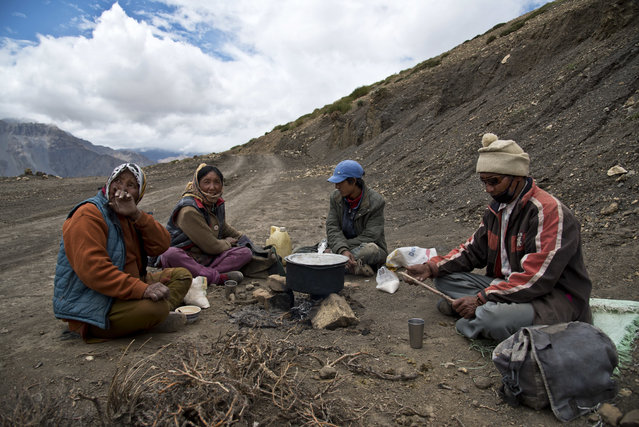
In this August 17, 2016, photo, from left to right, Chhering Chodom, 60, Tashi Yangzom, 50, Lobsang Chhering, 27, and Dorje Tandup, 58, drink milk tea on the side of the road. For centuries, the sleepy valley nestled in the Indian Himalayas remained a hidden Buddhist enclave forbidden to outsiders. Enduring the harsh year-round conditions of the high mountain desert, the people of Spiti Valley lived by a simple communal code – share the Earth's bounty, be hospitable to neighbors, and eschew greed and temptation at all turns. That's all starting to change, for better or worse. Since India began allowing its own citizens as well as outsiders to visit the valley in the early 1990s, tourism and trade have boomed. And the marks of modernization, such as solar panels, asphalt roads and concrete buildings, have begun to appear around some of the villages that dot the remote landscape at altitudes above 4,000 meters (13,000 feet). (Photo by Thomas Cytrynowicz/AP Photo)

In this August 17, 2016, photo, from left to right, Chhering Chodom, 60, Tashi Yangzom, 50, Lobsang Chhering, 27, and Dorje Tandup, 58, drink milk tea on the side of the road. For centuries, the sleepy valley nestled in the Indian Himalayas remained a hidden Buddhist enclave forbidden to outsiders. Enduring the harsh year-round conditions of the high mountain desert, the people of Spiti Valley lived by a simple communal code – share the Earth's bounty, be hospitable to neighbors, and eschew greed and temptation at all turns. That's all starting to change, for better or worse. (Photo by Thomas Cytrynowicz/AP Photo)
Details
15 Sep 2016 09:22:00
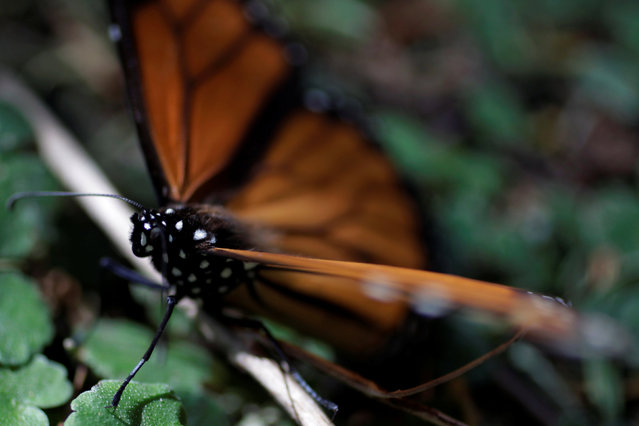
A monarch butterfly rests on the ground at the Sierra Chincua butterfly sanctuary on a mountain in Angangeo, Michoacan November 24, 2016. Angangueo is a town and municipality located in far eastern Michoacán state in central Mexico noted for its history of mining and its location in the Monarch Butterfly Biosphere Reserve. The Monarch Butterfly Biosphere Reserve is a World Heritage Site containing most of the over-wintering sites of the eastern population of the monarch butterfly. The reserve is located in the Trans-Mexican Volcanic Belt pine-oak forests ecoregion on the border of Michoacán and State of Mexico, 100 km (62 miles), northwest of Mexico City. Millions of butterflies arrive in the reserve annually. Butterflies only inhabit a fraction of the 56,000 hectares of the reserve from October–March. (Photo by Carlos Jasso/Reuters)

A monarch butterfly rests on the ground at the Sierra Chincua butterfly sanctuary on a mountain in Angangeo, Michoacan November 24, 2016. Angangueo is a town and municipality located in far eastern Michoacán state in central Mexico noted for its history of mining and its location in the Monarch Butterfly Biosphere Reserve. The Monarch Butterfly Biosphere Reserve is a World Heritage Site containing most of the over-wintering sites of the eastern population of the monarch butterfly. (Photo by Carlos Jasso/Reuters)
Details
26 Nov 2016 10:20:00