Loading...
Done


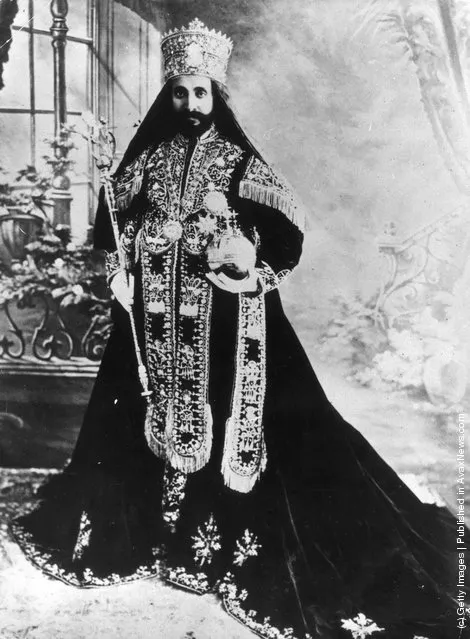
“Haile Selassie I (23 July 1892 – 27 August 1975), born Tafari Makonnen, was Ethiopia's regent from 1916 to 1930 and Emperor of Ethiopia from 1930 to 1974. The heir to a dynasty that traced its origins to the 13th century, and from there by tradition back to King Solomon and Queen Makeda, Empress of Axum, known in the Abrahamic tradition as the Queen of Sheba. Haile Selassie is a defining figure in both Ethiopian and African history.

Haile Selassie is revered as the returned Messiah of the Bible, God incarnate, among the Rastafari movement, the number of followers of which is estimated between 200,000 and 800,000. Begun in Jamaica in the 1930s, the Rastafari movement perceives Haile Selassie as a messianic figure who will lead a future golden age of eternal peace, righteousness, and prosperity. He himself remained an Ethiopian Orthodox Christian throughout his life”. – Wikipedia

Photo: Negusa Negasti, Emperor of Ethiopia Haile Selassie I, known as “Lord of Lords”, “The Conquering Lion of the tribe of Judah”, “Light of the world”, “Elect of God”, in full ceremonial regalia following his coronation. (Photo by Hulton Archive/Getty Images)
Details
21 Jun 2011 11:04:00
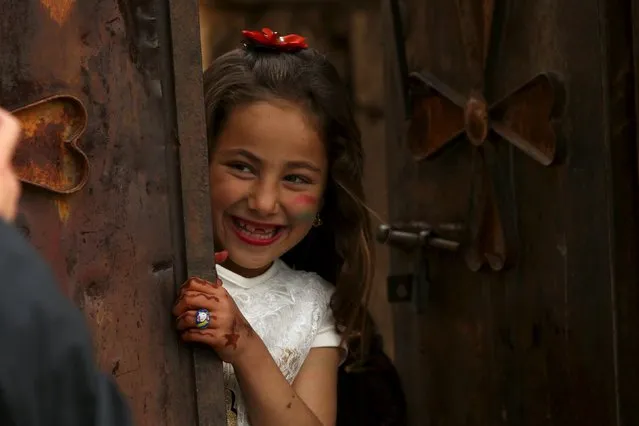
A Kurdish girl celebrates Newroz Day, a festival marking spring and the new year, in Akra, Iraq March 20, 2016. (Photo by Ari Jalal/Reuters)

A Kurdish girl celebrates Newroz Day, a festival marking spring and the new year, in Akra, Iraq March 20, 2016. Nowruz is the name of the Iranian New Year also referred to as Persian New Year which is celebrated worldwide by Iranian peoples, along with some other ethno-linguistic groups. Nowruz is the day of the vernal equinox, and marks the beginning of spring in the Northern Hemisphere. It usually occurs on March 21 or the previous/following day, depending on where it is observed. Although having Persian and religious Zoroastrian origins, Nowruz has been celebrated by people from diverse ethno-linguistic communities for thousands of years. (Photo by Ari Jalal/Reuters)
Details
21 Mar 2016 12:47:00
Orient Industry 40th Anniversary-Love Doll in Tokyo, Japan on May 19,  2017. Orient industry prides itself on its detail with two looking extremely real as they sit flirtatiously on a couch. (Photo by Masatoshi Okauchi/Rex Features/Shutterstock)

Japanese sеx doll exhibition attracts hundreds of mannequin-fetishists to celebrate 40 years of the X-rated love bots in Tokyo, Japan on May 19, 2017. These silicon seductresses were the star of an extraordinary exhibition in Japan showcasing sеx dolls that cost as little as a second hand car. Japanese sеx doll maker Orient Industry (originally Orient made dolls for disabled people) were laying bare their dazzling bevvy of beauties in an extravaganza to mark its 40th anniversary this week. Here: Orient industry prides itself on its detail with two looking extremely real as they sit flirtatiously on a couch. (Photo by Masatoshi Okauchi/Rex Features/Shutterstock)
Details
20 May 2017 10:03:00
Japanese children wear loincloths as they splash about in freezing cold water during Saidaiji Naked Festival, at Saidaiji Temple

“A Hadaka Matsuri (“Naked Festival”) is a type of Japanese festival, or matsuri, in which participants wear a minimum amount of clothing; usually just a Japanese loincloth (called fundoshi), sometimes with a short happi coat, and rarely completely naked. Whatever the clothing, it is considered to be above vulgar, or everyday, undergarments, and on the level of holy Japanese shrine attire. Naked festivals are held in dozens of places throughout Japan every year, usually in the summer or winter. The most famous festival is held in Okayama, where the festival originated. Every year, over 9,000 men participate in this festival”. – Wikipedia

Photo: Japanese men wear loincloths as they splash about in freezing cold water during Saidaiji Naked Festival, at Saidaiji Temple on February 18, 2012 in Okayama, Japan. (Photo by Buddhika Weerasinghe/Getty Images)
Details
19 Feb 2012 12:18:00
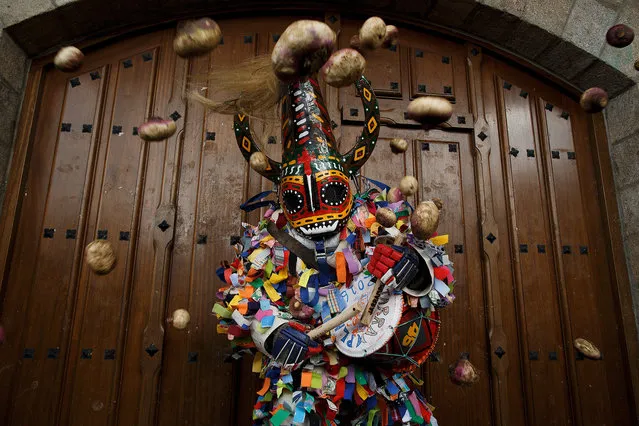
People throw turnips at the Jarramplas as he comes out from the church beating his drum during the Jarramplas Festival on January 20, 2016 in Piornal, Caceres province, Spain. The centuries old Jarramplas festival takes place annually every January 19-20 on Saint Sebastian Day and this year they expect to use more than 20 thousand kilogrames of turnips. Even though the exact origins of the festival are not known, various theories exist including the mythological punishment of Caco by Hercules. (Photo by Pablo Blazquez Dominguez/Getty Images)

People throw turnips at the Jarramplas as he comes out from the church beating his drum during the Jarramplas Festival on January 20, 2016 in Piornal, Caceres province, Spain. The centuries old Jarramplas festival takes place annually every January 19-20 on Saint Sebastian Day and this year they expect to use more than 20 thousand kilogrames of turnips. Even though the exact origins of the festival are not known, various theories exist including the mythological punishment of Caco by Hercules, a relation to ceremonies celebrated by the American Indians that were seen by the first conquerors, to a cattle thief ridiculed and expelled by his village neighbours. It is generally believed to symbolize the expulsion of everything bad. (Photo by Pablo Blazquez Dominguez/Getty Images)
Details
21 Jan 2016 13:21:00
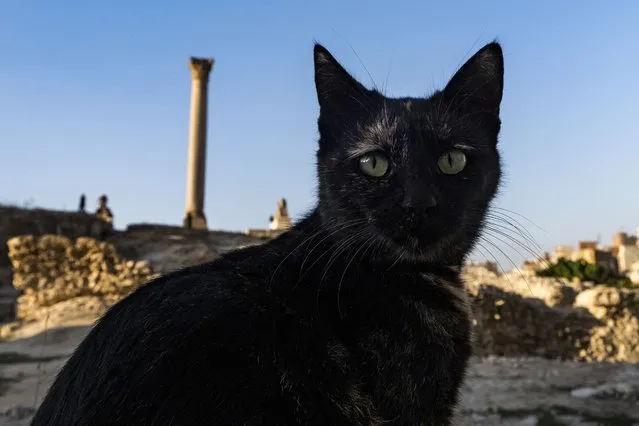
A cat looks on near the Victory Pillar at the ruins of the Serapeum of Alexandria, an ancient Greek temple dating to the Ptolemaic and Roman periods (246 BC – 391 AD) dedicated to the city's protector deity Serapis, in Egypt's northern coastal city of Alexandria on November 24, 2023. The giant Corinthian column, commonly misidentified as “Pompey's Pillar”, is a Roman triumphal column set up in honour of the Roman emperor Diocletian (298–302 AD), and originally supported a colossal porphyry statue of the emperor in armour. (Photo by Amir Makar/AFP Photo)

A cat looks on near the Victory Pillar at the ruins of the Serapeum of Alexandria, an ancient Greek temple dating to the Ptolemaic and Roman periods (246 BC – 391 AD) dedicated to the city's protector deity Serapis, in Egypt's northern coastal city of Alexandria on November 24, 2023. The giant Corinthian column, commonly misidentified as “Pompey's Pillar”, is a Roman triumphal column set up in honour of the Roman emperor Diocletian (298–302 AD), and originally supported a colossal porphyry statue of the emperor in armour. (Photo by Amir Makar/AFP Photo)
Details
13 Dec 2023 23:52:00
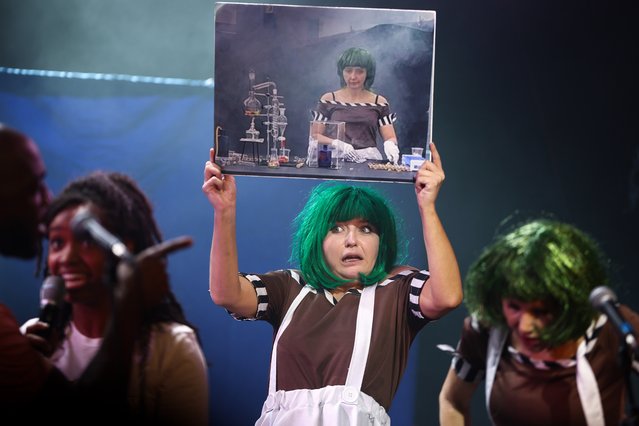
Kirsty Paterson appears as herself in Willy’s Candy Spectacular at the Pleasance Dome on August 15, 2024 in Edinburgh, Scotland. Police eventually shut down the 2023 Willy's Chocolate Experience event in Glasgow last year after disappointed attendees spent £35 on tickets only to be met with a sparsely decorated warehouse and a handful of actors. The event garnered worldwide attention and has now been made into a show “Willy's Candy Spectacular” for the Edinburgh Fringe, featuring Kirsty Paterson the original “Sad Oompa Loompa”. (Photo by Jeff J. Mitchell/Getty Images)

Kirsty Paterson appears as herself in Willy’s Candy Spectacular at the Pleasance Dome on August 15, 2024 in Edinburgh, Scotland. Police eventually shut down the 2023 Willy's Chocolate Experience event in Glasgow last year after disappointed attendees spent £35 on tickets only to be met with a sparsely decorated warehouse and a handful of actors. The event garnered worldwide attention and has now been made into a show “Willy's Candy Spectacular” for the Edinburgh Fringe, featuring Kirsty Paterson the original “Sad Oompa Loompa”. (Photo by Jeff J. Mitchell/Getty Images)
Details
11 Dec 2025 06:33:00
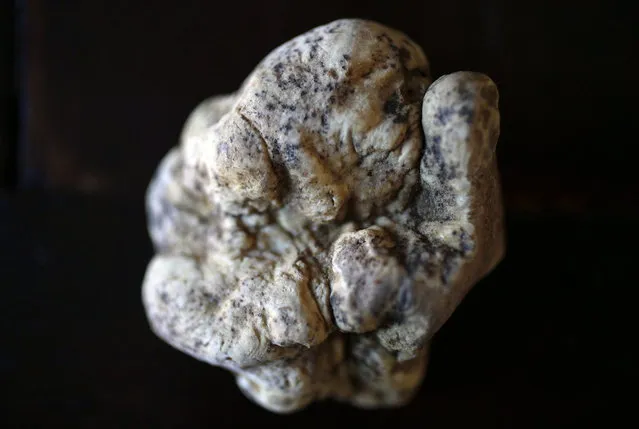
A truffle is seen on a table in Alba, north-western Italy November 11, 2013. Located in the heart of the Langhe – the hilly southern area of Italy's northwestern Piedmont region – Alba is the country's capital of white truffles, a variety of the prized fungus which grows underground. Truffles are found two to eight inches (5-20cm) below the ground near the roots of trees. (Photo by Stefano Rellandini/Reuters)

A truffle is seen on a table in Alba, north-western Italy November 11, 2013. Located in the heart of the Langhe – the hilly southern area of Italy's northwestern Piedmont region – Alba is the country's capital of white truffles, a variety of the prized fungus which grows underground. Truffles are found two to eight inches (5-20cm) below the ground near the roots of trees. They give off an odour which lasts for a limited period of time and can be detected with the assistance of well-trained dogs and experienced hunters. Output of white truffles, which are not cultivated and only grow naturally in forests, has fallen in Italy over the past few years, largely because climate change has brought a damaging mix of drought and torrential rains. (Photo by Stefano Rellandini/Reuters)
Details
31 Dec 2013 11:22:00