Loading...
Done
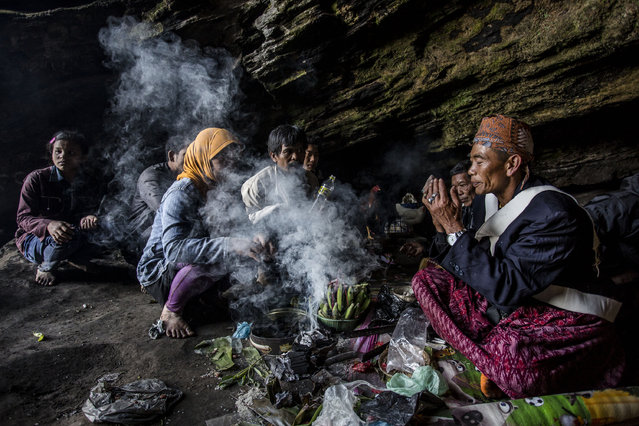
A Tenggerese shaman praying for worshippers at Widodaren cave during the Tenggerese Hindu Yadnya Kasada festival on July 31, 2015 in Probolinggo, East Java, Indonesia. The festival is the main festival of the Tenggerese people and lasts about a month. On the fourteenth day, the Tenggerese make the journey to Mount Bromo to make offerings of rice, fruits, vegetables, flowers and livestock to the mountain gods by throwing them into the volcano's caldera. (Photo by Ulet Ifansasti/Getty Images)

A Tenggerese shaman praying for worshippers at Widodaren cave during the Tenggerese Hindu Yadnya Kasada festival on July 31, 2015 in Probolinggo, East Java, Indonesia. The festival is the main festival of the Tenggerese people and lasts about a month. On the fourteenth day, the Tenggerese make the journey to Mount Bromo to make offerings of rice, fruits, vegetables, flowers and livestock to the mountain gods by throwing them into the volcano's caldera. The origin of the festival lies in the 15th century when a princess named Roro Anteng started the principality of Tengger with her husband Joko Seger, and the childless couple asked the mountain Gods for help in bearing children. The legend says the Gods granted them 24 children but on the provision that the 25th must be tossed into the volcano in sacrifice. The 25th child, Kesuma, was finally sacrificed in this way after initial refusal, and the tradition of throwing sacrifices into the caldera to appease the mountain Gods continues today. (Photo by Ulet Ifansasti/Getty Images)
Details
01 Aug 2015 12:07:00
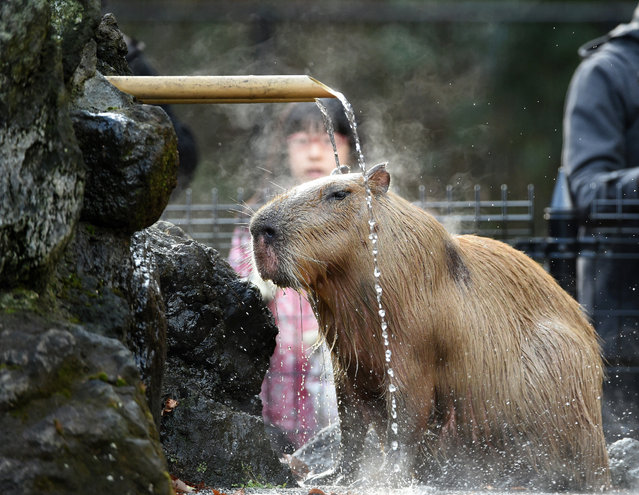
A Capybara bathes in the hot spring water at the Saitama Children's zoo in Higashi Matsuyama city, Saitama prefecture on December 21, 2014. Seven capybaras in the zoo, originally from South America, enjoyed the hot spring water on the chilly winter day in Japan. (Photo by Toshifumi Kitamura/AFP Photo)

A Capybara bathes in the hot spring water at the Saitama Children's zoo in Higashi Matsuyama city, Saitama prefecture on December 21, 2014. Seven capybaras in the zoo, originally from South America, enjoyed the hot spring water on the chilly winter day in Japan. (Photo by Toshifumi Kitamura/AFP Photo)
Details
27 Dec 2014 12:59:00
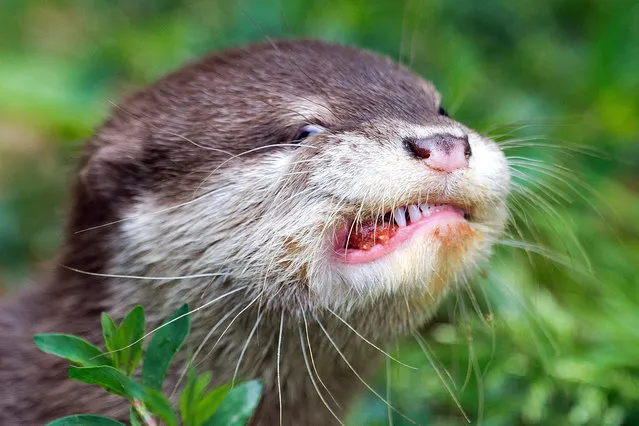
One of three young oriental small-clawed otters eats a meatball on June 18, 2015 in a zoo in Dresden, eastern Germany. The oriental small-clawed otter female Fussi gave birth to 3 healthy pups. Its pups now leave their burrow to explore the environment. (Photo by Arno Burgi/AFP Photo/DPA)

One of three young oriental small-clawed otters eats a meatball on June 18, 2015 in a zoo in Dresden, eastern Germany. The oriental small-clawed otter female Fussi gave birth to 3 healthy pups. Its pups now leave their burrow to explore the environment. (Photo by Arno Burgi/AFP Photo/DPA)
Details
29 Jun 2015 12:27:00
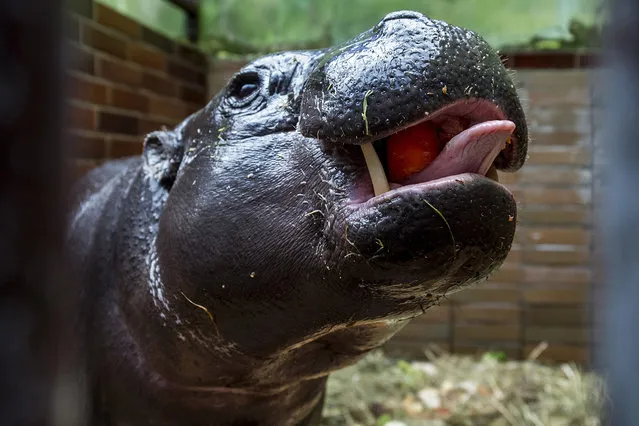
Female of pygmy hippopotamus called Malaya from Netherlands in zoo in Dvur Kralove nad Labem, Czech Republic, February 22, 2016. (Photo by David Tanecek/CTK via ZUMA Press)

Female of pygmy hippopotamus called Malaya from Netherlands in zoo in Dvur Kralove nad Labem, Czech Republic, February 22, 2016. (Photo by David Tanecek/CTK via ZUMA Press)
Details
28 Feb 2016 10:44:00
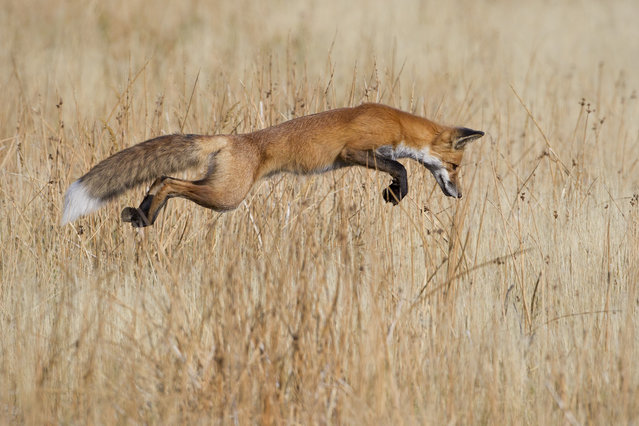
Canada: “Lucky pounce”. (Photo by Connor Stefanison/Wildlife Photographer of the Year 2013)

The winners of The London’s Natural History Museum's prestigious Wildlife Photographer of the Year for 2013 have finally been unveiled. Selected from almost 43,000 entries from 96 countries, the winners offer a glimpse of the stunning array of natural beauty on our planet. Photo: Canada: “Lucky pounce”. “Anticipating the pounce – that was the hardest part”, says Connor, who had come to Yellowstone National Park, Wyoming, USA, in search of wildlife as much as the spectacular landscape. He had found this fox, his first ever, on his last day in the park. It was so absorbed in hunting that Connor had plenty of time to get out of the car and settle behind a rock. It quartered the grassland, back and forth, and then started staring intently at a patch of ground, giving Connor just enough warning of the action to come. When it sprung up, Connor got his shot. And when it landed, the fox got his mouse. (Photo by Connor Stefanison/Wildlife Photographer of the Year 2013)
Details
17 Oct 2013 08:12:00
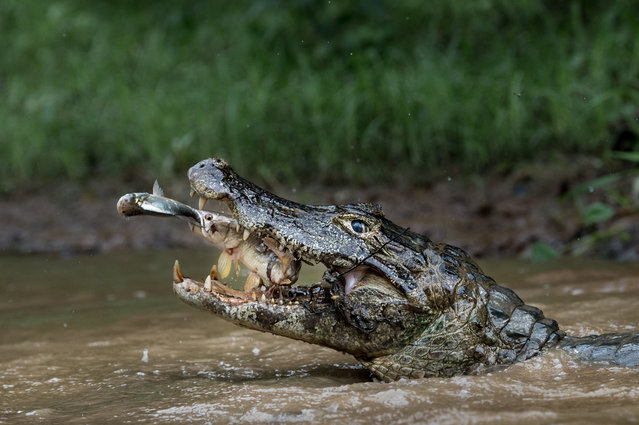
Second place, nature: double trapping. Picture taken in the Brazilian Pantanal ... when I downloaded the CF did not want to believe it ... The nature knows we always give magnificent events but sometimes extraordinary. (Photo by Massimiliano Bencivenni/National Geographic Travel Photographer of the Year Contest)

Second place, Nature: double trapping. Picture taken in the Brazilian Pantanal ... when I downloaded the CF did not want to believe it ... The nature knows we always give magnificent events but sometimes extraordinary. (Photo by Massimiliano Bencivenni/National Geographic Travel Photographer of the Year Contest)
Details
02 Jul 2016 12:53:00
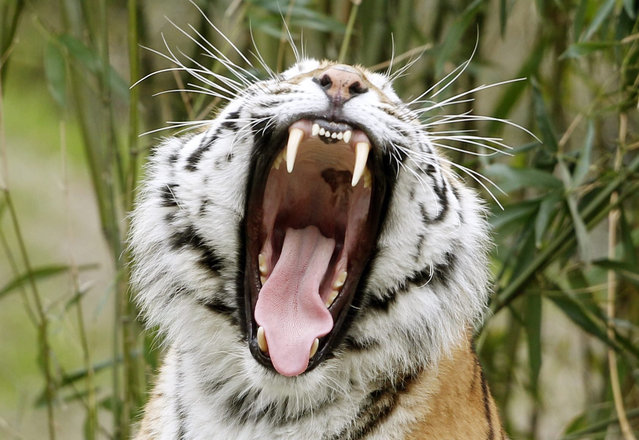
Female Siberian tiger Dasha yawns in the new enclosure at the zoo in Duisburg, Germany, 30 March 2016. The new facility is three times larger than the old one and will be opened to the public on the same day. (Photo by Roland Weihrauch/EPA)

Female Siberian tiger Dasha yawns in the new enclosure at the zoo in Duisburg, Germany, 30 March 2016. The new facility is three times larger than the old one and will be opened to the public on the same day. (Photo by Roland Weihrauch/EPA)
Details
03 Apr 2016 11:38:00
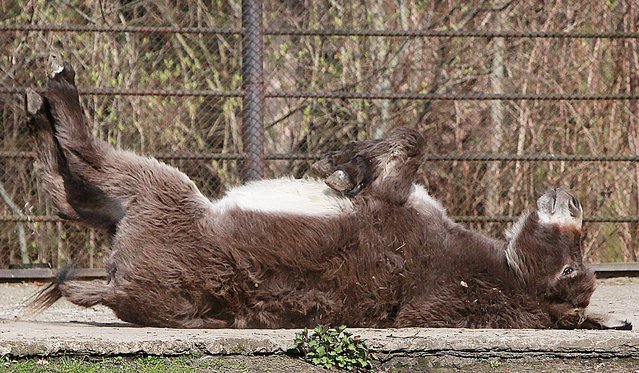
A donkey savors warming temperatures after a long winter at the zoo in Warsaw, Poland, on Wednesday, April 8, 2015. (Photo by Czarek Sokolowski/AP Photo)

A donkey savors warming temperatures after a long winter at the zoo in Warsaw, Poland, on Wednesday, April 8, 2015. (Photo by Czarek Sokolowski/AP Photo)
Details
11 Apr 2015 11:12:00