Loading...
Done
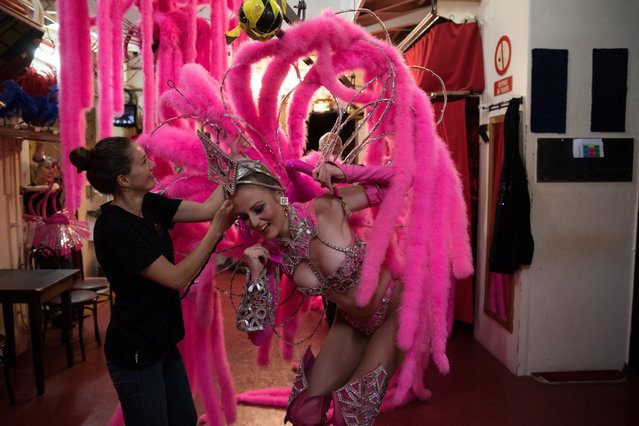
Dancer Megan changes costume as she performs in the review “Feerie” at the Moulin Rouge in Paris, France, July 3, 2018. Each show requires 1,000 outfits, all crafted in the workshops that have been supplying the Moulin Rouge for decades. Each dancer has to make between 10 and 15 costume changes per show, with about 90 seconds to complete each one before they have to be back out on stage. (Photo by Philippe Wojazer/Reuters)

Dancer Megan changes costume as she performs in the review “Feerie” at the Moulin Rouge in Paris, France, July 3, 2018. Each show requires 1,000 outfits, all crafted in the workshops that have been supplying the Moulin Rouge for decades. Each dancer has to make between 10 and 15 costume changes per show, with about 90 seconds to complete each one before they have to be back out on stage. (Photo by Philippe Wojazer/Reuters)
Details
05 Oct 2019 00:03:00
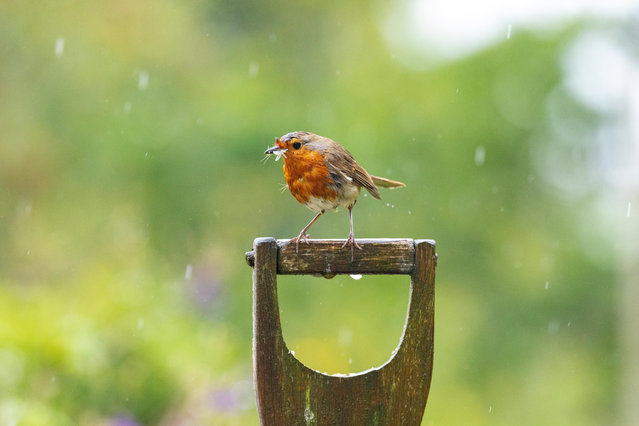
A robin perches on a spade handle in a garden on a rainy day in Lixwm, north Wales. Researchers said this week that when European robins are subjected to human-produced noise, their behaviour changes. (Photo by DGDImages/Alamy Live News)

A robin perches on a spade handle in a garden on a rainy day in Lixwm, north Wales. Researchers said this week that when European robins are subjected to human-produced noise, their behaviour changes. (Photo by DGDImages/Alamy Live News)
Details
28 Jul 2019 00:03:00
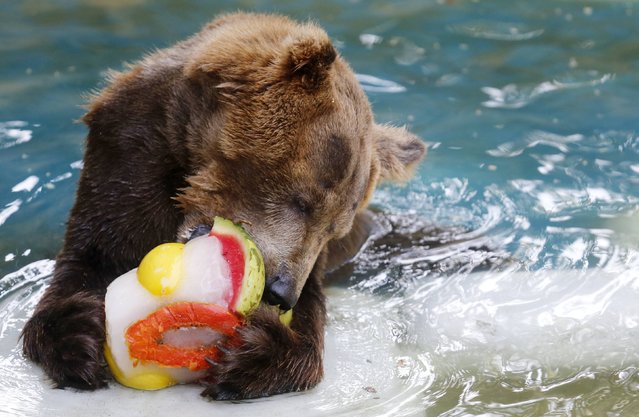
A grizzly bear eats a frozen fruits during a hot summer day at Rio de Janeiro's zoo January 13, 2015. According to a local climate institute, temperatures in Rio de Janeiro on Tuesday rose up to 34 degrees Celsius (93.2 degrees Fahrenheit). (Photo by Sergio Moraes/Reuters)

A grizzly bear eats a frozen fruits during a hot summer day at Rio de Janeiro's zoo January 13, 2015. According to a local climate institute, temperatures in Rio de Janeiro on Tuesday rose up to 34 degrees Celsius (93.2 degrees Fahrenheit). (Photo by Sergio Moraes/Reuters)
Details
14 Jan 2015 11:52:00
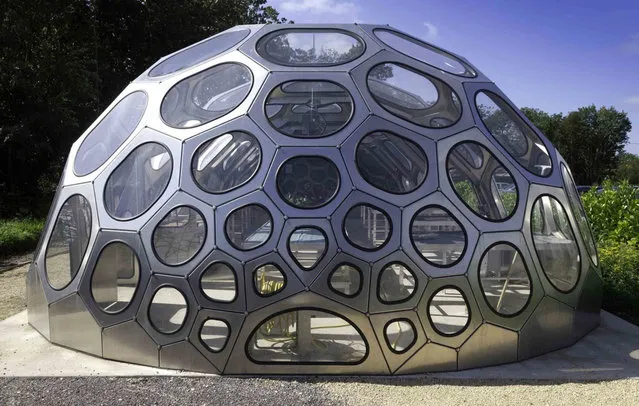
Greenhouse Greenhouse Bristol

A greenhouse is a contained quantity of air and light which extends the growing season and enables the thriving of plants otherwise alien to local climate. It creates a bubble of super-nature, where things otherwise impossible become possible. The smell, temperature, humidity and taste of things are significantly different than just outside the thin membrane. It enables us to create different kinds (or quantities) of food, but also to experience different climates and atmospheres. A greenhouse is by definition alien to its site, but creates a significant place in everyday life.
Details
25 Jun 2014 11:09:00
A delegate from the indigenous Maasai community blows a horn and wears an ostrich feathers headgear as he arrives for the Africa Climate Summit (ACS) 2023 at the Kenyatta International Convention Centre (KICC) in Nairobi, Kenya on September 6, 2023. (Photo by Monicah Mwangi/Reuters)

A delegate from the indigenous Maasai community blows a horn and wears an ostrich feathers headgear as he arrives for the Africa Climate Summit (ACS) 2023 at the Kenyatta International Convention Centre (KICC) in Nairobi, Kenya on September 6, 2023. (Photo by Monicah Mwangi/Reuters)
Details
14 Sep 2023 02:27:00
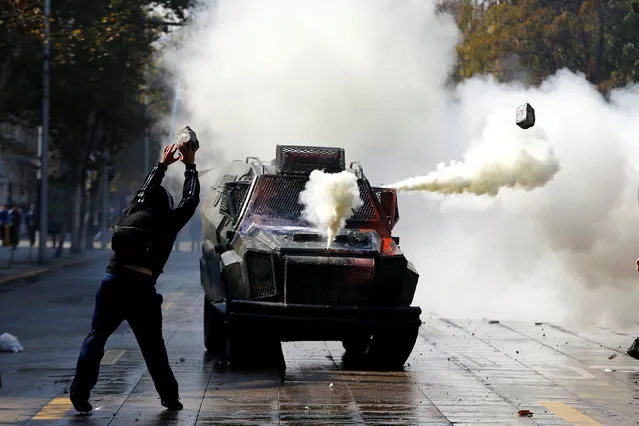
A student protester throws a stone against a riot police vehicle during a demonstration to demand changes in the education system in Santiago, Chile, April 21, 2016. (Photo by Ivan Alvarado/Reuters)

A student protester throws a stone against a riot police vehicle during a demonstration to demand changes in the education system in Santiago, Chile, April 21, 2016. (Photo by Ivan Alvarado/Reuters)
Details
22 Apr 2016 13:05:00
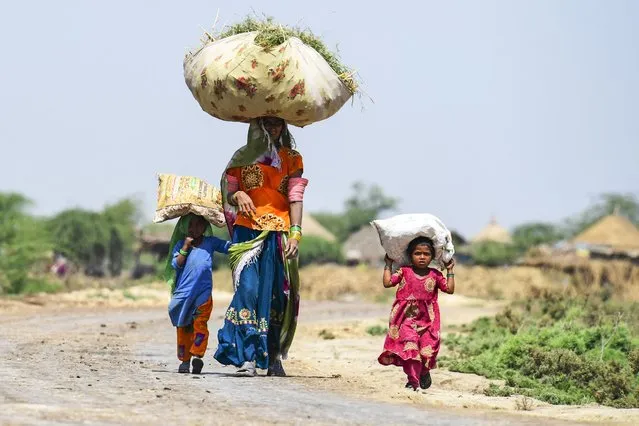
A woman along with her children carry hay to feed cattle in Sanjar Chang village, Mirpurkhas district in Sindh province on April 9, 2023. (Photo by Asif Hassan/AFP Photo)

A woman along with her children carry hay to feed cattle in Sanjar Chang village, Mirpurkhas district in Sindh province on April 9, 2023. (Photo by Asif Hassan/AFP Photo)
Details
02 May 2023 03:05:00
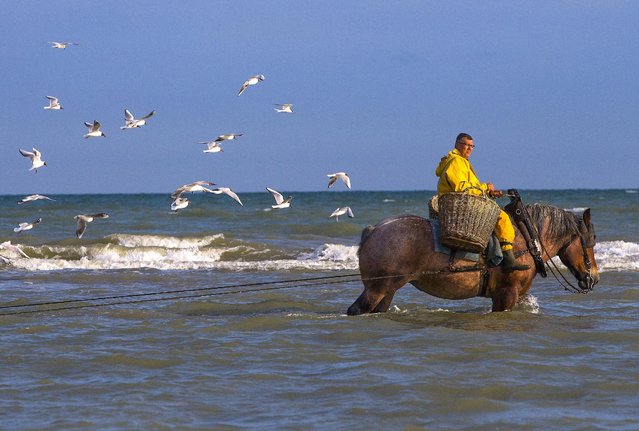
A Belgian shrimp fisherman rides a carthorse to haul a net out in the sea to catch shrimps during low tide at the coastal town of Oostduinkerke, Belgium July 3, 2015. (Photo by Yves Herman/Reuters)

A Belgian shrimp fisherman rides a carthorse to haul a net out in the sea to catch shrimps during low tide at the coastal town of Oostduinkerke, Belgium July 3, 2015. At the end of each fishing session, the fishermen and their mounts leave the water to empty the net's contents into two wicker baskets fixed on each side of the horse. This traditional method of catching shrimps along the North Sea coast, which dates back to some 500 years, attracts tourists every summer. In 2013, Unesco recognized shrimp fishing on horseback as an intangible cultural heritage. (Photo by Yves Herman/Reuters)
Details
04 Jul 2015 11:29:00