Loading...
Done
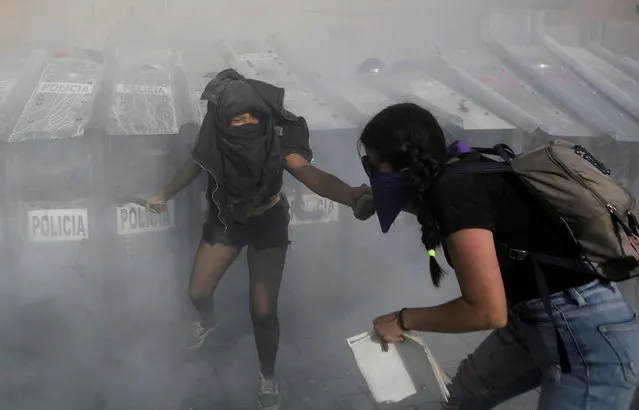
Women clash with police officers behind riot shields during a protest in support of Victoria Salazar, a Salvadoran woman who died after a Mexican female police officer was seen in a video kneeling on her back, in Mexico City, Mexico on April 2, 2021. (Photo by Raquel Cunha/Reuters)

Women clash with police officers behind riot shields during a protest in support of Victoria Salazar, a Salvadoran woman who died after a Mexican female police officer was seen in a video kneeling on her back, in Mexico City, Mexico on April 2, 2021. (Photo by Raquel Cunha/Reuters)
Details
06 Apr 2021 10:14:00
A fan of England cheers prior to the UEFA EURO 2020 quarter final match between Ukraine and England in Rome, Italy, 03 July 2021. (Photo by Mike Hewitt /EPA/EFE)

A fan of England cheers prior to the UEFA EURO 2020 quarter final match between Ukraine and England in Rome, Italy, 03 July 2021. (Photo by Mike Hewitt /EPA/EFE)
Details
04 Jul 2021 09:47:00
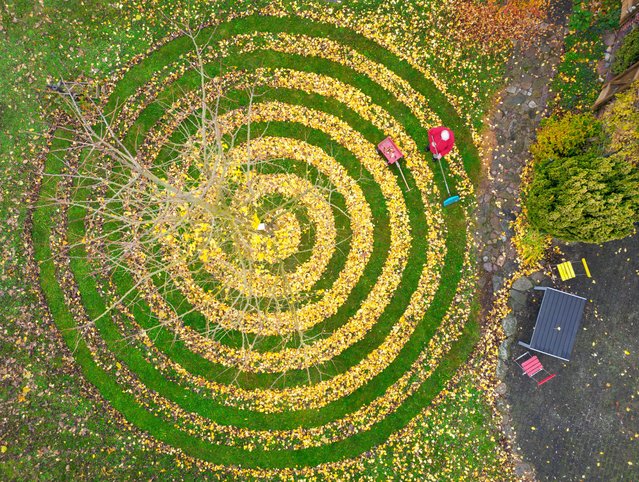
A striking spiral of golden ginkgo leaves raked with care in a private garden in Petersdorf, Brandenburg, Germany on November 2, 2025. (Photo by Patrick Pleu/dpa)

A striking spiral of golden ginkgo leaves raked with care in a private garden in Petersdorf, Brandenburg, Germany on November 2, 2025. (Photo by Patrick Pleu/dpa)
Details
05 Dec 2025 06:30:00
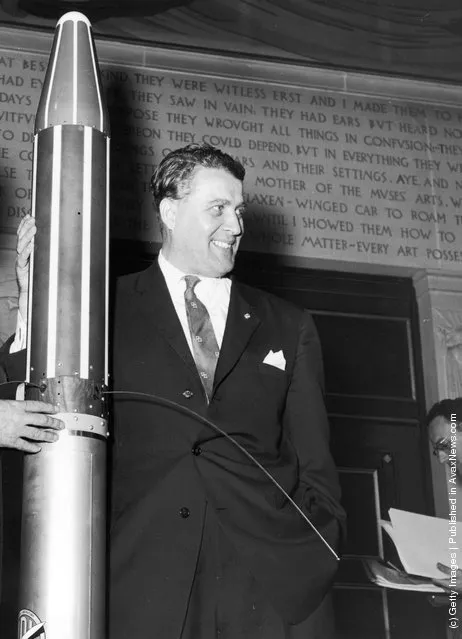
German-born American engineer Dr Wernher von Braun (1912 - 1977) with a model of the Explorer orbiting space satellite which he designed, 1958

“Wernher Magnus Maximilian Freiherr von Braun (March 23, 1912 – June 16, 1977) was a German-born rocket scientist, aerospace engineer, space architect, and one of the leading figures in the development of rocket technology in Nazi Germany during World War II and, subsequently, the United States”. – Wikipedia

Photo: German-born American engineer Dr. Wernher von Braun with a model of the Explorer orbiting space satellite which he designed. (Photo by Keystone/Getty Images). 1958
Details
22 Mar 2012 11:18:00
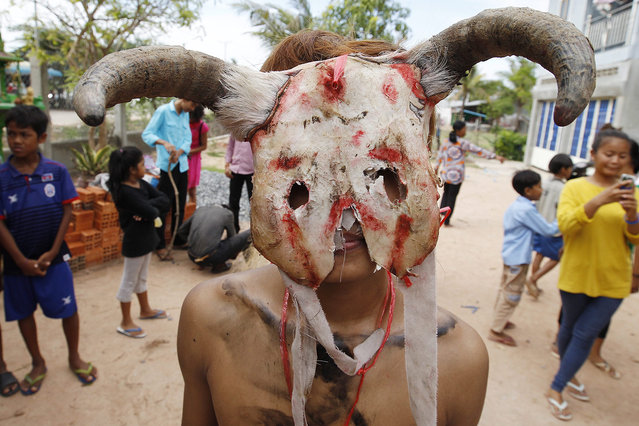
A Cambodian resident wearing a mask attends a ceremony at Pring Ka-Ek village on the outskirts of Phnom Penh, Cambodia, 09 June 2016. Villagers organized a ceremony to continue their local traditions by paying respect to the Neakta Pring Ka-Ek (Spirit house) to prevent them from diseases and to achieve abundant rice harvests and other agricultural yields. (Photo by Mak Remissa/EPA)

A Cambodian resident wearing a mask attends a ceremony at Pring Ka-Ek village on the outskirts of Phnom Penh, Cambodia, 09 June 2016. Villagers organized a ceremony to continue their local traditions by paying respect to the Neakta Pring Ka-Ek (Spirit house) to prevent them from diseases and to achieve abundant rice harvests and other agricultural yields. (Photo by Mak Remissa/EPA)
Details
11 Jun 2016 12:23:00
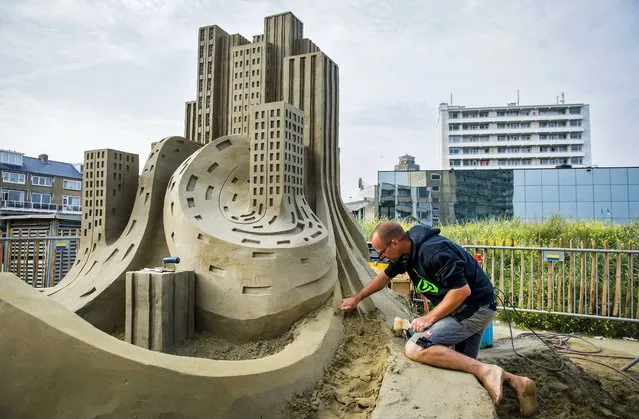
Dutch artist Maxim Gazendam works on his sand sculpture during the third edition of the European Championship Sand Sculpting 2014 in Zandvoort aan Zee, The Netherlands, 08 August 2014. Eight sculptors from different European countries will each create an impressive sculpture on the main theme “Music and Dance”. (Photo by Remko De Waal/EPA)

Dutch artist Maxim Gazendam works on his sand sculpture during the third edition of the European Championship Sand Sculpting 2014 in Zandvoort aan Zee, The Netherlands, 08 August 2014. Eight sculptors from different European countries will each create an impressive sculpture on the main theme “Music and Dance”. (Photo by Remko De Waal/EPA)
Details
09 Aug 2014 10:57:00
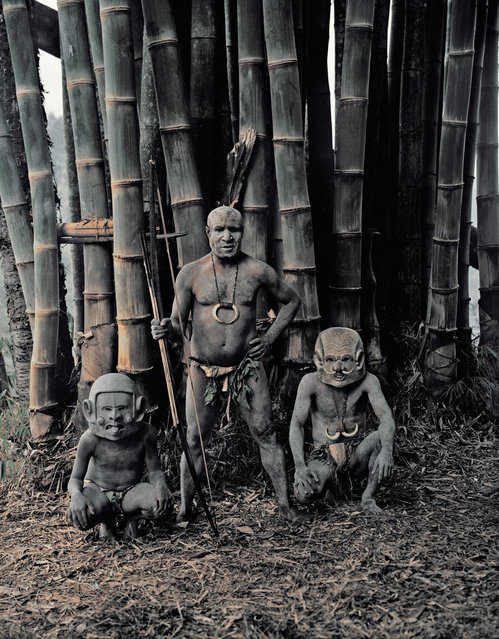
“Asaro from the Eastern Highlands”. The mudmen could not cover their faces with mud because the people of Papua New Guinea thought that the mud from the Asaro river was poisonous. So instead of covering their faces with this alleged poison, they made masks from pebbles that they heated and water from the waterfall, with unusual designs such as long or very short ears either going down to the chin or sticking up at the top, long joined eyebrows attached to the top of the ears, horns and sideways mouths. (Jimmy Nelson)

“Asaro from the Eastern Highlands”. The mudmen could not cover their faces with mud because the people of Papua New Guinea thought that the mud from the Asaro river was poisonous. So instead of covering their faces with this alleged poison, they made masks from pebbles that they heated and water from the waterfall, with unusual designs such as long or very short ears either going down to the chin or sticking up at the top, long joined eyebrows attached to the top of the ears, horns and sideways mouths. (Photo and caption by Jimmy Nelson)
Details
20 Oct 2013 08:54:00
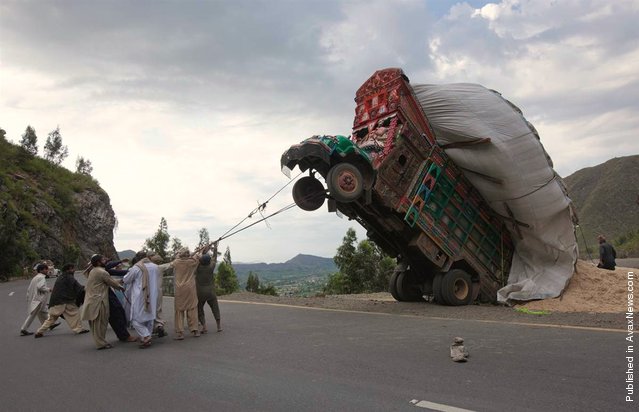
Men use ropes to try and right a supply truck overloaded with wheat straw along a road in Dargai, in the Malakand district, about 100 miles northwest of Pakistan's capital Islamabad, on April 13

Men use ropes to try and right a supply truck overloaded with wheat straw along a road in Dargai, in the Malakand district, about 100 miles northwest of Pakistan's capital Islamabad, on April 13, 2012. (Photo by Mian Khursheed/Reuters)
Details
22 Apr 2012 12:15:00