Loading...
Done
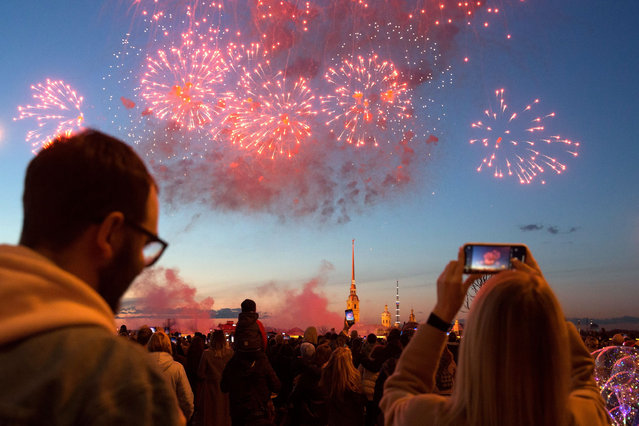
People watch fireworks commemorating the 76th anniversary of the victory in the Great Patriotic War in St. Petersburg, Russia, May 9, 2021. (Photo by Chine Nouvelle/SIPA Press/Rex Features/Shutterstock)

People watch fireworks commemorating the 76th anniversary of the victory in the Great Patriotic War in St. Petersburg, Russia, May 9, 2021. (Photo by Chine Nouvelle/SIPA Press/Rex Features/Shutterstock)
Details
13 May 2021 08:19:00
A person reacts during an anti-war protest, after Russia launched a massive military operation against Ukraine, in Moscow, Russia on February 24, 2022. (Photo by Evgenia Novozhenina/Reuters)

A person reacts during an anti-war protest, after Russia launched a massive military operation against Ukraine, in Moscow, Russia on February 24, 2022. (Photo by Evgenia Novozhenina/Reuters)
Details
25 Feb 2022 06:01:00
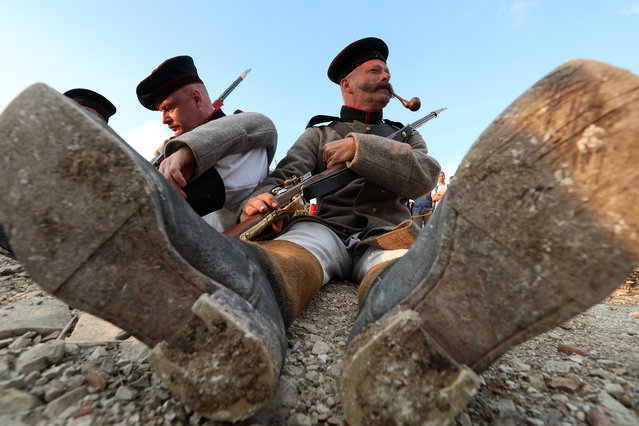
Enthusiasts participate in the historical re-enactment of the Sevastopol Fortress assault, which took place during the Crimean War of 1853-1856, at a military historical festival in Sevastopol, Crimea, September 5, 2020. (Photo by Alexey Pavlishak/Reuters)

Enthusiasts participate in the historical re-enactment of the Sevastopol Fortress assault, which took place during the Crimean War of 1853-1856, at a military historical festival in Sevastopol, Crimea, September 5, 2020. (Photo by Alexey Pavlishak/Reuters)
Details
21 Sep 2020 00:01:00
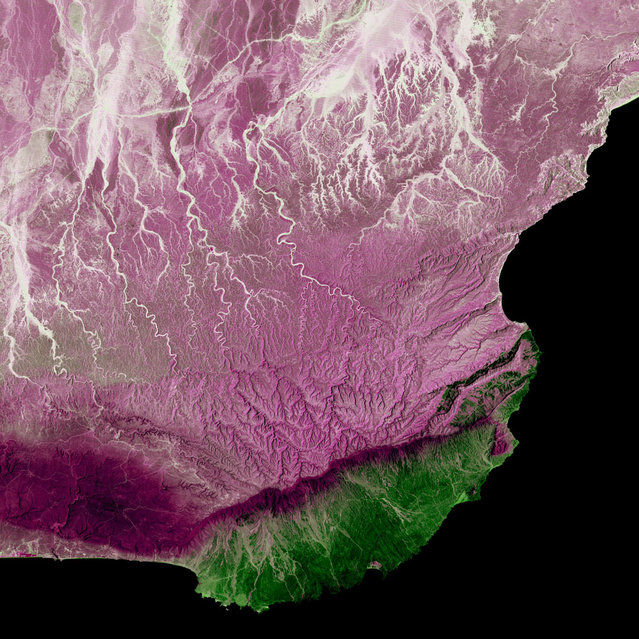
Dhofar Region, Oman. Much of Oman is desert, but the Arabian Sea coast in the Dhofar region represents a startling difference in climate. This coastal region catches the monsoon rains, or khareef, during the summer months. Drenching rains fall primarily on the mountainous ridge that separates the lush, fertile areas along the coast from the arid interior, recharging streams, waterfalls and springs that provide plentiful water supplies in the fertile lowlands for the remainder of the year. Image taken by Landsat 5 on April 2, 2005. (Photo by USGS/NASA)

Dhofar Region, Oman. Much of Oman is desert, but the Arabian Sea coast in the Dhofar region represents a startling difference in climate. This coastal region catches the monsoon rains, or khareef, during the summer months. Drenching rains fall primarily on the mountainous ridge that separates the lush, fertile areas along the coast from the arid interior, recharging streams, waterfalls and springs that provide plentiful water supplies in the fertile lowlands for the remainder of the year. Image taken by Landsat 5 on April 2, 2005. (Photo by USGS/NASA)

Details
25 Dec 2012 11:13:00
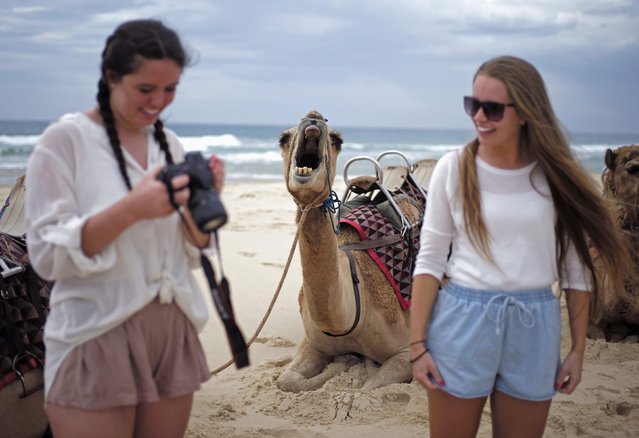
A camel yawns as a tourist checks images on her camera following a ride on a camel safari alongside the Pacific Ocean on Lighthouse Beach, north of Sydney, December 4, 2014. For 25 years camel rides on this beach have given visitors to Australia's holiday coast a rare experience available only in a handful of locations in the country. (Photo by Jason Reed/Reuters)

A camel yawns as a tourist checks images on her camera following a ride on a camel safari alongside the Pacific Ocean on Lighthouse Beach, north of Sydney, December 4, 2014. For 25 years camel rides on this beach have given visitors to Australia's holiday coast a rare experience available only in a handful of locations in the country. Australia's long history with the “ships of the desert” goes back to the 1800s when they were imported from Afghanistan and India for use as transportation across Australia's vast deserts before being released into the wild following their replacement by motorised transport. (Photo by Jason Reed/Reuters)
Details
06 Dec 2014 12:48:00
A staff member demonstrates how she puts on the helmet of a mock space suit at the C-Space Project Mars simulation base in the Gobi Desert outside Jinchang, Gansu Province, China, April 17, 2019. The facility – comprising several interconnected modules including a greenhouse and a mock decompression chamber – opened its doors to the public. (Photo by Thomas Peter/Reuters)

A staff member demonstrates how she puts on the helmet of a mock space suit at the C-Space Project Mars simulation base in the Gobi Desert outside Jinchang, Gansu Province, China, April 17, 2019. The facility – comprising several interconnected modules including a greenhouse and a mock decompression chamber – opened its doors to the public. (Photo by Thomas Peter/Reuters)
Details
19 Apr 2019 00:07:00
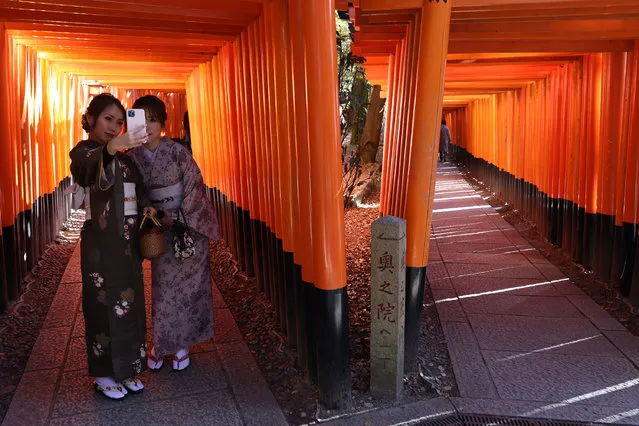
Women dressed in kimonos pose for a selfie photograph at a deserted torii path Fushimi Inari Taish shrine on January 18, 2021 in Kyoto, Japan. Kyoto, along with a Osaka and several other prefectures, was brought under a state of emergency last week by the Japanese government as they grapple to contain the third, and most virulent, wave of Covd-19 coronavirus to hit the country. (Photo by Buddhika Weerasinghe/Getty Images)

Women dressed in kimonos pose for a selfie photograph at a deserted torii path Fushimi Inari Taish shrine on January 18, 2021 in Kyoto, Japan. Kyoto, along with a Osaka and several other prefectures, was brought under a state of emergency last week by the Japanese government as they grapple to contain the third, and most virulent, wave of Covd-19 coronavirus to hit the country. (Photo by Buddhika Weerasinghe/Getty Images)
Details
28 Jan 2021 10:42:00
In this photo made Thursday, April 11, 2013, Soviet Jewish World War Two veteran Boris Ginsburg poses for a portrait at his house in the southern Israeli city of Ashdod. Ginsburg, born in Belorussia, was kept by a German garrison in the Lenin ghetto since 1941 until its destruction by partisan units in September 1942. (Photo by Oded Balilty/AP Photo)

In this photo made Thursday, April 11, 2013, Soviet Jewish World War Two veteran Boris Ginsburg poses for a portrait at his house in the southern Israeli city of Ashdod. Ginsburg, born in Belorussia, was kept by a German garrison in the Lenin ghetto since 1941 until its destruction by partisan units in September 1942. In 1942 he joined the partisans for two years and in 1944 he joined the Red Army as a combat soldier and fought till the and of the war. Ginsubrg demobilized in 1947 and immigrated to Israel in 2001. About 500,000 Soviet Jews served in the Red Army during World War Two, and the majority of those still alive today live in Israel. (Photo by Oded Balilty/AP Photo)
Details
07 May 2013 08:08:00