Loading...
Done
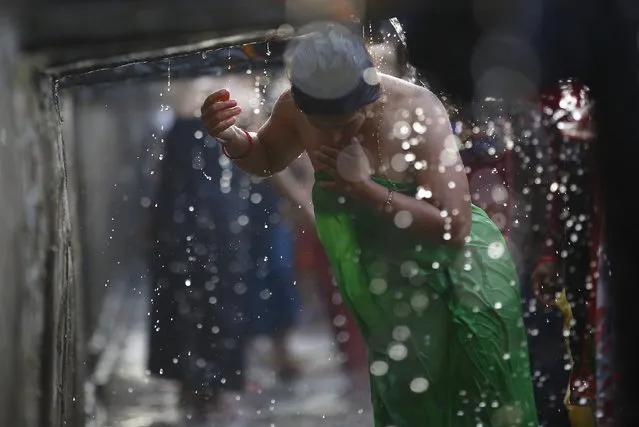
A devotee takes a holy bath at the Balaju Baise Dhara (22 water spouts) during the Baishak Asnan festival in Kathmandu April 4, 2015. Devotees believe that the water from these stone spouts, which is collected from the catchment area of the Nagarjun forest behind the spouts, will cure pains and skin diseases. (Photo by Navesh Chitrakar/Reuters)

A devotee takes a holy bath at the Balaju Baise Dhara (22 water spouts) during the Baishak Asnan festival in Kathmandu April 4, 2015. Devotees believe that the water from these stone spouts, which is collected from the catchment area of the Nagarjun forest behind the spouts, will cure pains and skin diseases. (Photo by Navesh Chitrakar/Reuters)
Details
04 Apr 2015 10:53:00
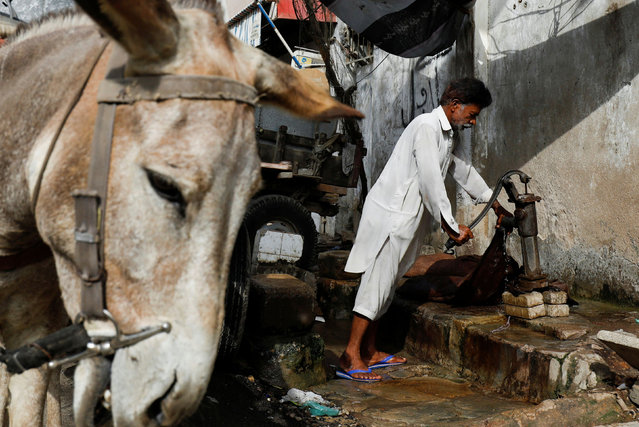
Mohammad Ramzan, 60, a traditional goatskin water carrier also known as a mashki, fills a bag with water from a handpump to deliver to nearby homes during the fasting month of Ramadan, as the outbreak of the coronavirus disease (COVID-19) continues, in Karachi, Pakistan on April 23, 2021. (Photo by Akhtar Soomro/Reuters)

Mohammad Ramzan, 60, a traditional goatskin water carrier also known as a mashki, fills a bag with water from a handpump to deliver to nearby homes during the fasting month of Ramadan, as the outbreak of the coronavirus disease (COVID-19) continues, in Karachi, Pakistan on April 23, 2021. (Photo by Akhtar Soomro/Reuters)
Details
29 May 2021 09:06:00
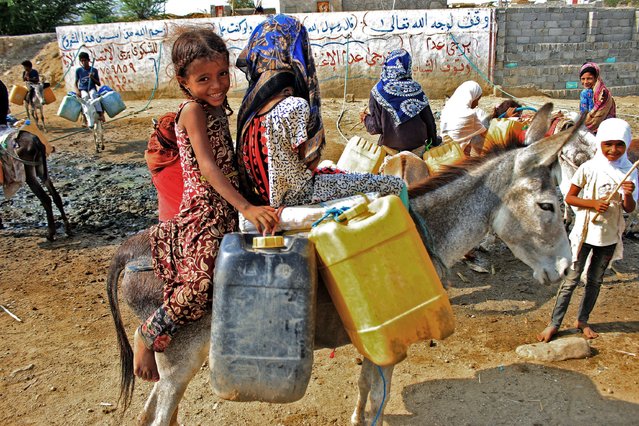
Children riding on donkeys queue to fill their jerrycans with water from a cistern at a make-shift camp for the internally displaced in Yemen's northern Hajjah province on July 12, 2021, amidst an extreme heat wave and severe water shortage. (Photo by Essa Ahmed/AFP Photo)

Children riding on donkeys queue to fill their jerrycans with water from a cistern at a make-shift camp for the internally displaced in Yemen's northern Hajjah province on July 12, 2021, amidst an extreme heat wave and severe water shortage. (Photo by Essa Ahmed/AFP Photo)
Details
13 Aug 2021 09:30:00
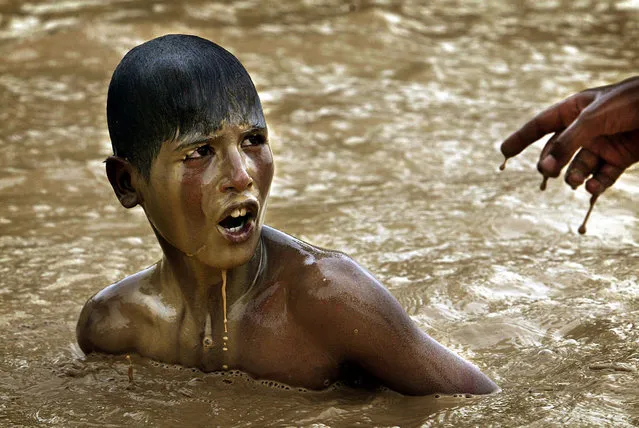
Iraqi teenagers swim in waste water from the nearby Tuweitha nuclear facility near Baghdad, Iraq on May 28, 2003. Iraqis are consuming contaminated water unaware of the dangerous pollutants that can cause severe ill health. (Photo by Damir Sagolj/Reuters)

Iraqi teenagers swim in waste water from the nearby Tuweitha nuclear facility near Baghdad, Iraq on May 28, 2003. Iraqis are consuming contaminated water unaware of the dangerous pollutants that can cause severe ill health. (Photo by Damir Sagolj/Reuters)
Details
24 Jun 2019 00:05:00
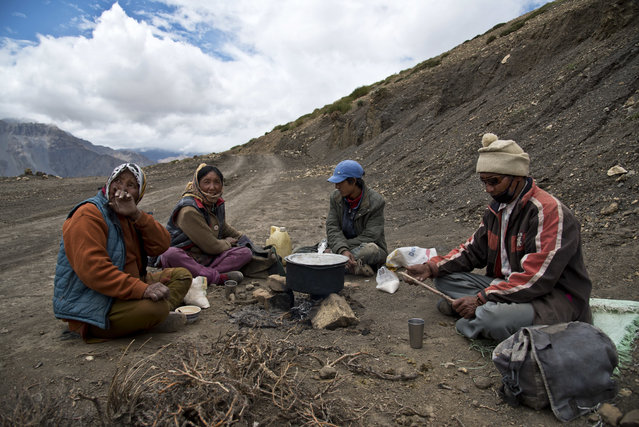
In this August 17, 2016, photo, from left to right, Chhering Chodom, 60, Tashi Yangzom, 50, Lobsang Chhering, 27, and Dorje Tandup, 58, drink milk tea on the side of the road. For centuries, the sleepy valley nestled in the Indian Himalayas remained a hidden Buddhist enclave forbidden to outsiders. Enduring the harsh year-round conditions of the high mountain desert, the people of Spiti Valley lived by a simple communal code – share the Earth's bounty, be hospitable to neighbors, and eschew greed and temptation at all turns. That's all starting to change, for better or worse. Since India began allowing its own citizens as well as outsiders to visit the valley in the early 1990s, tourism and trade have boomed. And the marks of modernization, such as solar panels, asphalt roads and concrete buildings, have begun to appear around some of the villages that dot the remote landscape at altitudes above 4,000 meters (13,000 feet). (Photo by Thomas Cytrynowicz/AP Photo)

In this August 17, 2016, photo, from left to right, Chhering Chodom, 60, Tashi Yangzom, 50, Lobsang Chhering, 27, and Dorje Tandup, 58, drink milk tea on the side of the road. For centuries, the sleepy valley nestled in the Indian Himalayas remained a hidden Buddhist enclave forbidden to outsiders. Enduring the harsh year-round conditions of the high mountain desert, the people of Spiti Valley lived by a simple communal code – share the Earth's bounty, be hospitable to neighbors, and eschew greed and temptation at all turns. That's all starting to change, for better or worse. (Photo by Thomas Cytrynowicz/AP Photo)
Details
15 Sep 2016 09:22:00
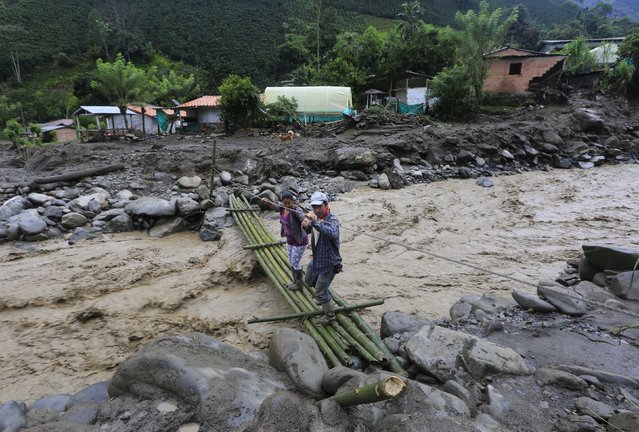
Residents cross over an improvised bridge after a landslide sent mud and water crashing onto homes close to the municipality of Salgar in Antioquia department, Colombia May 19, 2015. (Photo by Jose Miguel Gomez/Reuters)

Residents cross over an improvised bridge after a landslide sent mud and water crashing onto homes close to the municipality of Salgar in Antioquia department, Colombia May 19, 2015. A landslide sent mud and water crashing onto homes in a town in Colombia's northwest mountains on Monday, killing at least 50 people and injuring dozens, officials said. (Photo by Jose Miguel Gomez/Reuters)
Details
20 May 2015 09:15:00
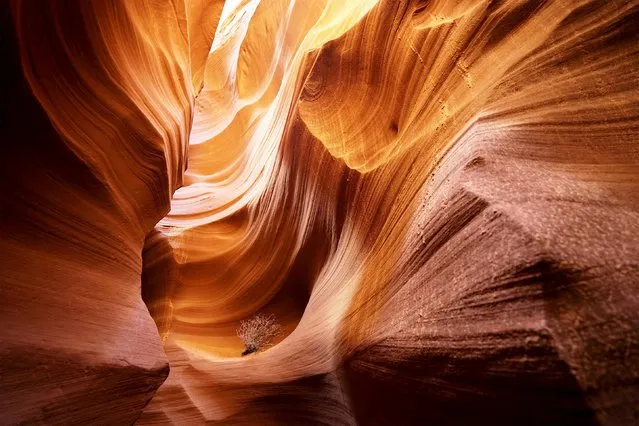
Sandstone sculpted by water and wind erosion is seen in a slot canyon, one of hundreds that surround Lake Powell near Page, Arizona, May 26, 2015. (Photo by Rick Wilking/Reuters)

Sandstone sculpted by water and wind erosion is seen in a slot canyon, one of hundreds that surround Lake Powell near Page, Arizona, May 26, 2015. Lake Powell on the Colorado River provides water for Nevada, Arizona and California. A severe drought in recent years, combined with withdrawals that many believe are not sustainable, has reduced its levels to only about 42 percent of its capacity. (Photo by Rick Wilking/Reuters)
Details
26 Nov 2015 08:01:00
Members of the Russian Red Army Choir perform at Water Front Theatre in Beirut September 13, 2014. (Photo by Jamal Saidi/Reuters)

Members of the Russian Red Army Choir perform at Water Front Theatre in Beirut September 13, 2014. (Photo by Jamal Saidi/Reuters)
Details
20 Sep 2014 10:09:00