Loading...
Done
A visitor looks at portraits of Mao Zedong amid his statues on display at a wholesale souvenir store in Shaoshan, Hunan Province in central China, 28 April 2016. Shaoshan is the hometown of former Communist leader Mao Zedong, popularly known as Chairman Mao. Thousands of visitors descend on this small Chinese town burrowed in the hills of Central China's Hunan province to pay homage to the “Great Helmsman” everyday. (Photo by How Hwee Young/EPA)

A visitor looks at portraits of Mao Zedong amid his statues on display at a wholesale souvenir store in Shaoshan, Hunan Province in central China, 28 April 2016. Shaoshan is the hometown of former Communist leader Mao Zedong, popularly known as Chairman Mao. Thousands of visitors descend on this small Chinese town burrowed in the hills of Central China's Hunan province to pay homage to the “Great Helmsman” everyday. It is one of the core sites of the “Red Tourism” industry, where communist party cadres and ordinary Chinese tourists alike seek to relive the experiences and rekindle the spirit of the revolutionaries. (Photo by How Hwee Young/EPA)
Details
08 May 2016 11:19:00
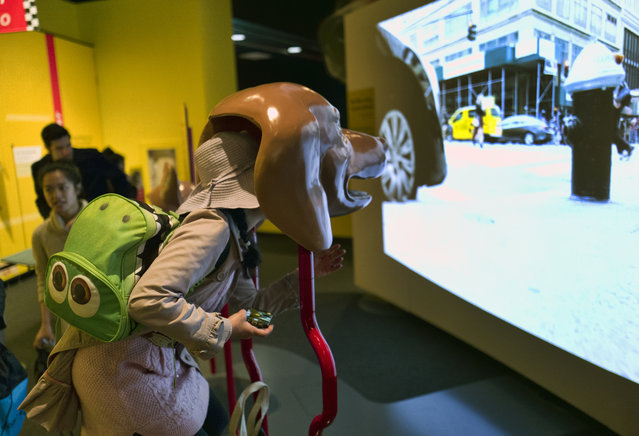
In this Tuesday, March 12, 2019 photo, a visitor takes part in an immersive experience showing visitors how dogs see from inside the head of a dog at the California Science Center in Los Angeles. A new exhibit at a Los Angeles museum examines the relationship between dogs and humans and explores why the two species seem to think so much alike and get along so well. “Dogs! A Science Tail” opens Saturday, March 16, 2019, at the California Science Center. (Photo by Richard Vogel/AP Photo)

In this Tuesday, March 12, 2019 photo, a visitor takes part in an immersive experience showing visitors how dogs see from inside the head of a dog at the California Science Center in Los Angeles. A new exhibit at a Los Angeles museum examines the relationship between dogs and humans and explores why the two species seem to think so much alike and get along so well. “Dogs! A Science Tail” opens Saturday, March 16, 2019, at the California Science Center. (Photo by Richard Vogel/AP Photo)
Details
15 Mar 2019 08:49:00
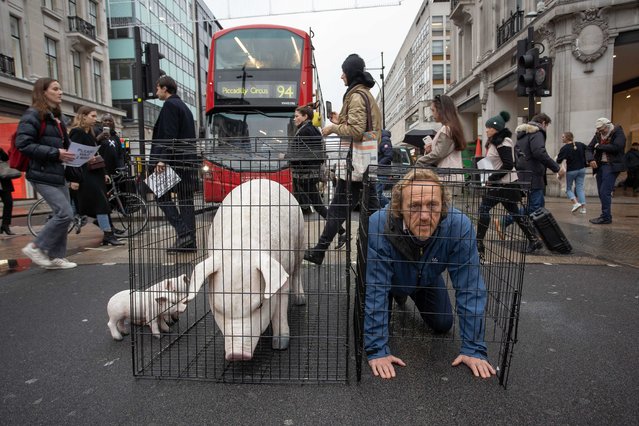
Jerome Flynn, who played Bronn on “Game of Thrones“, posed in a cage on London's Oxford Street on November 26, 2019 alongside the campaign group Farms Not Factories to raise awareness that most supermarkets and high street food chains are still sourcing their pork almost entirely from factory farms. Says Jerome "Factory Farming is one of the most horrific examples of how far we have strayed from our hearts in the relentless drive for profit and so called progress”. (Photo by Jeff Moore/Splash News and Pictures)

Jerome Flynn, who played Bronn on “Game of Thrones“, posed in a cage on London's Oxford Street on November 26, 2019 alongside the campaign group Farms Not Factories to raise awareness that most supermarkets and high street food chains are still sourcing their pork almost entirely from factory farms. Says Jerome "Factory Farming is one of the most horrific examples of how far we have strayed from our hearts in the relentless drive for profit and so called progress”. (Photo by Jeff Moore/Splash News and Pictures)
Details
28 Nov 2019 00:05:00
Ukrainian platoon commander Mariia talks on the phone in a position in the Donetsk region, Ukraine, Saturday, July 2, 2022. Ukrainian soldiers returning from the frontlines in eastern Ukraine’s Donbas region describe life during what has turned into a grueling war of attrition as apocalyptic. Mariia, 41, said that front-line conditions may vary depending on where a unit is positioned and how well supplied they are. (Photo by Efrem Lukatsky/AP Photo)

Ukrainian platoon commander Mariia talks on the phone in a position in the Donetsk region, Ukraine, Saturday, July 2, 2022. Ukrainian soldiers returning from the frontlines in eastern Ukraine’s Donbas region describe life during what has turned into a grueling war of attrition as apocalyptic. Mariia, 41, said that front-line conditions may vary depending on where a unit is positioned and how well supplied they are. (Photo by Efrem Lukatsky/AP Photo)
Details
14 Aug 2022 04:45:00
Reflected in the rearview mirror, Jose Collantes gets a hug from daughter Kehity while they're stopped at a red light, as Jose drives his five-year-old home from a playdate in Santiago, Chile, Sunday, September 6, 2020, three months after they lost his wife, her mother, to COVID-19. Their case highlights how COVID-19 deaths the world over are often the beginning of a new personal journey for those affected. (Photo by Esteban Felix/AP Photo)

Reflected in the rearview mirror, Jose Collantes gets a hug from daughter Kehity while they're stopped at a red light, as Jose drives his five-year-old home from a playdate in Santiago, Chile, Sunday, September 6, 2020, three months after they lost his wife, her mother, to COVID-19. Their case highlights how COVID-19 deaths the world over are often the beginning of a new personal journey for those affected. (Photo by Esteban Felix/AP Photo)
Details
15 Oct 2020 00:05:00
Felix Gelin and Claudine Jean describe in sign language how their community, the La Piste encampment, went up in flames this past summer, in Port-au-Prince, Haiti, Sunday, September 20, 2021. According to residents and a United Nations account, police lead the assault at dusk on the encampment, a shelter for deaf and disabled Haitians relocated there by the International Red Cross after the 2010 earthquake leveled the capital. (Photo by Rodrigo Abd/AP Photo)

Felix Gelin and Claudine Jean describe in sign language how their community, the La Piste encampment, went up in flames this past summer, in Port-au-Prince, Haiti, Sunday, September 20, 2021. According to residents and a United Nations account, police lead the assault at dusk on the encampment, a shelter for deaf and disabled Haitians relocated there by the International Red Cross after the 2010 earthquake leveled the capital. (Photo by Rodrigo Abd/AP Photo)
Details
01 Oct 2021 08:41:00
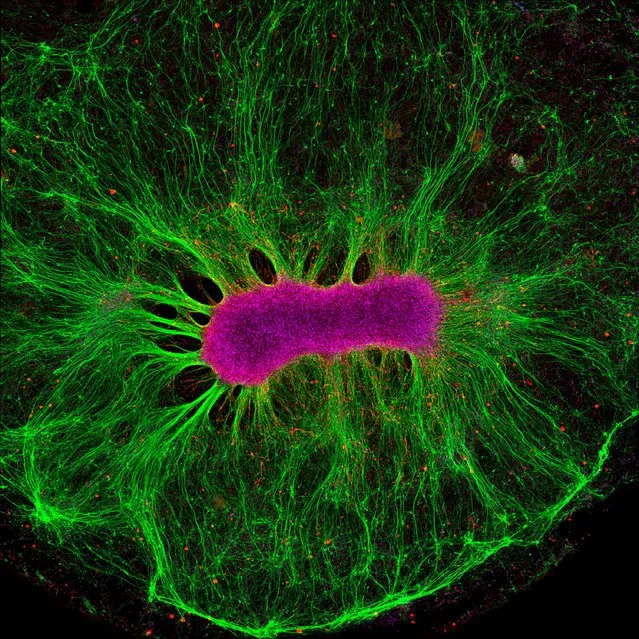
Brain-on-a-chip. Dazzling in green and magenta this image shows the nerve fibres (in green) produced by neural stem cells (in magenta) as they grow on a synthetic gel. Captured by a technique known as confocal microscopy, the image is part of research shedding light on how tinkering with the environment can affect the way in which nerve fibres grow. (Photo by Collin Edington and Iris Lee/Massachusetts Institute of Technology/Wellcome Images)

Brain-on-a-chip. Dazzling in green and magenta this image shows the nerve fibres (in green) produced by neural stem cells (in magenta) as they grow on a synthetic gel. Captured by a technique known as confocal microscopy, the image is part of research shedding light on how tinkering with the environment can affect the way in which nerve fibres grow. (Photo by Collin Edington and Iris Lee/Massachusetts Institute of Technology/Wellcome Images)
Details
17 Mar 2017 00:01:00
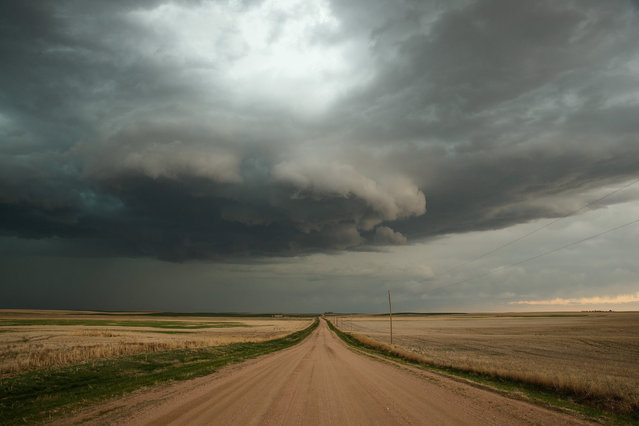
A supercell thunderstorm develops, May 8, 2017 in Elbert County outside of Limon, Colorado. With funding from the National Science Foundation and other government grants, scientists and meteorologists from the Center for Severe Weather Research try to get close to supercell storms and tornadoes trying to better understand tornado structure and strength, how low-level winds affect and damage buildings, and to learn more about tornado formation and prediction. (Photo by Drew Angerer/Getty Images)

A supercell thunderstorm develops, May 8, 2017 in Elbert County outside of Limon, Colorado. With funding from the National Science Foundation and other government grants, scientists and meteorologists from the Center for Severe Weather Research try to get close to supercell storms and tornadoes trying to better understand tornado structure and strength, how low-level winds affect and damage buildings, and to learn more about tornado formation and prediction. (Photo by Drew Angerer/Getty Images)
Details
16 Jun 2017 06:20:00