Loading...
Done
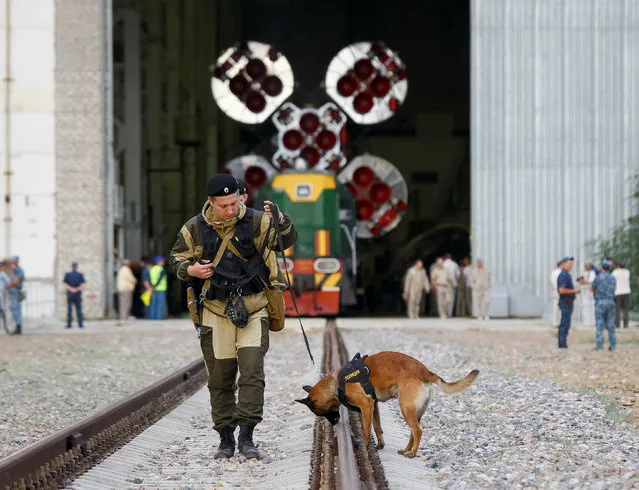
Police officers with a sniffer dog check a railway as the Soyuz MS spacecraft for the next International Space Station (ISS) crew of Kate Rubins of the U.S., Anatoly Ivanishin of Russia and Takuya Onishi of Japan is ready to be transported from an assembling hangar to the launchpad ahead of its launch scheduled on July 7, at the Baikonur cosmodrome in Kazakhstan July 4, 2016. (Photo by Shamil Zhumatov/Reuters)

Police officers with a sniffer dog check a railway as the Soyuz MS spacecraft for the next International Space Station (ISS) crew of Kate Rubins of the U.S., Anatoly Ivanishin of Russia and Takuya Onishi of Japan is ready to be transported from an assembling hangar to the launchpad ahead of its launch scheduled on July 7, at the Baikonur cosmodrome in Kazakhstan July 4, 2016. (Photo by Shamil Zhumatov/Reuters)
Details
06 Jul 2016 16:24:00
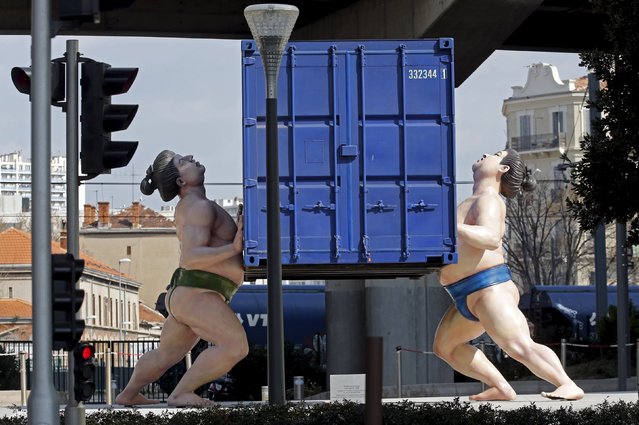
The sculpture “It Takes Two to Tango” by Scottish sculptor David Mach is seen in front of the headquarters of the CMA-CGM shipping company office tower in the port of Marseille, France, March 15, 2016. (Photo by Jean-Paul Pelissier/Reuters)

The sculpture “It Takes Two to Tango” by Scottish sculptor David Mach is seen in front of the headquarters of the CMA-CGM shipping company office tower in the port of Marseille, France, March 15, 2016. (Photo by Jean-Paul Pelissier/Reuters)
Details
16 Mar 2016 14:20:00
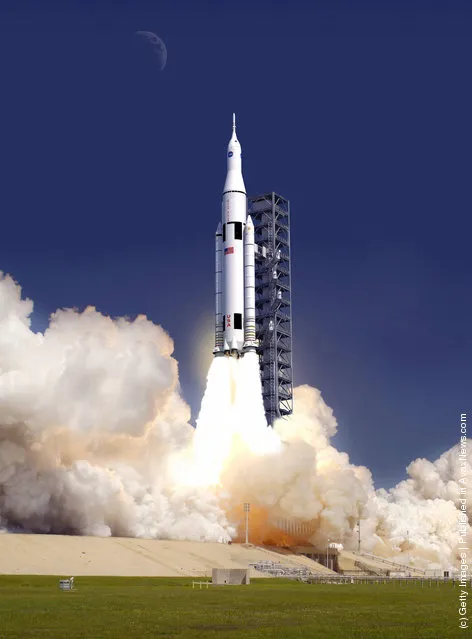
NASA's New Space Launch System

“The Space Launch System, or SLS, is a Shuttle-Derived heavy launch vehicle being designed by NASA, following the cancellation of the Constellation Program, to replace the Space Shuttle after its retirement. The NASA Authorization Act of 2010 envisions the transformation of the Ares I and Ares V vehicle designs into a single launch vehicle usable for both crew and cargo. It is to be upgraded over time with more powerful versions. The proposed SLS is visually similar to the legacy Saturn V booster and in particular the proposed, two-stage, Saturn INT-20”. – Wikipedia

Photo: In this illustration provided by NASA, the design for a new space rocket system, the Space Launch System, is seen. NASA's new rocket design will reportedly cost about $35 billion and be ready to for test launch in 2017. According to NASA, the rocket will be used to carry Orion Multi-Purpose Crew Vehicle as well as cargo and science experiments to earth's orbit, as a backup for the space station and possibly destinations beyond that. (Illustration by NASA via Getty Images)

Details
15 Sep 2011 10:50:00
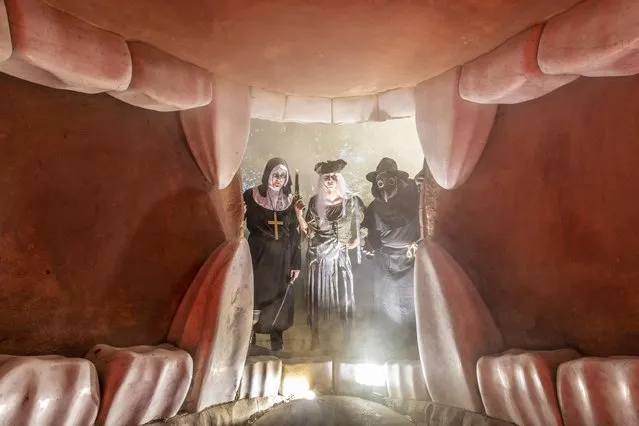
Staff prepare for Halloween at the Forbidden Corner tourist attraction, a labyrinth in the heart of Tupgill Park, in the Yorkshire Dales on October 19, 2022. (Photo by James Glossop/The Times)

Staff prepare for Halloween at the Forbidden Corner tourist attraction, a labyrinth in the heart of Tupgill Park, in the Yorkshire Dales on October 19, 2022. (Photo by James Glossop/The Times)
Details
22 Oct 2022 04:54:00
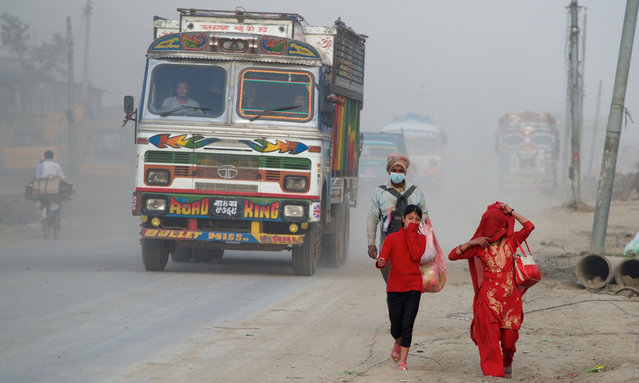
People in Kathmandu joke that the face mask has now become part of the national dress – an indispensable accessory in an effort to protect themselves from the dust. Nepal has the worst air quality in the world, according to the Environmental Performance Index. (Photo by Pete Pattisson/The Guardian)

People in Kathmandu joke that the face mask has now become part of the national dress – an indispensable accessory in an effort to protect themselves from the dust. Nepal has the worst air quality in the world, according to the Environmental Performance Index. (Photo by Pete Pattisson/The Guardian)
Details
22 Jun 2018 00:05:00
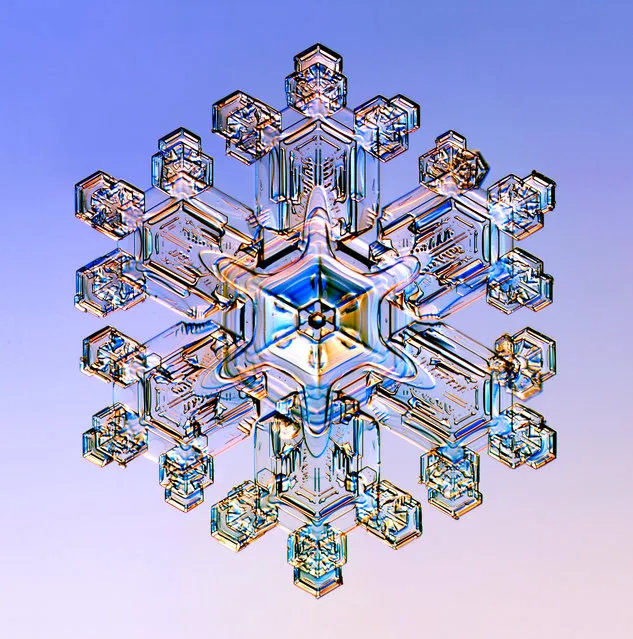
Nikon Small World Photomicrography Competition 2012. Honorable Mention. “Snow crystal, illuminated with colored lights (5x)”. (Photo by Dr. Kenneth Libbrecht, California Institute of Technology (Caltech), Department of Physics, Pasadena, California, USA)

Most people know Nikon as a purveyor of pro and consumer-grade digital cameras. But the company's expertise with optics bleeds over into related markets – it's one of the science community's major suppliers of microscopes. And each year the company asks the community to send it some of their favorite images of tiny objects. A panel of scientists and journalists have chosen the best of this past year's submissions, which Nikon has placed on its Small World site.

Photo: Honorable Mention. “Snow crystal, illuminated with colored lights (5x)”. (Photo by Dr. Kenneth Libbrecht, California Institute of Technology (Caltech), Department of Physics, Pasadena, California, USA)
Details
25 Oct 2012 13:49:00
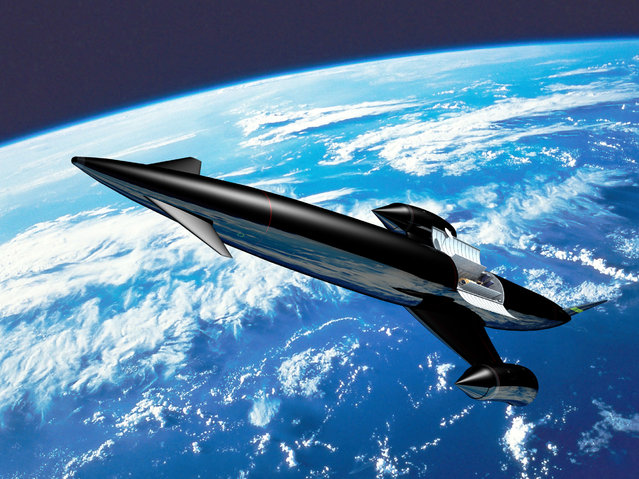
Artist's impression of Skylon. (Photo by Reaction Engines Ltd)

“A small British company with a dream of building a re-usable space plane has won an important endorsement from the European Space Agency (ESA) after completing key tests on its novel engine technology. Reaction Engines Ltd believes its Sabre engine, which would operate like a jet engine in the atmosphere and a rocket in space, could displace rockets for space access and transform air travel by bringing any destination on Earth to no more than four hours away”. – Chris Wickham via Reuters. Photo: Artist's impression of Skylon. (Photo by Reaction Engines Ltd)
Details
29 Nov 2012 10:31:00
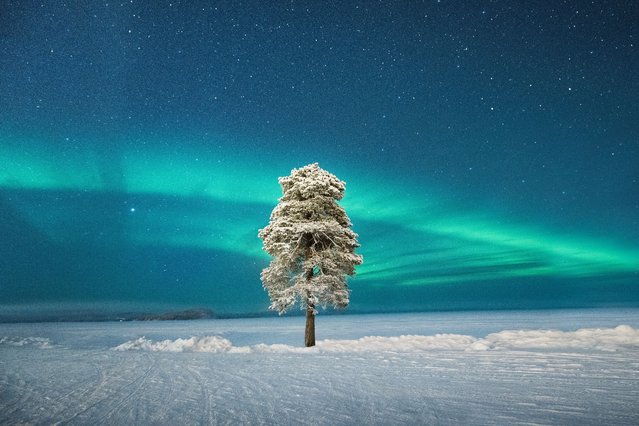
Aurorae category runner-up: Lone Tree under a Scandinavian Aurora by Tom Archer (UK). The photographer decided to explore the area around the hotel on a very crisp -35C evening in Finnish Lapland. When he found this tree, he decided to wait for the misty conditions to change and could not believe his luck when the sky cleared and the aurora came out in the perfect spot. Archer spent about an hour photographing it before his camera started to lock up because of the harsh conditions, but by then he was happy to call it a night. (Photo by Tom Archer/2020 Astronomy Photographer of the Year)

Aurorae category runner-up: Lone Tree under a Scandinavian Aurora by Tom Archer (UK). The photographer decided to explore the area around the hotel on a very crisp -35C evening in Finnish Lapland. When he found this tree, he decided to wait for the misty conditions to change and could not believe his luck when the sky cleared and the aurora came out in the perfect spot. Archer spent about an hour photographing it before his camera started to lock up because of the harsh conditions, but by then he was happy to call it a night. (Photo by Tom Archer/2020 Astronomy Photographer of the Year)
Details
17 Sep 2020 00:03:00